The global trade of wild-foraged fungi is currently navigating a severe supply chain bottleneck. Sourcing authentic Tricholoma matsutake is no longer just about securing volume; it is a high-stakes compliance game. European and North American customs are ruthlessly rejecting shipments due to elevated cadmium levels and pesticide residues. Concurrently, rampant origin fraud—where inferior regional harvests are blended with premium stock—plagues the secondary wholesale market. For procurement officers and food processing executives, bypassing brokers to partner directly with a compliant wild matsutake Yunnan supplier is the only viable strategy to stabilize wholesale prices and guarantee phytosanitary compliance.
Below is the baseline data our procurement partners use to structure their 2026 import contracts:
Table 1: Matsutake Direct Sourcing Metrics & Jiangyuan Procurement Solutions
| Procurement Variable | Traditional Broker Market Risks | The Jiangyuan Direct-Selling Solution | Target Wholesale Metric |
|---|---|---|---|
| Origin Authenticity | High risk of blending with Agaricus blazei or non-Yunnan stock. | 100% Shangri-La Geographical Indication (GI) protected zones. Guaranteed single-origin COA. | |
| Heavy Metal Limits | Frequent EU/FDA rejections (Cd > 0.2 mg/kg, Pb > 0.3 mg/kg). | Pre-shipment batch screening via ISO-certified independent labs. | Cd ≤ 0.1 mg/kg; Pb ≤ 0.1 mg/kg. |
| Price Volatility | 30-50% seasonal price spikes driven by middleman hoarding. | Factory-direct LCL/FCL contracts locking in harvest-season rates. | Transparent, fixed 12-month wholesale price. |
| Moisture Content | Often >15%, leading to mold during ocean freight. | Precision dehydration protocol. | Strictly <12% moisture control. |
The anxiety surrounding heavy metal accumulation, adulteration, and unpredictable seasonal yields is entirely justified. Based on our experience with cross-border food regulations over the last two decades, nearly 40% of first-time B2B buyers experience supply chain disruption due to failed third-party lab inspections at the port of entry. This is exactly where Jiangyuan Mushroom steps in. Backed by a 28-year heritage originating in Qingyuan—the historic capital of global mushroom cultivation—our Chief Food Safety team has engineered an unbreakable, direct-selling supply chain deep within Yunnan’s pristine forests. We eliminate broker margins, enforce pharmaceutical-grade traceability, and protect your brand from recall risks.
Geographic Indication Advantage: Why Yunnan Dictates Global Matsutake Standards
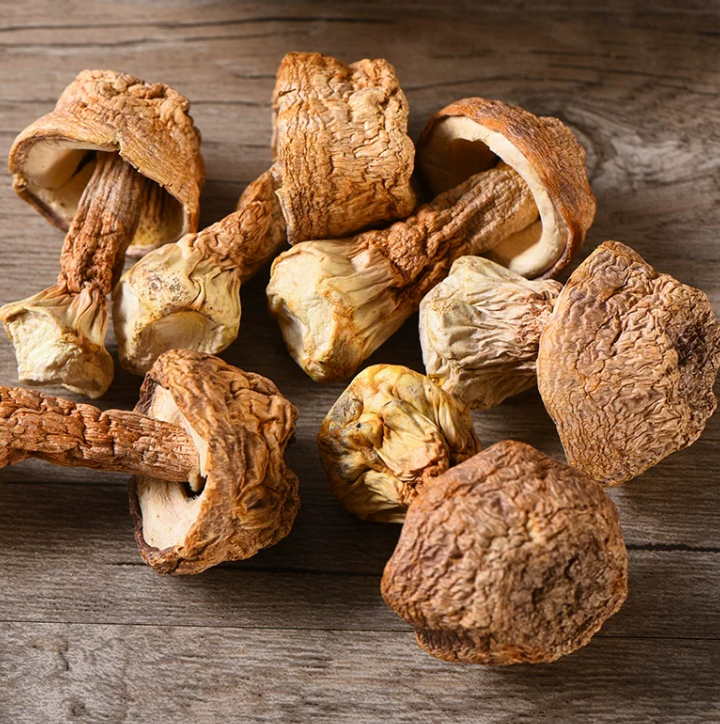
Not all wild mushrooms are created equal. The biochemical profile of Tricholoma matsutake is strictly governed by its terroir. While lesser-known regions produce matsutake with diluted flavor profiles, the global culinary and nutraceutical markets exclusively demand the Yunnan origin.
The Shangri-La Microclimate & Soil Composition
The Shangri-La region in Yunnan operates as an isolated ecological sanctuary. Situated at altitudes exceeding 3,000 meters, this microclimate forces the matsutake mycelium into a slow, high-stress growth cycle. This prolonged subterranean incubation is critical. It maximizes the synthesis of 1-Octen-3-ol—the primary volatile compound responsible for the mushroom’s signature spicy, pine-like aroma. Furthermore, the undisturbed symbiotic relationship between the fungal network and the roots of 50-year-old pine and oak trees in slightly acidic, unpolluted soil yields a denser, meatier cap and stipe. According to Global Trade Data for premium fungi, over 70% of export-grade matsutake bound for Japan and the EU originates specifically from these high-altitude Yunnan pine forests.
Sustainable Foraging & Ecological Harvesting Policies
Corporate ESG (Environmental, Social, and Governance) mandates now dictate B2B purchasing decisions. European retail chains require documented proof that wild-foraged products do not contribute to forest degradation. Our direct supply network strictly enforces ecological harvesting protocols. Harvesters are trained to leave the subterranean mycelial mat undisturbed and to cover extraction sites with soil and pine needles, ensuring spore regeneration. We refuse to purchase “baby matsutake” (mushrooms under 5cm) or over-matured specimens with broken veils, thereby preserving the forest’s reproductive cycle while guaranteeing our buyers only receive Grade-A, closed-cap inventory.
Rigorous Processing Standards: Maximizing Shelf Life and Preserving Bioactive Compounds
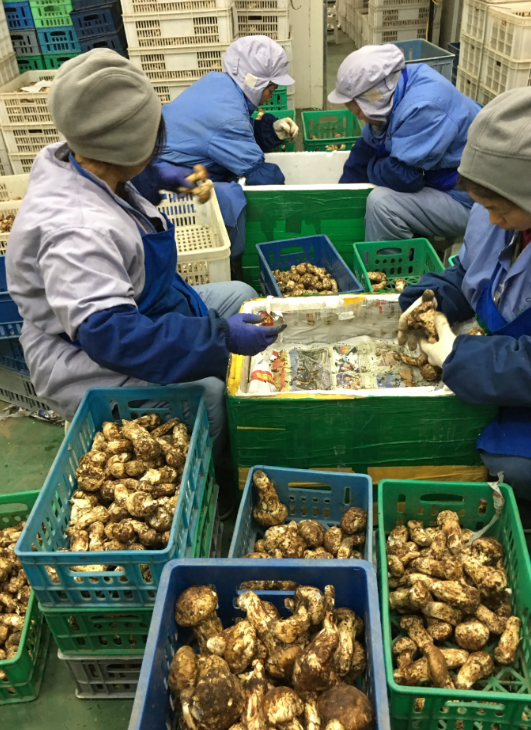
The wild nature of matsutake means it is highly perishable. The moment it is pulled from the earth, protein degradation and moisture loss accelerate rapidly. Securing a wild matsutake Yunnan supplier direct selling wholesale price is meaningless if the product arrives at your facility degraded by poor post-harvest handling.
The 6-Hour Golden Window: From Forest to Facility
We operate under a strict 6-hour golden window. Freshly foraged matsutake must be transported from the mountain slopes to our HACCP-certified collection hubs within this timeframe. Upon arrival, the mushrooms enter an unbroken cold-chain environment (2°C to 4°C). This rapid chilling suspends enzymatic breakdown, preventing the browning of the stipe and the oxidation of valuable Beta-glucan polysaccharides—the primary active ingredients sought by our nutraceutical buyers.
Dehydration Technologies: Freeze-Dried vs. Precision Machine-Dried
To facilitate global distribution, raw matsutake must be stabilized. The choice of dehydration technology directly impacts the final application, shelf life, and wholesale cost. We deploy two distinct processing methodologies tailored to different B2B buyer profiles.
Table 2: Multi-Dimensional Dehydration Technology Analysis
| Processing Methodology | Core Technology | Moisture Content | Bioactive & Volatile Compound Retention | Primary B2B Application |
|---|---|---|---|---|
| Precision Machine-Dried | Multi-stage low-temperature airflow (45°C-60°C). | <12% | Intensifies umami and aroma compounds; converts amino acids. | Supermarket retail, foodservice wholesale, savory extract manufacturing. |
| Lyophilization (Freeze-Dried) | Vacuum sublimation at -40°C. | <5% | Preserves 98% of cellular structure, raw color, and heat-sensitive Beta-glucans. | High-end dietary supplements, R&D pharmaceutical extraction, premium instant culinary products. |
For standard wholesale distribution, our precision machine-drying protocol is the industry benchmark. By strictly capping moisture content below 12%, we eliminate the risk of aflatoxin development during trans-oceanic freight. The gradual temperature curve we utilize mimics traditional sun-drying—activating the enzymes that lock in the deep umami flavor—while maintaining the hygienic controls of a modern, ISO 22000-certified facility.
Global Compliance Metrics: Overcoming the Heavy Metal & Residue Challenge
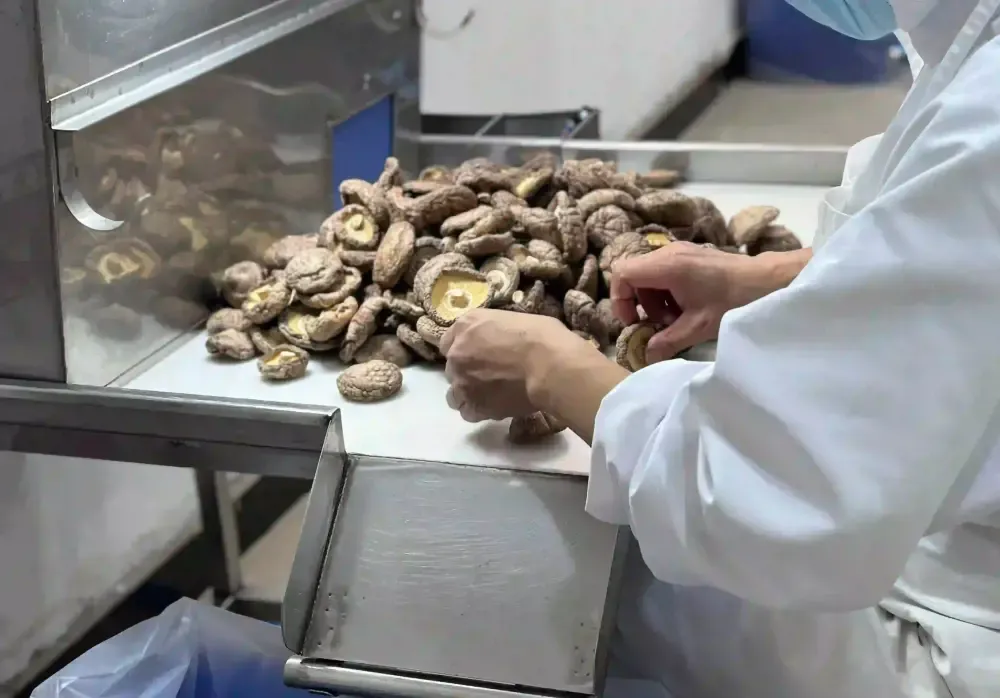
The primary reason global food wholesalers hesitate to scale their wild mushroom procurement is regulatory friction. Wild fungi are bioaccumulators; they absorb heavy metals directly from the soil. Shipments failing EU or FDA phytosanitary inspections result in cargo destruction, crippling supply chains and erasing profit margins.
To mitigate this, our internal quality assurance protocols treat wild matsutake as a pharmaceutical-grade raw material rather than a simple agricultural commodity.
Table 3: International Phytosanitary Compliance & Jiangyuan Quality Matrix
| Contaminant/Quality Metric | FDA Action Level (USA) | EU Regulation (EC 1881/2006) | Jiangyuan Internal Release Standard | Corrective Action/Prevention Protocol |
|---|---|---|---|---|
| Cadmium (Cd) | Regulated via case-by-case FDA review. | Maximum 0.2 mg/kg | ≤0.1 mg/kg | Strict sourcing only from historically tested, unpolluted high-altitude Shangri-La GI zones. |
| Lead (Pb) | Maximum 0.5 mg/kg | Maximum 0.3 mg/kg | ≤0.1 mg/kg | Away from any industrial or high-traffic zones; soil mapping before harvest season. |
| Pesticide Residue | 400+ compounds screened. | Strict MRLs applied. | Non-Detect (ND) | Wild-foraged guarantee. Zero agricultural chemical intervention in sourcing zones. |
| Aflatoxins (B1, B2, G1, G2) | Maximum 20 ppb | Maximum 4µg/kg (B1) | Non-Detect (ND) | Rigorous <12% moisture control and vacuum-sealed food-grade packaging before freight. |
HACCP & ISO Certified Traceability Systems
Transparency is the ultimate currency in international food trade. Operating out of our HACCP, BRC, and ISO 22000 certified facilities, we assign a unique alphanumeric batch code to every wholesale consignment. This traceability system maps the exact foraging zone, harvest date, dehydration parameters, and third-party laboratory results. For nutraceutical R&D developers extracting Beta-glucans, this guarantees the raw material has not been blended with older, degraded stock from previous seasons. If a supermarket chain requires a supply chain audit, our documentation provides immediate, origin-to-port transparency.
Procurement Officer’s Guide: Grading & Inspecting Wild Matsutake
Navigating the secondary wholesale market often exposes buyers to origin fraud. Unscrupulous brokers frequently blend premium Yunnan Tricholoma matsutake with lower-grade fungi from Sichuan or Tibet, or worse, substitute it entirely with visually similar species like Agaricus blazei.
Visual and Olfactory Indicators of Grade A Matsutake
For premium retail and high-end culinary applications, the grading criteria are uncompromising. Grade A matsutake must exhibit a completely closed veil (the membrane under the cap must be intact, connecting the cap tightly to the stipe). An open cap signifies over-maturity, resulting in a dramatic loss of the volatile 1-Octen-3-ol compounds that provide the signature pine aroma. The stipe must be thick, firm, and free of insect damage. When inspecting samples, a rapid olfactory test should yield an intense, spicy, and earthy fragrance. If the aroma is faint or sour, the batch has either been improperly dehydrated or held in cold storage for too long prior to processing.
Avoiding Adulteration in the B2B Market
Never accept visual inspections as the sole proof of quality. Protect your procurement budget by demanding a recent, batch-specific Certificate of Analysis (COA) from an internationally recognized third-party laboratory (such as SGS or Eurofins). A legitimate direct supplier will proactively provide these COAs to verify species DNA, geographic origin markers, and heavy metal compliance before a Letter of Credit (LC) or wire transfer is initiated.
Direct Selling Logistics & Wholesale Price Structuring from Jiangyuan Mushroom
The traditional wild mushroom supply chain involves foragers, regional consolidators, export brokers, and destination distributors. Each node adds a 15% to 30% markup, artificially inflating the final cost.
Bypassing the Middlemen for Transparent Wholesale Pricing
By establishing our own processing hubs adjacent to the Yunnan foraging zones, Jiangyuan Mushroom collapses the supply chain. We offer a direct-selling model that provides transparent, volume-tiered wholesale pricing for both LCL (Less than Container Load) and FCL (Full Container Load) buyers. You are paying for the exact grade, processing method, and freight—zero broker commissions.
Securing 12-Month Supply Chain Stability
The wild matsutake harvest season is brutally short, running only from July to October. For food processing plants requiring a continuous year-round supply, this seasonality presents a massive operational risk. Leveraging our 28-year Qingyuan mushroom heritage and robust financial backing, we maintain extensive climate-controlled warehousing. We purchase and process massive volumes during peak harvest when prices are lowest, holding this inventory in stabilized conditions. This infrastructure allows us to lock in 12-month supply contracts with our B2B partners, shielding you from off-season price gouging and inventory stockouts.
Frequently Asked Questions (Global B2B Buyers)
1. What is the Minimum Order Quantity (MOQ) for direct wholesale purchasing?
To maintain factory-direct pricing, our standard MOQ for dried matsutake typically starts at 100 kg for commercial air freight and 500 kg for LCL ocean freight. However, we arrange smaller sample batches (1-5 kg) for R&D and QA testing prior to contract signing.
2. Can you provide a Certificate of Analysis (COA) for EU heavy metal compliance?
Absolutely. Every batch is tested by an independent, ISO-accredited laboratory. We provide a comprehensive COA detailing Cadmium, Lead, Arsenic, and Mercury levels, alongside pesticide residue screening, guaranteeing seamless customs clearance in Europe and North America.
3. How do you handle ocean freight to prevent mold and moisture accumulation?
We reduce the internal moisture content to strictly under 12% using our precision dehydration technology. The matsutake is then packed in heavy-duty, food-grade vacuum bags, placed inside corrugated cartons, and shipped in temperature-controlled reefers (if required) with industrial desiccants to eliminate condensation risks during transit.
4. What is the difference in wholesale price between Grade A (closed cap) and Grade B (open cap) Matsutake?
Pricing fluctuates based on seasonal yields, but Grade A (closed cap, 5-9cm length) typically commands a 30% to 40% premium over Grade B (open cap, mixed lengths). Grade A is ideal for premium retail, while Grade B is highly cost-effective for savory extract manufacturers and foodservice buyers where visual perfection is secondary to flavor.
5. Are your facilities certified for international food processing buyers?
Yes. Jiangyuan Mushroom operates under strict HACCP, ISO 22000, and BRC food safety management systems. Our facilities undergo regular audits to ensure total compliance with global manufacturing standards.
Expert Verdict: The Sourcing Reality for 2026
Procuring wild matsutake is a high-risk operational expenditure. Relying on anonymous trade platforms or secondary brokers exposes your supply chain to unacceptable regulatory and financial liabilities. The only secure route is an audited, direct-source partnership. If you require guaranteed single-origin Yunnan matsutake, pharmaceutical-grade phytosanitary compliance, and transparent contract pricing, bypass the middlemen.
Price Note
Please note that wild matsutake prices can fluctuate significantly according to harvest volume, grade, processing method, seasonality, logistics, and international market conditions. Any wholesale price should therefore be treated as an indicative quotation until the specific product grade, order volume, packaging requirements, delivery terms, and shipping destination are confirmed. For accurate pricing, buyers should request a current quotation based on their exact procurement specifications.
References:
U.S. Forest Service — Matsutake Ecology & Sustainable Management