The wholesale price of fresh Enoki mushrooms per kg is only meaningful when evaluated alongside four purchasing variables: origin, food safety compliance, cold-chain capability, and supply consistency. A quotation that appears 15% lower on paper can become significantly more expensive after transportation losses, customs delays, or inconsistent product quality. For importers supplying supermarket chains, food processors, or ready-meal manufacturers, the most competitive supplier is rarely the one offering the lowest unit price—it is the one capable of delivering stable quality with every shipment.
| Purchasing Factor | Low-Price Supplier | Professional Export Supplier | Impact on Total Procurement Cost |
|---|---|---|---|
| Price per kg | Lower | Competitive | Initial purchase only |
| Quality Consistency | Variable | Stable | Fewer rejected batches |
| Food Safety Documentation | Limited | Complete HACCP, ISO, export records | Faster customs clearance |
| Cold Chain Management | Basic | Fully controlled | Lower spoilage rate |
| Long-Term Supply | Seasonal uncertainty | Stable production planning | Reduced procurement risk |
| Traceability | Often incomplete | Batch-level traceability | Easier quality management |
Many international buyers searching for wholesale price of fresh Enoki mushrooms per kg are not simply comparing quotations. They are trying to answer more important questions. Can the supplier maintain identical quality over twelve months? Will the shipment comply with EU or FDA import requirements? Can the factory support growing demand without sacrificing consistency? Based on our experience with international food manufacturers, distributors, and retail procurement teams, these concerns influence purchasing decisions far more than a small difference in price per kilogram. According to industry reports from the Food and Agriculture Organization (FAO) and international fresh produce trade statistics, demand for premium-quality specialty mushrooms continues to grow as retailers place greater emphasis on food safety, traceability, and supply-chain resilience.
Understanding Wholesale Prices: What Determines the Cost per Kilogram?
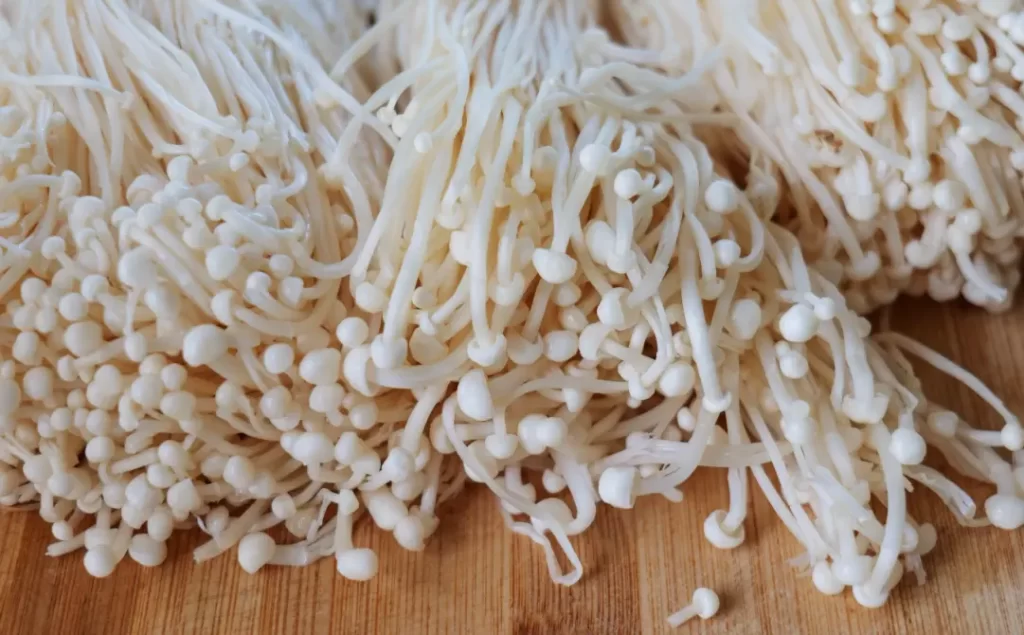
wholesale price of fresh Enoki mushrooms per kg
A common misconception is that Enoki mushrooms are a standardized commodity with a universal market price. In reality, export quotations can vary considerably because the product itself is far from uniform. Growing conditions, post-harvest handling, logistics, certification status, and packaging specifications all influence the final price offered to overseas buyers.
Professional procurement teams therefore evaluate value—not just cost.
How Seasonality Influences Export Prices
Fresh Enoki mushrooms are cultivated under carefully controlled environmental conditions, allowing year-round production in many modern facilities. However, market prices still fluctuate due to factors beyond cultivation.
These include:
- Regional energy costs
- Labor availability
- Transportation capacity
- International freight rates
- Seasonal purchasing demand
- Currency fluctuations
For buyers managing annual procurement contracts, understanding these market dynamics makes budgeting considerably more predictable than reacting to temporary price movements.
Based on our experience with export supply programs, buyers who establish long-term purchasing agreements often achieve greater pricing stability than those relying solely on spot-market quotations.
Grade, Size, Freshness, and Packaging Differences
Two suppliers may both advertise “Fresh Enoki Mushrooms,” yet the products can differ significantly in commercial value.
Important grading indicators include:
- Stem uniformity
- Cap appearance
- Color consistency
- Moisture retention
- Harvest freshness
- Mechanical damage
- Packaging performance
These characteristics directly influence shelf life after arrival, retail presentation, and processing efficiency.
For supermarket chains, visual consistency often determines consumer acceptance. Food processors, meanwhile, may prioritize stem length uniformity and moisture stability because these characteristics improve production efficiency.
The following comparison illustrates why identical products rarely exist within international wholesale markets.
| Quality Indicator | Premium Export Grade | Standard Commercial Grade | Procurement Impact |
|---|---|---|---|
| Stem Uniformity | Highly consistent | Moderate variation | Better retail presentation |
| Freshness | Harvested and rapidly cooled | Longer handling time | Extended shelf life |
| Packaging | Export-grade protective packaging | Basic cartons | Lower transport damage |
| Traceability | Full batch records | Limited documentation | Easier compliance audits |
| Expected Shelf Life | Longer under cold chain | Shorter | Reduced distribution losses |
Domestic vs Export Market Pricing
Export pricing includes considerably more than agricultural production costs.
Professional exporters invest continuously in:
- Food safety management systems
- Cold storage facilities
- Temperature-controlled logistics
- Export documentation
- Batch traceability
- Laboratory testing
- Packaging optimization
While these investments may increase the quoted price per kilogram, they often reduce the buyer’s total landed cost by minimizing spoilage, rejected shipments, and supply interruptions.
Experienced procurement managers therefore evaluate total supply-chain performance rather than comparing quotations line by line.
Why Origin Matters More Than Price Alone When Sourcing Fresh Enoki Mushrooms
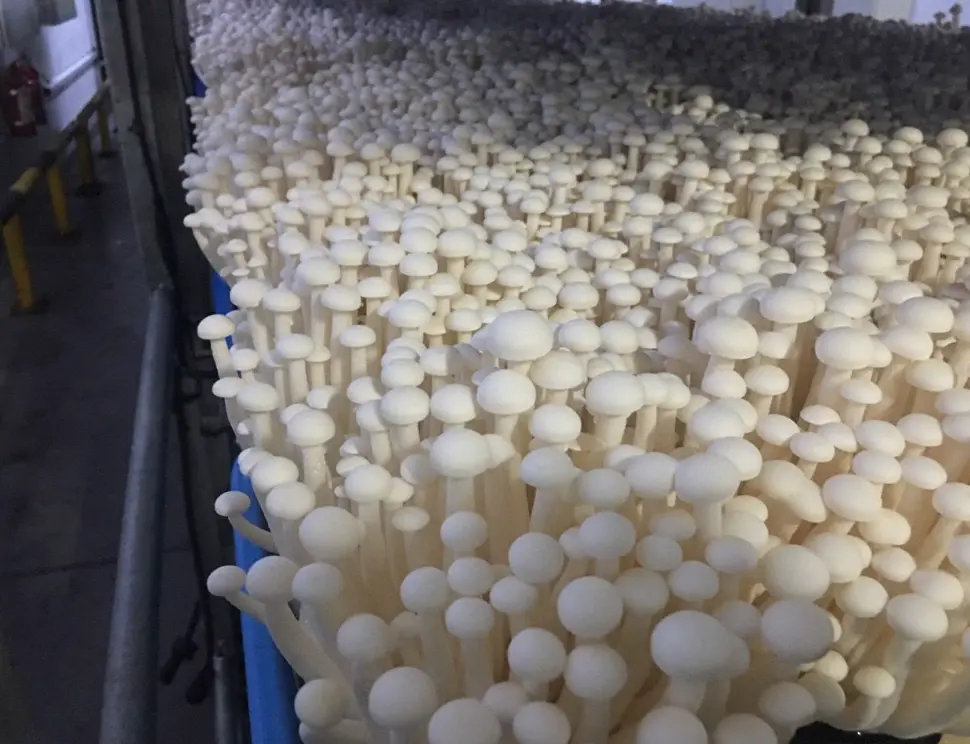
Fresh Enoki Mushrooms
Origin is frequently listed as a single line on a quotation sheet. In reality, it is one of the strongest indicators of production consistency and long-term supply capability.
Regions that have developed specialized mushroom industries over decades typically benefit from accumulated cultivation knowledge, mature supplier networks, experienced technical teams, and standardized quality management systems. These advantages cannot be replicated quickly.
For international buyers, the origin of production should therefore be viewed as a risk-management factor rather than simply a geographical description.
Climate, Cultivation Conditions, and Consistency
Unlike many field-grown vegetables, Enoki mushrooms require tightly controlled environmental conditions throughout cultivation.
Professional production facilities continuously regulate factors including:
- Temperature
- Relative humidity
- Air circulation
- Carbon dioxide concentration
- Water quality
- Hygiene management
Small deviations can influence stem length, color, texture, and shelf life.
Consistency is achieved through disciplined environmental control rather than chance. Buyers who receive uniform products month after month are ultimately benefiting from invisible production systems developed over years of operational experience.
How Professional Mushroom Regions Deliver Stable Quality
Successful mushroom-producing regions share several common characteristics.
They typically possess:
- Specialized agricultural expertise
- Mature supply-chain infrastructure
- Skilled cultivation professionals
- Reliable packaging suppliers
- Efficient cold-chain logistics
- Established export experience
These regional ecosystems improve efficiency while reducing quality variation.
According to international agricultural development research, production clusters generally demonstrate stronger quality consistency than fragmented agricultural areas because knowledge, technology, and infrastructure evolve together. This creates measurable advantages for overseas buyers seeking dependable long-term suppliers.
Professional procurement decisions therefore extend beyond comparing today’s wholesale price. They focus on selecting partners capable of maintaining identical standards across every shipment, every season, and every contract period.
Food Safety Requirements International Buyers Should Never Overlook
Price negotiations often begin with a quotation sheet. Long-term partnerships begin with confidence in food safety.
For global importers, food processors, and supermarket procurement teams, compliance is no longer a competitive advantage—it is the minimum requirement for entering regulated markets. A shipment that fails inspection can generate costs far beyond the value of the goods themselves, including customs delays, product recalls, contract penalties, and reputational damage.
Based on our experience with export-oriented mushroom supply chains, successful buyers evaluate a supplier’s quality management system before discussing annual purchasing volumes.
Meeting HACCP and ISO 22000 Standards
An effective food safety management system should cover every stage of production rather than relying solely on finished-product inspection.
Professional export facilities generally implement standardized controls covering:
- Raw material verification
- Environmental sanitation
- Personnel hygiene
- Process monitoring
- Packaging integrity
- Warehouse management
- Corrective action procedures
HACCP provides a preventive framework for identifying and controlling food safety risks, while ISO 22000 integrates these controls into a comprehensive management system recognized by international food businesses.
For multinational retailers, these certifications also simplify supplier qualification and annual compliance audits.
EU MRL Compliance and FDA Expectations
Different destination markets operate under different regulatory frameworks, yet buyers share one objective: imported food must comply with local legislation before reaching consumers.
Professional exporters should be prepared to provide supporting documentation covering:
- Pesticide residue monitoring
- Heavy metal analysis
- Microbiological examination
- Product specifications
- Batch identification
- Export inspection records
According to international food safety regulations, importers remain legally responsible for ensuring that products entering their markets meet applicable standards. Working with suppliers that maintain comprehensive quality documentation significantly reduces commercial risk.
Heavy Metal, Microbiological, and Residue Testing
Laboratory verification provides objective evidence that production controls are functioning as intended.
Testing programs commonly evaluate:
- Lead
- Cadmium
- Mercury
- Arsenic
- Total plate count
- Yeasts and molds
- Pathogenic microorganisms
- Agricultural chemical residues
Rather than viewing laboratory reports as paperwork, experienced procurement managers use them to verify consistency across multiple production batches.
Cold Chain Management: Protecting Freshness from Farm to Destination
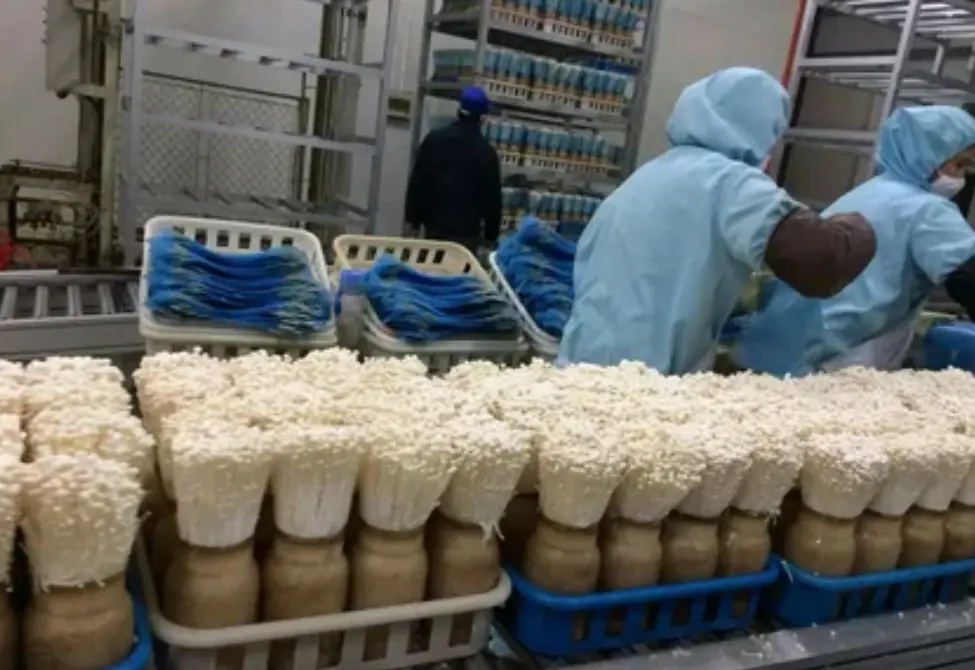
Fresh Enoki mushrooms
Fresh Enoki mushrooms remain highly sensitive after harvest. Even small temperature fluctuations during transportation can shorten shelf life, reduce product appearance, and increase waste at the distribution center.
A reliable cold chain therefore protects both product quality and procurement profitability.
Rapid Cooling After Harvest
The period immediately following harvest is one of the most critical stages in maintaining freshness.
Professional post-harvest handling focuses on:
- Rapid temperature reduction
- Moisture preservation
- Gentle handling
- Hygienic sorting
- Immediate packaging
These procedures help maintain the delicate texture and bright appearance expected by premium retail markets.
Temperature-Controlled Storage
Cold storage is more than refrigeration.
Successful exporters continuously monitor storage conditions to maintain product stability throughout inventory management and shipment preparation. Consistent environmental control helps reduce condensation, microbial growth, and premature quality deterioration.
For buyers importing large volumes, dependable storage management directly contributes to predictable shelf life after arrival.
Export Packaging Designed for Long-Distance Transportation
Packaging should protect both food safety and commercial value.
Well-designed export packaging minimizes:
- Compression damage
- Moisture loss
- Cross contamination
- Temperature fluctuations during transit
Packaging specifications should also match the buyer’s distribution model, whether supplying supermarkets, wholesalers, food-service distributors, or industrial food manufacturers.
Batch Traceability: A Critical Requirement for Modern Food Supply Chains
Traceability has become an essential component of international food trade.
Every shipment should be traceable from cultivation through harvesting, packing, storage, and export.
A robust traceability system enables buyers to:
- Verify production history
- Identify individual batches
- Respond quickly to quality investigations
- Strengthen consumer confidence
- Meet retailer audit requirements
Increasingly, global retailers expect suppliers to demonstrate complete supply-chain transparency rather than simply providing certificates.
How Professional Buyers Evaluate Fresh Enoki Mushroom Quality Before Purchasing
Experienced procurement teams rarely make purchasing decisions based solely on photographs or quotations.
Instead, they compare measurable quality indicators across multiple suppliers.
| Evaluation Criteria | Why It Matters | Buyer Benefit |
|---|---|---|
| Uniform Stem Length | Consistent retail appearance | Higher consumer acceptance |
| White, Clean Color | Indicates freshness and proper cultivation | Stronger shelf appeal |
| Firm Texture | Better transportation performance | Lower product loss |
| Moisture Balance | Maintains product quality | Extended shelf life |
| Batch Traceability | Supports quality verification | Faster compliance audits |
| HACCP/ISO Documentation | Demonstrates systematic quality control | Reduced regulatory risk |
| Cold Chain Capability | Protects freshness during export | Lower spoilage costs |
| Stable Production Capacity | Supports long-term contracts | Reliable year-round supply |
Professional procurement is ultimately a process of risk reduction. Every verified quality indicator decreases uncertainty within the supply chain.
Sustainable Cultivation Practices Increasingly Required by Global Retailers
Sustainability has evolved from a marketing concept into a procurement criterion.
Many international retailers and food manufacturers now assess suppliers according to environmental performance alongside traditional quality metrics.
Areas receiving increased attention include:
- Responsible water management
- Energy-efficient production systems
- Waste reduction initiatives
- Sustainable packaging solutions
- Responsible resource utilization
Suppliers investing in sustainable production are generally better positioned to meet future regulatory requirements and retailer expectations.
Choosing the Right Export Partner Instead of Simply the Lowest Price
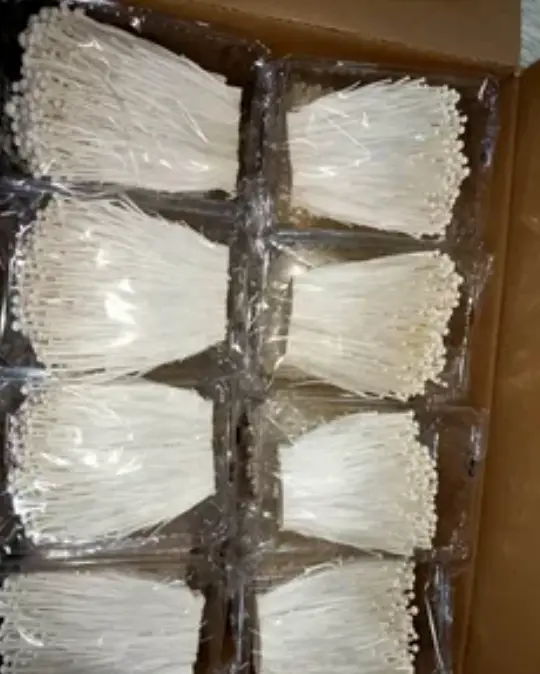
wholesale price of fresh Enoki mushrooms per kg
A competitive quotation should represent operational efficiency—not reduced quality.
The strongest export partners consistently demonstrate:
- Stable production capacity
- Transparent communication
- International compliance expertise
- Complete documentation
- Reliable delivery schedules
- Continuous quality improvement
These capabilities become increasingly valuable as procurement volumes grow.
An experienced supplier contributes to supply-chain resilience, helping buyers maintain inventory stability while reducing operational uncertainty.
Frequently Asked Questions About Wholesale Price of Fresh Enoki Mushrooms per kg
1. Why do wholesale prices of fresh Enoki mushrooms vary so significantly between suppliers?
Differences usually reflect production standards, grading consistency, food safety management, packaging specifications, cold-chain capability, order volume, and destination market requirements rather than production cost alone.
2. Which certifications should international buyers request before placing an order?
Professional buyers commonly request HACCP certification, ISO 22000 certification where applicable, product specifications, laboratory testing reports, batch traceability records, and export documentation required by their destination market.
3. How can buyers evaluate whether an Enoki mushroom supplier is suitable for long-term cooperation?
Review production capacity, quality management systems, export experience, traceability procedures, historical supply consistency, communication efficiency, and the supplier’s ability to support recurring orders throughout the year.
4. What factors have the greatest impact on shelf life during international transportation?
Harvest freshness, rapid post-harvest cooling, continuous cold-chain management, humidity control, packaging quality, and proper handling throughout logistics all contribute to preserving product quality.
5. Is the lowest wholesale price always the most economical purchasing option?
Not necessarily. Lower-priced products may generate higher overall costs through spoilage, inconsistent quality, customs delays, rejected shipments, or interrupted supply. Most experienced procurement teams evaluate total landed cost instead of purchase price alone.
Expert Verdict
The wholesale price of fresh Enoki mushrooms per kg should never be assessed as an isolated number. For international buyers, the more meaningful calculation combines product quality, verified food safety systems, traceability, cold-chain performance, and long-term supply reliability. Mushrooms suppliers capable of delivering all five consistently create measurable value that extends well beyond the invoice price—and those are the partnerships that remain competitive year after year.
Price Note
Wholesale prices for fresh Enoki mushrooms can vary according to grade, order volume, packaging specifications, destination market, season, logistics costs, and current raw-material and production conditions. Any price reference should therefore be treated as an indicative purchasing range rather than a fixed quotation. For an accurate B2B offer, buyers should confirm the required specifications, quantity, packaging, delivery terms, and destination before placing an order.
References:
FAO — Food and Agriculture Organization of the United Nations