The biggest problem with Shiitake grades A/B/C explained is that the letters themselves can create a false sense of certainty. There is no single global A/B/C grading system that every shiitake producer, exporter and importing market follows. In commercial trade, these grades generally describe physical and visual characteristics such as cap size, thickness, shape, color, defects and breakage. They should therefore be treated as commercial classifications unless the supplier provides a specific written grading standard. For a B2B buyer, the practical solution is straightforward: never approve a shipment from the words “Grade A” alone. Define the grade with measurable specifications, an approved sample, food-safety documentation and traceability.
| Buyer Check | What “Grade A” May Indicate | What the Buyer Should Verify |
|---|---|---|
| Cap appearance | More uniform and attractive | Defect tolerance and reference sample |
| Cap size | Larger or more consistent | Exact diameter range |
| Cap thickness | Fuller, meatier caps | Minimum / average thickness |
| Whole mushrooms | Higher percentage | Broken-piece tolerance |
| Color | More uniform appearance | Acceptable color range |
| Moisture | Properly dried | Contractual moisture specification |
| Origin | May be marketed as premium | Actual origin documentation |
| Food safety | Not guaranteed by grade | COA and applicable residue / contaminant tests |
That distinction matters because overseas buyers are not simply purchasing mushrooms; they are purchasing repeatable raw material. Based on our experience with international mushroom supply, disputes rarely begin with an obviously poor container. They begin when a buyer and supplier use the same term — “Grade A” — but have completely different expectations of what should arrive. A supermarket buyer may prioritize uniform caps and presentation, while a food-processing factory may care more about usable yield, aroma, moisture and price per finished kilogram. The grade has to serve the application, not the other way around.
Why Shiitake A/B/C Grades Are Not a Universal International Standard
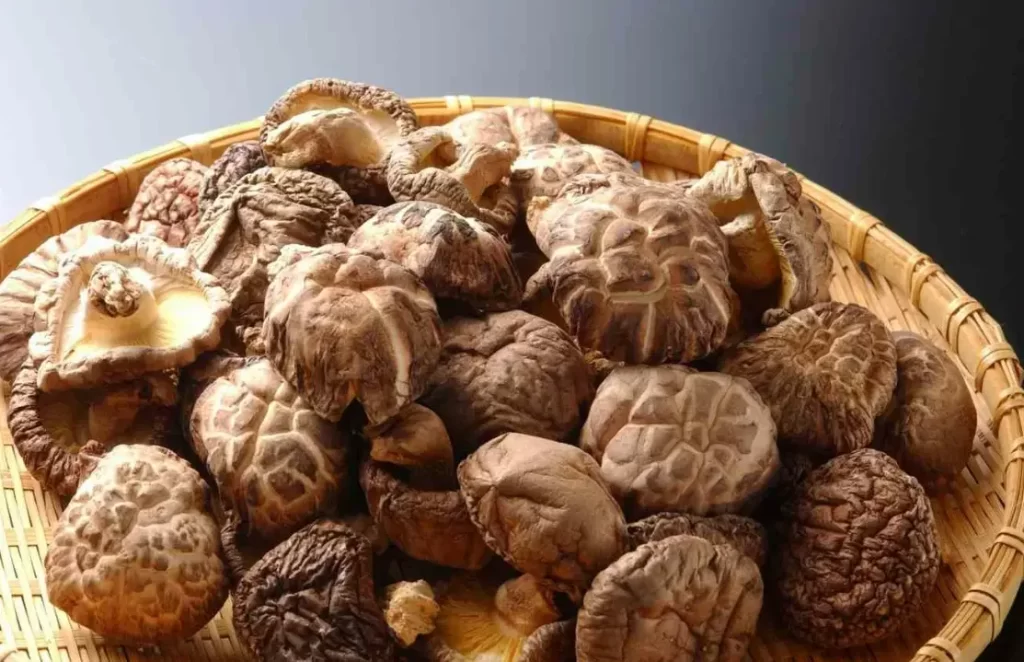
Grade A shiitake
The first question procurement teams should ask is not “Which grade is best?” but “What does this supplier mean by Grade A?”
Shiitake, scientifically known as Lentinula edodes, is traded across fresh, dried, whole, sliced and processed formats. Its commercial grading practices consequently vary according to market and application. Some systems place considerable emphasis on cap diameter and appearance; others give greater weight to thickness, shape, defects or processing characteristics. Government grading systems can also use completely different terminology. In the United States, for example, USDA mushroom standards use classifications such as U. S. No. 1 and U. S. No. 2 rather than assuming that A / B / C is a universal regulatory language.
This distinction is not academic. It directly affects purchasing contracts.
If Supplier A defines Grade A as “large, intact, thick-cap mushrooms,” while Supplier B defines Grade A simply as “premium appearance,” comparing their quotations on the grade name alone is unreliable. A lower-priced Grade A may actually contain a different size distribution, higher breakage or a shorter stem specification.
What Normally Determines Shiitake Grade?
For dried shiitake, professional grading usually combines several physical characteristics rather than relying on one measurement.
Cap Size
Cap size is the easiest factor to understand. Larger caps are often associated with premium retail or foodservice positioning, but larger does not automatically mean better for industrial processing. A processor making soup bases or mushroom seasoning may obtain better economics from smaller whole mushrooms, slices or broken pieces.
Cap Thickness
Cap thickness is another important indicator. A thick, well-developed cap can provide a stronger eating texture after rehydration and may be commercially attractive for premium applications. However, thickness should be evaluated together with moisture and drying condition; appearance alone cannot establish product performance.
Shape and Surface Condition
Shape and surface condition also influence grade. Buyers commonly inspect whether caps are well formed, whether there are excessive cracks or deformities, and whether there is visible insect damage, discoloration or other defects.
Whole-to-Broken Ratio
Whole-to-broken ratio becomes especially important once the product enters large-volume trade. A shipment can look excellent in photographs while containing a materially different percentage of broken mushrooms after transportation and handling. For this reason, the acceptable percentage of broken pieces should be written into the specification.
Aroma and Drying Quality
Aroma and drying quality deserve separate attention. Dried shiitake develops characteristic aroma compounds during processing, and research has shown that drying conditions can significantly influence volatile compounds, color, microstructure and rehydration behavior.
The practical lesson is simple: a grade is a starting point, not a complete quality specification.
Grade A vs Grade B vs Grade C: How Should Buyers Interpret Them?
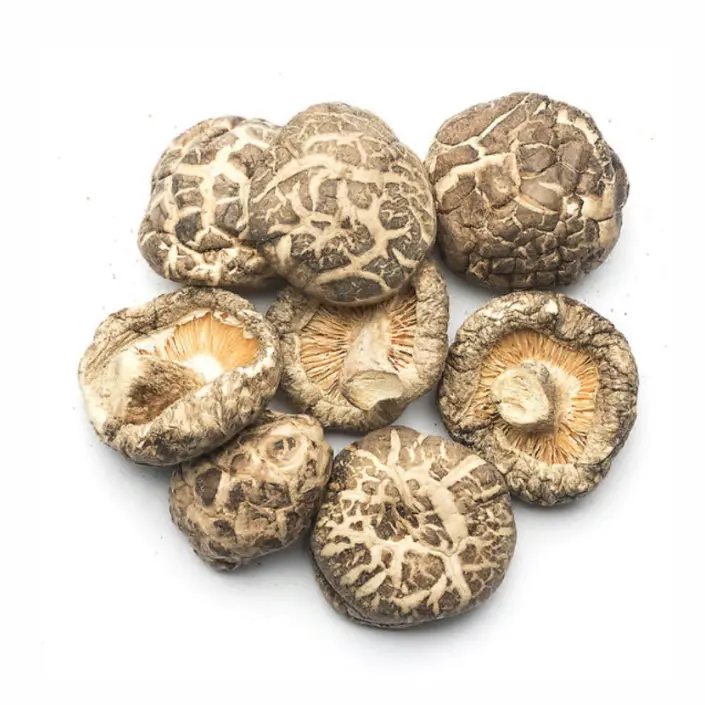
Grade B shiitake
A useful commercial framework is to think of the three grades as different quality and application positions, rather than assuming that Grade C means unsafe or inferior food.
| Commercial Factor | Grade A | Grade B | Grade C |
|---|---|---|---|
| Visual uniformity | High | Moderate | Lower |
| Cap appearance | More consistent | Standard commercial appearance | Greater variation |
| Size consistency | High | Medium | Lower |
| Cap thickness | Typically more developed | Moderate | More variable |
| Defect tolerance | Low | Moderate | Higher |
| Whole mushroom ratio | Generally higher | Standard | More broken / irregular pieces may be accepted |
| Retail presentation | Excellent fit | Possible | Usually less suitable |
| Restaurant / foodservice | Premium positioning | Strong fit | Application dependent |
| Food processing | Suitable but may cost more | Often economical | Often highly cost-efficient |
| Price positioning | Premium | Mid-range | Value-oriented |
Grade A is generally the most suitable choice when appearance and consistency have a direct commercial value. Supermarket private-label products, premium Asian-food distribution and high-end restaurant supply may justify paying more for uniform caps, low defect rates and attractive presentation.
Grade B can be the more rational choice for many foodservice and wholesale applications. If the end customer does not pay a premium for visual uniformity, moving from B to A may add cost without creating proportional value.
Grade C should not automatically be interpreted as poor-quality or unsafe material. Depending on the supplier specification, it may be better suited to slicing, soup bases, sauces, seasoning, mushroom powder or other ingredient applications where appearance is secondary to usable material, aroma and cost efficiency.
The critical point for importers is that commercial grade and food safety are two separate control systems. A Grade A mushroom is not automatically pesticide-compliant, organic, low in heavy metals or microbiologically acceptable. Those claims require appropriate evidence.
For that reason, a serious purchasing specification should combine the commercial grade with measurable requirements such as cap diameter, thickness, moisture, defect tolerance, foreign matter, packaging and batch identification.
Why Origin Can Matter as Much as Grade
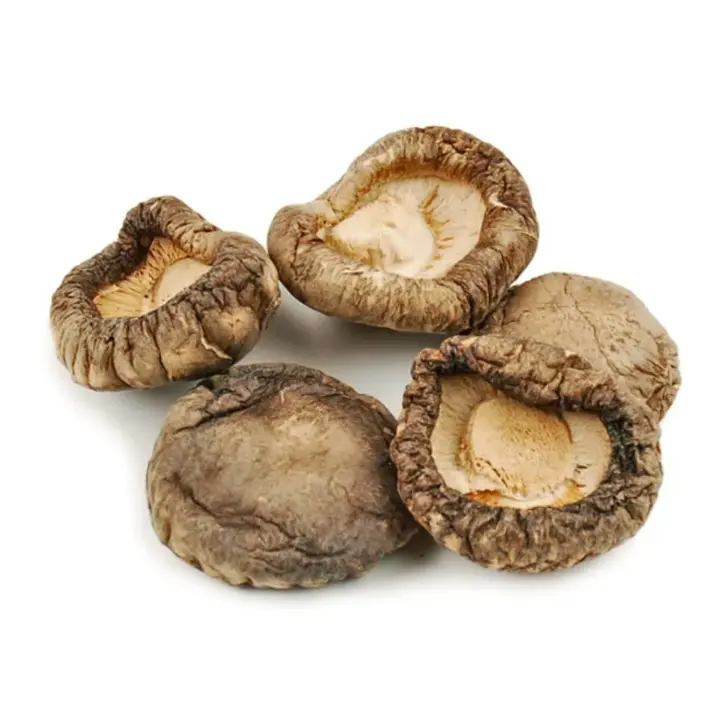
Grade C shiitake
There is another issue often overlooked in generic shiitake grading articles: the grade letter does not prove geographic origin.
“Chinese dried shiitake” is a broad country-of-origin description. Qingyuan-origin shiitake has a more specific geographical identity. Qingyuan in Zhejiang has a long-established shiitake cultivation tradition, and Qingyuan Xiang Gu is associated with China’s geographical-indication protection framework. China’s official standards database lists GB / T 19087-2008, Geographical Indication Product — Qingyuan Xiang Gu, providing an important reference point for buyers researching origin claims.
For a premium B2B product, that distinction matters. If a supplier presents a mushroom as Qingyuan-origin, procurement teams should ask what documentation supports the claim rather than relying solely on wording on a quotation or product page.
For Jiangyuan Mushroom, this origin question is particularly relevant because our supply-chain positioning begins in Qingyuan, one of China’s historic shiitake-producing regions, rather than treating origin as a marketing detail added after processing. Raw-material sourcing, sorting, grading, drying, inspection and packaging need to remain connected through traceability.
And that leads to the next issue buyers should examine: how processing — especially sun drying versus controlled mechanical drying — changes the characteristics they are actually paying for.
How Drying Method, Food Safety and Origin Affect Shiitake Grade
The visible grade of a dried shiitake mushroom is only part of the purchasing equation. Two batches can both be sold as Grade A while performing differently after rehydration because their raw materials, drying conditions, moisture control and sorting standards are different. For importers, the practical question is therefore not simply whether the mushroom looks premium, but whether the quality can be reproduced from batch to batch.
Sun-Dried vs Machine-Dried Shiitake: What Changes?
Traditional sun drying has long been associated with shiitake production in Qingyuan. Natural drying can contribute to the characteristic aroma profile of dried mushrooms, but it also depends on weather, drying time and environmental conditions. Controlled mechanical drying, by comparison, gives processors much tighter control over temperature, airflow and final moisture.
Neither method should automatically be described as “better.” The right question is whether the process produces the required specification consistently.
| Quality Factor | Sun-Dried Shiitake | Controlled Machine-Dried Shiitake | B2B Buying Consideration |
|---|---|---|---|
| Aroma | Traditional, potentially pronounced | More process-controlled | Match aroma profile to end use |
| Moisture consistency | More dependent on conditions | Easier to standardize | Important for storage and shipping |
| Color consistency | Can vary naturally | More controllable | Relevant to retail presentation |
| Production capacity | Weather dependent | More scalable | Important for annual contracts |
| Process repeatability | Variable if conditions change | Higher | Critical for private label |
| Environmental exposure | Greater | More controlled | Requires appropriate hygiene controls |
| Batch specification | Needs careful inspection | Easier to standardize | Always request a written specification |
Research on shiitake drying has shown that processing conditions can affect volatile compounds, aroma, color and rehydration characteristics. That means “dried shiitake” is not a sufficiently detailed purchasing description for a large commercial order.
Based on our experience with export supply, the safest approach is to specify the finished product, not simply the drying technology. A buyer may prefer a traditional aroma profile for premium retail products, while a food manufacturer may place greater value on predictable moisture and consistent processing performance.
Moisture Is a Specification, Not a Grade
Moisture deserves particular attention because it affects shelf stability, packaging, transportation and product consistency. A buyer may use less than 13% moisture as a commercial target for a particular dried shiitake specification, but it should not be presented as a universal legal threshold for every market or product.
The contract should instead identify:
- target moisture level;
- permitted tolerance;
- testing method;
- sampling procedure;
- packaging requirement;
- storage conditions.
A supplier that can provide a consistent moisture specification and batch-level test record gives an importer substantially more useful information than the simple statement “Grade A.”
Food Safety: Why Grade A Does Not Mean Export-Ready
The second major mistake in shiitake procurement is treating commercial appearance as evidence of food safety.
A Grade A mushroom can have excellent cap shape, thickness and color while still requiring appropriate testing for pesticide residues, heavy metals, microbiological parameters and other applicable contaminants. Food-safety compliance operates independently from commercial grading.
For European buyers, contaminant requirements should be checked against the applicable EU legislation and product category. Regulation (EU) 2023 / 915 establishes maximum levels for certain contaminants in food and specifically includes cultivated fungi within its framework.
For U. S. buyers, FDA makes clear that imported food must meet U. S. requirements and that imported products can be inspected or detained when requirements are not met.
This is why a serious wholesale inquiry should request a COA (Certificate of Analysis) and clarify which laboratory methods and limits apply to the destination market.
A Practical Quality-Assurance Framework for Importers
| Control Point | What to Request | Why It Matters |
|---|---|---|
| Product identity | Lentinula edodes + product form | Prevents specification ambiguity |
| Grade | Supplier’s written A / B / C definition | Makes quotations comparable |
| Physical quality | Size, thickness, color, defects | Controls commercial consistency |
| Moisture | Target + tolerance + test method | Supports storage stability |
| Pesticide residues | Recent laboratory report | Supports destination-market compliance |
| Heavy metals | Applicable test report | Addresses contaminant risk |
| Microbiology | Relevant microbiological testing | Supports food-safety assessment |
| Traceability | Batch / lot identification | Enables investigation and recall |
| Drying method | Declared process | Explains product characteristics |
| Origin | Documentation supporting origin claim | Protects premium positioning |
| Packaging | Material, weight and format | Reduces logistics and shelf-life risk |
| COA | Batch-linked documentation | Connects testing with actual shipment |
For a professional buyer, this table is more useful than a generic “Grade A = premium” ranking. It converts a subjective label into a measurable procurement system.
Why Qingyuan Origin Matters in Premium Shiitake Procurement
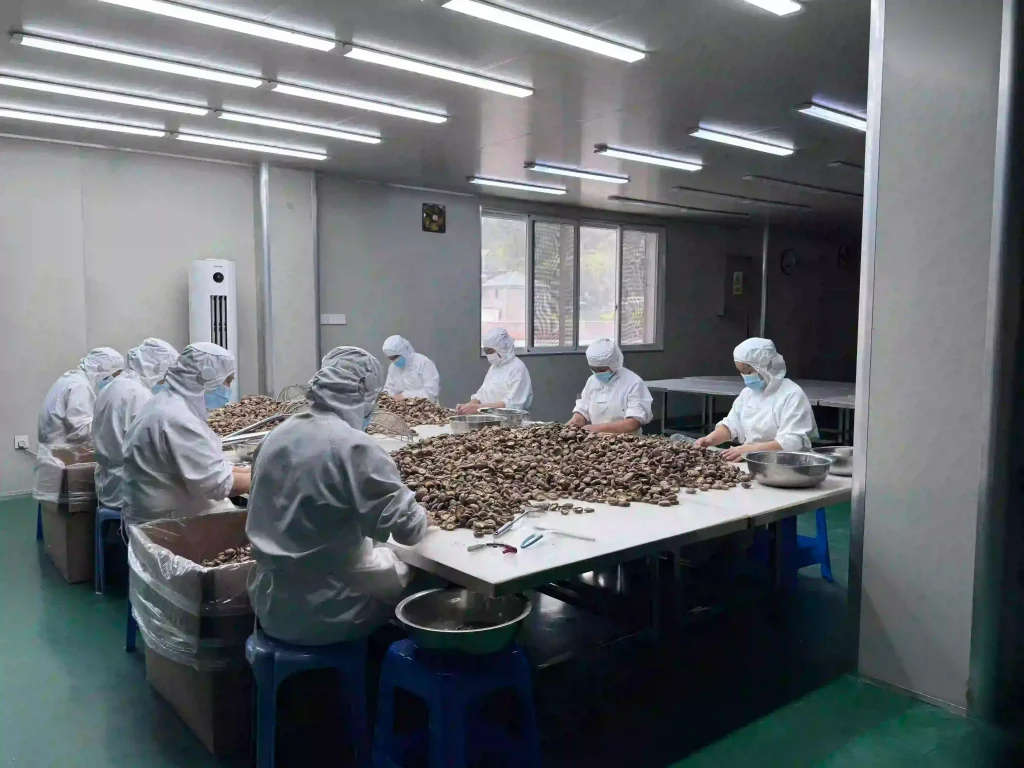
Wholesale Dried Mushrooms from China
Origin becomes commercially important when buyers are selling not just an ingredient, but a product with a story of authenticity and provenance.
Qingyuan has a long history of shiitake cultivation, and Qingyuan Xiang Gu is covered by China’s geographical-indication framework. China’s official standards database lists GB / T 19087-2008 Geographical Indication Product — Qingyuan Xiang Gu.
That does not mean every mushroom described as “Chinese shiitake” qualifies as Qingyuan-origin product. Buyers should distinguish:
- Country of origin: China
- Production region: Qingyuan, Zhejiang
- Geographical-indication claim: subject to the applicable GI requirements and supporting documentation
This distinction is especially relevant for supermarket chains, premium Asian-food distributors and brands using origin as part of their product positioning.
At Jiangyuan Mushroom, our Qingyuan location is integrated into a broader supply chain covering raw-material selection, cleaning and sorting, grading, drying, quality inspection, packaging and export. The commercial advantage is not simply geographical. It is the ability to connect origin, processing and traceability rather than treating each as a separate claim.
How to Choose Grade A, B or C for Different Applications
A higher grade is not automatically the most economical grade.
For supermarket and private-label retail, Grade A is usually the strongest fit when visual consistency, cap appearance and premium positioning influence the selling price.
For restaurants and foodservice, Grade B can provide a better balance between appearance, aroma, usable material and purchase cost. If mushrooms are sliced before cooking, paying a substantial premium for perfect whole caps may have limited value.
For food-processing factories, Grade B or C can often make more commercial sense, particularly when the material will be sliced, diced, powdered or incorporated into soup bases, sauces or seasoning.
For functional-food and ingredient developers, visual grade should be secondary to traceability, analytical testing, batch consistency and the specific characteristics required by the formulation.
The right question is therefore:
Which grade delivers the lowest cost per usable kilogram for my application?
That is a much more useful purchasing metric than simply asking for the cheapest Grade A.
5 FAQ Questions Global Shiitake Buyers Should Ask
Is Grade A shiitake always better than Grade B?
No. Grade A generally offers stronger visual consistency and premium presentation, but Grade B can deliver better economics for foodservice and processing applications. The optimal grade depends on the final use.
What is the difference between Grade A and Grade B dried shiitake?
The difference normally relates to commercial characteristics such as cap appearance, size consistency, thickness, defects and breakage. Because suppliers can define grades differently, buyers should always request the supplier’s written grading specification.
Is Grade C shiitake safe to eat?
Grade C is a commercial quality classification, not a food-safety classification. A lower visual grade can still be suitable for food production when it meets applicable food-safety and contaminant requirements.
What should I test when importing dried shiitake from China?
At minimum, buyers should establish the applicable requirements for pesticide residues, heavy metals, microbiological parameters, moisture and other relevant contaminants, together with a batch-linked COA and traceability documentation.
How can I verify whether shiitake is genuinely from Qingyuan?
Do not rely solely on the product name. Request documentation supporting production origin and, where a geographical-indication claim is made, verify that the product and supplier meet the applicable GI requirements.
Expert Verdict
Do not buy a grade letter. Buy a specification.
For global B2B buyers, the strongest shiitake purchasing model combines defined A / B / C criteria, controlled drying, measurable moisture, food-safety testing, documented Qingyuan origin and batch traceability. Grade A may be the right choice for premium retail, but Grade B or C can be the smarter commercial decision for processing.
For Jiangyuan Mushroom, that is the standard we recommend: origin you can verify, quality you can measure, and supply you can repeat.
Price Note
Prices for dried shiitake can vary according to grade, cap size, thickness, moisture specification, drying method, origin, packaging, order volume, seasonal raw-material conditions and destination-market requirements. Any price mentioned in connection with this product should therefore be treated as a reference rather than a fixed quotation. Buyers are encouraged to confirm the latest specification, availability, packaging requirements and final price with the supplier before placing an order.
References:
Cornell University — Shiitake Storage & Preservation
Penn State University — Production Technology: Lentinula edodes