Few commercial ingredients cause as much operational frustration for quality assurance managers as dehydrated edible fungi. You issue a purchase order for premium Grade-A mushrooms, verify an initial bench sample, and book the container. Six weeks later, ocean freight arrives at your processing facility with brittle caps that crumble into your slicing machinery, uneven moisture levels that trigger localized mold blooms, or worse — a border detention notice from customs citing trace sulfur dioxide or elevated cadmium. In the fast-moving food manufacturing sector, a single contaminated shipment does not just cause logistical headaches; it halts production lines, invalidates clean-label marketing claims, and incurs costly port demurrage fees.
The root of this problem lies in the fragmented nature of the wholesale mushroom trade. Most global buyers inadvertently purchase through export consolidators and secondary brokers who source from unregulated wholesale markets, mixing diverse regional harvests into a single homogenized lot. At Zhejiang Jiangyuan Mushroom, we have spent the last 28 years proving that there is an entirely different way to run an agricultural supply chain. Situated in the ecological heart of Qingyuan, our team tackles these supply vulnerabilities through end-to-end operational control: from selecting sterile fungal spawn strains and enforcing strict hardwood log substrate standards, to operating continuous thermodynamic dehydration lines. When sourcing a Qingyuan dried shiitake wholesale program, food brands must partner with a primary manufacturer that treats edible fungi not as an untamed field crop, but as an engineered, high-precision food ingredient.
The Raw Material Standard: Agronomy, Cellular Architecture, and Material Design
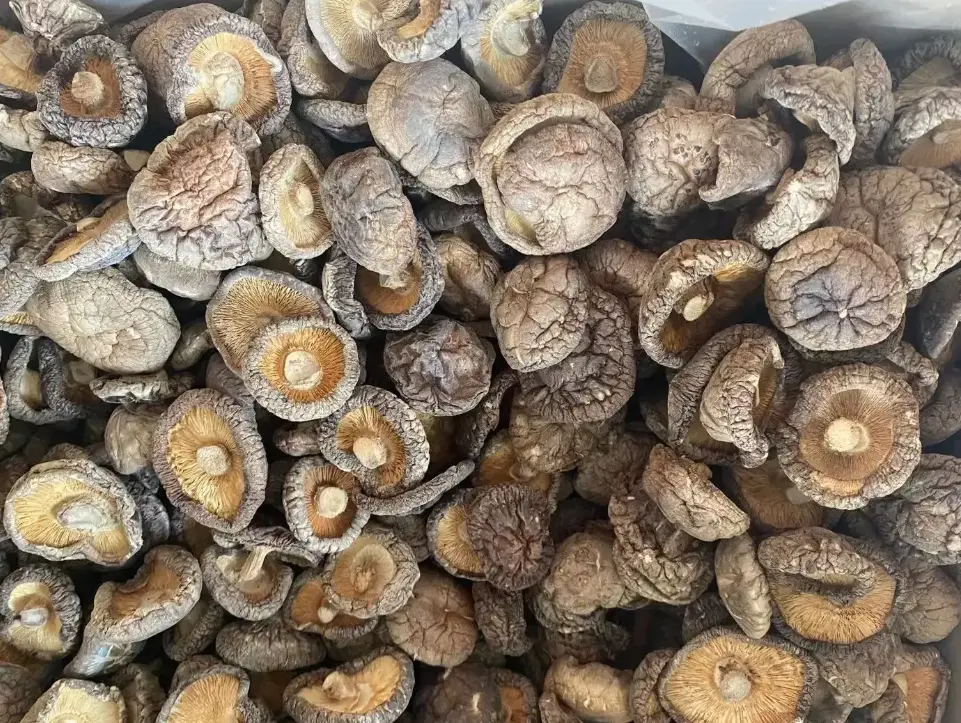
Qingyuan dried shiitake wholesale
Every seasoned food technologist understands that the functional performance of a dried mushroom inside an automated manufacturing line depends on its cellular architecture. If the raw harvest possesses weak cellular walls, high free-water ratios, and loose hymenium gill structures, no amount of sophisticated dehydration can yield a shelf-stable, structurally sound ingredient.
The Supply Chain Journey Starts Deep Within the Substrate Chemistry
- Broadleaf Hardwood Substrates: Utilizing certified Quercus and Castanopsis timbers.
- Slow Alpine Growth Cycle: Cold montane temperatures drive dense beta-glucan synthesis.
- Interlocked Hyphal Matrix: Yields high mechanical shear strength for slicing and a predictable 1:6 rehydration ratio.
True industrial-grade shiitake (Lentinula edodes) requires strict agricultural design before spores ever touch the growing medium. The density of the pileus (cap) is determined primarily by the carbon-to-nitrogen ratio of the substrate and the ambient temperature gradient during the fruiting phase. While low-cost commercial producers utilize fast-fruiting substrates packed with non-verified agricultural waste, compressed straw, or softwoods, authentic Qingyuan cultivation relies strictly on native broadleaf hardwood sawdust, predominantly sourced from monitored Castanopsis and Quercus timbers. These dense hardwoods break down slowly, releasing lignocellulose complexes that compel the mycelium to build thick, reinforced cell walls rich in cross-linked chitin and beta-(1,3)-(1,6)-glucans.
Furthermore, structural integrity is directly governed by growth velocity. In the high-altitude microclimates of Qingyuan, cool ambient night temperatures naturally retard mycelial expansion, prolonging the maturation cycle to nearly double that of low-altitude hothouses. This slow development forces the fungal hyphae to knit together tightly. For an industrial processor running high-speed mechanical dicers or commercial retorts, this compact cellular matrix delivers critical physical advantages:
Exceptional Shear Strength
Caps do not fracture into unwanted fines during automated mechanical cutting or dry spice mixing.
Controlled Fluid Uptake
Cells reabsorb moisture evenly without bursting, preventing mushy or stringy textures in canned, frozen, or retort-packaged ready meals.
Aroma Synthesis
Extended maturation allows the precursor lentinic acid to concentrate in the gill tissues, creating high yields of volatile lenthionine once cooked.
Why Partner With Jiangyuan? 28 Years of Industrial Scalability and Direct-Source Control
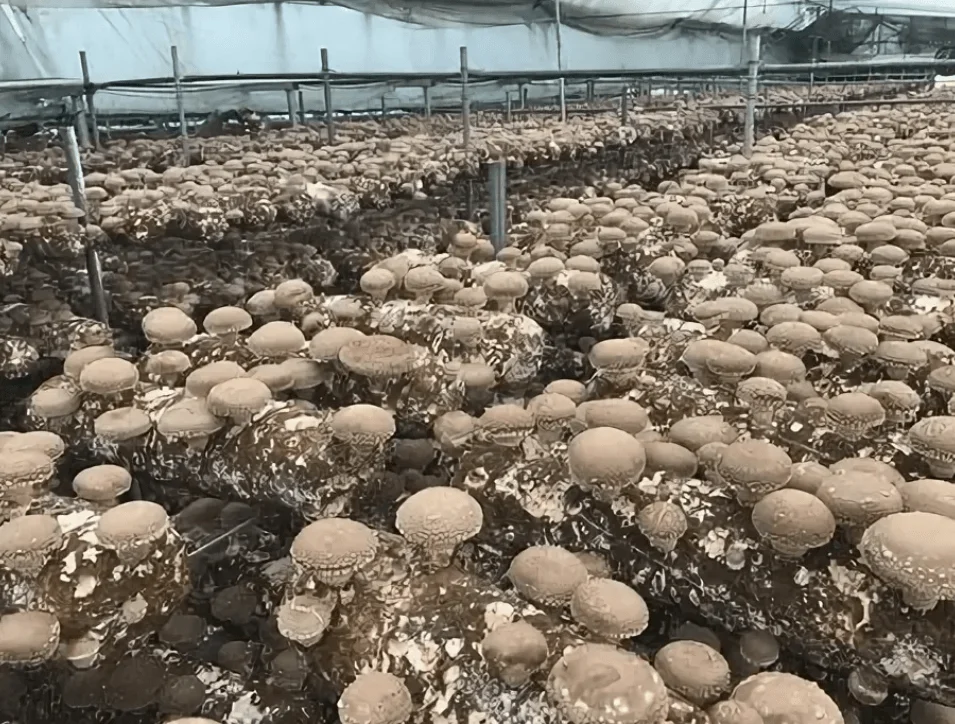
father of shiitake cultivation
Global food processors and multinational restaurant chains do not just buy commodities; they purchase supply chain reliability. For nearly three decades, Jiangyuan Mushroom has operated from Qingyuan with a straightforward mission: eliminate the multi-tier broker system and bring direct-factory transparency to international markets.
Our operational model is built around vertical integration. Founded in 1996, we scaled our business alongside the formalization of international food safety standards. While trading companies rely on fluctuating spot markets to piece together export orders, Jiangyuan commands over 28 years of agricultural expertise, operating our own spawn incubation laboratories, managed forest cultivation plots, automated dehydration complexes, and finished-goods packaging facilities. This closed loop solves the three major challenges in fungal procurement: batch-to-batch inconsistency, seasonal price spikes, and opaque traceability.
Our Vertically Integrated Production Pathway Follows Four Monitored Phases
- In-House Spawn Laboratory: Guaranteed strain purity and contamination-free mycelium generation.
- Regulated Hardwood Bases: Monitored soil, mountain spring water, and zero agro-chemical inputs.
- Automated Drying Facilities: Multi-stage thermodynamic curves locking water activity below 0.55.
- Direct Export Terminal: Full lot traceability, export health certifications, and batch-specific lab testing.
By owning the source, we protect our international partners from the predatory price shifts that typically follow regional crop shortages. When unseasonal rains or temperature spikes disrupt open-market supplies, our long-term inventory reserves and controlled drying capacity keep contracted delivery schedules and container pricing entirely stable. We are an industrial partner who speaks the language of procurement managers, plant quality engineers, and international logistics teams.
Origin Fraud and Counterfeit Blends: Protecting Your Brand from Counterfeit Stock
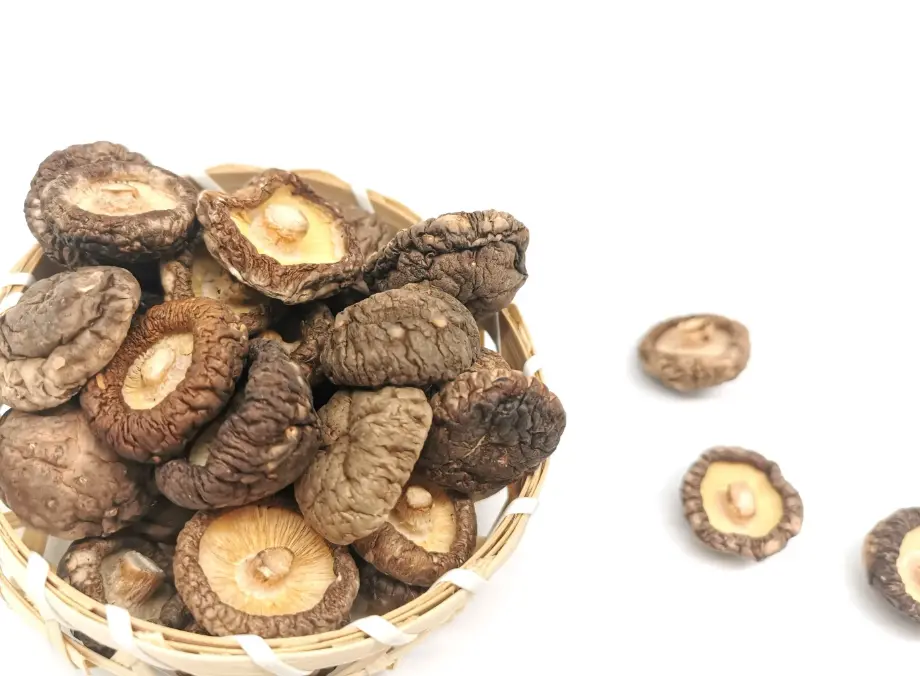
Qingyuan shiitake mushrooms
Procurement professionals pay a market premium for Qingyuan-labeled shiitake for a good reason: the region is globally recognized for superior quality. The United Nations Food and Agriculture Organization (FAO) recognized Qingyuan’s Forest-Mushroom Co-culture System as a Globally Important Agricultural Heritage System (GIAHS), validating centuries of ecological synergy between broadleaf mountain canopies and fungal cultivation. Furthermore, the region holds formal Geographical Indication (GI) status, certifying that its environmental conditions produce a chemically and physically distinct product.
Unfortunately, high market demand invites deceptive practices across the wholesale trade. Unscrupulous suppliers frequently engage in origin blending. Brokers buy cheap, thin-capped, moisture-heavy mushrooms from low-altitude operations, ship them to regional transit hubs, blend them with a minor percentage of genuine Qingyuan stock, and forge bills of lading to claim authentic origin.
According to notifications cataloged by the European Rapid Alert System for Food and Feed (RASFF), imported specialty mushrooms face regular alerts for undeclared chemical treatments, mislabeled provenance, and unapproved preservatives used to mask freshness issues during long transit times.
When your procurement department unknowingly sources these blended lots, your food operations absorb the collateral damage: erratic cooking times, variable nutritional profiles, and serious brand vulnerabilities if origin-specific packaging claims are audited by regulatory authorities.
Origin Authenticity and Technical Integrity Matrix
| Evaluation Criterion | Authentic Qingyuan GI Standard (Jiangyuan Closed Loop) | Secondary Market Aggregation (Broker/Reseller Network) | Analytical Verification Protocol |
|---|---|---|---|
| Origin Verification | Single-origin: Registered forest plots in Qingyuan County, Zhejiang | Multi-provincial wholesale market aggregation (untraced farms) | China Customs (GACC) Processing Registration & GPS Farm Mapping |
| Substrate Integrity | Certified broadleaf hardwoods (Fagaceae); zero industrial wood waste | Mixed timber, agricultural biomass, unregulated local residues | ICP-MS Heavy Metal Substrate Screening (Pb, Cd, As, Hg) |
| Growth Period | 120 to 150 days of slow, alpine forest maturation | 60 to 75 days of accelerated, heat-forced hothouse cycling | Hyphal density microscopy & structural shear-force testing |
| Pileus Profile | Thick, tightly curled margins; deeply fissured natural crackling | Flat, paper-thin caps; widely flared, loose, delicate gills | Digital micrometer margin gauge; visual grade sorting |
| Preservation Profile | Pure thermodynamic heat extraction; zero sulfites, non-irradiated | Chemical fumigation (SO₂) to prevent transit rot and whiten gills | Monier-Williams distillation method; zero tolerance (< 5.0 ppm) |
| Traceability Granularity | Lot-specific: Traces from packed shipping carton back to inoculation date | Mixed aggregation: Pooled wholesale inventory with no field-level origin | Fully digitized ERP lot tracking system |
The Dehydration Myth: Why “Traditional Sun-Dried” Is an Industrial Food Safety Hazard
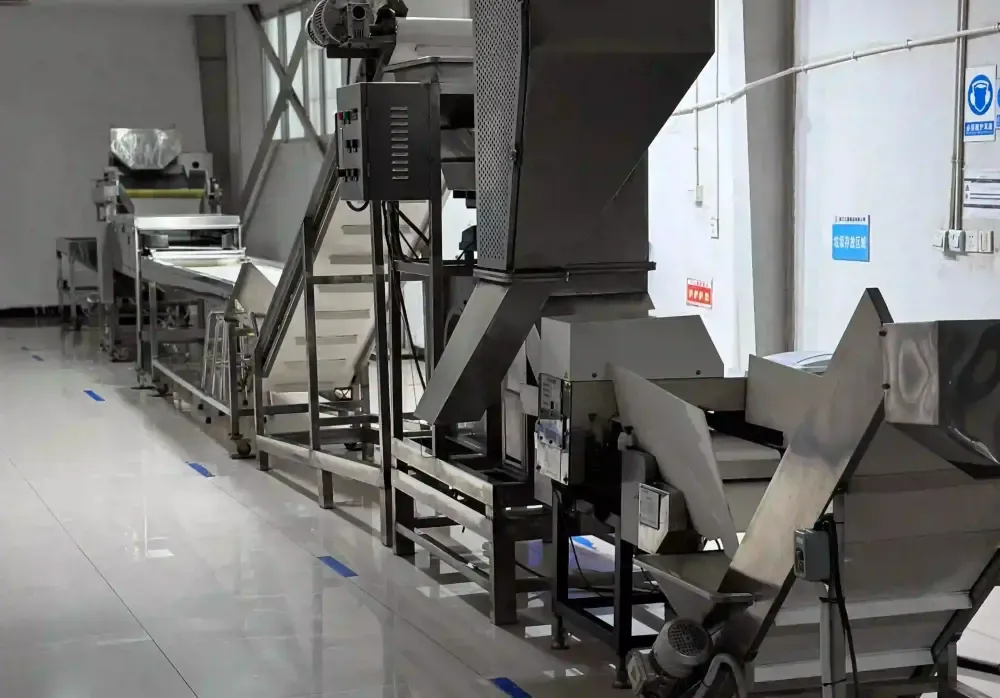
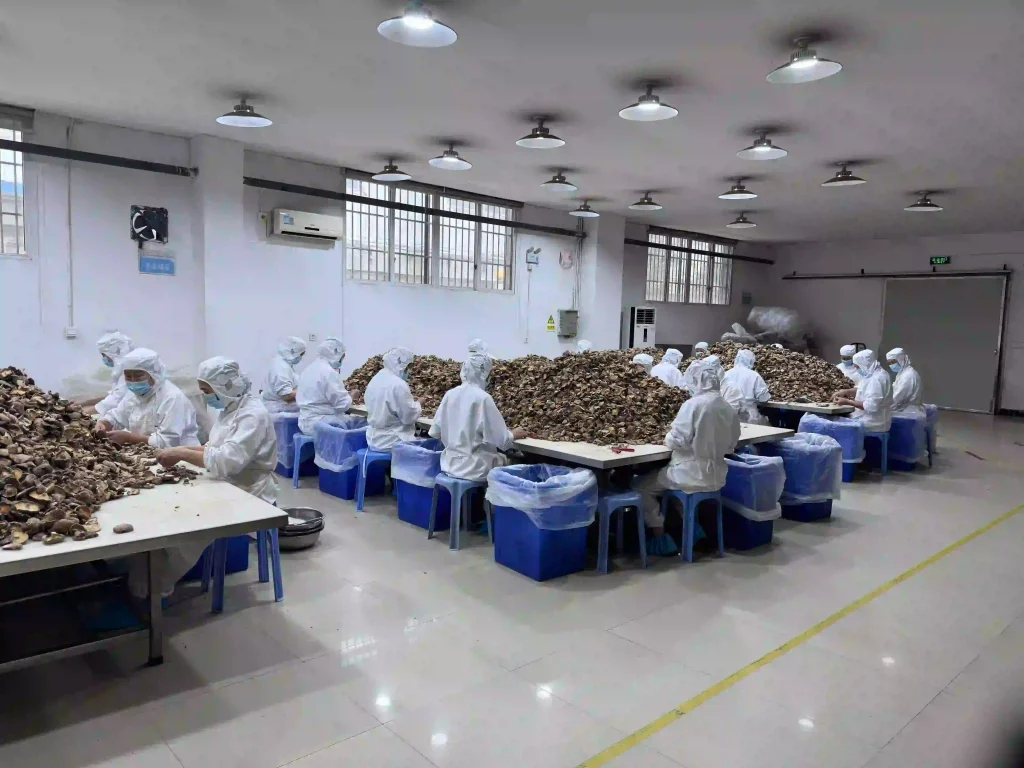
Controlled processing environment
A persistent trope in retail culinary marketing suggests that traditional sun-dried mushrooms represent the pinnacle of artisanal processing. For an industrial food technologist, open-air sun-drying represents a critical control failure.
Open-air solar drying leaves wet mushrooms defenseless against environmental contaminants. Windborne dust, industrial exhaust particulates, wild bird droppings, insect activity, and outdoor mold spores inevitably settle onto the damp, nutrient-rich gill tissues. Furthermore, sun-drying is entirely dependent on ambient weather. If cloud cover rolls in or relative humidity rises, moisture evaporation stalls. Under these slow, uncontrolled conditions, internal enzymatic decomposition begins, destroying the mushroom’s structural integrity while aerobic plate counts (APC) skyrocket.
From a food physics perspective, sun-drying fails to properly balance moisture hysteresis and water sorption isotherms. When surface water evaporates too quickly in direct, uncirculated heat, the outer layers suffer from case-hardening. This forms a tough, leathery exterior skin that traps residual moisture deep within the core cap tissue. While the mushroom may appear dry to the touch, this trapped interior water eventually migrates outward inside sealed shipping containers, creating localized condensation, pushing water activity above 0.65, and triggering fungal re-growth during oceanic transit.
Jiangyuan eliminates this risk by using fully enclosed, multi-stage thermodynamic heat-pump dehydration tunnels. Rather than applying crude, high-heat blasts that cook the mushrooms and destroy delicate umami compounds, our drying curves are digitally modulated:
Stage 1: Low-Temperature Surface De-Watering (35°C to 40°C)
Air velocity and exhaust rates are maximized to sweep away free surface water, preventing enzymatic browning and case-hardening.
Stage 2: Core Moisture Evacuation (45°C to 52°C)
Capillary channels remain naturally open as internal moisture migrates steadily to the surface, maintaining structural dimensions and preventing tissue collapse.
Stage 3: Aroma Development and Enzymatic Lock (58°C to 62°C)
Controlled thermal finishing activates endo-enzymes that convert native lentinic acid into flavorful lenthionine, fixing water activity strictly below 0.55.
Industrial Grading and Mechanical Sizing Specifications
| Industrial Grade Designation | Cap Diameter Range | Cap Thickness Target | Moisture Threshold | Target Water Activity (aw) | Rehydration Ratio (Weight Multiplier) | Ideal Industrial Food Applications |
|---|---|---|---|---|---|---|
| Super Grade Flower (Huagu) | 30-50 mm (Graded) | 15.0 mm or greater | 12.0% or less | Less than 0.53 | 1:6.5 (Complete structural recovery) | High-end retail packaging, premium food service, visual presentation dishes |
| Select Thick Cap (Donko) | 40-60 mm | 10.0-14.0 mm | 12.5% or less | Less than 0.55 | 1:6.0 (Firm, meat-like bite) | Retort pouch meals, canned gourmet entrées, frozen bowl kits |
| Industrial Slices (Machine Cut) | Width: 4.0-6.0 mm | Natural cross-section | 11.5% or less | Less than 0.50 | 1:5.0 (Fast moisture uptake) | Dry soup envelopes, instant noodle inclusions, plant-based meat analogs |
| Milled Granules/Cut Stems | Custom: 10-40 Mesh | Particulate | 10.0% or less | Less than 0.48 | Instant absorption (< 8 mins) | Natural 5′-GMP umami broth bases, seasoning rubs, nutraceutical extraction |
Real-World Application: How a European Manufacturer Restructured Its Specialty Supply Chain
reliable mushroom manufacturer
A major Continental European manufacturer of premium dehydrated soup and meal kits was battling a persistent supply crisis. The company, which processes more than 40 metric tons of sliced dried mushrooms annually, was buying its materials through a regional European distributor who sourced pooled lots from assorted Chinese trading agents.
The consequences of this multi-tiered supply chain hit their production facility on three fronts:
Customs Delays
Two out of every five containers experienced border holds at the Port of Rotterdam due to inconsistent cadmium readouts fluctuating between 0.85 mg/kg and 1.40 mg/kg, flirting dangerously with European Union regulatory boundaries.
High Line Wastage
Sliced shiitake shipments suffered from significant thickness variations (2.0 mm to 9.0 mm in the same bag), alongside a high ratio of broken fines (exceeding 12%). Automated packaging equipment continually clogged, and rehydration rates within consumer soup packets were inconsistent.
Microbial Instability
The manufacturer frequently measured moisture levels exceeding 14.5% on arrival, resulting in shortened ambient shelf life and off-odors during storage.
The manufacturer bypassed the intermediary network entirely and initiated a direct technical audit with Jiangyuan Mushroom. Our food safety team implemented a three-point operational solution:
Substrate-Controlled Inoculation
We allocated dedicated forest plots in Qingyuan, grown exclusively on analyzed broadleaf timber substrates with low natural mineral affinity, stabilizing cadmium levels well below 0.30 mg/kg.
Precision Mechanical Slicing
Rather than hand-slicing variable stock, dehydrated caps were calibrated through our optical sorting and continuous slicing lines, holding thicknesses to 5.0 mm (+/- 0.5 mm) and reducing packaging fines to under 2.0%.
Targeted Low-Moisture Profiles
We adjusted our final thermodynamic stage to deliver a guaranteed moisture ceiling of 11.5% (water activity below 0.50), safely packed in high-barrier multi-layer poly liners.
Over the past four years of continuous commercial supply, our shipments have cleared EU customs without a single port detention. Processing line efficiency jumped by 14%, and overall ingredient waste dropped to near zero.
Quality Assurance Infrastructure: Heavy Metals, Pesticides, and Cross-Border Standards
For an enterprise procurement officer, ensuring food safety compliance is not a philosophical exercise — it is a non-negotiable legal and financial requirement. Because fungi naturally absorb minerals from their surroundings, clean harvesting requires relentless analytical vigilance across every single production run.
Our Quality Gating Architecture Operates Across Four Decisive Phases
- Phase 1: Raw Substrate Screening. Heavy metal screening (Cd, Pb, As) via ICP-MS prior to spawn inoculation.
- Phase 2: Post-Harvest Screening. Screening against a 500+ pesticide residue panel via LC-MS/MS prior to dehydration.
- Phase 3: Dried Bulk Processing. Digital moisture and water activity validation prior to sealed packaging.
- Phase 4: Pre-Shipment Release. Third-party multi-element Certificate of Analysis (SGS/Eurofins) verifying batch compliance.
At Jiangyuan, our internal quality protocols are built to exceed the world’s most demanding import standards. We do not rely on random sampling; our quality management follows strict Hazard Analysis Critical Control Point (HACCP) principles. Heavy metals are tested via Inductively Coupled Plasma Mass Spectrometry (ICP-MS), capable of isolating trace heavy metals down to parts-per-billion (ppb). Concurrently, finished lots are screened against an extensive multi-residue pesticide panel using both Liquid Chromatography-Tandem Mass Spectrometry (LC-MS/MS) and Gas Chromatography-Tandem Mass Spectrometry (GC-MS/MS). When our containers arrive at international entry ports, every pallet is backed by verified laboratory data.
Global Chemical Thresholds vs. Jiangyuan Internal Release Limits
| Analyte/Contaminant | European Union Standards (Reg. 2023/915 & 396/2005) | US FDA Title 21 CFR/FSMA Action Targets | Japan MHLW Positive List Framework | Jiangyuan Factory Release Specifications | Analytical Testing Instrumentation |
|---|---|---|---|---|---|
| Cadmium (Cd) | 1.0 mg/kg or less (dry basis) | 0.50 mg/kg or less (action target) | 1.0 mg/kg or less | 0.30 mg/kg or less (Strict limit) | ICP-MS (AOAC Official Method 2015.01) |
| Lead (Pb) | 1.5 mg/kg or less | 0.50 mg/kg or less | 1.0 mg/kg or less | 0.20 mg/kg or less | ICP-MS (EN 15763:2009 Standards) |
| Sulfur Dioxide (SO₂) | 10 mg/kg or less (Clean-label threshold) | 10 ppm or less (Above requires declaration) | 30 ppm or less | Undetected (Less than 5.0 ppm) | Optimized Monier-Williams Method |
| Aerobic Plate Count (APC) | Industry standard: < 100,000 CFU/g | Industry standard: < 100,000 CFU/g | Less than 50,000 CFU/g | Less than 10,000 CFU/g | Automated Colony Count (ISO 4833-1) |
| Yeast & Mold Count | Less than 1,000 CFU/g | Less than 1,000 CFU/g | Less than 1,000 CFU/g | Less than 500 CFU/g | Direct Plate Inoculation (ISO 21527-2) |
| Fungicide: Carbendazim | 0.10 mg/kg or less | Zero Tolerance (Unregistered compound) | 0.10 mg/kg or less | Undetected (Less than 0.01 mg/kg) | LC-MS/MS High-Resolution Screening |
Logistics Engineering: Nitrogen Flushing, Moisture Barrier Materials, and Ocean Freight
Even perfectly dehydrated mushrooms can spoil if bulk packaging cannot withstand the rigors of multi-week ocean transport. Industrial dried shiitake is exceptionally hygroscopic. When ocean containers transit equatorial trade routes, daily ambient temperature swings trigger condensation along the container’s interior steel walls — a hazardous phenomenon known in maritime logistics as container rain.
To Combat Moisture Migration, Our Barrier Packaging Utilizes a Multi-Layered Defense
- Heavy Outer Layer: 5-ply corrugated master cartons engineered with bursting strength of 1400 kPa or higher.
- Internal Climate Control: Active bentonite clay desiccant sachets absorbing atmospheric water vapor.
- Primary Moisture Barrier: Heavy-gauge 100-micrometer sealed inner polyethylene liner.
- Optional Gas Packaging: Multi-layer EVOH vacuum barrier backflushed with food-grade nitrogen.
For sensitive ingredients, like fine seasoning slices, granulates, or high-value caps destined for humid markets, we employ advanced multi-layer barrier bags containing ethylene vinyl alcohol (EVOH) co-extrusions. These barrier films prevent oxygen and water vapor transmission, and can be nitrogen-flushed to preserve golden gill coloration, prevent lipid oxidation, and guarantee that the cargo arrives at your dock in pristine physical condition.
From a freight optimization perspective, dried whole mushrooms are space-dense rather than weight-dense. A standard 40-foot High Cube (40HQ) container holds between 7,500 and 9,000 kilograms of whole dried caps. However, when working with our standardized, machine-compressed uniform slices or granules, container load capacity jumps to between 12,000 and 13,500 kilograms. This dramatically lowers the shipping cost per kilogram of active mushroom solids, providing significant landed-cost savings for high-volume processors.
Industrial Sourcing FAQ: Real-World Procurement Answers
What Precise Paper Trail Is Required to Confirm Authentic Qingyuan GI Origin and Prevent Broker Fraud?
To verify authentic origin, your supplier must furnish three mutually verifiable documents: (1) The Certificate of Origin explicitly identifying Qingyuan County, issued by regional trade authorities; (2) The General Administration of Customs of China (GACC) Export Enterprise Registration displaying our factory’s registered facility address in Qingyuan; and (3) Batch-specific internal farm-intake logs linking harvest plots directly to your finished packing lot codes.
How Does Jiangyuan Prevent Cadmium Bioaccumulation Without Using Chemical Soil/Substrate Washes?
We control heavy metal accumulation through strict preventative agronomy. Because fungi bioaccumulate heavy metals directly from their growing medium, post-harvest chemical treatments are ineffective and unsafe. We manage contamination by testing all wood inputs before chipping, using broadleaf hardwood sawdust grown in verified montane soils, and running continuous ICP-MS water tests across all growing bases to keep finished cadmium levels well below 0.30 mg/kg.
What Rehydration Parameters Should Our Plant Engineers Program for Industrial Retort and Soup Processes?
For optimal texture recovery without mushiness, rehydrate whole caps in cold water held between 4°C and 8°C for 4 to 6 hours using a water-to-mushroom ratio of 6:1 by weight. Cold-water steeping controls internal enzymes (specifically endogenous proteinases) from breaking down cell walls, preserving a firm, meat-like bite that withstands downstream high-temperature processing.
What Are the Operational Minimum Order Quantities (MOQ) and Production Lead Times for Specialized Machine Cuts?
For standard whole caps in industrial bulk packaging, our baseline order quantity is a 20-foot general container (approximately 3,500 to 4,000 kg). For custom-engineered components, including precise slice widths, custom stem trimming, or low-moisture granulations, our production MOQ starts at 1,000 kg. Standard factory lead time from order confirmation to port loading at Ningbo or Shanghai is 10 to 14 business days.
Why Does Jiangyuan Reject Open-Air Sun-Drying in Favor of Automated Heat-Pump Drying?
Open-air sun-drying exposes food ingredients to bird waste, windborne dirt, insects, and unpredictable weather, creating unacceptable microbial risks for international food brands. Furthermore, uncontrolled solar drying causes uneven exterior case-hardening that traps moisture in the cap’s core. Our closed-loop thermodynamic drying curves safely bring water activity below 0.55 while locking in natural umami aromas.
Expert Sourcing Verdict: Securing Long-Term Commercial Supply
Selecting an international partner for your Qingyuan dried shiitake wholesale pipeline comes down to risk management. Relying on spot-market brokers and export consolidators leaves your operations vulnerable to volatile pricing, uneven quality, and the persistent threat of import detentions.
Food manufacturers need consistency. By securing a direct-factory contract with an integrated grower and processor in Qingyuan, you bypass intermediary markups while gaining total supply chain visibility: from pristine fungal spawn and regulated hardwood logs to automated dehydration, clean-label processing, and multi-tier lab verifications.
Whether you are seeking custom-sliced components to streamline high-speed automated packaging, or seeking verified low-cadmium, high-density caps for premium food lines, our operations are built to support your growth.
Explore Our Specialized Ingredient Solutions
Review Slicing Dimensions & Specifications
Learn how our Industrial Shiitake Slices & Custom Mechanical Cuts eliminate preparation labor, drop line fines below 2%, and provide consistent hydration performance for industrial soup mixes, sauces, and prepared meals.
Explore Concentrated Mushroom Ingredients
Discover how our Bulk Shiitake Granulates, Powders, and High-Beta-Glucan Ingredients deliver natural, clean-label umami enhancement and functional nutritional benefits for seasoning manufacturers and dietary supplement formulators.
Price Note
Please note that dried shiitake mushroom prices can vary depending on grade, size, moisture specification, processing method, packaging format, order quantity, seasonal raw material conditions, and destination logistics. The information presented in this article should therefore be used as a sourcing reference rather than a fixed quotation. For an accurate current price, buyers should confirm the required specification, quantity, packaging requirements, destination, and delivery terms directly with the supplier before placing an order.
References:
FAO — Qingyuan Forest-Mushroom Co-culture System
Cornell University — Best Management Practices for Shiitake Cultivation