Global dried shiitake trade lost an estimated $40–60 million in rejected shipments last year alone, according to customs rejection data compiled across EU and North American ports—and the majority of those rejections traced back not to pesticide residue, but to origin misrepresentation and inconsistent moisture control. For a wholesale buyer or R&D procurement lead evaluating suppliers today, the “organic vs. conventional” question is really a proxy for a harder question: can this supplier prove what they claim, batch after batch?
Quick Answer Table
| Buyer Concern | Organic-Certified Shiitake | Conventional (Direct-Source, GI-Verified) |
|---|---|---|
| Pesticide/synthetic input use | None permitted | Regulated, residue-tested to EU MRL/FDA thresholds |
| Price premium | 20–35% higher | Standard market rate |
| Availability at scale | Limited—certification caps supply | High—established production capacity |
| Traceability requirement | Certification body audit trail | Depends entirely on supplier’s own systems |
| Nutrient/flavor profile driver | Substrate + drying method | Substrate + drying method (identical variable) |
That last row is the one most sourcing guides skip past. Based on our experience supplying international buyers for nearly three decades out of Qingyuan, the “organic” label answers a narrow regulatory question—what inputs went into the substrate—but it does not answer the buyer’s actual risk questions: is this truly Qingyuan-origin product, was it dried correctly, and will the next container match the sample you approved. Those are questions of origin integrity and processing discipline, not certification status. A conventionally grown, rigorously tested shiitake from a verified origin will consistently outperform an organic-labeled product of uncertain provenance on every metric that matters to a food processor or supermarket buyer: consistency, documentation, and supply reliability.
Why Origin Determines Quality Before Farming Method Does
mushroom manufacturer
Qingyuan, China—The Climate and Soil Behind 28 Years of Shiitake Cultivation
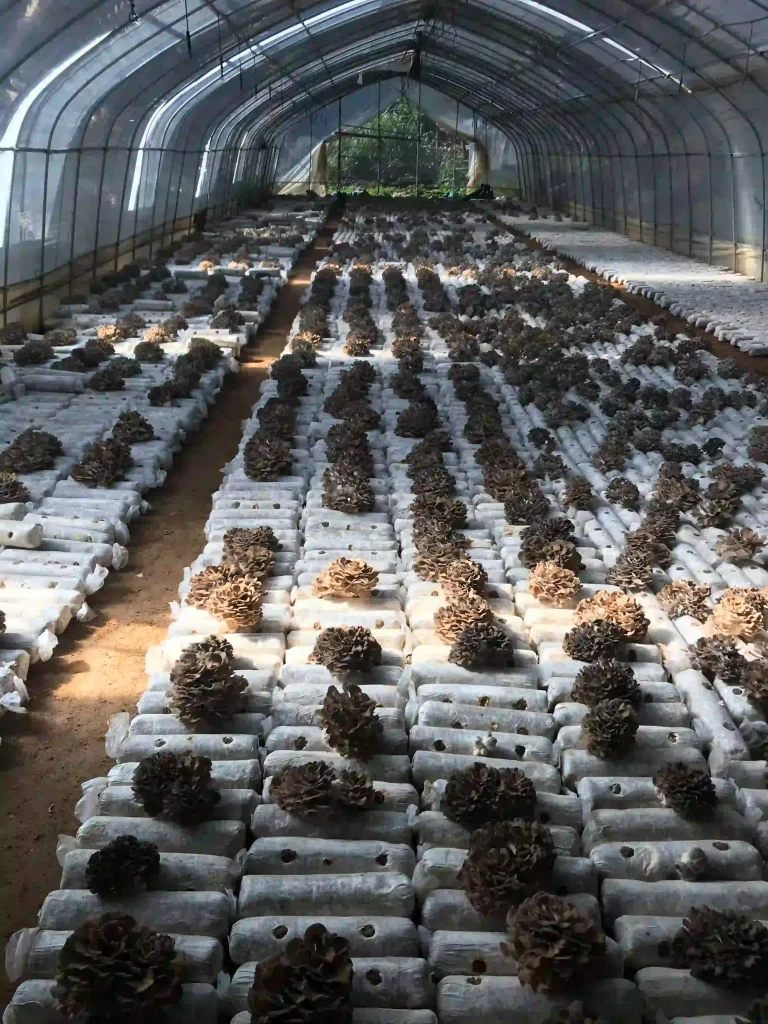
Qingyuan County sits in a mid-subtropical monsoon climate zone with the elevation, humidity cycling, and hardwood forest cover that Lentinula edodes requires for slow mycelial development—the biological process that builds the dense flesh structure and higher guanylate concentration prized in export-grade shiitake. This is not marketing language; it is the reason Qingyuan has held the title “China’s Hometown of Shiitake Mushrooms” for over six centuries of continuous cultivation, and why the region’s growing conditions cannot be replicated simply by importing spawn to a different climate. According to regional agricultural bureau data, log-substrate cultivation cycles in Qingyuan run longer than in flatland industrial operations elsewhere in China, and that extended cycle is what produces the thicker cap structure buyers associate with premium grade.
Geographical Indication (GI) Protection: How to Verify Authentic Origin vs. Blended/Relabeled Stock
Qingyuan shiitake holds Protected Geographical Indication (GI) status under China’s national GI framework—a legal designation, not a marketing claim, that restricts use of the name to product actually cultivated within the defined region. This matters commercially because origin fraud is a documented problem in the dried mushroom trade: lower-grade product from other provinces is periodically blended with or mislabeled as Qingyuan-origin stock to capture the price premium. For buyers, the practical takeaway is this: GI certification numbers, regional agricultural bureau export documentation, and factory-level batch records should be requested and cross-checked before contract signing—not assumed from a supplier’s marketing copy. A supplier unwilling to provide traceable GI documentation is signaling exactly the kind of origin ambiguity that leads to customs disputes downstream.
Organic vs. Conventional Cultivation: What Actually Changes in the Substrate
organic mushroom farming
Substrate Sourcing Standards—Organic-Certified Sawdust/Log Inputs vs. Conventional Inputs
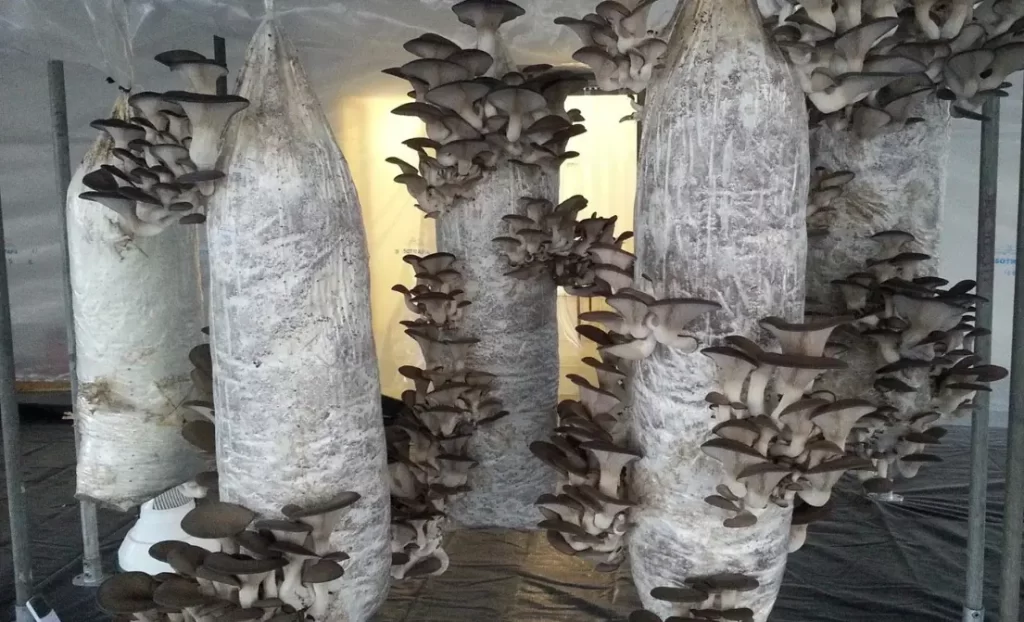
Shiitake, unlike leafy vegetables, does not photosynthesize—it derives 100% of its nutrient and flavor compound profile from the substrate it consumes, whether that substrate is hardwood log or sawdust-based synthetic log. This single fact is why substrate integrity, not the organic/conventional label alone, is the variable that actually determines contaminant risk and nutritional density.
| Substrate Factor | Organic Standard | Conventional Standard (Qingyuan Direct-Source) |
|---|---|---|
| Sawdust/log source | Certified organic hardwood only | Regionally sourced hardwood, residue-tested |
| Fertilizer/additive input | Prohibited entirely | Permitted within regulated limits, batch-tested |
| Water source control | Certified organic water standards | Municipal/well water, quality-monitored |
| Certification body oversight | Third-party annual audit | Factory HACCP/ISO internal + export lab testing |
| Typical cycle length | Comparable to conventional | 8–12 months, log-cultivation standard |
Does “Organic” Guarantee Lower Contaminant Load? What Buyers Should Actually Test For
conventional mushroom farming
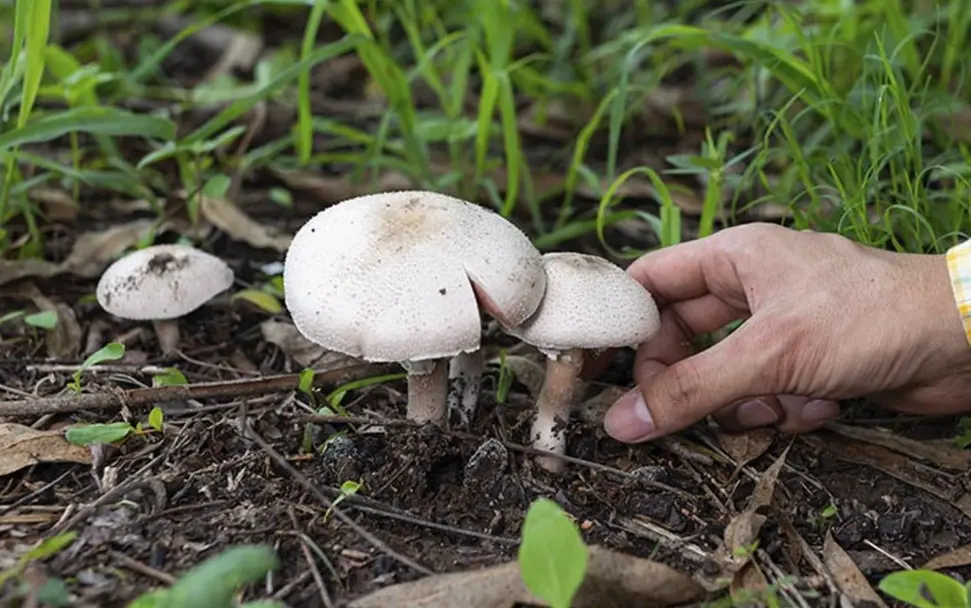
Here is the point that gets lost in consumer-facing content: organic certification governs inputs, not outputs. It restricts what can be added during cultivation; it does not, by itself, test or guarantee the final residue or heavy metal load of the harvested mushroom—particularly for a bioaccumulating fungus grown in soil-adjacent conditions. A conventional shiitake grown under controlled substrate sourcing and tested post-harvest against EU Maximum Residue Limits (MRL) and FDA import tolerances can, and frequently does, test cleaner than an organic-labeled product from a supplier without rigorous lab verification. For buyers supplying supermarket chains or supplement manufacturers, the actionable standard is not “organic or not”—it is: request the certificate of analysis (CoA) for every batch, specifying heavy metal screening (cadmium, lead) and pesticide residue panels, regardless of certification status.
Rigorous Dehydration Standards: Ensuring 12-Month Shelf Life
organic mushroom farming
Sun-Dried vs. Mechanical Drying—Impact on Guanylate Retention and Color Grade
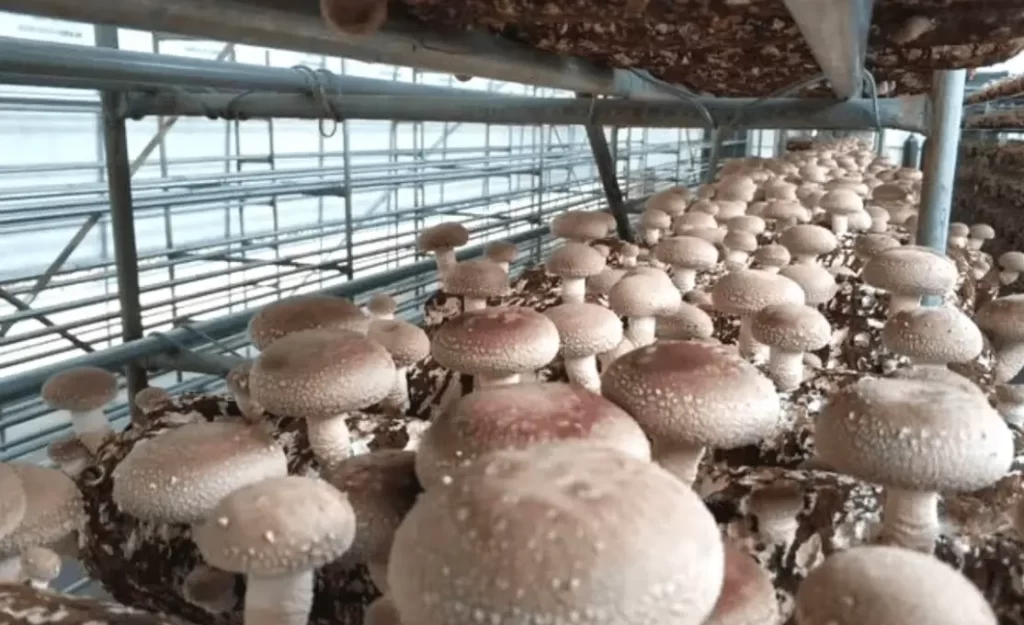
Drying method is arguably the single most under-discussed variable in shiitake procurement, and it deserves more attention than the organic/conventional debate itself. Traditional sun-drying, still used for premium-grade lots in Qingyuan, triggers a slower enzymatic conversion that elevates guanylate concentration—the compound responsible for shiitake’s signature umami depth—while producing the characteristic golden-brown cap color buyers associate with top grade. Mechanical hot-air drying, by contrast, is faster and more scalable for high-volume orders, but if temperature and airflow aren’t tightly controlled, it can compromise both flavor compound retention and visual grade consistency. Neither method is inherently “better” for every use case; the right choice depends on end application. A supplement manufacturer extracting beta-glucans cares primarily about polysaccharide integrity, while a food processor selling whole dried caps cares about color and rehydration texture. Based on our experience filling orders across both segments, the mistake buyers make is assuming all “dried shiitake” is processed identically—it isn’t, and the method should be specified in the purchase contract, not assumed.
Moisture Content Control (<13%): The Number That Prevents Mold and Rejection at Customs
Moisture content is the technical detail that separates a shipment that clears customs cleanly from one that gets flagged, fumigated, or destroyed. Dried shiitake held above 13% residual moisture creates conditions for mold growth during ocean transit—a risk that intensifies over the 30–45 day shipping windows common on Asia-to-Europe or Asia-to-North America routes. Reputable exporters test moisture at multiple stages: post-drying, pre-packaging, and again before container loading, using calibrated moisture meters rather than visual inspection alone.
| Moisture Level | Shelf Life Outlook | Export Risk Profile |
|---|---|---|
| Below 11% | 12+ months, stable | Minimal—safe for extended ocean freight |
| 11%–13% | 8–10 months | Low, standard commercial tolerance |
| 13%–15% | 3–5 months, mold risk rises | Elevated—customs inspection risk |
| Above 15% | Not export-viable | High rejection/fumigation likelihood |
Quality Control Buyers Can Verify: HACCP, ISO, and Residue Testing
Meeting EU MRL and FDA Import Tolerance Standards—What Lab Reports to Request
According to import compliance data published by EU food safety authorities, pesticide residue and heavy metal contamination remain among the top three reasons dried mushroom shipments face customs holds. A serious exporter should be able to produce, on request, a current Certificate of Analysis covering pesticide residue panels calibrated to EU MRL thresholds, alongside FDA-aligned import tolerance documentation for U.S.-bound orders. Buyers should treat the absence of per-batch CoA documentation—not the absence of organic certification—as the real red flag during supplier vetting.
Heavy Metal Screening Protocols: Cadmium and Lead Thresholds for Export-Grade Product
Because fungi absorb minerals from their growing substrate more readily than most plant crops, cadmium and lead screening is non-negotiable for export-grade product, regardless of organic status. Facilities operating under HACCP and ISO 22000 frameworks typically build heavy metal testing into routine batch release protocols rather than treating it as a one-time certification event—a distinction worth confirming directly with any prospective supplier before signing a long-term contract.
A Sourcing Officer’s Checklist: How to Grade and Verify Supplier Claims
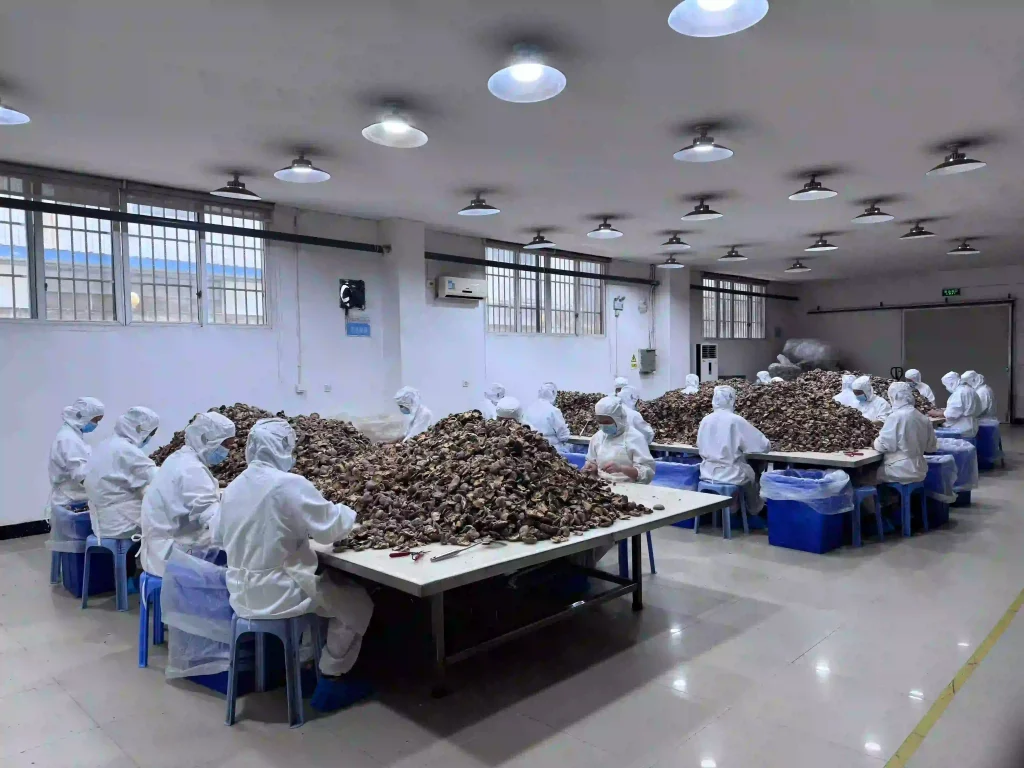
EU MRL mushroom testing
Grade A vs. Grade B Shiitake—Visual and Moisture Benchmarks for Bulk Purchasing
Grade separation typically comes down to cap thickness, surface pattern (the prized “flower” cracking pattern on premium caps), size uniformity, and moisture consistency across the lot—not the farming method used. Requesting sample photos alongside a CoA, and where possible a pre-shipment third-party inspection, remains the most reliable way to confirm grade claims before container loading.
Requesting Traceability Documentation: From Farm Batch to Container
Full traceability—from cultivation batch number through drying facility, packaging date, and container loading—is what allows a buyer to isolate and resolve an issue quickly if one arises downstream, rather than facing an unexplained quality inconsistency with no way to trace its origin.
Long-Term Supply Reliability: Why Continuous Production History Matters
A supplier’s multi-decade operating history is itself a due diligence signal. Seasonal harvest volatility, log-cultivation cycle timing, and regional weather risk all affect year-to-year supply—and a partner with a long track record of meeting contracted volumes through multiple harvest cycles carries materially less counterparty risk than a newer, opportunistic exporter capitalizing on a single good season.
FAQ for International Buyers
Is organic-certified shiitake automatically safer than conventional for export to the EU?
No. Organic certification governs cultivation inputs, not final residue levels. EU-bound shipments still require batch-level MRL testing regardless of organic status.
How can I verify a supplier’s Qingyuan-origin claim isn’t blended with product from another region?
Request the GI certification number, regional export bureau documentation, and cross-check batch traceability records rather than relying on packaging claims alone.
What moisture content should I specify in a dried shiitake purchase contract?
Below 13% is the standard commercial threshold for safe long-distance ocean freight and 8–12 month shelf stability.
Does sun-dried shiitake cost more than mechanically dried, and is the premium justified?
Typically yes, driven by longer processing time and higher guanylate/flavor retention—justified for premium retail or culinary applications, less critical for extraction-based supplement use.
What certifications should I require before signing a long-term supply contract?
HACCP and ISO 22000 at minimum, plus per-batch Certificates of Analysis covering pesticide residue and heavy metal screening.
Expert Verdict
Stop treating “organic vs. conventional” as the decision that matters. It isn’t. Origin verification, moisture control below 13%, and per-batch lab documentation are what separate a shipment that clears customs and rebuilds trust with your retail buyers from one that doesn’t. Vet the paperwork before you vet the label.
References:
USDA AMS — National Organic Program: Market Development for Mushrooms and Pet Food