For an international buyer, mushroom processing technology China is not really about choosing between an old drying method and a new machine. The real question is much harder: can a processor turn variable agricultural raw materials into a stable product that meets your moisture, grade, safety, traceability, and delivery specifications shipment after shipment? The practical answer depends on five linked controls—raw-material selection, controlled drying, grading, laboratory inspection, and batch traceability. A processor that gets only one or two of these right can still create problems downstream.
The concern is understandable. A dried mushroom may look perfectly acceptable when a sample arrives, yet excessive moisture, inconsistent drying, foreign material, pesticide residues, or mixed origins can become expensive problems after a container has crossed the ocean. FDA’s current Import Alert 25-05 specifically covers dried fungi and mushrooms from China and Hong Kong for filth, including whole, sliced, broken, and powdered products. For a professional importer, that changes the conversation completely. Quality is not a visual promise; it needs a controlled process and evidence behind it.
Based on our experience with mushroom production and export supply, the strongest Chinese processing operations do not treat drying as an isolated factory step. They build a chain that starts before the mushroom enters the dryer.
| Processing Control | What Can Go Wrong | What a B2B Buyer Should Verify |
|---|---|---|
| Raw-material selection | Mixed grades, damaged mushrooms, inconsistent maturity | Origin, species, incoming inspection |
| Cleaning & sorting | Soil, foreign material, defective pieces | Sorting procedure and inspection records |
| Drying | Excess moisture, darkening, aroma loss, uneven batches | Drying method, temperature control, moisture specification |
| Grading | Different sizes or quality levels mixed together | Written grading criteria |
| Laboratory testing | Residues, heavy metals, microbiological risks | Batch COA and testing scope |
| Packaging | Moisture reabsorption during storage or transport | Packaging specification and sealing controls |
| Traceability | Difficult recall or origin verification | Lot/batch identification |
That is why a serious mushroom processing technology China strategy begins with process control rather than equipment marketing.
Why Mushroom Processing Technology Determines Export Quality
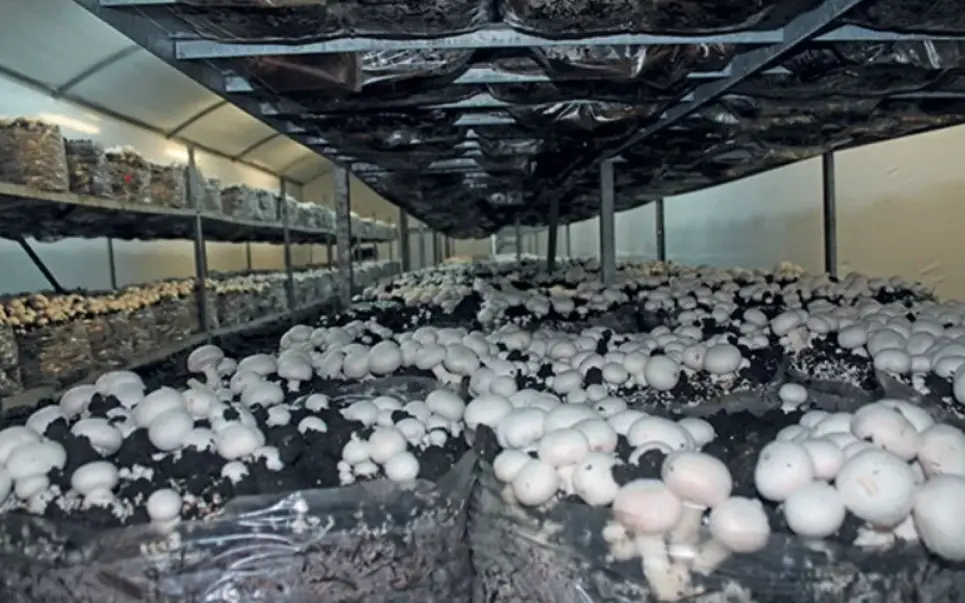
Why Mushroom Processing Technology Determines Export Quality
The first mistake buyers make is judging processing quality by appearance alone. A bright, attractive dried shiitake may photograph well, but appearance tells only part of the story. Moisture distribution, internal structure, aroma compounds, rehydration performance, microbial stability, and the consistency of the raw material all influence whether that mushroom performs properly in a commercial kitchen or food-production line.
For Lentinula edodes, the processing challenge is particularly interesting because drying changes more than water content. Heat transfer and moisture migration influence texture, color, shrinkage, aroma, and rehydration behavior. The objective is therefore not simply to“dry the mushroom.”It is to remove sufficient moisture while maintaining the characteristics required by the final application.
For a supermarket buyer, appearance may dominate the specification. A soup manufacturer may care more about aroma and rehydration. A food processor purchasing sliced or broken mushrooms may prioritize uniformity and cost per usable kilogram. A supplement or ingredient developer may require an entirely different analytical specification.
The processing system has to reflect that difference.
From Fresh Mushroom to Export-Ready Product
A commercially reliable process generally follows a controlled sequence:
Raw Mushroom Selection → Cleaning&Sorting → Grading → Drying → Quality Inspection → Packaging → Batch Traceability → Export
Each stage solves a different procurement risk.
Raw-material selection determines the starting point. Sorting removes defective or unsuitable material. Grading separates products according to size, appearance, cap thickness, and other commercial specifications. Drying establishes storage stability. Inspection verifies whether the finished batch actually meets the agreed specification. Packaging protects the product from moisture pickup during storage and transportation.
This is where a manufacturer and a simple trading operation can look very different.
A trader may be able to source mushrooms when the market is favorable. A manufacturer with an integrated processing system has greater control over how the raw material becomes the finished product.
For buyers planning recurring orders, that distinction matters.
Why Moisture Control Is a Procurement Issue
Moisture is one of the quiet variables that can undermine an otherwise good shipment.
If the final product retains excessive moisture, storage stability can deteriorate. If it is overdried or processed too aggressively, the buyer may see unnecessary quality loss, excessive breakage, undesirable color changes, or changes in rehydration behavior.
For this reason, buyers should avoid vague specifications such as“well dried.”A purchase specification should define a measurable target, an acceptable tolerance, the sampling method, and the corresponding testing procedure.
A commonly requested commercial specification may use moisture content below 13%, but that figure should never be treated as a universal legal requirement for every dried mushroom product. The correct specification depends on the product, applicable standards, intended use, and destination market.
The same principle applies to pesticide residues. EU Regulation(EC)No.396/2005 establishes maximum residue levels for pesticides in food and feed, with the regulatory text continuing to be updated. A responsible supplier therefore should not simply state“EU compliant.”The buyer should know what was tested, against which limits, for which batch, and with what laboratory documentation.
China Mushroom Processing: Traditional Drying vs. Modern Controlled Drying
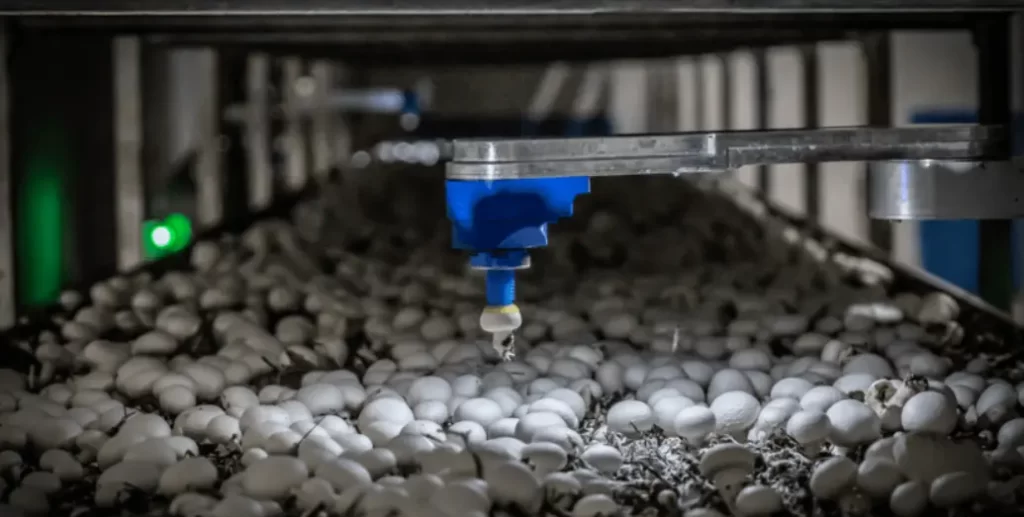
China Mushroom Processing
The debate between sun-dried and mechanically dried mushrooms is often presented too simply.
Traditional sun drying can contribute distinctive sensory characteristics and has deep roots in Chinese mushroom production. But it is dependent on weather, ambient humidity, solar intensity, drying time, and operator control. Those variables can make repeatability difficult when a buyer needs hundreds of cartons—or several containers—with a narrowly defined specification.
Mechanical drying solves a different problem. It allows processors to control temperature, airflow and drying time more consistently, making it much easier to reproduce a commercial specification across batches.
The right question, therefore, is not“Which drying method is superior?”
It is:
“Which drying process can deliver the required quality consistently for the intended application?”
| Factor | Traditional Sun Drying | Mechanical Drying | B2B Procurement Implication |
|---|---|---|---|
| Temperature control | Limited | High | Mechanical systems offer stronger repeatability |
| Weather dependency | High | Low | Mechanical drying supports year-round production |
| Batch consistency | Variable | More controllable | Important for supermarket and food-manufacturing contracts |
| Aroma profile | Can support traditional characteristics | Depends on process parameters | Sample approval remains important |
| Production scale | More limited | Better suited to industrial volume | Critical for recurring bulk orders |
| Moisture control | More variable | More precise | Important for shelf life and shipping |
| Energy profile | Potentially low direct energy input | Depends on equipment and energy source | Evaluate energy per finished kilogram |
| Sustainability | Strong under suitable climate conditions | Can improve with efficient systems | Compare actual process efficiency, not marketing claims |
A practical Chinese processing operation does not necessarily need to reject traditional knowledge in favor of machinery. The better model is often to preserve the sensory and processing knowledge developed through generations while using modern equipment to improve temperature control, consistency, throughput, and quality verification.
That approach is particularly relevant to Qingyuan.
Qingyuan is not simply a convenient location on a supplier’s address. The national standards platform currently lists GB/T 19087-2008, Product of Geographical Indication—Qingyuan Xiang Gu, as a current standard, with its latest review recorded in August 2025 and the conclusion that it remains effective. For buyers evaluating Qingyuan-origin shiitake, this provides an important starting point for understanding why origin claims should be connected to identifiable standards and documentation rather than used as a marketing phrase.
At Jiangyuan Mushroom, this origin-processing connection is particularly important. The company has operated from Qingyuan since 1996, developing a supply chain that connects mushroom sourcing, sorting, grading, drying, inspection, packaging, and export. The purpose of that structure is straightforward: the quality buyers receive should not depend entirely on luck at the harvest stage.
The next question is what happens inside the processing line when the mushrooms move from raw material to finished grade—and how a buyer can tell whether that system is actually capable of delivering consistent bulk quality.
The Next Step: Turning Drying Technology into Consistent Export Quality
Once the drying method has been selected, the factory still has several opportunities to lose quality. Drying cannot compensate for poor raw materials, weak grading, or inadequate storage controls. In commercial production, the process must work as a chain.
For Jiangyuan Mushroom, the practical approach is to connect raw mushroom selection, controlled drying, grading, inspection, and traceability rather than optimizing one stage in isolation. That is particularly important when supplying different customers—from supermarket private labels to food manufacturers requiring sliced mushrooms or standardized ingredient inputs.
How Chinese Mushroom Processors Control Quality After Drying
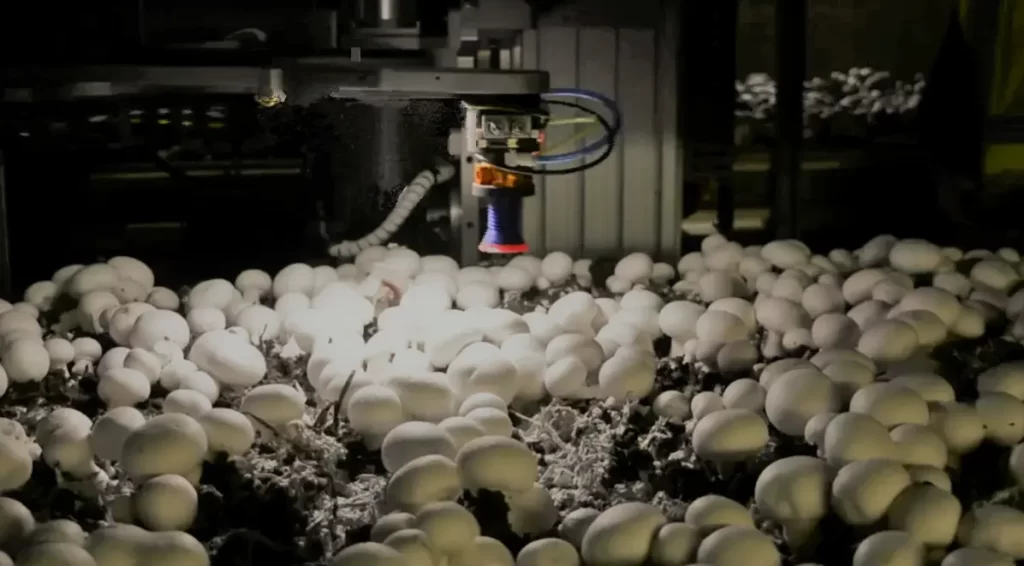
How Chinese Mushroom Processors Control Quality After Drying
A professional processing line should answer a simple question at every stage: what specification are we trying to protect?
After drying, mushrooms are inspected for moisture, appearance, grade, defects and other agreed specifications. The finished product is then packed under controlled conditions designed to prevent unnecessary moisture reabsorption during storage and shipment.
This matters because international transportation can expose dried mushrooms to changing temperature and humidity. A product that leaves the factory within specification still needs packaging capable of protecting that specification until it reaches the buyer.
Grading Is More Than Sorting by Size
Wholesale buyers often ask for“Grade A”or“premium”mushrooms, but these labels mean little unless the supplier has defined measurable criteria.
A stronger specification can include:
- Cap diameter
- Cap thickness
- Color
- Shape
- Aroma
- Moisture content
- Broken-piece percentage
- Defect percentage
- Foreign-material tolerance
- Packaging format
- Based on our experience with bulk mushroom supply, written specifications outperform verbal grade descriptions. They reduce disputes, make sample approval meaningful, and allow production teams to compare every batch against the same target.
Quality Dimension What the Processor Checks Why Buyers Care Typical Commercial Application Cap size Diameter and uniformity Retail appearance Supermarkets Cap thickness Physical structure Texture and yield Restaurants Color Surface appearance Consumer presentation Retail packs Aroma Characteristic mushroom aroma Flavor performance Foodservice Moisture Finished moisture level Storage stability Export shipments Broken pieces Percentage of fragments Yield and appearance Food processing Foreign material Physical contamination Food safety All applications Traceability Batch/lot identification Recall and verification International trade
The best supplier is not necessarily the one offering the lowest nominal price. It is the one whose grade remains predictable at volume.
Food Safety: What International Buyers Should Test
Processing technology and food safety are closely connected, but they are not interchangeable.
Drying reduces available moisture, yet it does not erase problems introduced earlier in cultivation or handling. Pesticide residues, heavy metals, microbiological hazards and foreign materials require their own control measures.
This is where HACCP-based process management becomes useful. Rather than relying exclusively on final-product inspection, HACCP identifies potential biological, chemical and physical hazards throughout the production process.
For an importer, the supplier should be able to provide evidence rather than broad assurances.
A practical documentation package may include:
- Product specification
- Certificate of Analysis(COA)
- Pesticide-residue test
- Heavy-metal test
- Microbiological analysis
- Batch or lot number
- Traceability information
- Packaging specification
- Relevant food-safety certifications
- Export documentation
The testing panel should be aligned with the destination market and product application. For U.S.buyers, FDA’s Foreign Supplier Verification Program is particularly relevant because importers have responsibilities for verifying that foreign suppliers produce food in a manner consistent with applicable U.S.safety requirements.
For European buyers, pesticide-residue specifications need to be evaluated against the applicable EU maximum residue levels rather than relying on a generic statement such as“European quality.”
That distinction is important. Compliance is a documented process, not a marketing adjective.
Why Traceability Separates a Manufacturer from a Reseller
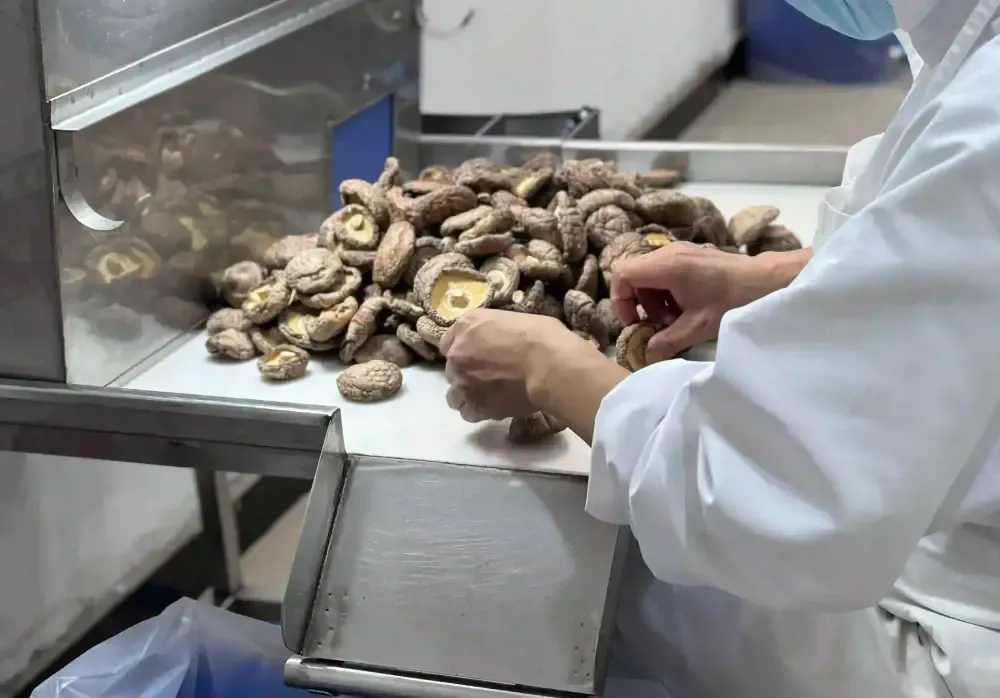
Why Traceability Separates a Manufacturer from a Reseller
Imagine receiving a shipment and discovering that one batch has an abnormal test result. The next question is immediate: where did the raw mushrooms come from, and which other products came from the same lot?
Without batch traceability, the answer can become surprisingly difficult.
A robust traceability system links the finished product back through:
Finished Product → Production Batch → Processing Date → Raw Material → Origin → Supplier/Base
For Qingyuan-origin shiitake, origin documentation adds another layer of value. China’s national standards system lists GB/T 19087-2008, Product of Geographical Indication—Qingyuan Xiang Gu, providing an authoritative reference point for discussing Qingyuan-origin shiitake rather than treating“Qingyuan”as a purely promotional label.
For procurement teams, this creates a useful distinction:
“Processed in China”≠“Grown in Qingyuan.”
The buyer should ask where the mushroom was cultivated, where it was processed, how the origin is documented, and whether the lot can be traced.
Choosing a Chinese Mushroom Processing Supplier by Application
Different buyers should not demand exactly the same processing configuration.
A supermarket private-label program may prioritize whole, visually attractive mushrooms with stable grading. A food manufacturer may care more about moisture, aroma, slicing performance and cost per usable kilogram. An ingredient developer may require a much tighter raw-material specification and analytical profile.
The processing technology should follow the application—not the other way around.
| Buyer Type | Priority | Preferred Product Form | Key Supplier Capability |
|---|---|---|---|
| Supermarket chain | Appearance + consistency | Whole mushrooms | Precise grading + packaging |
| Food distributor | Stable bulk quality | Whole/sliced | Consistent production |
| Food manufacturer | Yield + specification | Sliced/pieces | Standardized processing |
| Soup/sauce producer | Aroma + cost efficiency | Pieces/broken | Raw-material utilization |
| Ingredient developer | Analytical consistency | Powder/processed ingredients | Traceability + laboratory control |
| Private-label brand | Quality + presentation | Retail-ready | OEM packaging + QA |
This is where mushroom processing technology China becomes a procurement issue rather than simply a manufacturing topic.
How to Audit a Chinese Mushroom Manufacturer Before Ordering
Before approving a supplier, buyers should ask six practical questions.
Where are the mushrooms cultivated?
Do not confuse processing location with agricultural origin.
How is drying controlled?
Ask about temperature, airflow, drying time and moisture verification—not merely whether the supplier uses“modern equipment.”
How are grades defined?
Request written specifications and compare them against the pre-shipment sample.
What laboratory tests are performed?
Request recent batch-specific reports rather than an undated certificate.
Can the supplier trace a finished carton to its raw material?
A traceability system should work in both directions.
Can the factory repeat the same quality at container scale?
A perfect sample proves very little if the production system cannot reproduce it.
At Jiangyuan Mushroom, the production model is built around Qingyuan-origin raw materials, processing, grading, inspection, packaging and export coordination. The value of that structure is not a slogan about being a“factory.”It is the ability to connect the specification requested by a buyer with a repeatable manufacturing process.
5 Long-Tail FAQ Questions B2B Buyers Actually Ask
What mushroom processing technologies are used in China?
Chinese mushroom processors use multiple approaches, including traditional sun drying, hot-air mechanical drying, heat-pump systems and other specialized drying technologies. The appropriate method depends on the mushroom species, required quality profile, production volume and target market.
Is sun-dried shiitake better than machine-dried shiitake?
Not automatically. Sun drying can support traditional sensory characteristics, while mechanical drying provides substantially greater control over temperature, airflow, moisture and production consistency. Buyers should evaluate the finished product and process specification rather than judging the technology by name alone.
How can I verify a Chinese dried mushroom manufacturer?
Request the factory’s product specification, processing flow, food-safety documentation, batch COA, residue-testing reports, traceability information and export history. A factory audit or third-party inspection can provide additional confidence for large recurring orders.
What tests should I request when importing mushrooms from China?
The appropriate panel depends on the product and destination market, but buyers commonly evaluate pesticide residues, heavy metals, microbiological parameters, foreign materials and moisture, alongside product-specific requirements. U.S.importers should also consider their FSVP obligations and applicable FDA requirements.
Why does Qingyuan origin matter when buying Chinese shiitake?
Qingyuan has a distinctive historical and geographical association with shiitake production, and the Chinese national standards system recognizes a geographical-indication standard for Qingyuan Xiang Gu. Buyers should nevertheless verify the actual cultivation origin and supporting documentation rather than relying solely on the supplier’s location.
Expert Verdict: Buy the Process, Not Just the Mushroom
A low-priced mushroom sample is easy to find. A supplier capable of reproducing the same specification across repeated export shipments is much harder to find.
For B2B procurement, prioritize four things: verified origin, controlled drying, measurable quality specifications, and complete traceability. That is the practical benchmark for evaluating mushroom processing technology China—and the standard a long-term supplier should be prepared to demonstrate with records, not promises.
References:
U.S. FDA — Import Alert 25-05: Dried Mushrooms from China and Hong Kong
European Union — Regulation (EC) No 396/2005 on Pesticide Residue Limits