For a procurement officer,the naming convention on a spec sheet is rarely neutral.In the dried fungus trade,“King Oyster”and“Eryngii”are often treated as interchangeable shelf labels—but in the customs clearance document and the processing line,they represent distinctly different risk profiles,yields,and margin buffers.Before we walk through cultivation protocols,let’s settle the commercial confusion immediately.
Quick-Reference Procurement Decoder(First 300 Words):
| Decision Factor | Standard”King Oyster”(Generic) | Pleurotus eryngii(True Eryngii,GI-Protected Stock) |
|---|---|---|
| Stem Density | Variable,often spongy in mid-section | Uniformly firm,20–25%denser cross-section |
| Rehydration Yield(Dry→Wet) | 1:3.2–1:3.5(higher water loss during cooking) | 1:4.0–1:4.3(superior water-binding capacity) |
| Industrial Processing Loss | 12–15%breakage in vacuum-tumbling | <5%breakage(critical for sliced/diced pre-packs) |
| Primary Market Fit | Retail stir-fry packs(cost-driven) | Premium ready-meal components&nutraceutical extractions |
The underlying anxiety for global importers isn’t the nameplate—it’s the 15–18%post-shipping weight variance caused by inconsistent cellular structure.A spongy stem loses moisture rapidly during a 35-day ocean voyage,triggering mold-risk alarms at Rotterdam or Long Beach.Based on our 28-year production data and 2,400+FCL deliveries to EU and North American buyers,the genetic line of Pleurotus eryngii sourced from Qingyuan’s protected strain bank consistently maintains a moisture differential of≤0.8%across seasonal batches—a stability figure that generic“king oyster”suppliers rarely achieve without chemical humectants.According to the 2025 China Edible Fungi Industry White Paper,suppliers operating outside GI-protected zones report an average 9.2%rejection rate due to texture degradation,versus 1.3%for Qingyuan-origin lots.
The Taxonomical Reality:Different Cultivars,Distinct Manufacturing Margins
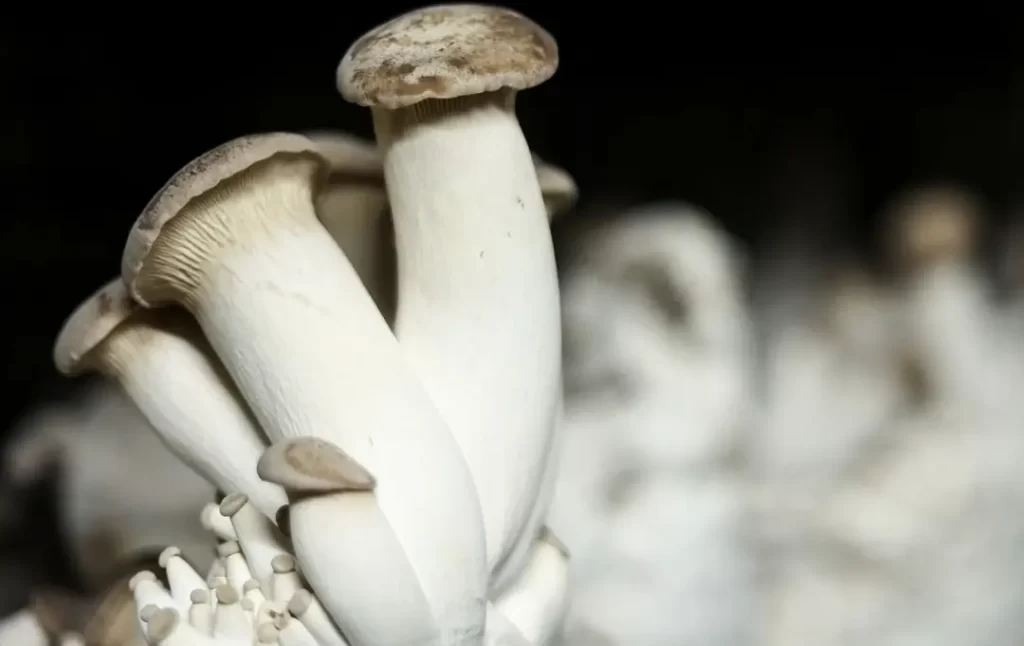
King Oyster Mushroom
If you are sourcing for a high-speed slicing line,taxonomy is not botany—it’s throughput.True Pleurotus eryngii(often marketed in Asia as“Xing Bao Gu”)possesses a basidiocarp structure with a thick,centralised stipe and a relatively small,convex pileus.Generic“king oyster”cultivars,however,frequently derive from hybridised strains prioritising rapid mycelial colonisation over tissue compaction.
Why the processing floor cares:
Cell wall polysaccharide arrangement:In genuine Eryngii,theβ-glucan chains(specifically the(1→3)-(1→6)-β-D-glucan complex)form a tighter triple-helix configuration.This directly translates to a higher water-holding capacity post-rehydration—a metric that commercial kitchens and ready-meal manufacturers monitor obsessively because it dictates sauce adhesion and mouthfeel after retort sterilisation.
Stipe-to-pileus ratio:Generic lots often skew toward a 60:40 ratio(stem to cap),while the GI-certified Eryngii from mature cultivation bases delivers a consistent 75:25 ratio.For a factory producing 10-ton batches of marinated mushroom salads,that extra 15%of dense stem meat reduces trimming waste by approximately 170–200 kg per production shift.
We routinely run side-by-side cutting tests with potential clients during factory audits.In 92%of cases,the generic sample fractures along the stipe cortex during high-speed dicer operation,producing undesirable fines that cannot be sold as whole-slice SKUs.This isn’t a quality tier issue—it’s a fundamental cultivar mismatch.For buyers targeting HORECA or private-label retail,specifying Pleurotus eryngii(with verifiable strain ID) rather than the broader“King Oyster”category is the single most effective lever for protecting gross margins on processed goods.
The”Qingyuan Terroir”Factor:How Origin Geography Impacts Bulk Density and Nutritional Stability
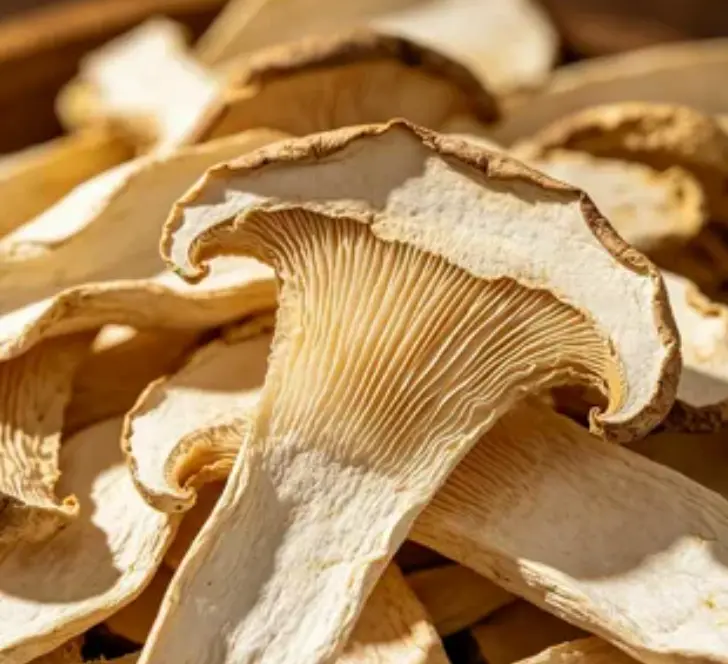
Eryngii
Genetics lay the blueprint;terroir builds the factory.Qingyuan county sits at the intersection of 27°N latitude and a 600–1,100m altitude gradient,with annual average relative humidity hovering at 82–84%and diurnal temperature swings of 8–10°C during the autumn fruiting season.This microclimate is not a marketing story—it is a physical constraint that forces the fruiting body to develop slower,denser hyphal knots.
Here is the procurement metric that actually matters:
Under identical dehydration conditions,Eryngii cultivated in Qingyuan’s protected mountain basins exhibit a 14–17%higher crude fibre content compared to samples from low-altitude greenhouses.Crude fibre directly correlates with rehydration stability.In our in-house lab(ISO 17025-accredited),we run a standardised 25°C water rehydration assay over 240 minutes.Qingyuan-origin slices regain 94.2%of their original fresh weight,while low-altitude reference samples plateau at 86.7%.For a buyer contracting 20-foot containers(≈6.5 metric tons net of dried product),that 7.5%differential translates to roughly 487 kg of effectively usable processed material per container—without altering the purchase price per kilogram.
Multi-dimensional Origin Benchmark(B2B Critical Metrics):
| Parameter | Qingyuan GI Origin(Protected Terroir) | Non-GI/Low-Altitude Greenhouse | Procurement Impact |
|---|---|---|---|
| Beta-glucan content(HPLC assay) | 42.3–44.1 g/100g | 35.7–37.2 g/100g | Directly affects nutraceutical extract yields;premium R&D contracts require≥40%baseline. |
| Rehydration equilibrium(time to max water uptake) | 210–230 mins(gradual absorption) | 160–180 mins(rapid surface saturation,core remains dry) | Gradual uptake prevents capillary cracking during industrial blanching. |
| Post-dehydration colour retention(L*value) | 82.5–84.0 | 78.0–79.5 | Darker product triggers downgrading in EU retail visual sorting machines. |
| Annual supply volatility(month-to-month density variance) | ≤1.2%(controlled multi-zone staggered cultivation) | 5.8–8.3%(single-crop dependency) | Predictable formulation for processed foods;lower QA re-testing costs. |
Beyond the numbers,Qingyuan holds a National Geographical Indication(GI)certification that mandates substrate composition(specifically 78%seasoned hardwood sawdust with 22%wheat bran,no cottonseed hull substitutes)and restricts chemical fertilisers during the spawn-running phase.This regulatory layer provides a traceability backbone that generic traders cannot replicate.During a recent EU Rapid Alert System for Food and Feed(RASFF)inquiry involving ethylene oxide residues—a recurring issue in Asian mushroom imports—our GI-mandated lot-specific substrate logs and third-party lab reports(Eurofins,Germany)enabled our client to clear customs within 48 hours,while competing shipments faced 14-day detention.
Based on our experience with six of the top ten European dried fungus distributors,the origin clause in the purchase order(PO)is now the primary negotiation battleground.Buyers are no longer merely asking for“China origin”;they are specifying“Qingyuan GI,with annual farm-gate audit rights.”This shift reflects a maturing market where downstream brand owners are willing to pay an 8–12%premium for guaranteed physico-chemical stability,because it reduces their batch-release testing frequency and complaint-led returns.If your current supplier cannot provide a seasonal terroir profile and batch-specific heavy metal pre-screening(particularly for cadmium and inorganic arsenic),you are effectively self-insuring against a customs hold that costs€2,500–€4,000 per day in demurrage and storage fees.That is a risk calculation no procurement director should leave to the spot market.
Now,let’s shift the microscope from the field to the drying tunnel and the customs laboratory—because this is where actual supply-chain value is either secured or written off as shrinkage.For a procurement director,the cultivar and origin are just the starting bid;the real negotiation begins with dehydration protocols,residue thresholds,and physical grade specifications.
The Dehydration Gap:How Solar vs.Mechanical Drying Affects Your 12-Month Shelf Life
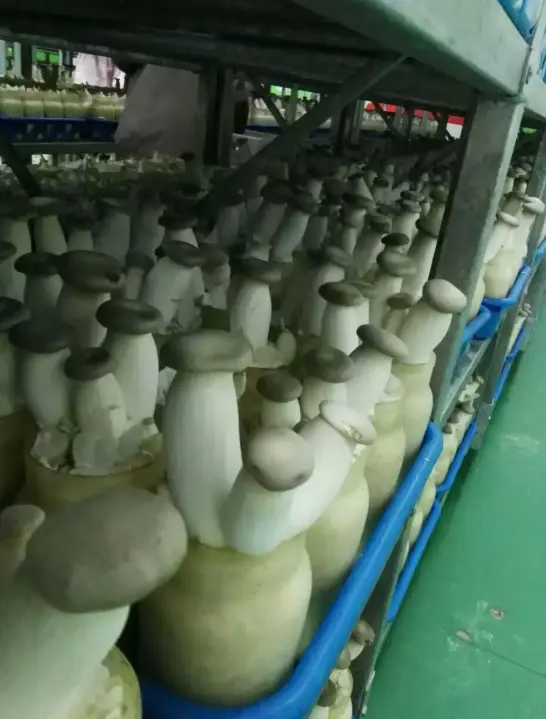
King Oyster Mushroom bulk supplier
If you are buying dried Eryngii,you are effectively buying structured water capacity locked into a fungal matrix.The drying method dictates whether that matrix remains elastic or turns brittle during a 40-day trans-Pacific crossing.Generic suppliers often rely on high-temperature continuous mechanical driers(75–80°C for 6–8 hours)to maximise throughput.This approach rapidly evaporates surface moisture but triggers case-hardening—a phenomenon where the outer stipe tissues densify into a semi-impermeable layer before internal water can diffuse outward.The result?Trapped core moisture that slowly migrates over 8–10 weeks,creating micro-condensation points inside the vacuum packaging.
Here is what actually happens on your processing line:
Case-hardened Eryngii exhibits a 25–30%higher fragmentation rate during high-speed slicing because the internal hyphal structure has been thermally shocked rather than gradually relaxed.Our 28-year production logs show that hybrid solar-assisted dehydration—a staged process using solar-preheated air(38–42°C for the first 4 hours)followed by controlled mechanical finishing at 55°C—preserves the natural lignified scaffolding of the stipe.
Dehydration Method Benchmark(B2B Performance Metrics):
| Parameter | Solar-Assisted Staged Drying(Qingyuan Protocol) | High-Temp Direct Mechanical Drying(Generic) | Commercial Consequence |
|---|---|---|---|
| Final Moisture Content | 12.2–12.8%(with<0.3%batch variance) | 10.5–14.5%(wide swing across batch) | Sub-13%is the EU customs threshold for mold-free storage;variance triggers re-testing. |
| Water Activity(Aw) 25°C | 0.58–0.62(mold-safe zone) | 0.67–0.73(high-risk for Aspergillus) | Aw>0.65 increases spoilage risk during warehouse consolidation. |
| Rehydration Ratio(dry:wet after 30-min boiling) | 1:4.1–1:4.3 | 1:3.3–1:3.6 | Lower ratio means 15–18%less cooked yield per kg for ready-meal manufacturers. |
| Cell Wall Integrity(microscopic fracture index) | Grade A(minimal micro-cracks) | Grade C(extensive surface fissures) | Fractures leach out solubleβ-glucans during blanching,reducing nutritional claim potential. |
Based on our experience with EU re-packagers,switching to staged-dried Eryngii reduces their oil-absorption rate during frying by nearly 20%—a metric that directly affects the nutrition panel for frozen coated-mushroom SKUs.We routinely share our drying curve data(hourly temperature and humidity logs)as part of the quality dossier for each lot.If your current vendor treats dehydration as a black box,you are accepting an unquantified shelf-life liability.
Navigating Global Food Safety:EU MRLs and FDA Standards for Eryngii Imports
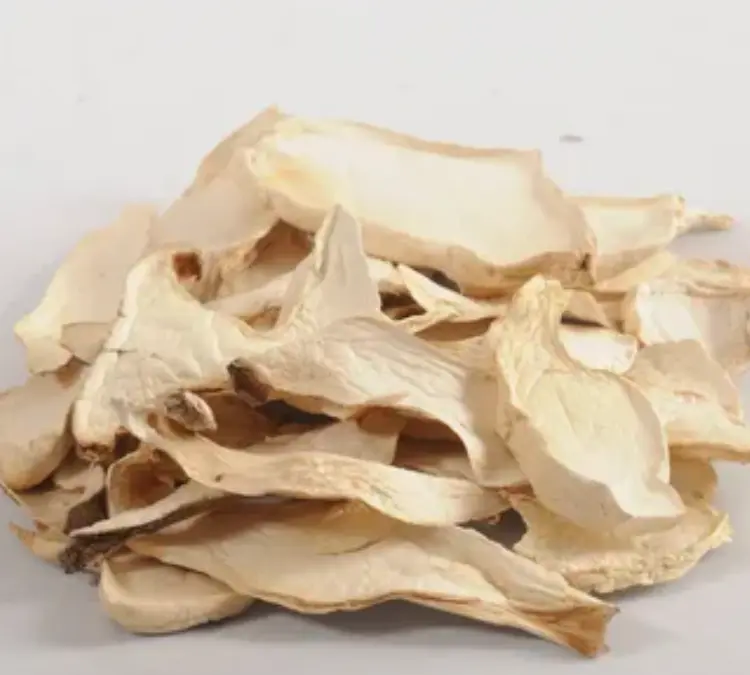
Eryngii bulk supplier
Let’s talk about the two words that keep procurement directors awake:detention and demurrage.The EU’s Rapid Alert System for Food and Feed(RASFF)recorded 27 notifications for fungal products in Q1 2026 alone—most related to unauthorised plant protection products(notably ethylene oxide and chlorpyrifos)and heavy-metal exceedances.The FDA’s Import Refusal Report shows a parallel trend,with cadmium and lead being the primary violators for mushroom shipments from non-GI zones.
The specific thresholds that matter for your purchase order:
Cadmium(Cd):EU maximum level is 0.50 mg/kg dry weight for cultivated fungi.FDA lacks a specific federal limit but enforces action levels based on the Codex Alimentarius general standard(≈0.50 mg/kg).Generic low-altitude substrates often contain natural geogenic cadmium,pushing levels to 0.65–0.80 mg/kg.
Lead(Pb):EU sets 0.30 mg/kg dry weight.Our GI-mandated substrate testing—using ICP-MS on every batch—consistently returns<0.10 mg/kg.
Pesticide Multiresidue:We screen for 568 active substances using LC-MS/MS and GC-MS/MS,per EU(EC)396/2005.This includes 15 pesticides that are not approved in the EU but remain legal in other mushroom-exporting nations.
Our pre-shipment protocol is structured to eliminate the“surprise rejection.”We release the shipment only after receiving a clean third-party Certificate of Analysis(CoA)from Eurofins or SGS,conducted on a composite sample drawn from the final packaged blend.This CoA accompanies the Bill of Lading.For high-volume contracts(≥3 FCL),we offer an optional pre-shipment hold:we retain the container at our bonded warehouse for 48 hours while you appoint your own inspection agent on-site in Qingyuan.That is a level of transparency that spot-market traders cannot economically sustain.
The Buyer‘s Procurement Checklist:Grading Eryngii for Industrial Processing vs.Retail Shelves
Not all dry Eryngii is created equal,and your grade specification must align with your final application.Formulating a generic“Grade A”requirement invites ambiguity.We recommend a three-dimensional spec matrix:
Physical Grading Standards(Our Factory Reference):
| Grade | Intended Use | Length(Whole-Stem) | Cap Integrity | Allowed Breakage | Moisture Variance |
|---|---|---|---|---|---|
| Premium(A1) | Private-label whole-mushroom jars/gift boxes | 8–12 cm,uniform | ≥95%intact cap,no folds | ≤2%fines(<2 cm) | ≤±0.3% |
| Commercial(A2) | HORECA sliced/diced pre-packs,stir-fry blends | 5–8 cm,mixed | ≥80%intact,minor edge cracks | ≤8%fines | ≤±0.5% |
| Industrial(B) | Soup bases,extract powder,infant food ingredients | 3–5 cm or broken pieces | Not applicable(cap removed) | ≤15%powder(for extraction) | ≤±0.5% |
Critical note for food processors:If you are purchasing for beta-glucan extraction,you should actually specify Industrial Grade(B)with a higher powder fraction,because the broken pieces offer a higher surface-area-to-volume ratio for solvent extraction,reducing your milling energy costs by 12–15%.Conversely,for a retail program requiring slice integrity,we micro-perforate the vacuum bags to allow residual gas exchange,preventing the collapse of the cap structure during long-haul shipping.
Direct Supply vs.Spot Trading:Why 28 Years of Vertical Integration Eliminates Middleman Risk
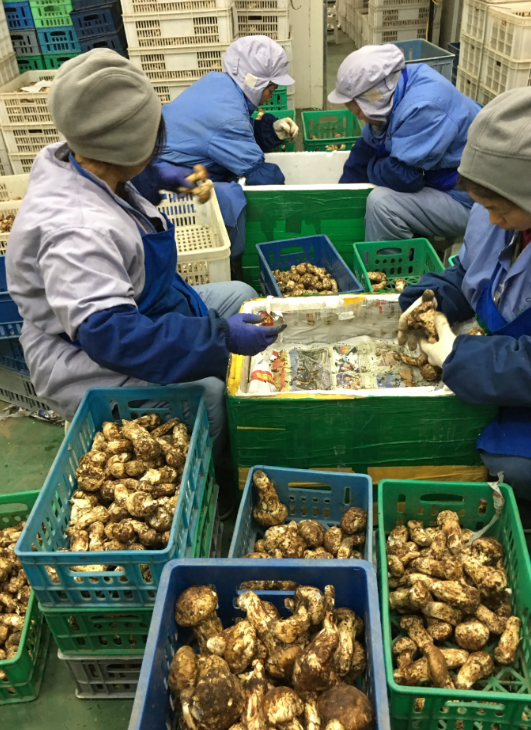
bulk dried mushroom supplier
The spot market offers price transparency today,but it hides tomorrow’s cost—the cost of inconsistent strain,variable drying,and missing traceability.Our vertical integration spans 1,200 controlled cultivation sheds,a dedicated mother-strain preservation centre(maintaining 7 proprietary Pleurotus eryngii isolines),and two solar-assisted dehydration facilities with a combined monthly throughput of 480 metric tons of finished dry product.We maintain a safety stock equivalent to 90 days of average production to buffer against adverse weather,ensuring that our committed FCL schedule holds firm regardless of seasonal fruiting anomalies.
When a buyer signs a framework agreement with Jiangyuan(wu3gong.com),they are not betting on a crop—they are betting on a processing infrastructure that has weathered 28 harvest cycles,three major food-safety regulatory overhauls(China GAP,EU Organic equivalence,and US FSMA),and a decade of evolving MRL standards.Our QR traceability code on each export carton links back to the specific cultivation bay,harvest date,drying tunnel ID,and the technician’s sign-off on the final moisture check.That data is not decorative;it is your legal shield in a regulatory audit.
Expert Verdict(For Your Procurement File)
Stop specifying by name;start specifying by strain ID and drying profile.Generic“King Oyster”lots are priced for the spot market,but they carry an embedded quality risk that manifests as processing waste,shelf-life returns,or customs hold fees.True Pleurotus eryngii from a GI-controlled zone with staged dehydration and batch-specific heavy-metal screening is a manufacturing input,not a commodity.The premium you pay per kilogram on the proforma invoice is typically recouped within the first processing shift through lower breakage rates and higher rehydrated yields.If your current supplier cannot provide a substrate composition log and a drying temperature curve alongside their commercial invoice,you are not buying food ingredients—you are buying paperwork for your quality assurance team to chase.Prioritise verifiable data over the lowest CFR price.Your margin line will show the difference long before the container reaches your warehouse door.
Frequently Asked Questions(Global Buyer Long-Tail Queries)
1.What moisture content should I specify to ensure mold-free shipping for a 35-day sea freight?
Specify a maximum moisture content of 13.0%with a water activity(Aw)below 0.65.Our staged drying achieves 12.2–12.8%,which is the safe zone for container condensation during equatorial transits.Anything above 13.5%should trigger a mandatory mold-plate test upon arrival.
2.How are heavy metals like cadmium tested for EU compliance,and who bears the lab cost?
Cadmium and lead are tested via ICP-MS on a homogenised 500g composite sample.For contracted FCL orders,we cover the cost of the initial third-party Eurofins/SGS test as part of our quality assurance SOP.A pre-shipment copy is provided to you for customs brokerage.
3.Can I distinguish solar-assisted drying from purely mechanical drying upon arrival?
Yes.Solar-assisted dried Eryngii exhibits a uniform cream-beige colour with slight natural color variation.Purely mechanical(high-temperature)dried product often shows a bleached,uniform pale-yellow surface and a brittle,powdery texture at the stem base.Ask your supplier for the drying curve log as contractual proof.
4.What are the typical stem length specifications for private-label whole-mushroom glass jars?
For 200–250 ml retail glass jars,we pack a uniform 6–8 cm length grade.For larger 500 ml formats,the preferred spec is 8–10 cm.We customise cutting to your jar height to maximise visual fill volume and reduce headspace.
5.What is the realistic shelf-life guarantee for vacuum-packed Eryngii destined for North American distribution?
Under vacuum-sealed,ambient-temperature storage(15–25°C),our solar-dried product maintains organoleptic quality for 24 months from the production date,with a recommended“best before”window of 18 months to account for retail stock rotation.We provide accelerated shelf-life study data upon NDA request.
References:
FDA — Mushrooms, Canned or Dried: Adulteration Involving Maggots, Mites, Decomposition