A low quotation from a Chinese mushroom supplier can look attractive until the shipment arrives with inconsistent grades, excessive moisture, damaged caps, missing documentation, or laboratory results that do not match the product you ordered. For international buyers, how to verify the quality of Chinese mushroom suppliers is not simply a question of inspecting a sample. It is about establishing whether a supplier can deliver the right product, meet the agreed food-safety requirements, and maintain those standards across commercial shipments.
The most reliable approach is to verify four things independently: the supplier’s business identity, the production facility, the actual mushroom quality, and the documentation linked to the shipment. A professional website or an impressive certificate may be a useful starting point, but neither proves that a particular batch meets your specifications.
| Verification area | What buyers should check | Evidence to request |
|---|---|---|
| Supplier identity | Legal entity and actual role in production | Business registration details and facility information |
| Food safety | Relevant systems and product-specific risks | Valid certificates, scope documents, and applicable test reports |
| Product quality | Grade, appearance, moisture, aroma, and defects | Written specifications and representative samples |
| Traceability | Connection between raw materials and finished goods | Lot codes, production records, and shipment documents |
| Shipment consistency | Whether delivered goods match the approved specification | Inspection results and batch-linked records |
For a food wholesaler, these checks help reduce the risk of rejected goods and costly disputes. For a supermarket buyer, they support supplier approval and audit readiness. For a food processor, they help ensure that the raw material performs consistently in soups, sauces, seasonings, and other finished products.
The objective is not to find a supplier who promises perfection. It is to find one whose claims can be tested against evidence.
1. Verify the Supplier’s Legal Identity and Actual Production Role
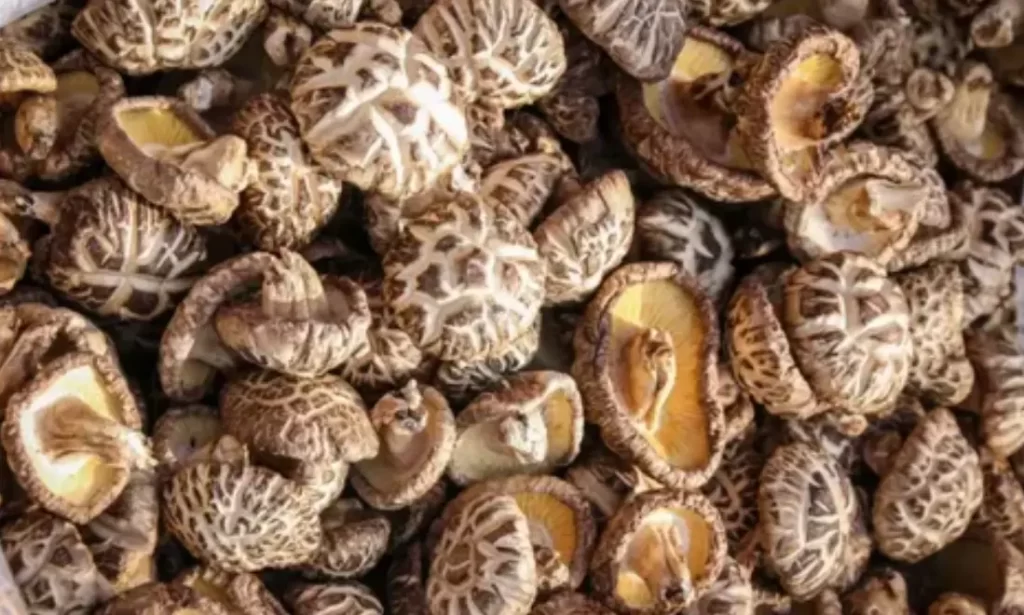
Verify the Supplier’s Legal Identity and Actual Production Role
Before examining dried shiitake caps or requesting a laboratory report, establish exactly who will supply your goods. This first step sounds administrative, yet it can determine who is responsible when quality problems arise.
China’s mushroom supply chain includes growers, processors, export companies, distributors, and businesses that combine several of these functions. A trading company is not automatically an unreliable supplier, just as a factory is not automatically a reliable one. The important question is whether the supplier’s actual role is transparent and appropriate for your order.
Check the registered company information
Request the supplier’s full registered company name, business registration details, operating address, and the name of the legal entity that will appear on the sales contract and commercial invoice.
Compare these details across the quotation, contract, invoice, relevant certificates, and export documentation. Differences do not necessarily indicate misconduct: a group company, export subsidiary, or authorized manufacturing partner may legitimately be involved. However, the relationship should be explained and documented before payment.
If the supplier claims to manufacture the mushrooms directly, ask which facility performs sorting, grading, drying, testing, and packaging. Do not assume that every operation takes place at the address shown on the website.
Distinguish manufacturing capability from sales capability
A credible supplier should be able to explain its production arrangements in practical terms. Vague claims about large capacity or advanced equipment are less useful than a clear account of how a particular product moves through the facility.
| Verification dimension | Evidence to request | Warning sign | Appropriate follow-up |
|---|---|---|---|
| Legal identity | Registered company details | Names differ across key documents without explanation | Request clarification and supporting records |
| Facility identity | Production address and facility details | Supplier cannot identify where processing occurs | Ask for a facility review or independent inspection |
| Production role | Description of in-house and outsourced operations | Supplier claims direct manufacturing but cannot explain the process | Request a process-flow description |
| Capacity and supply | Product-specific capacity and lead-time information | Promises appear inconsistent with the stated operation | Confirm a realistic production schedule |
| Contract accountability | Contracting entity and quality responsibilities | No clear party accepts responsibility for defects | Resolve responsibilities before placing the order |
Based on our experience with the practical requirements of B2B mushroom sourcing, the most useful supplier discussions are specific rather than promotional. Ask how a lot is graded, how drying conditions are controlled, how finished products are identified, and what happens when an inspection reveals a deviation. The answers should be consistent with the documents and processes the supplier can demonstrate.
For buyers sourcing from Qingyuan, Zhejiang, a recognized shiitake-producing region, origin can be commercially relevant because buyers may value established production traditions and product characteristics. But a geographical claim alone does not establish the origin of every shipment. Request supporting sourcing and traceability records where origin is part of the purchasing specification.
A practical rule: Verify the company behind the transaction before relying on the story told by its sales team.
2. Verify Food-Safety Certifications and Quality Documents
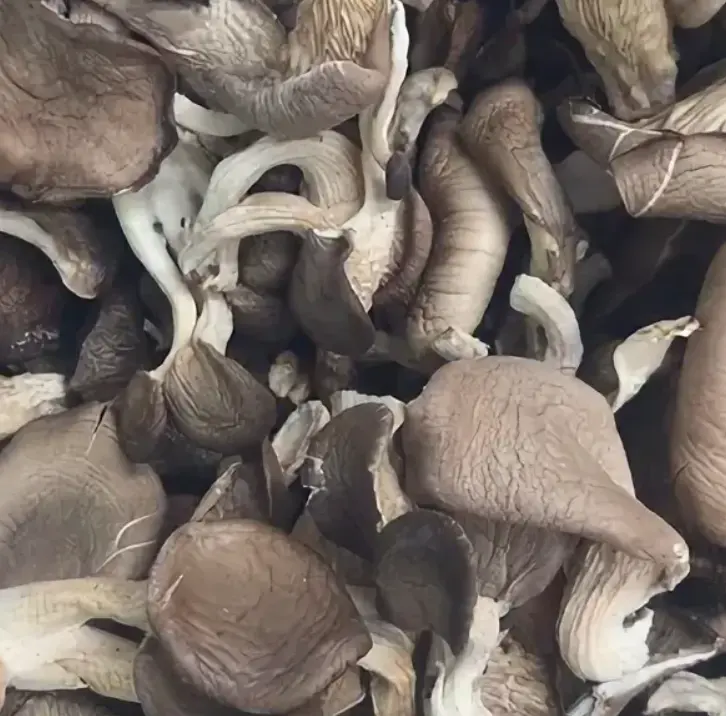
Verify Food-Safety Certifications and Quality Documents
A supplier may send you a folder containing certificates, audit documents, and inspection reports within minutes of receiving your inquiry. The important question is not how many documents arrive. It is whether those documents are genuine, relevant, current, and applicable to the facility and product you intend to purchase.
Check HACCP and ISO 9001 separately
HACCP and ISO 9001 serve different purposes. HACCP focuses on identifying food-safety hazards and establishing controls for significant risks. ISO 9001 addresses quality management systems. Neither should be presented as a blanket guarantee that every shipment is safe or meets a buyer’s specification.
Ask for copies of the relevant certificates and verify the issuing organization, certificate number, validity period, covered activities, and facility identity. Where available, confirm the information through the issuing body’s official verification system or directly with the issuer.
For buyers importing into the United States, the distinction has practical consequences. According to the FDA’s Foreign Supplier Verification Programs (FSVP) guidance, covered importers must conduct risk-based supplier verification activities. A certificate alone does not replace the required evaluation of food hazards, supplier performance, and appropriate verification measures.
The FDA’s August 2026 warning letter concerning an importer of dried mushrooms illustrates this point: the agency identified deficiencies in documenting the basis for supplier approval and the verification activities needed. This is a concrete reminder that collecting certificates and test reports is not the same as operating an adequate verification program.
Match every document to the actual product
A certificate may cover one facility, while your order is processed elsewhere. A laboratory report may describe a different product or an earlier batch. These inconsistencies deserve clarification before the order proceeds.
Build a document checklist around the product, processing location, and destination market. Request only the records relevant to the transaction, and document any gaps that need to be resolved.
Do not confuse a supplier’s quality-system certification with a product-specific Certificate of Analysis (COA). The former concerns a management system; the latter reports analytical findings for a defined sample or batch.
3. Evaluate Mushroom Quality Against Written Specifications
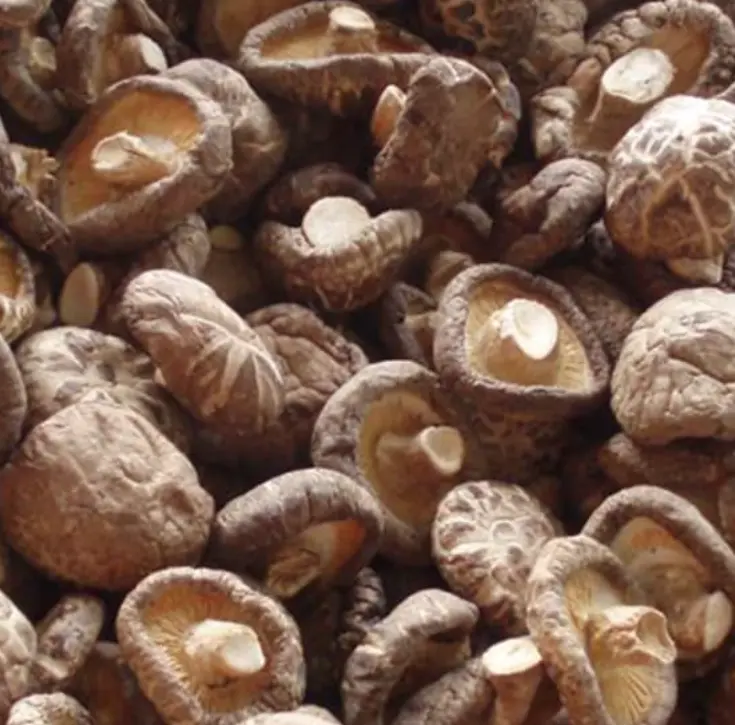
Evaluate Mushroom Quality Against Written Specifications
A photograph can show the general appearance of dried shiitake mushrooms. It cannot reliably establish moisture content, hidden contamination, or whether an entire production lot matches the sample.
The solution is to define acceptance criteria before ordering. Otherwise, buyer and supplier may have different interpretations of words such as premium, large, thick-cap, or export quality.
Inspect appearance, aroma, and physical condition
For dried shiitake, examine cap size, thickness, color, breakage, visible foreign matter, insect damage, and characteristic aroma. These characteristics should be assessed against the agreed grade and intended application rather than an assumed universal standard.
Fresh shiitake requires a different assessment, including freshness, firmness, surface condition, temperature management, and expected shelf life. Black fungus has its own product-specific characteristics and acceptance criteria.
Moisture content deserves particular attention in dried products. Excess moisture can affect storage stability and increase the risk of deterioration, but appearance alone cannot establish the moisture level. Agree on a measurement method and acceptance limit appropriate to the product and applicable requirements.
| Quality dimension | What to examine | Verification method | Procurement consideration |
|---|---|---|---|
| Appearance and grade | Size, cap thickness, color, breakage | Visual inspection against an agreed specification | Define acceptable variation before ordering |
| Aroma and condition | Characteristic aroma and signs of deterioration | Sensory assessment by trained personnel | Investigate unusual odors or visible deterioration |
| Moisture | Moisture level in dried mushrooms | Appropriate calibrated measurement method | Specify the limit and test method in writing |
| Foreign matter | Soil, insects, extraneous material, and other defects | Representative sampling and physical inspection | Set acceptance criteria and escalation procedures |
| Food safety | Relevant chemical, biological, or physical hazards | Risk-based laboratory testing and process verification | Select tests according to product and destination |
| Packaging | Seal integrity, labeling, lot identification, and condition | Packaging inspection and document review | Ensure the shipment remains identifiable and protected |
Do not apply one specification to every mushroom product
A dried shiitake supplier may also offer fresh mushrooms, black fungus, mushroom powder, or extracts. Those products should not automatically share the same acceptance criteria or testing plan.
For example, a powder intended for food manufacturing may require a different identity, particle-size, contaminant, and functional specification from whole dried shiitake sold to restaurant distributors. An extract also cannot be verified solely by examining the raw mushroom from which it was produced.
The buyer’s intended use must therefore shape the inspection plan. That is the difference between purchasing a product that looks acceptable and approving a raw material that performs reliably in a commercial process.
4. Verify Laboratory Reports and Contaminant Testing
A supplier’s promise that its mushrooms are “100% safe” is not a substitute for analytical evidence. For international buyers, the real question is whether the testing program addresses the risks associated with the product, its production history, and the destination market.
Request a recent Certificate of Analysis (COA) and confirm that the report identifies the correct product, sample, testing date, laboratory, analytical methods, and results. Where possible, match the report to the production lot you intend to purchase.
Select tests according to product risk
Dried shiitake, black fungus, mushroom powder, and extracts may require different testing plans. Depending on the product and risk assessment, relevant checks may include pesticide residues, heavy metals, microbiological hazards, and physical contamination.
Do not assume every shipment requires an identical testing panel. Equally, do not assume that a report covering a small number of analytes proves the absence of all potential hazards.
For buyers importing into the United States or European Union, verify the applicable requirements for the exact product category and intended use. Pesticide maximum residue limits (MRLs), contaminant limits, sampling requirements, and import controls can differ by jurisdiction and commodity. Use current official regulatory sources rather than relying on a supplier’s general statement that its products meet international standards.
Check laboratory credibility and report relevance
A laboratory’s accreditation can strengthen confidence in its technical competence, but buyers should confirm that the relevant tests fall within the laboratory’s accredited scope. Also check whether the reported results can be interpreted against the applicable legal limits or agreed purchasing specification.
If the order carries substantial financial or regulatory risk, consider independent sampling and testing through a suitably qualified laboratory. Agree in advance who selects the sample, how it is sealed and identified, who pays for testing, and what happens if results fail.
5. Test Samples and Confirm Batch-to-Batch Consistency
A good sample is encouraging. It is not a guarantee of a good shipment.
Samples may come from carefully selected stock rather than the production lot intended for the buyer. Even when the supplier acts in good faith, differences in raw materials, drying conditions, grading, and storage can affect the final product.
Before confirming a bulk order, establish a written product specification covering the characteristics that matter commercially. Depending on the product, these may include grade, size range, moisture content, acceptable defects, packaging, labeling, and applicable test requirements.
Retain an approved reference sample where practical. The agreement should also specify how the shipment will be sampled, which inspection method applies, and how disagreements will be resolved.
A pre-shipment inspection can help establish whether the goods conform to agreed requirements, but its effectiveness depends on representative sampling, clear acceptance criteria, and competent inspection. It cannot independently guarantee the absence of every food-safety hazard.
6. Audit Traceability, Processing, and Packaging Controls
Traceability becomes especially important when a quality problem emerges after the goods have reached a distribution center, factory, or retail warehouse.
Ask the supplier to explain how it links raw-material sourcing, processing records, finished-product lot numbers, packaging dates, and shipment documentation. The records should support the level of traceability required by the buyer and applicable regulations.
For dried shiitake, review the controls used during sorting, grading, drying, and storage. The supplier should be able to explain how it monitors relevant process conditions and prevents finished products from being mixed with unsuitable material.
For WUSANGONG, the company’s stated production workflow includes raw mushroom selection, cleaning and sorting, grading, drying, quality inspection, packaging, and export shipment. Buyers evaluating these capabilities should request current supporting records and confirm which controls apply to the specific product being purchased.
Packaging deserves equal attention. Incorrect labeling, damaged seals, poor moisture protection, or missing lot identification can create commercial and compliance problems even when the mushrooms themselves appear acceptable.
7. Verify Export Documentation and Destination-Market Requirements
A supplier may be capable of producing good mushrooms without having every document required for a particular export transaction. Buyers should therefore confirm documentation requirements before production begins, not when the goods are already waiting for shipment.
The exact requirements depend on the destination, product type, processing method, intended use, and applicable import rules. Depending on the transaction, relevant documents may include commercial invoices, packing lists, certificates of origin, phytosanitary documents where applicable, laboratory reports, and product or facility records required by the importing country.
For the United States, importers should assess applicable FDA requirements, including the Foreign Supplier Verification Programs (FSVP) rule where relevant. European buyers should verify applicable EU food-safety, contaminant, pesticide-residue, labeling, and import requirements for the specific product.
Never treat a supplier’s statement that it has export experience as proof that your shipment will automatically clear customs. Confirm responsibilities with the supplier, freight forwarder, customs broker, and relevant authorities before dispatch.
8. Use a Mushroom Supplier Quality Assurance Scorecard
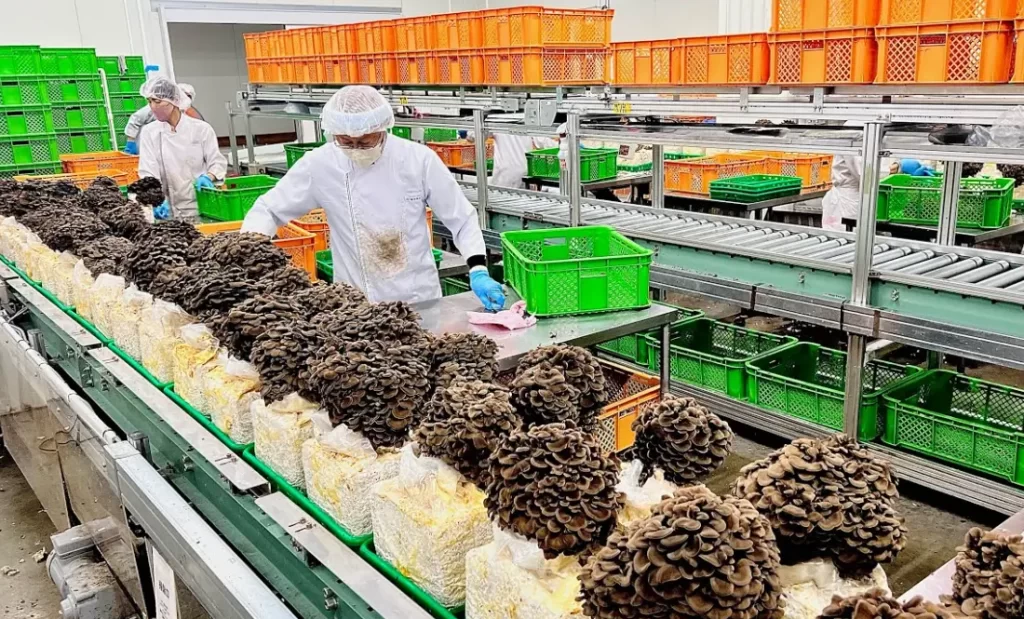
Use a Mushroom Supplier Quality Assurance Scorecard
A structured scorecard helps purchasing teams compare suppliers consistently instead of relying on price, presentation, or personal impressions. The following is a proposed buyer evaluation framework, not an official industry standard.
| Quality assurance dimension | Evidence to evaluate | High-risk warning sign | Recommended decision |
|---|---|---|---|
| Legal identity | Consistent registration and contracting details | Unexplained entity discrepancies | Hold approval until resolved |
| Certifications | Validity, scope, facility, and issuer | Certificate cannot be independently verified | Request clarification and verification |
| Product quality | Sample results against written specifications | Material defects or repeated inconsistencies | Reject or request corrective action |
| Laboratory evidence | Relevant methods, results, and batch identity | Report does not match the product or lot | Request appropriate new testing |
| Traceability | Lot codes and production records | Finished goods cannot be linked to relevant records | Escalate before shipment approval |
| Export readiness | Applicable documentation and destination requirements | Required documents are missing or inconsistent | Delay dispatch until resolved |
| Commercial reliability | Clear specifications, lead times, and responsibilities | Supplier refuses reasonable quality agreements | Reassess supplier suitability |
Establish clear approval and rejection rules
A useful supplier approval process has three possible outcomes:
- Approved: The supplier meets the defined requirements, and the available evidence supports the intended purchase.
- Conditionally approved: Outstanding issues are documented, assigned to a responsible party, and resolved before the relevant order or shipment proceeds.
- Rejected or suspended: Material safety concerns, unresolved document inconsistencies, or repeated failures make the supplier unsuitable until satisfactory corrective action is demonstrated.
Do not let a high score compensate for a critical food-safety failure. A supplier with attractive pricing and excellent packaging should not pass if essential safety evidence is missing or applicable requirements are not met.
Review the supplier again when there is a significant quality incident, a change of production facility, a new product category, or a material change in sourcing arrangements. Supplier verification is an ongoing control, not a one-time administrative exercise.
9. Frequently Asked Questions for Global Buyers
How can I tell whether a Chinese mushroom supplier is a real manufacturer?
Request the registered company details, production address, description of manufacturing operations, and relevant facility evidence. Compare these with the contracting entity and supporting documents. A trading company may still be a suitable supplier if its role, production partners, and accountability are transparent.
What documents should I request before ordering dried shiitake mushrooms?
Start with the product specification, relevant quality-system certificates, available batch-specific laboratory reports, traceability information, and packaging details. Confirm the additional commercial, origin, and regulatory documents required for your destination and transaction. The complete document list will vary by market and product.
How can I verify a mushroom supplier’s HACCP certificate?
Check the certificate holder, facility, scope, validity period, and issuing organization. Where possible, verify it through the issuer or an official verification service. Confirm that the documented food-safety system applies to the actual production operation supplying your order.
Which laboratory tests are relevant to imported dried mushrooms?
Testing should reflect the product, risk assessment, intended use, supplier history, and destination-market rules. Depending on those factors, the program may include pesticide residues, heavy metals, microbiological hazards, or other relevant contaminants. Ask a qualified laboratory or food-safety professional to establish the appropriate test panel rather than assuming one universal panel covers every risk.
How can I ensure bulk mushroom shipments match the approved sample?
Create a written specification, retain a reference sample where practical, and agree on representative sampling and acceptance criteria before production. Request batch-linked inspection and testing records as appropriate. For higher-risk orders, consider independent pre-shipment inspection and define the procedure for handling nonconforming goods before signing the contract.
10. Expert Verdict: Verify the Evidence Before You Approve the Order
The best approach to how to verify the quality of Chinese mushroom suppliers is to evaluate the company, the product, the test evidence, and the shipment as one connected purchasing process.
For WUSANGONG and any other prospective supplier, request evidence that matches the specific product and order. Confirm the production role, review the relevant certificates, agree on measurable specifications, and establish traceability and inspection requirements before payment or dispatch.
My recommendation: Never approve a bulk mushroom order on the strength of a certificate, a sales promise, or a good-looking sample alone. Approve it when the evidence supports the decision.
References:
FAO / WHO – General Principles of Food Hygiene (CXC 1-1969)
University of New Hampshire Extension – Boosting the Quality and Safety of Specialty Mushrooms