For a global food wholesaler or a high-volume processing plant, the criteria for how to pick good dried shiitake mushrooms extend far beyond the kitchen-level advice found on culinary blogs. In the industrial supply chain, a “good” mushroom isn’t just about flavor; it is defined by microbial stability, consistent rehydration yields, and strict adherence to Maximum Residue Limits (MRLs). A single shipment failing a pesticide test or arriving with a moisture content above 13% can result in catastrophic financial losses and damaged brand reputation.
At Jiangyuan Mushroom, having navigated the complexities of international fungi trade since 1996 from our base in Qingyuan, we have seen that professional procurement requires a data-driven approach. Before we dive into the nuances of morphology, the following table summarizes the non-negotiable technical benchmarks every B2B buyer must demand from their supplier.
Table 1: Export-Grade Dried Shiitake Quality Benchmarks (Industrial Standard)
| Metric | Premium Export Grade (Qingyuan GI) | Standard Commercial Grade | Reject/High-Risk Grade |
|---|---|---|---|
| Moisture Content | <12% (Optimized for shelf-life) | 13%-15% | >16% (Risk of mold/aflatoxins) |
| Rehydration Ratio | 1:6 to 1:7 | 1:4 to 1:5 | <1:3 (Poor cell structure) |
| Aroma Profile | Strong, pungent, woodsy (Lenthionine rich) | Moderate mushroom scent | Musty, sour, or odorless |
| Pesticide Residues | EU/FDA Compliant (Third-party tested) | Varies by region | High risk/Untraced |
| Cap-to-Stem Ratio | Short stem or Stemless | Long stem (untrimmed) | Irregular/Crushed |
The primary pain point for international buyers is the lack of standardization in the global market. You are often forced to choose between low-cost, high-risk “commodity” mushrooms and premium, verified origins. When you are sourcing 20-ton containers, “visual inspection” is your last line of defense, not your first. Your first defense is a technical specification sheet that guarantees consistency across every batch.
Beyond the Visuals: The Three Core Metrics of Industrial Shiitake Quality
how to pick good dried shiitake
Understanding how to pick good dried shiitake mushrooms requires a shift from “looking” to “measuring.” In my 28 years of overseeing export quality control at Jiangyuan, I have identified three metrics that dictate the true value of a bulk shipment.
1. The Moisture Threshold: The Silent Profit Killer
Moisture is the most critical factor in B2B sourcing. High moisture (anything above 15%) adds “dead weight” to your shipment, meaning you are paying for water rather than fungi. More dangerously, it facilitates the growth of Aspergillus species, leading to potential mycotoxin contamination.
The Jiangyuan Standard: We stabilize our dried shiitake at 11-12% moisture. This ensures the mushroom remains brittle to the touch—snapping cleanly when pressed—and provides the longest possible shelf-life for global sea freight.
2. The Rehydration Yield (Expansion Ratio)
For food processing plants and industrial kitchens, the “true cost” of the mushroom is its weight after rehydration. A high-quality dried shiitake should expand 6 to 7 times its dry weight.
The Science: This ratio is determined by the density of the Lentinus edodes mycelium. Mushrooms grown in high-altitude, mountainous regions like Qingyuan grow slower, resulting in a denser cell wall that absorbs and retains more water, providing a superior “meaty” texture in soups and ready-meals.
3. Aroma Intensity and Guanylate Content
The “Umami” of a dried shiitake is driven by 5′-GMP (guanylate). This compound is significantly higher in dried mushrooms than fresh ones, but only if the drying process is managed correctly. If the drying temperature is too high, the enzymes responsible for flavor development are destroyed. If too low, the mushroom undergoes fermentation.
The Professional Test: Rub two dried mushrooms together. The friction should release a deep, concentrated earthiness. If you detect a “smoky” or “burnt” scent, the manufacturer likely used high-heat mechanical drying to cut costs, which compromises the flavor profile for your end consumers.
The Origin Factor: Why Qingyuan (GI) Status is a Non-Negotiable Quality Filter
dried shiitake quality
The most common mistake in global procurement is treating dried mushrooms as a generic commodity. However, just as Champagne must come from France, the highest-tier shiitake is inextricably linked to the Qingyuan Mushroom Origin. As the recognized “Home of the Shiitake,” Qingyuan mushrooms are protected by Geographical Indication (GI) status.
When you are determining how to pick good dried shiitake mushrooms, verifying the origin is your shortcut to safety and quality. The ecological conditions in the Zhejiang mountains—high diurnal temperature variations and acidic soil—naturally suppress pests, reducing the need for chemical interventions.
Table 2: Comparison of Qingyuan GI Shiitake vs. Generic Mass-Market Shiitake
| Feature | Qingyuan (Jiangyuan Standard) | Generic Mass-Market Origin |
|---|---|---|
| Cultivation Altitude | 800m-1200m (High Mountain) | Lowland/Industrial Greenhouse |
| Traceability | Farm-to-Fork (Batch Coded) | Aggregated from unknown sources |
| Safety Testing | Regular Cd, Pb, and 500+ Pesticide screens | Basic or Non-existent |
| Cultural Heritage | 800+ Years of traditional methods | Rapid industrial scale-up |
| Texture | Firm, resilient, “meaty” | Spongy or fibrous |
According to recent customs data, shipments from verified GI origins face significantly lower “red-flag” rates during EU and North American border inspections. For a buyer, this means faster customs clearance and lower warehouse detention costs. Based on our experience with large-scale distributors in Southeast Asia and Europe, sourcing from a manufacturer with deep roots in a GI region like ours isn’t just about quality—it’s a risk management strategy.
Selecting a “good” mushroom is therefore synonymous with selecting a “transparent” supply chain. In the next section, we will break down the specific physical grading categories—from Flower Shiitake (Donko) to Sliced varieties—and how to choose the right grade for your specific business model.
Decoding the Grades: Choosing the Right Morphology for Your Application
dried shiitake mushrooms
Knowing how to pick good dried shiitake mushrooms also involves understanding that “Grade A” doesn’t mean the same thing for every buyer. A snack manufacturer has vastly different requirements than a high-end Michelin-starred restaurant distributor. In the Qingyuan export tradition, we categorize mushrooms based on growth timing and cap morphology.
The “Flower” vs. “Winter” Distinction
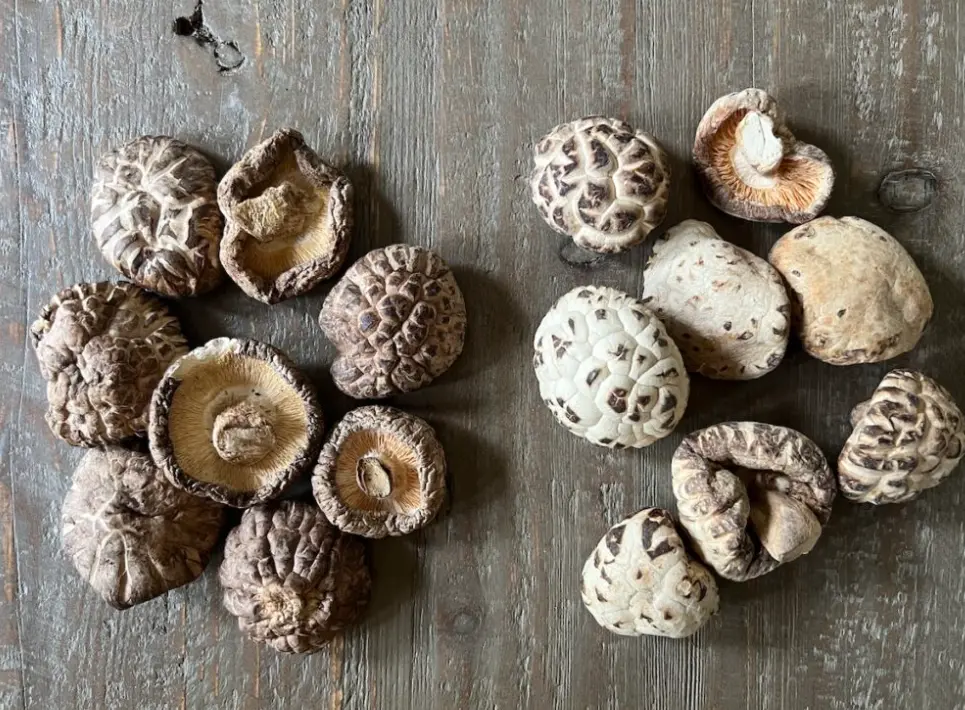
Donko (Flower Shiitake): These are harvested in the cold of winter. The cold causes the cap to crack, creating a beautiful white-on-brown lattice. For a wholesaler, these represent the highest price point and are best suited for gift sets or premium retail.
Koko (Winter Shiitake): These have a thick, meaty cap but lack the surface cracking of the Donko. For food processing plants, Koko often provides the best ROI, offering the same structural integrity and “mouthfeel” as Flower Shiitake at a more competitive price per kilogram.
Sliced and Diced : For industrial soup or seasoning manufacturers, sourcing pre-sliced dried shiitake is a strategic move to reduce labor costs and ensure uniformity in the final product.
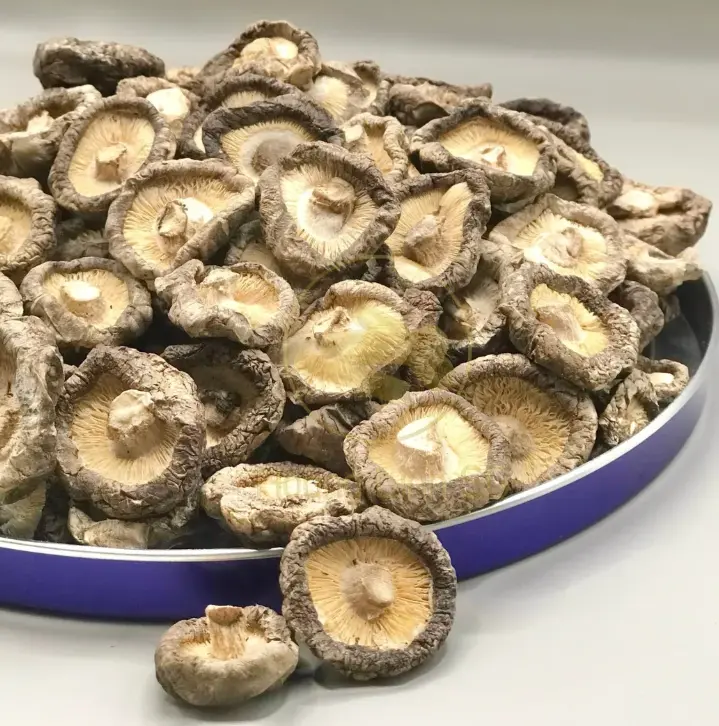
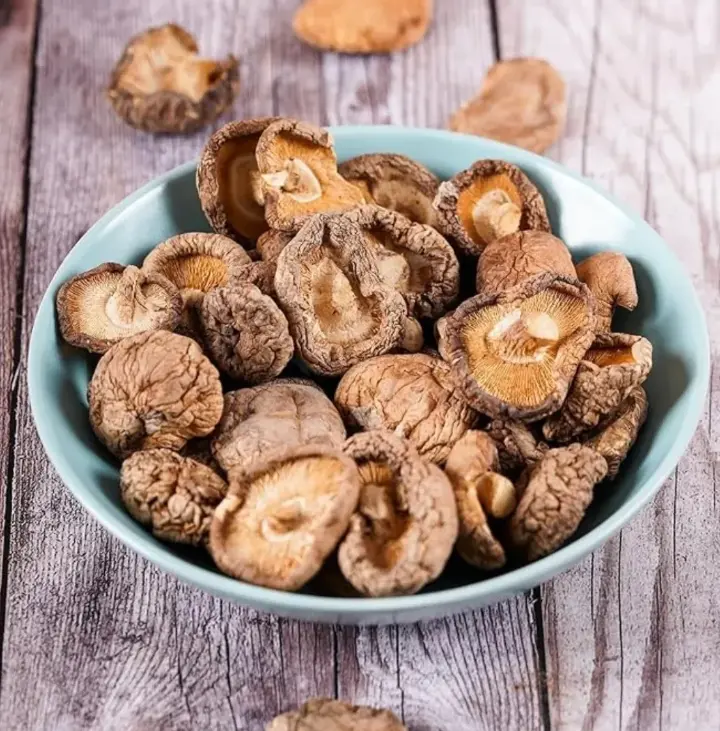
However, the “goodness” of these grades is often sabotaged by poor processing. If you see a Donko with a yellowish or dark grey interior (the gills), it indicates poor drying or aged stock. A premium dried shiitake should always have pale, creamy-yellow gills.
Solar vs. Mechanical Dehydration: The 2026 Health-Tech Convergence
In 2026, the global food market is increasingly focused on functional ingredients. One of the unique advantages of picking a high-quality supplier like Jiangyuan is our specialized drying protocols. There is a common debate in the industry: Sun-dried vs. Machine-dried.
Professional buyers must understand the trade-offs. Traditional sun-drying is superior for Vitamin D2 optimization. Shiitake mushrooms contain high levels of ergosterol, which converts to Vitamin D2 under UV light. However, 100% sun-drying is risky due to environmental contaminants and inconsistent moisture.
The Hybrid Solution
At Jiangyuan, we utilize a proprietary hybrid drying technology. We expose the mushrooms to controlled UV-simulated light to maximize Vitamin D2, followed by closed-loop heat pump dehydration. This ensures:
- Safety: No exposure to dust or insects.
- Color Preservation: Prevention of oxidation that turns mushrooms black.
- Nutrient Density: High retention of Beta-glucans and Polysaccharides.
Quality Assurance: The Compliance Matrix
For a procurement director, the most critical part of how to pick good dried shiitake mushrooms is the lab report. “Good” must be synonymous with “Safe.” Below is the Jiangyuan Quality Assurance Matrix, which we use to benchmark every batch before it leaves our Qingyuan facility.
Table 3: B2B Quality Compliance & Safety Matrix
| Test Parameter | Global Standard (EU/FDA/JP) | Jiangyuan Control Protocol | Business Impact for Buyer |
|---|---|---|---|
| Heavy Metals (Cd, Pb, Hg) | <0.5 mg/kg (Varies by region) | Soil-testing at the source; Batch-specific ICP-MS testing. | Prevents shipment rejection at border inspection. |
| Pesticide Residues | Zero-tolerance for non-approved chemicals. | 500+ Multi-residue screen (GC-MS/LC-MS). | Ensures “Clean Label” compliance for EU/US markets. |
| Microbial Load (TPC) | <100,000 cfu/g (Standard) | Advanced steam-sterilization (optional for high-spec). | Guarantees safety for ready-to-eat or short-cook applications. |
| Sulfur Dioxide (SO2) | <10 mg/kg (Detection limit) | No sulfur-fumigation policy (Natural air-drying). | Avoids allergic reactions and regulatory penalties. |
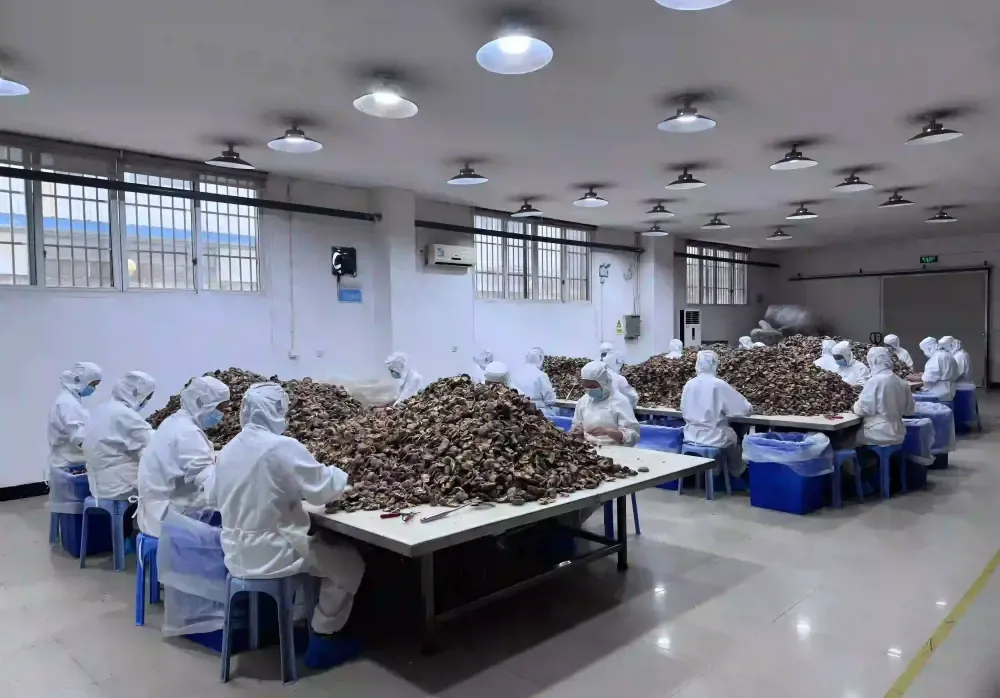
| Foreign Matter | 0% (Stones, hair, plastic) | X-Ray and dual-stage metal detection. | Protects industrial processing equipment from damage. |
The B2B Strategic Procurement Checklist
mushroom supplier
When evaluating a new supplier or auditing your current stock, use this systematic checklist to verify you are truly picking “good” mushrooms:
Traceability Verification
Ask for the “Lot Number” and its corresponding farm origin. In 2026, if a supplier cannot provide a digital trail back to the cultivation base in Qingyuan, the quality is likely inconsistent.
The “Crush” Test
Take a handful of mushrooms and squeeze. They should be hard and resistant. If they feel slightly soft or “leathery,” the moisture content is above 15%, and you are paying for water.
The Rehydration Clarity
Soak a sample in 20°C water for 4 hours. The resulting liquid (shiitake dashi) should be a clear, golden-brown. If the water is muddy or excessively dark, the mushrooms were likely harvested too late or stored in high-humidity conditions.
Uniformity of Stem Trim
Check the stems. For premium B2B applications, stems should be trimmed to the “cap level.” Excess stem weight is a common way for low-quality suppliers to increase their margins at your expense.
FAQ: Sourcing Dried Shiitake for Global Markets
Q1: How can I distinguish between genuine Qingyuan Shiitake and cheaper alternatives?
A: Look for the Geographical Indication (GI) certification. Authentic Qingyuan mushrooms have a distinctively thicker cap and a more concentrated woodsy aroma due to the specific Fagus and Quercus wood substrates used in the region. Cheaper alternatives often use generic sawdust, resulting in a “hollow” flavor.
Q2: Does the size of the mushroom affect the quality or Umami intensity?
A: No. Size is purely a functional requirement. Small mushrooms (2-3cm) are excellent for snacks or inclusions, while large mushrooms (5cm+) are preferred for center-of-plate presentation. The Umami intensity (guanylate content) is determined by the strain and the drying process, not the diameter.
Q3: What is the shelf-life of export-grade dried shiitake in a warehouse setting?
A: If the moisture is kept below 12% and they are stored in a cool, dry, dark environment, they maintain peak quality for 24 months. For B2B buyers, we recommend vacuum-sealed bulk packaging to prevent “moisture regain” during sea transit.
Q4: Is “Organic” certification necessary for dried shiitake?
A: While highly valued for retail, “Green Food” or “GAP (Good Agricultural Practices)” certifications are often sufficient for industrial use, provided they include comprehensive pesticide residue testing. Jiangyuan offers both Organic and conventional high-spec options.
Q5: Why is there a price discrepancy between “Spring” and “Winter” harvests?
A: Winter harvests (Donko) grow slower in lower temperatures, leading to higher nutrient density and better texture, hence the premium price. Spring harvests grow faster and are more economical, ideal for extraction or powdering.
Expert Verdict: The Jiangyuan Perspective
Procurement is not a search for the lowest price; it is a search for the lowest total cost of ownership. A cheap mushroom that fails a lab test or ruins a batch of soup with off-flavors is the most expensive mushroom you will ever buy.
In the 2026 market, “good” dried shiitake is defined by technical precision. Focus on the 12% moisture threshold, insist on GI-certified Qingyuan origin, and prioritize suppliers who can provide ICP-MS lab transparency. At Jiangyuan Mushroom, we’ve built our 28-year reputation on these three pillars. If your supply chain requires this level of rigor, we are ready to provide the samples and specifications to prove it.
References:
FAO / Codex Alimentarius — Standard for Dried Edible Fungi
Cornell University — Storage & Preservation: Drying Shiitake Mushrooms