For properly dried and well-packaged shiitake mushrooms, there is no single universal shelf-life number. Commercial products can carry different best-before periods because drying level, packaging, storage conditions, and quality specifications all influence stability. A shiitake-specific storage study found that approximately one year was acceptable for its tested best-before period, while a sealed sample stored at room temperature showed little change over one year; once the package was repeatedly opened and closed, quality changes became more noticeable after six months.
For global buyers, that distinction matters. “How long does it last?” is not simply a calendar question. It is a question about how long the product can retain its intended quality under defined storage and packaging conditions.
| Storage Situation | What Determines Stability | Buyer Consideration |
|---|---|---|
| Unopened commercial package | Drying level, packaging barrier, storage environment | Follow the supplier’s declared shelf-life specification |
| Opened package | Humidity exposure, resealing, handling frequency | Quality may deteriorate faster |
| Bulk warehouse storage | Temperature, relative humidity, package integrity | Inventory rotation becomes important |
| Rehydrated shiitake | Water availability, temperature, handling | No longer treat as a shelf-stable dry ingredient |
| Damaged package | Moisture or air ingress | Inspect before accepting or using |
For Jiangyuan Mushroom and other commercial suppliers, the responsible answer is therefore not to promise that every dried shiitake mushroom lasts “two years” or “three years.” Shelf life must be connected to the actual product specification and storage system.
What Is the Typical Shelf Life of Dried Shiitake Mushrooms?
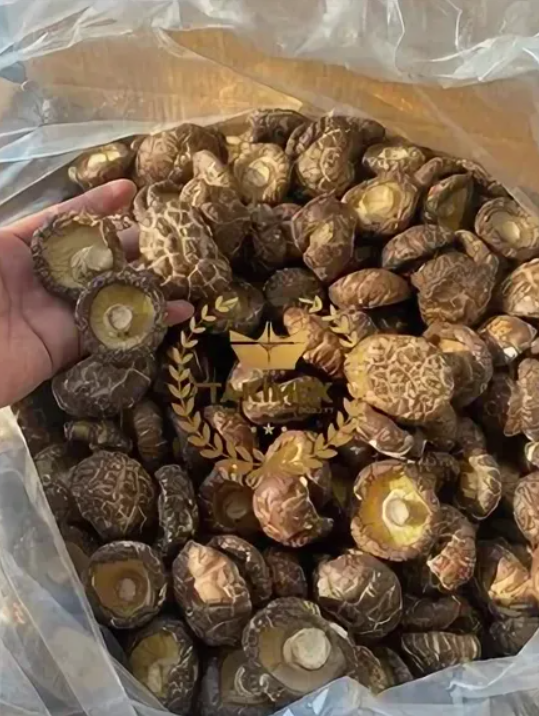
What Is the Typical Shelf Life of Dried Shiitake Mushrooms
The internet produces surprisingly different answers to this question. Some consumer resources describe roughly 12–18 months for best quality, while commercial products can carry longer manufacturer-defined dates. That variation does not necessarily mean one source is wrong and another is right. They may be describing different products, packages, storage environments, or quality criteria.
The USDA Food Safety and Inspection Service directs consumers to the FoodKeeper system for recommended storage times and emphasizes that shelf-stable foods can lose freshness and quality over time even when they do not immediately become unsafe.
This is an important distinction for dried shiitake buyers.
Shelf life is not the same thing as “the day the mushroom suddenly becomes unsafe.”
A buyer evaluating a shipment should instead think about three separate questions:
- Does the product remain within its declared commercial shelf life?
- Has its sensory and functional quality deteriorated?
- Is there evidence of moisture damage, mold, contamination, or packaging failure?
These questions lead to very different decisions.
A dried shiitake may technically remain dry after a long period but lose some of the aroma, color, texture, or cooking performance expected from a premium grade. For a household, that may be disappointing. For a supermarket or food manufacturer, it can become a commercial quality issue.
Why One-Year Storage Data Still Matters
A particularly useful reference is the Japanese study by Sasaki and colleagues examining dried shiitake under different storage conditions. The researchers monitored water content, appearance, sensory characteristics, and flavor-related components. Their results showed relatively little change in some measured taste components, while sensory quality tended to decline after six months. Samples stored in sealed bags at room temperature showed no major changes over one year, whereas repeatedly opened and reclosed samples showed greater changes. The researchers considered approximately one year acceptable for the best-before period under their tested conditions.
That last phrase — under their tested conditions — should not be ignored.
It means the study should inform purchasing logic, not become a universal label for every dried shiitake product.
Why Dried Shiitake Shelf Life Varies So Much
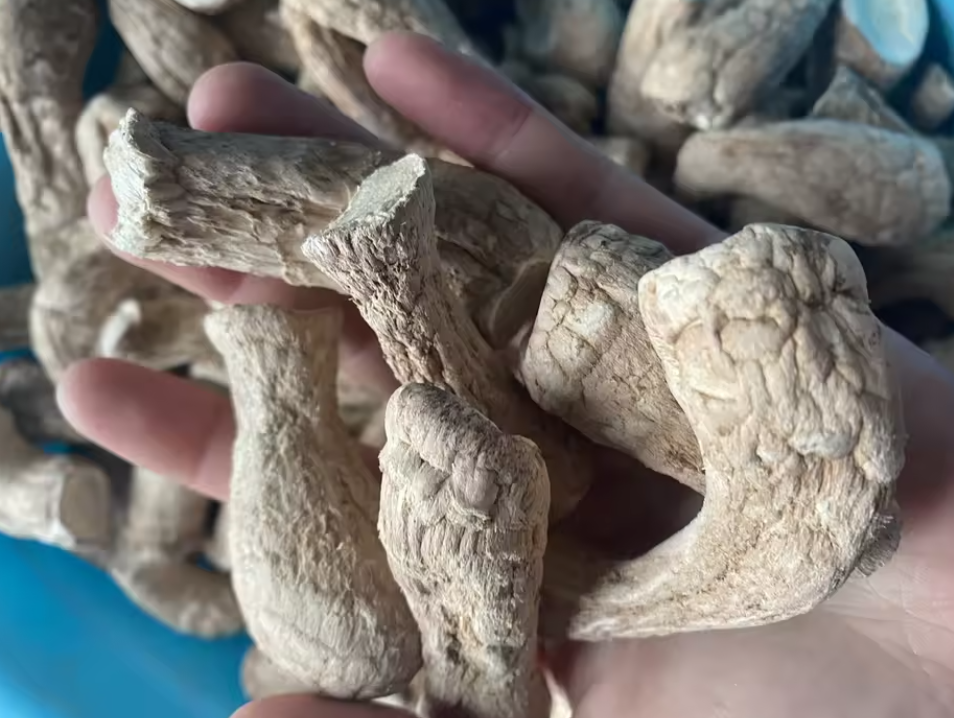
Why Dried Shiitake Shelf Life Varies So Much
A dried mushroom is not simply a fresh mushroom with “the water removed.” The final stability of the product depends on what happens during drying, immediately after drying, and throughout the supply chain.
Based on our experience with dried mushroom processing, the critical chain is:
Raw material quality → drying control → moisture condition → packaging → warehouse environment → transportation → opening and handling
A weakness at any point can shorten the practical quality life of the product.
1. Water Activity Matters More Than the Calendar Alone
One of the most important technical terms in dried-food storage is water activity (aw).
Moisture content tells you how much water is present. Water activity tells you how much of that water is available to participate in microbial and chemical processes. That difference is fundamental in food preservation.
Recent research on dehydrated mushrooms reports that drying can reduce water activity to levels at which pathogenic bacteria cannot proliferate. However, the researchers also emphasize that drying does not mean the product is sterile. Pathogens can survive in low-moisture foods and become a greater concern after rehydration.
For procurement teams, this changes the question from:
“How many months has this mushroom been stored?”
to:
“Was the product properly dried, and has its low-moisture condition been maintained?”
That is a much more useful quality-control question.
| Technical Factor | Effect on Dried Shiitake | What a B2B Buyer Should Verify |
|---|---|---|
| Water activity | Influences microbial stability | Whether the supplier controls and verifies the relevant specification |
| Residual moisture | Excess moisture can reduce storage stability | Product specification and testing documentation |
| Drying consistency | Uneven drying can create variable quality within a lot | Process control and batch consistency |
| Packaging barrier | Limits moisture and environmental exposure | Material, seal integrity, and package format |
| Warehouse humidity | High humidity can encourage moisture uptake | Storage conditions and warehouse controls |
| Package opening | Repeated exposure introduces environmental moisture | Resealing and inventory practices |
| Light and heat | Can accelerate quality deterioration | Warehouse and transport conditions |
The practical point is simple: a shelf-life date only has meaning when the conditions supporting that date are maintained.
How Drying Method Influences Shelf Stability
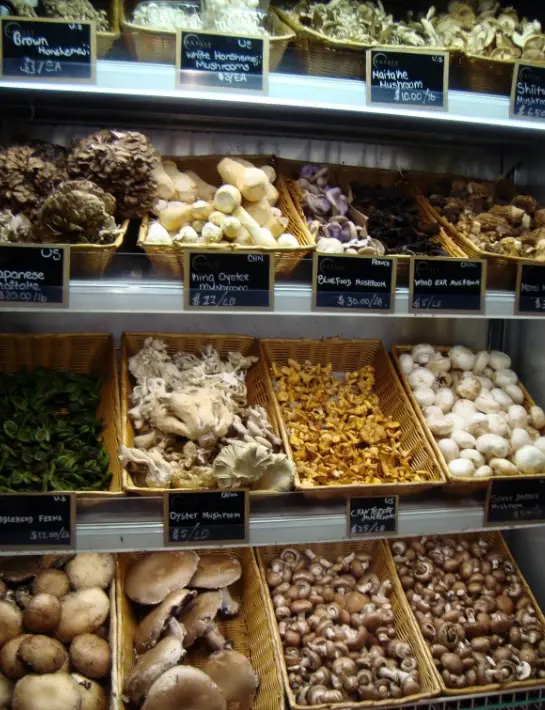
How Drying Method Influences Shelf Stability
Drying technology deserves more attention than it usually receives in consumer articles.
Commercial dried shiitake may be produced using different drying approaches, including traditional sun drying and controlled mechanical drying. These methods can affect drying uniformity, sensory characteristics, microbial load, and final product properties.
A recent review of dried mushroom processing notes that dehydration methods including sun drying, hot-air drying, freeze drying, and microwave drying can affect both nutritional characteristics and microbial profiles. It also emphasizes that drying methods differ in their effectiveness and that more well-designed studies are needed before making broad claims about one technique being universally superior.
That is why a responsible supplier should avoid statements such as “this drying method guarantees five years of shelf life.”
It does not.
The final result depends on the complete process.
At Jiangyuan, the relevant production logic is not simply “dry the mushroom.” Raw mushrooms are selected and sorted, then graded, dried, inspected, packaged, and prepared for shipment. That process-oriented view is more meaningful for B2B buyers because consistency across lots matters just as much as the nominal shelf-life date.
Does Packaging Affect How Long Dried Shiitake Mushrooms Last?
Absolutely — and this is where many consumer-level articles become too simplistic.
A dried shiitake mushroom leaving a controlled production environment is in a very different situation from the same mushroom sitting in an opened bag in a humid warehouse.
The package is the barrier between the low-moisture product and its environment.
If that barrier fails, moisture can migrate into the product. Once moisture is absorbed, the original drying condition may no longer represent the condition of the mushroom months later.
For bulk buyers, packaging should therefore be evaluated alongside the shelf-life declaration.
Important questions include:
- What packaging material is being used?
- Is the package designed to provide an appropriate moisture barrier?
- Is the seal intact?
- What is the package size?
- How frequently will the package be opened?
- What warehouse conditions are expected after delivery?
- Can individual lots be traced back to production and inspection records?
The difference between unopened commercial packaging and repeatedly opened bulk packaging should never be treated as a minor detail.
Storage Conditions: Cool and Dry Is Only the Beginning
The basic storage instruction for dried foods is familiar: keep them in a cool, clean, dry environment and protect the package from damage and moisture. USDA FSIS specifically advises storing dry goods in suitable dry conditions and checking packaging for holes or other routes through which moisture or pests could enter.
For professional buyers, however, “keep it dry” needs to become an operational requirement.
A warehouse handling dried shiitake should consider:
Humidity control → package integrity → pallet/storage practices → exposure time → stock rotation → lot traceability
This becomes particularly important when the product travels internationally. A shipment may pass through production storage, inland transport, port handling, ocean or air freight, customs, distributor storage, and finally a buyer’s warehouse. The product does not experience “one storage condition” during that journey.
And that is exactly why shelf life should be treated as a supply-chain specification, not merely a number printed on a bag.
How to Tell If Dried Shiitake Mushrooms Have Gone Bad
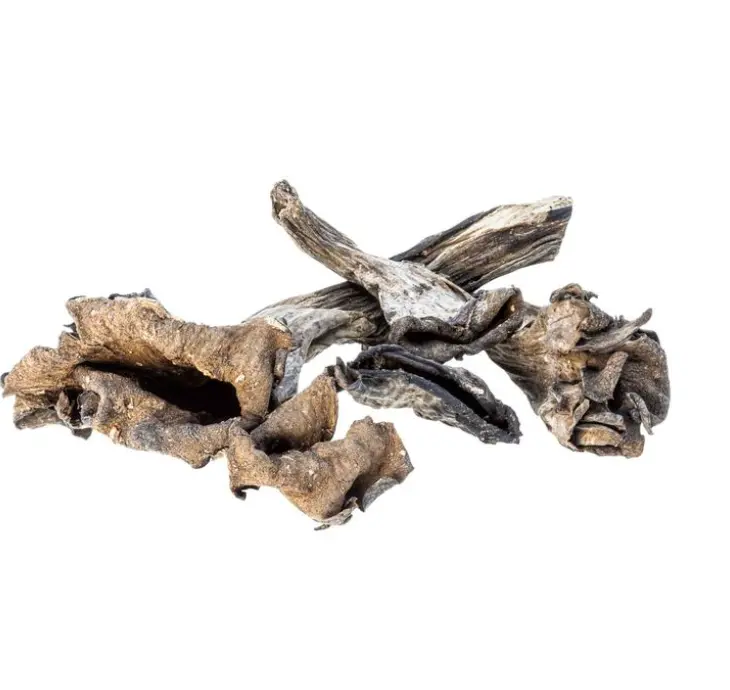
Spoiled dried mushrooms
A dried shiitake mushroom does not usually become unacceptable simply because a certain number of months have passed. The more useful question is whether the product has remained dry, protected, and within its specified quality parameters.
That distinction matters in commercial purchasing. A buyer should never use the printed date as the only acceptance criterion, but neither should an old-looking package be judged by appearance alone.
Look for a combination of warning signs:
- Visible mold or abnormal growth
- Unexpected moisture or softening
- Strong or unusual odors
- Evidence of insects or infestation
- Severely abnormal discoloration
- Damaged, leaking, or compromised packaging
A little color variation does not automatically mean spoilage. Dried shiitake naturally changes in appearance during storage, and research has documented changes in the color of the mushroom’s lamellae during extended storage. In the same study, sensory quality also declined after approximately six months even though several measured flavor components changed relatively little.
For that reason, professional inspection should consider the whole condition of the lot, rather than relying on one visual characteristic.
Quality Assurance Checklist for Bulk Buyers
| Inspection Dimension | What to Check | Potential Concern | Recommended Buyer Action |
|---|---|---|---|
| Physical condition | Mushrooms remain dry and structurally intact | Moisture uptake or deterioration | Isolate questionable lot |
| Surface | No visible mold or abnormal growth | Possible spoilage | Do not release affected product |
| Odor | Characteristic mushroom aroma | Off-odor or contamination | Investigate before acceptance |
| Packaging | Seals and barrier packaging intact | Moisture/air ingress | Check packaging specification |
| Insects | No infestation or insect evidence | Storage or packaging failure | Hold and investigate |
| Traceability | Lot and production information available | Difficult recall or investigation | Require traceable documentation |
| Sensory quality | Aroma, color, texture appropriate to grade | Aging or poor storage | Compare against approved specification |
This is where a supplier’s quality-control system becomes commercially important. The buyer is not purchasing a number of months. The buyer is purchasing a defined product specification that should remain consistent through the supply chain.
How Long Do Rehydrated Shiitake Mushrooms Last?
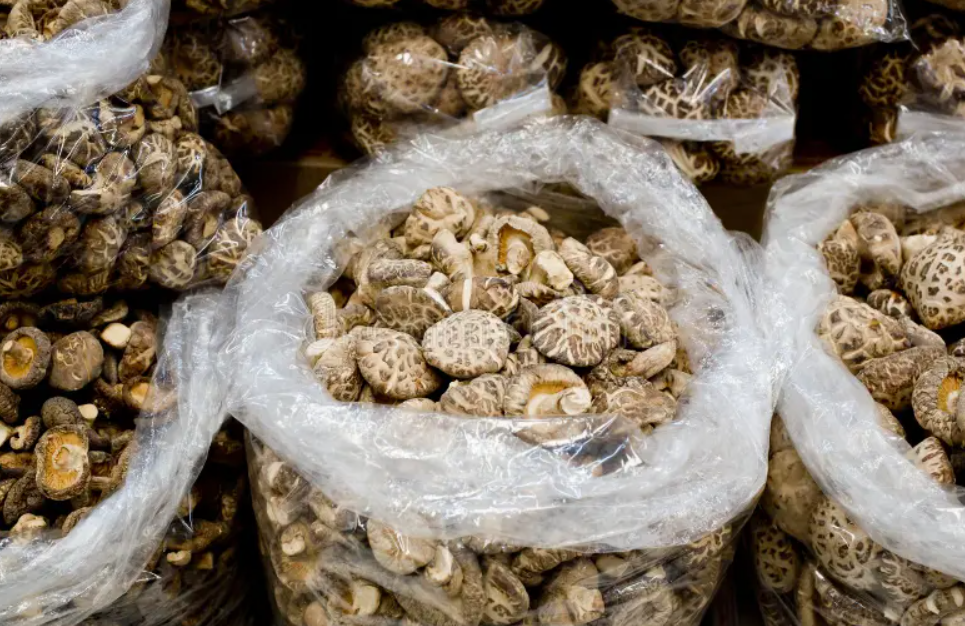
How Long Do Rehydrated Shiitake Mushrooms Last
This is a completely different storage question.
Once dried shiitake absorbs water, the product no longer has the same low-moisture characteristics that make the dry ingredient shelf-stable. Water activity becomes much more relevant, and the handling process becomes critical.
Research on dried shiitake has specifically examined rehydration temperature and time, demonstrating that soaking changes the mushroom’s chemical and physical characteristics.
For food businesses, the practical rule is straightforward:
Do not treat rehydrated shiitake as though it were still a dry, shelf-stable ingredient.
After soaking, it should be handled according to the food-safety procedures appropriate for the prepared product, including temperature control, hygienic handling, and appropriate refrigerated storage where required.
The reason is not theoretical. Research examining dried shiitake available through retail and online channels found that dehydrated samples had much lower water activity than fresh mushrooms; the study reported water activity of approximately 0.34–0.40 for the dehydrated products tested.
USDA’s food-science resources explain why this matters: water activity is a key parameter for predicting bacterial, yeast, and mold growth and for designing shelf-stable food systems.
Once water is added, that preservation barrier changes.
Rehydration Is Also a Quality Issue
Storage is not the only concern. Rehydration conditions can affect the eating quality of shiitake.
Research has shown that soaking temperature and duration influence water absorption and changes in compounds associated with shiitake flavor.
For food manufacturers, therefore, the shelf-life discussion should continue beyond the warehouse. If dried shiitake is destined for soup, sauce, instant noodles, ready meals, or another processed food, the rehydration step becomes part of the product’s process-control system.
What Global Buyers Should Check Before Ordering Dried Shiitake
For an importer or supermarket procurement team, shelf life should be evaluated before the purchase order is finalized — not after the shipment reaches the warehouse.
A useful supplier review should cover five areas.
1. Ask for the Declared Shelf-Life Specification
Do not ask only:
“How long do your dried shiitake mushrooms last?”
Ask instead:
“What is the declared shelf life for this specific product and packaging format, and under what storage conditions is it validated?”
That wording produces a much more useful answer.
A supplier’s shelf-life declaration should be linked to a defined product, package, production process, and storage condition. Commercial examples vary substantially, which is exactly why one supplier’s number should not automatically be applied to another supplier’s product.
2. Understand the Packaging
Packaging is part of the shelf-life system.
A buyer should identify:
- Packaging material;
- Moisture-barrier characteristics;
- Sealing method;
- Package size;
- Whether the package is intended for repeated opening;
- Outer-carton protection;
- Storage requirements after opening.
A technically good dried product can still suffer quality deterioration if it repeatedly absorbs moisture during distribution or warehouse handling.
3. Check Lot-Level Traceability
Traceability becomes particularly important when importing food ingredients at scale.
A procurement file should be capable of connecting the shipment to the relevant production lot, inspection records, packaging information, and applicable food-safety documentation.
This is not about adding paperwork for its own sake. If a quality deviation appears months later, traceability determines how quickly the buyer and supplier can identify the affected product.
4. Consider the Entire Logistics Window
Suppose a product has a declared shelf life of 12 months. A buyer should not automatically assume there are 12 months of usable inventory remaining after arrival.
The commercial timeline may include:
Production → drying → packaging → factory storage → inland transport → port handling → international freight → customs → distributor warehouse → supermarket warehouse → retail inventory
The purchasing specification should therefore consider remaining shelf life at arrival, not just the nominal shelf life from production.
For large-volume contracts, this can be more important than whether the supplier advertises “one year” or “two years.”
5. Define the Acceptance Standard Before Shipment
A good purchase specification should establish what constitutes an acceptable lot.
For example:
| Buyer Requirement | Specification to Clarify | Why It Matters |
|---|---|---|
| Shelf life | Declared period and calculation basis | Inventory planning |
| Remaining shelf life | Minimum required at delivery | Prevents short-dated stock |
| Packaging | Approved format and seal condition | Moisture protection |
| Product grade | Size, cap characteristics, color, etc. | Batch consistency |
| Moisture condition | Agreed product specification | Storage stability |
| Foreign matter | Defined acceptance criteria | Food safety |
| Mold/insects | No unacceptable evidence | Product integrity |
| Traceability | Lot/batch identification | Recall and investigation |
| Documentation | Required food-safety/export documents | Import compliance |
The exact numerical acceptance limits should come from the buyer’s specification, applicable regulations, and supplier validation rather than being invented as a universal industry number.
How Shelf Life Affects Wholesale Inventory Planning
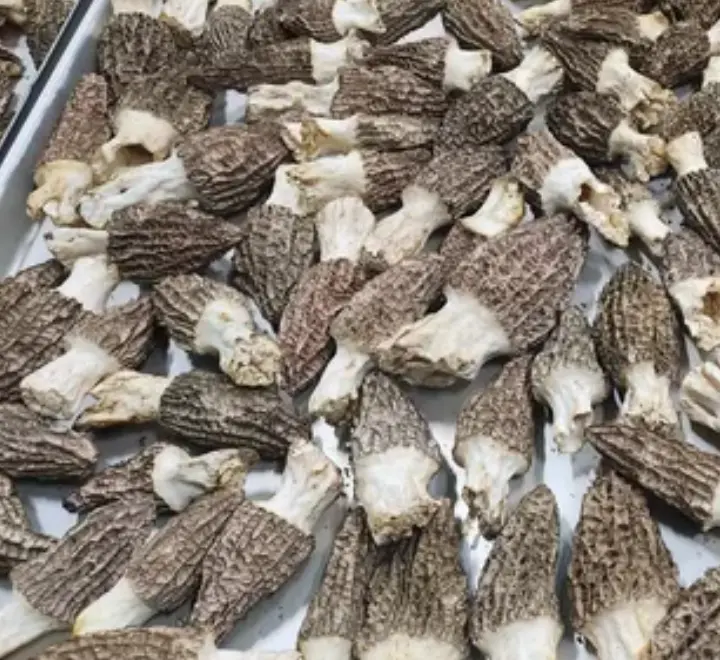
How Shelf Life Affects Wholesale Inventory Planning
A common mistake in dried-food purchasing is treating long shelf life as permission to hold excessive inventory.
It is not.
A product with a long nominal shelf life still needs sensible stock rotation. Warehouse humidity, package openings, damaged cartons, transport exposure, and changing demand can all affect the practical quality window.
For supermarket groups and food manufacturers, first-expiry-first-out (FEFO) inventory management can be useful where expiry or best-before dates differ between lots. The goal is simple: move the lots with the earliest applicable date first, rather than allowing older inventory to disappear behind newer deliveries.
For processors, there is another consideration: ingredient shelf life must align with the production schedule.
A manufacturer buying dried shiitake for sauces, soup bases, noodles, seasoning blends, or ready meals should consider:
- Expected monthly consumption;
- Minimum order quantity;
- Delivery frequency;
- Warehouse capacity;
- Package size;
- Remaining shelf life on arrival;
- Time between opening bulk packaging and consumption.
The cheapest price per kilogram can become less attractive if the buyer must carry slow-moving inventory for too long.
5 Long-Tail FAQs for Global Dried Shiitake Buyers
1. How long do dried shiitake mushrooms last in bulk packaging?
There is no universal period for every bulk product. The applicable shelf life depends on the supplier’s validated specification, packaging, drying condition, and storage environment. Buyers should request the declared shelf life for the exact product and packaging format rather than applying a generic internet estimate.
2. How long do dried shiitake mushrooms last after opening?
Opening exposes the product to environmental humidity and repeated handling. The practical quality period can therefore differ from the unopened package specification. Keep opened product tightly sealed, minimize humidity exposure, and follow the supplier’s post-opening storage instructions.
3. Do dried shiitake mushrooms need refrigeration?
Not necessarily. Refrigeration is not automatically superior for a properly dried, appropriately packaged product. The storage method should follow the supplier’s specification. More importantly, avoid conditions that allow condensation or moisture absorption. Packaging and humidity control are central to shelf stability.
4. How can importers check the shelf life of dried shiitake mushrooms?
Ask the supplier for the declared shelf-life specification, production/packaging date, remaining shelf life at shipment, storage requirements, packaging specification, lot traceability, and relevant quality documentation. For higher-risk or contract-specific applications, buyers may also establish incoming inspection and laboratory-testing requirements.
5. Does rehydrating dried shiitake shorten its shelf life?
Rehydration fundamentally changes the storage conditions because water becomes available again. Rehydrated shiitake should therefore be handled as a prepared food rather than as a shelf-stable dry ingredient. The appropriate storage period depends on the preparation process, temperature control, formulation, packaging, and applicable food-safety requirements.
Expert Verdict
How long do dried shiitake mushrooms last? The defensible B2B answer is not one number.
A properly dried product can have a substantial shelf life, but the commercial window depends on water activity, drying consistency, moisture-barrier packaging, storage conditions, package handling, and the supplier’s validated specification. Research on dried shiitake supports the importance of both storage conditions and packaging, while food-science guidance confirms that water activity is central to shelf stability.
For global buyers, the safest purchasing strategy is simple: specify the shelf life you require, verify the conditions supporting it, check remaining shelf life at delivery, and make packaging and traceability part of the purchase specification.
That is a much stronger procurement decision than choosing a dried shiitake supplier based on a shelf-life number alone.
Prices for dried shiitake mushrooms may vary depending on product grade, size, moisture content, drying method, packaging specifications, order quantity, and market conditions. Any prices discussed are for reference only and should not be considered fixed quotations. For accurate wholesale pricing, buyers are encouraged to confirm the latest specifications, order requirements, and delivery terms directly with the supplier.
References:
Cornell University – Storage & Preservation
University of Missouri Extension – Safety of Home Dried Mushrooms