At commercial manufacturing scale, how dried shiitake mushrooms are made is not a culinary drying exercise — it is a continuous thermodynamic phase shift that systematically lowers raw moisture from 88% down to a shelf-stable equilibrium of ≤ 12.0% , while intentionally preserving cellular lenthionine and guanosine 5′-monophosphate (GMP). The baseline workflow executes across four synchronized operations: immediate post-harvest cold stabilization, mechanical size and stem calibration, an 18-to-22-hour graduated temperature heat-pump cycle (35°C to 65°C), and automated optical sorting under strict water-activity (a_w < 0.60) containment.
Every year, global food processors lose millions of dollars to mold proliferation inside maritime containers, high sulfur dioxide (SO₂) customs detentions, and structural rehydration collapse. These problems stem directly from primitive processing: drying mushrooms over unmonitored coal-smoke pits or relying on unpredictable open-air sun dehydration. Importers do not fail at the border because of poor recipes; they fail because of inadequate thermodynamics and lax traceability. Operating from Qingyuan — the globally recognized birthplace of shiitake cultivation with an 800-year lineage (recognized as a GIAHS site by the FAO) — Zhejiang Jiangyuan Mushroom has spent 28 years standardizing industrial dehydration. Based on our experience with multi-container maritime dispatches across North America, Europe, and Southeast Asia, converting fresh Lentinula edodes into an export-grade dry ingredient requires absolute control over raw tissue density, thermal gradients, and chemical purity.
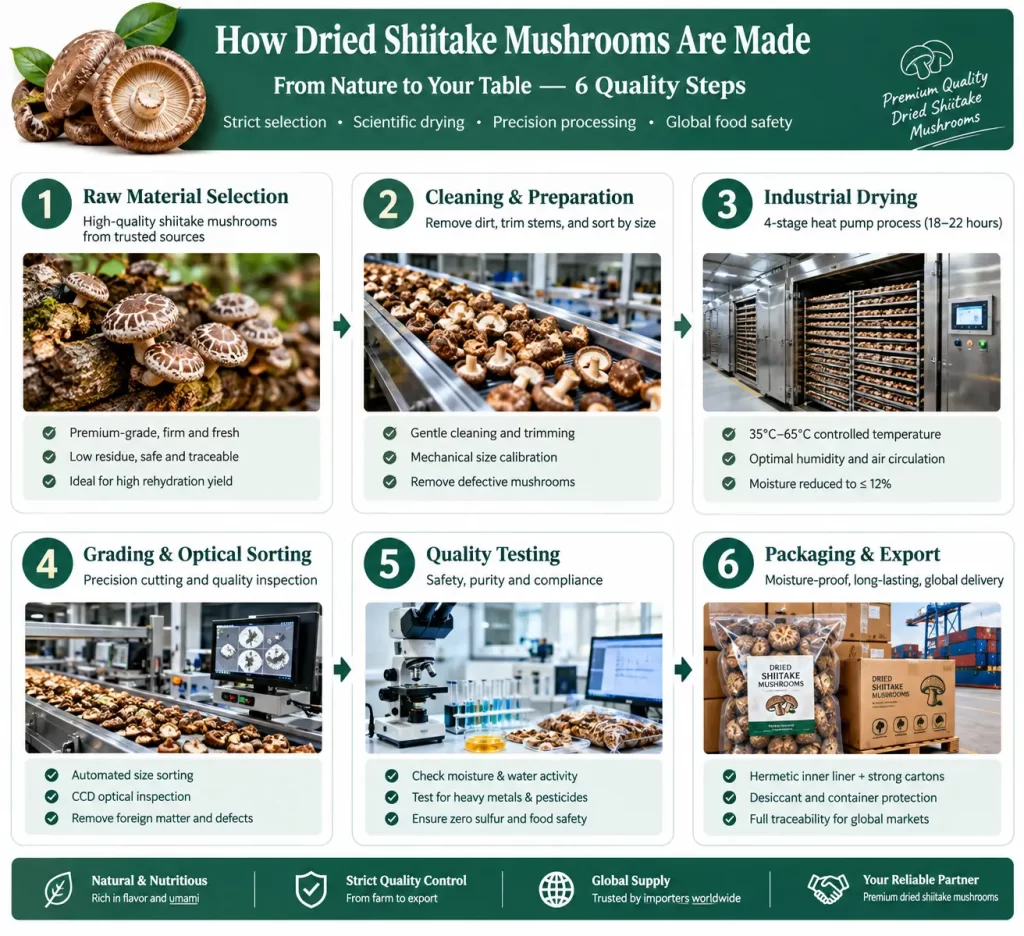
How dried shiitake mushrooms are made
1. Raw Material Provenance: The Agronomic Baseline for Industrial Dehydration
Industrial dehydration cannot remediate inferior raw fungus. If the fresh basidiocarp enters the intake facility with weak cell walls or high chemical residues, thermal drying merely concentrates those defects. The chemical transformation during drying depends entirely on the raw mushroom’s initial dry matter composition.
Qingyuan Terroir and Cell-Wall Density
Qingyuan’s ecological profile provides the structural density needed for high-yield rehydration. Situated in mountainous southern Zhejiang at altitudes between 600 and 1,200 meters, our cultivation bases experience a diurnal temperature fluctuation of 10°C to 14°C during the autumn and winter growing seasons. This persistent thermal oscillation forces Lentinula edodes to slow its cellular expansion.
The mushroom deposits thicker chitin and glucan matrix layers within its hyphal walls compared to rapid-growth flatland varieties. When dried, these dense cellular walls resist collapse, allowing an industrial rehydration ratio of 1:5.5 to 1:6.2 by mass. Furthermore, the fruiting substrate consists exclusively of certified broadleaf hardwood sawdust (principally Fagaceae species) rather than spent cereal straw or compressed agricultural waste, ensuring baseline heavy metal concentrations remain consistently below EU Regulation (EC) No 1881/2006 maximum limits.
Harvest Calibration and Post-Harvest Cooling
Timing the harvest determines the cap’s structural performance during hot-air transit. Mushrooms must be hand-harvested when the veil has broken but the cap margin remains curled inward by 20% to 30% (the “seven-to-eight-tenths mature” stage). Once the cap fully flattens, sporulation accelerates, consuming internal sugars and drastically reducing the finished mushroom’s umami precursor reserves.
Immediately post-harvest, fresh mushrooms respire at an intense rate, generating metabolic heat that rapidly degrades surface color and hydrolyzes polysaccharides. According to internal QA trials across 45 metric-ton export batches, leaving freshly harvested shiitake at ambient temperatures (22°C–26°C) for more than 6 hours increases cap blackening by 18% and reduces final rehydrated elasticity. At Jiangyuan, freshly picked crops enter forced-air pre-cooling chambers (4°C to 6°C at 85% RH) within 180 minutes of field separation, effectively arresting enzymatic respiration prior to trimming and mechanical drying.
The table below defines the correlation between raw harvest metrics and the physical performance of the finished dry product:
| Raw Harvest Grade | Cap Diameter / Morphological Profile | Harvest Moisture Range (%) | Primary Target Commercial Application | Post-Dehydration Rehydration Ratio | Industrial Processing Yield (Fresh to Dry) |
|---|---|---|---|---|---|
| Grade A (Premium Donko) | 30–50 mm; thick pileus; deep inward margin curl; zero gill exposure | 84%–86% | Retort soups, premium retail packs, whole foodservice rehydration | 1:5.8–1:6.2 | 7.8:1 to 8.2:1 |
| Grade B (Standard Koshin) | 40–60 mm; moderate pileus; partial margin expansion; light gill reveal | 86%–88% | Industrial dicing, ready-meal inclusion, automated slicing lines | 1:5.0–1:5.4 | 8.5:1 to 9.0:1 |
| Grade C (Open Industrial) | > 60 mm; flat planar cap; complete gill exposure; thin flesh | 89%–92% | Industrial milling (80–200 mesh), umami broth extracts, hydrolysates | 1:4.0–1:4.5 | 9.8:1 to 10.5:1 |
2. How Dried Shiitake Mushrooms Are Made: The 4-Stage Industrial Thermal Curve
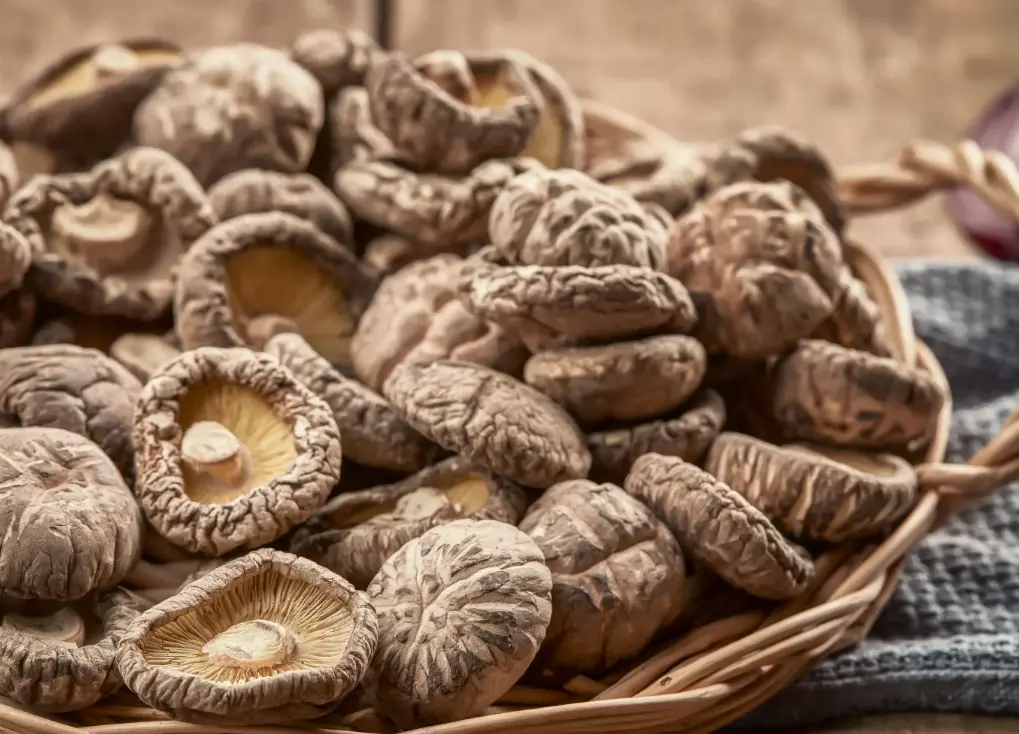
How Dried Shiitake Mushrooms Are Made
The core vulnerability in commercial supply chains is unscientific drying. Traditional open-air sun drying exposes organic matter to bird droppings, insect infestation, airborne microplastics, and ambient moisture spikes that cause localized bacterial souring. Conversely, primitive wood- or coal-fired ovens blast the mushrooms with uneven heat, scorching the exterior while leaving internal moisture trapped around the core, often coating the edible surface with toxic polycyclic aromatic hydrocarbons (PAHs).
To achieve uniform food safety compliance, Jiangyuan employs automated, closed-loop heat pump dehydrators with bidirectional air recirculation. Understanding how dried shiitake mushrooms are made at an institutional level requires examining the thermodynamic curve, which runs uninterrupted over an 18-to-22-hour cycle divided into four distinct biochemical phases.
Industrial Dehydration Temperature & Moisture Trajectory
[Phase 1: 35°C–40°C] → [Phase 2: 40°C–50°C] → [Phase 3: 50°C–55°C] → [Phase 4: 60°C–65°C]
Raw Moisture: ~86% → Surface Water Drop → Internal Migration → Final Cure: ≤ 12%
Phase 1: Surface Moisture Evaporation (Initial Thermal Equilibration)
Temperature Profile: 35°C to 40°C
Exhaust Humidity: Set to continuous full exhaust (100% air discharge)
Duration: 4 to 5 hours
Target: Remove surface water without case hardening
Freshly trimmed mushrooms are arranged gills-downward on food-grade 304 stainless-steel mesh trays. The chamber temperature starts low at 35°C. Blasting fresh shiitake with immediate high heat would gelatinize surface starches, sealing the outer pores and trapping water inside — a catastrophic processing defect known as “case hardening.” During this initial phase, high-volume circulating fans draw off unbounded surface moisture, dropping total tissue moisture from ~86% to roughly 60%.
Phase 2: Internal Moisture Diffusion (The Transpiration Stage)
Temperature Profile: Stepped incrementally from 40°C to 50°C (ramping at 2°C per hour)
Exhaust Humidity: Modulated cycle exhaust (intermittent venting at 50% duty cycle)
Duration: 6 to 8 hours
Target: Drive deep-tissue moisture migration toward the cap periphery
As surface water clears, internal moisture must migrate from the core of the thick pileus to the perimeter. The chamber’s relative humidity is deliberately maintained between 40% and 50% to prevent the exterior skin from drying prematurely and cracking. If the heat rises too fast here, the cap’s cellular structure collapses, resulting in a rubbery, unyielding texture once rehydrated.
Phase 3: Enzymatic Aroma Synthesis (Lenthionine Generation)
Temperature Profile: 50°C to 55°C
Exhaust Humidity: Low-volume venting (20% to 30% fresh air intake)
Duration: 4 to 5 hours
Target: Activate C-S lyase to generate aromatic volatile compounds
This phase defines the characteristic profile of a high-grade dried shiitake. The volatile sulfur compound lenthionine — which delivers the signature pungent, woodsy shiitake aroma — does not exist in high quantities within the fresh mushroom. It is synthesized through an enzymatic breakdown when the heat-activated enzyme C-S lyase interacts with lentinic acid. This biochemical reaction peaks precisely between 50°C and 55°C. Bypassing or rushing this step leaves the finished product flat, odorless, and organoleptically indistinguishable from low-grade alternatives.
Phase 4: Thermal Sterilization and Moisture Fixation
Temperature Profile: Final ramp to 60°C; terminal flash at 65°C
Exhaust Humidity: Full air purge to desiccate remaining ambient moisture
Duration: 2 to 3 hours
Target: Enzyme deactivation, moisture lock (≤ 12%), and pathogenic pasteurization
In the terminal phase, the dry room reaches 60°C to desiccate the dense stem cores. A brief, controlled rise to 65°C pasteurizes the batch, eliminating any residual micro-insects, insect eggs, or vegetative microbial pathogens without charring the mushroom’s structural sugars. This step halts all remaining enzymatic activity, permanently stabilizing the amino acid profile. The dehydrator then circulates chilled, dehumidified air to bring the product down to 28°C before transfer into humidity-controlled cleanrooms for sorting and packaging.
The technical specifications for each thermodynamic phase are summarized in the operational matrix below:
| Processing Phase | Air Temperature Range (°C) | Air Velocity (m/s) | Target Relative Humidity (%) | Critical Biochemical / Physical Milestone | HACCP Preventive Control Target |
|---|---|---|---|---|---|
| Phase 1: Pre-Drying | 35°C–40°C | 2.2–2.5 | 60%–70% | Initial surface evaporation; prevents pore occlusion | Prevent surface scorching & cellular burst |
| Phase 2: Core Migration | 40°C–50°C | 1.8–2.0 | 40%–50% | Capillary water migration; uniform cell-wall preservation | Avoid internal water pocket encapsulation |
| Phase 3: Aroma Synthesis | 50°C–55°C | 1.5–1.8 | 30%–40% | Maximum activation of C-S lyase; synthesis of lenthionine | Verify aroma compound synthesis via sensory cross-check |
| Phase 4: Stabilization | 60°C–65°C | 2.0–2.2 | < 15% | Equilibrium moisture locked to ≤ 12%; terminal enzyme deactivation | Microbiological pathogen purge; water activity (a_w < 0.60) |
3. Post-Drying Mechanical Processing: Precision Cutting and Optical Grading
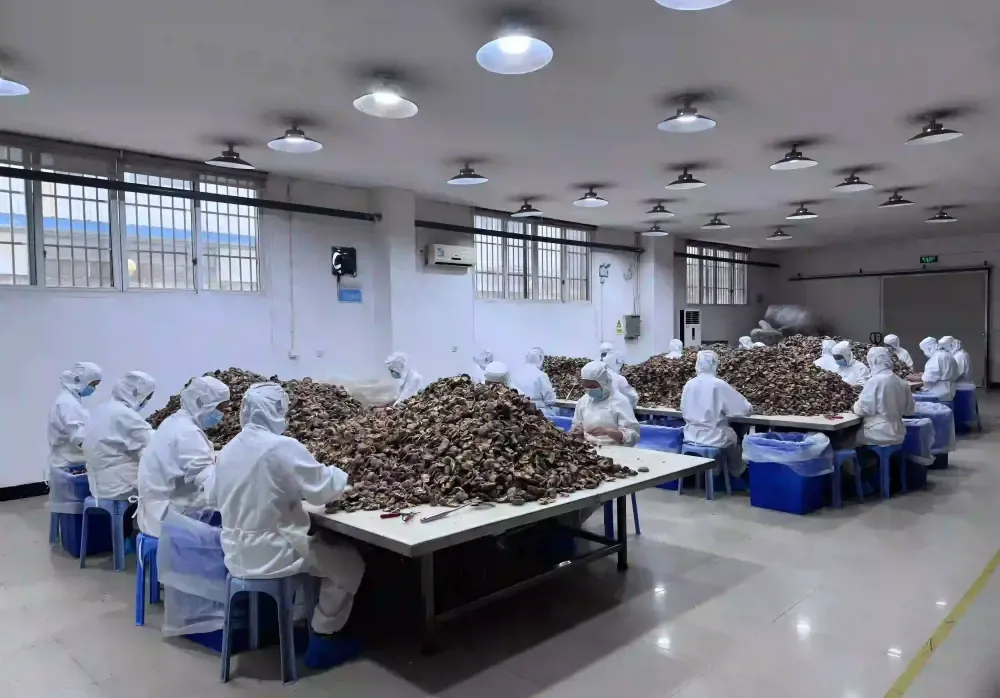
Post-Drying Mechanical Processing
Once the shiitake emerge from the dehydration tunnel at equilibrium moisture (≤ 12.0%), they cannot simply be shoveled into bulk bags. Industrial end-users — such as instant noodle manufacturers, commercial soup-base compounders, and ready-meal co-packers — require strict dimensional uniformity to ensure predictable rehydration curves in automated production lines.
Automated Sizing and De-Stemming
De-stemming is calibrated based on client specification:
Flush Cut (Stemless): The stipe is cleanly clipped flush to the base of the pileus using high-speed rotary blades, leaving zero protruding fibrous wood. This is the global standard for high-end retail packaging and whole-mushroom foodservice presentation.
Short Stem (≤ 5 mm to 10 mm reserve): Designed for industrial dicing and slicing, where the stem remnant provides structural rigidity during continuous mechanical feed.
After trimming, vibrating multi-deck circular sieves sort whole caps into standardized diameter brackets: 20–30 mm, 30–40 mm, 40–50 mm, and 50+ mm. Visual sorting lines equipped with dual-sided high-resolution CCD optical cameras simultaneously scan for surface color anomalies, residual mycelial base-matter, or broken gills, automatically ejecting defective units with localized air-jet solenoids.
Post-Drying Processing Flow
[Equilibrated Dry Output] → [Rotary Blade De-Stemming] → [Multi-Deck Caliber Sieve] → [CCD Optical Inspection] → [Precision Slicing / Cryo-Milling] → [Triple-Stage Foreign Matter Detection]
Transverse Slicing and Cryogenic Milling
For processing clients, whole dehydrated caps are transferred to continuous transversal industrial slicers:
Uniform Slices: Cut thicknesses are mechanically indexed between 2.0 mm and 6.0 mm (± 0.5 mm tolerance). The sliced stream immediately passes across a dynamic air-aspiration screen to extract loose spores and broken fragments (“fines”), guaranteeing a clean finished slice with < 3.0% aggregate dust content.
Cryogenic Mushroom Powders: For functional food blends, nutraceutical capsules, and natural umami seasonings, dehydrated shiitake are processed through hammer mills paired with liquid nitrogen pre-chilling (-40°C). This cryogenic milling prevents frictional heat from scorching the heat-sensitive lentinan and aromatic esters, yielding an ultra-fine, free-flowing 80 to 200-mesh powder with unbroken cell integrity.
4. Quality Assurance Protocols: Chemical, Physical, and Microbial Verification
The primary vulnerability in international mushroom procurement lies in invisible chemical residues and inadequate moisture management. An importer can easily pass a visual intake check, only to face mandatory customs destruction weeks later when composite laboratory screenings flag illegal fungicides or excessive cadmium levels.
At Jiangyuan, our in-house ISO 17025-compliant quality laboratory tests every 5-metric-ton production run across three non-negotiable vectors:
Water Activity (a_w) vs. Total Moisture
Total moisture measures water mass percentage; water activity (a_w) measures the free, unbound water capable of supporting microbial life. Even if moisture measures 12.5%, if a_w ≥ 0.65, mold spores (Aspergillus flavus, Penicillium spp.) will germinate inside warm shipping containers. We calibrate our output to a_w < 0.60 and moisture ≤ 11.5%.
Heavy Metal Chelation Risks
Fungi are natural bioaccumulators of soil minerals. Our cultivation bases strictly mandate heavy metal testing on every batch of sawdust substrate before inoculation, running raw materials through Inductively Coupled Plasma Mass Spectrometry (ICP-MS) to keep finished products well below European Union maximum thresholds.
The Zero-Sulfur Mandate
Many low-tier processors still burn sulfur sticks to lighten dark caps and artificially lower microbial counts. Jiangyuan enforces an absolute zero-sulfur protocol. Testing via the optimized Monier-Williams method ensures non-detectable SO₂ thresholds (< 10 ppm), guaranteeing uninhibited entry into the EU, US, and Japanese markets.
The multi-dimensional matrix below outlines the critical specification standards enforced during export release:
| Analytical Parameter | Testing Methodology | European Union Standard (EC 396/2005 / EC 1881/2006) | US FDA Compliance Threshold | Jiangyuan Export Quality Standard (Factory Gate) |
|---|---|---|---|---|
| Residual Moisture | Karl Fischer Titration / Vacuum Oven (105°C) | ≤ 13.0% | ≤ 13.0% | ≤ 11.5%–12.0% max |
| Water Activity (a_w) | Chilled Mirror Dewpoint (25°C) | Not codified (a_w < 0.65 rec.) | Not codified (a_w < 0.65 rec.) | < 0.58 (Zero mold germination window) |
| Sulfur Dioxide (SO₂) | Monier-Williams Digestion | ≤ 50 mg/kg (labeled) | ≤ 10 mg/kg (for label exemption) | Non-Detectable (< 5 mg/kg) |
| Lead (Pb) | ICP-MS | ≤ 1.0 mg/kg | ≤ 0.5 mg/kg | ≤ 0.20 mg/kg |
| Cadmium (Cd) | ICP-MS | ≤ 0.20 mg/kg | ≤ 0.20 mg/kg | ≤ 0.10 mg/kg |
| Multi-Pesticide Screen | LC-MS/MS & GC-MS/MS (500+ compounds) | Below specific default MRLs (0.01 mg/kg) | Zero tolerance for unregistered chemistry | ND (Conforms to zero-pesticide organic baseline) |
| Physical Contaminants | Dual X-Ray & Dynamic Magnetic Separation | Zero glass, metal, hard plastics | Zero foreign adulterants | Fe ≤ 0.8 mm, Non-Fe ≤ 1.0 mm, SS ≤ 1.2 mm |
5. Industrial Packaging Architecture for Maritime Transits
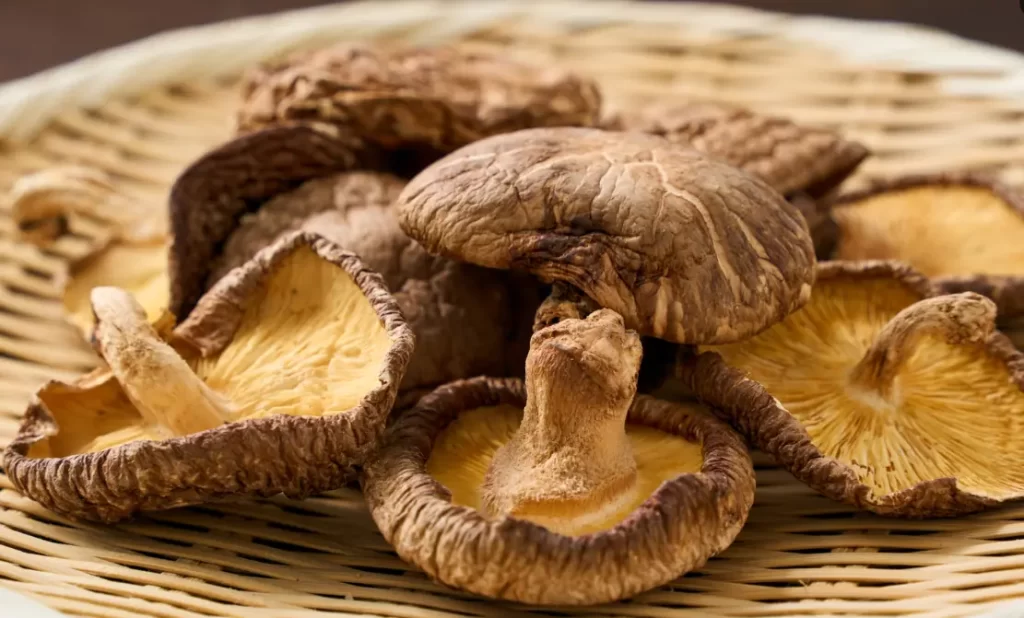
dried shiitake mushroom processing
A perfectly processed batch of dried shiitake can be destroyed during ocean transit if packaging is inadequate. Crossing warm waters through the Suez or Panama Canal exposes dry-cargo containers to extreme internal temperature swings (daily fluctuations between 15°C and 55°C). This generates “container rain” — condensation that forms along the ceiling and walls, penetrating porous outer cartons.
To prevent moisture re-absorption and condensation damage during 30 to 45-day sea voyages, we utilize a dual-barrier system:
Primary Barrier (Hermetic Inner Liner)
Export shipments are packed inside high-barrier co-extruded food-grade polyethylene/polyamide (PE/PA) blend liners (minimum thickness: 80 μm). Liners undergo light vacuuming and optional food-grade nitrogen flushing (N₂ ≥ 99.5%), which suppresses lipid oxidation and eliminates insect development without requiring chemical fumigants.
Secondary Barrier (Reinforced Carton Outer)
Heavy-duty 5-ply corrugated export cartons (burst test rating: ≥ 275 psi) with water-resistant exterior varnish are mechanically taped along all seams.
Container Loading Protocols
Every 40-foot high-cube container includes calcium chloride desiccant bags suspended across the wall anchors. Cartons are mounted on heat-treated ISPM-15 compliant pallets and wrapped in stretch film with moisture-wicking paper baseboards to prevent bottom-pallet condensation.
6. Buyer FAQ: Technical & Sourcing Inquiries
What is the confirmed rehydration yield ratio for industrial whole vs. sliced dried shiitake?
Whole, thick-capped shiitake (Donko grade) require immersion in cold water (4°C–10°C) for 4 to 6 hours to achieve complete cellular expansion without enzyme degradation, yielding an average weight expansion of 1:5.8 to 1:6.2. Machine-cut slices (3–5 mm) rehydrate significantly faster — achieving target yield in 20 to 30 minutes in water at 20°C with an industrial expansion ratio of 1:5.0 to 1:5.4.
How does mechanical heat-pump drying compare with open sun drying regarding Vitamin D2 conversion?
Direct sunlight dehydrates mushrooms unevenly and leaves them vulnerable to outdoor contamination, though UV rays naturally convert cellular ergosterol into Vitamin D2. Modern industrial dehydrators replicate this process cleanly. After completing closed-loop mechanical dehydration, our facilities expose finished batches to controlled food-grade UV-B light tunnels for 90 to 120 seconds. This activates the exact same photochemical conversion — producing verified Vitamin D2 concentrations exceeding 1,000 IU/100g — while preserving an entirely sterile, cleanroom-controlled environment.
Why do some commercial dried shiitakes turn black during rehydration?
Blackening during hydration indicates thermal failure during drying: the fresh mushrooms sat too long at warm, humid temperatures (40°C–45°C) with insufficient exhaust. This allows native polyphenol oxidase enzymes to oxidize cellular phenols into dark melanin pigments. Properly processed shiitakes, dried via immediate surface evaporation and stable moisture extraction, hydrate into a uniform, rich golden-amber gill structure and an elastic, light-brown cap.
Can custom specifications be ordered for moisture content below the standard 12%?
Yes. For clients formulating shelf-stable dry soup bases or blending powders with hygroscopic salt mixtures, Jiangyuan can calibrate its Phase 4 drying curves to deliver bulk shipments stabilized at 8.0% to 9.5% moisture (± 0.5%). These batches are packed immediately into heavy-gauge foil-laminate barrier liners with internal food-grade desiccants to prevent moisture regain during warehouse handling.
How does Jiangyuan guarantee container-to-farm traceability for global audits?
Every export carton features a dynamic traceability QR code and lot identifier tied directly to our ERP database. Scanning the lot number reveals the specific Qingyuan grower base, harvest date, hardwood substrate lot analysis, drying run log (temperature / humidity logs from the dehydrator), and the third-party batch Certificate of Analysis (COA) covering heavy metals and pesticide residue screens.
Expert Verdict: Procurement Takeaway
Understanding how dried shiitake mushrooms are made clarifies a fundamental truth in food procurement: the finished ingredient’s quality reflects the engineering of the dehydrator, not the romanticism of the harvest. High aroma, exceptional rehydration yield, and zero border rejections are achieved through strict control of water activity, calibrated thermal ramp profiles, and cleanroom handling.
When auditing your Asian mushroom supply chain, stop accepting broker certificates that lump together unmonitored smallholder drying lots. Insist on verifying closed-loop heat-pump dehydration logs, complete 500+ pesticide residue screens, and certified factory-direct origins. Contact Zhejiang Jiangyuan Mushroom’s technical export desk today to request our complete 2026 Technical Specification Sheet, current third-party COAs, and customized bulk samples for pilot-line testing.
References: