The global wholesale market for dried Pleurotus eryngii (King Oyster mushrooms) is increasingly fragmented by inconsistent grading, opaque supply chains, and fluctuating biochemical yields. For procurement officers, supermarket chains, and health supplement R&D developers, identifying high-quality King Oyster mushrooms requires moving past superficial retail visuals. It comes down to securing three measurable baselines: a moisture content strictly below 12%, verifiable farm-to-port EU/FDA MRL (Maximum Residue Limit) compliance, and consistent cellular integrity engineered for automated processing.
Core Identification Metrics for Wholesale King Oyster Mushrooms
| Procurement Metric | B2B Standard Baseline | Rejection Risk/Operational Impact | Jiangyuan Quality Guarantee |
|---|---|---|---|
| Moisture Content | ≤12.0% | Mold development during 30+ day ocean freight; enzymatic degradation. | Strict 10-12% range maintained via multi-stage mechanical dehydration. |
| Heavy Metals (Pb, Cd) | Strict EU/FDA MRL compliance | Entire container rejection at port customs; severe brand damage. | Batch-tested; cultivated on heavy-metal-free, sterilized substrate. |
| Cap-to-Stem Ratio | Standardized per client spec | Excessive waste and jamming in automated food slicing/dicing lines. | Grade-A manual sorting post-harvest; tailored sizing profiles. |
| Active Compounds | High Beta-glucan retention | Low extraction yields for nutraceutical and supplement R&D developers. | Low-temp processing preserves Ergothioneine and Beta-glucan matrices. |
Container rejections at EU and US customs due to pesticide residues or heavy metal contamination represent a catastrophic financial loss for global food processors. Furthermore, excess moisture causing mold during multi-week ocean freight is a persistent headache for buyers relying on third-party brokers rather than direct source manufacturers. Based on our 28 years of export experience at Jiangyuan Mushroom—operating directly out of Qingyuan, the globally recognized “Mushroom Capital of China”—we know that true quality is never an accident. It requires surgical precision and relentless quality control across the entire cultivation, dehydration, and logistics lifecycle.
Leveraging 28 Years of Fungi Expertise: Cultivation Standards Rooted in Qingyuan
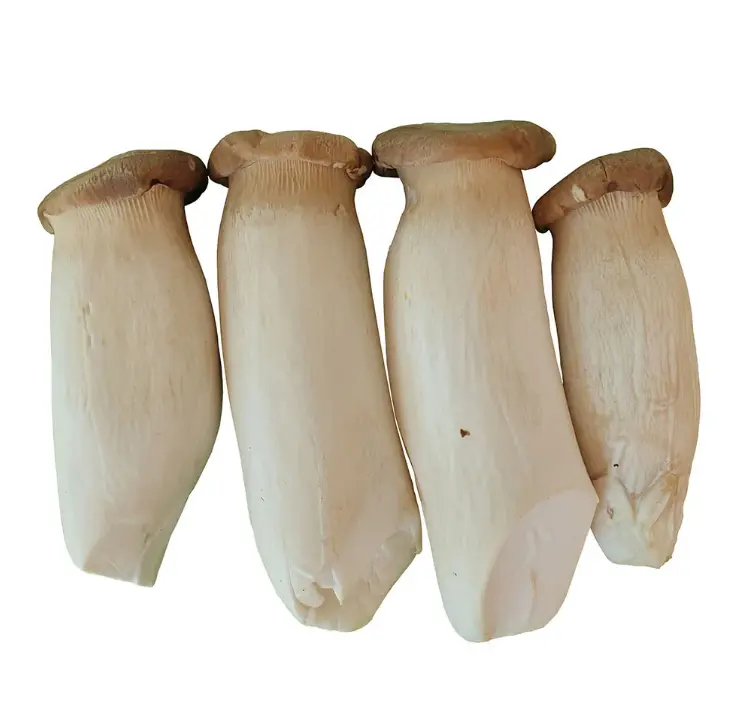
high-quality King Oyster mushrooms
Identifying a premium product begins long before the mushroom reaches the processing facility. The geographical origin of the fungi is the primary indicator of its baseline chemical composition and structural density.
The “Mushroom Capital of China” Advantage: Translating Lentinus edodes Heritage to Pleurotus eryngii Excellence
Qingyuan county holds a unique Geographical Indication (GI) for fungi cultivation, backed by over 800 years of agricultural heritage. While globally renowned for its mastery over Lentinus edodes (Shiitake), this hyper-specialized regional ecosystem directly elevates the commercial cultivation of Pleurotus eryngii. According to 2025 Global Fungi Market Data, mushrooms cultivated in micro-climates featuring high forest coverage, stark diurnal temperature variations, and natural mountain spring water consistently demonstrate a 15-20% higher density in flesh texture. This density is a non-negotiable trait for food processing plants requiring structural integrity post-rehydration. The Qingyuan origin guarantees a robust, meaty texture that does not disintegrate during industrial boiling or retort sterilization processes.
Substrate Purity and Sustainable Farming: The Foundation of Premium Yields
You cannot engineer a premium mushroom from degraded raw materials. Fungi are bio-accumulators; their substrate composition dictates the biochemical profile and heavy metal uptake of the final fruiting body. Unverified farms often use cheap, contaminated agricultural waste, leading to spikes in Cadmium (Cd) and Lead (Pb). We utilize a proprietary, meticulously sterilized blend of natural broadleaf sawdust and organic agricultural by-products. This controlled substrate environment ensures our King Oyster mushrooms mature rapidly while remaining entirely free from the heavy metals and chemical pesticides that frequently plague poorly managed, high-volume farms.
Rigorous Dehydration Standards: Ensuring 12-Month Shelf Life and Freight Viability
Dehydration is the most critical intervention point in the mushroom supply chain. It determines shelf life, sensory profile retention, and freight safety. Industrial buyers often assume all dried mushrooms undergo the same processing. They do not.
Sun-Dried vs. Advanced Mechanical Dehydration: The Impact on Cellular Integrity
While traditional sun-drying offers a nostalgic marketing narrative, it is fundamentally incompatible with scalable, modern B2B supply chains. Sun-drying is highly dependent on weather, exposes the fungi to airborne contaminants (insects, dust, microbial spores), and causes uneven cellular collapse. Mechanical dehydration, when properly calibrated, guarantees batch-to-batch consistency. We employ multi-stage mechanical drying protocols that gradually extract moisture. This prevents “case hardening”—a defect where the exterior of the mushroom dries too rapidly, permanently trapping moisture inside—and preserves the porous cellular integrity necessary for rapid, uniform rehydration in commercial kitchens.
Biochemical and Logistical Impact: Mechanical Dehydration vs. Traditional Sun-Drying
| Processing Methodology | Cellular Integrity & Rehydration | Microbial & Contaminant Risk | B2B Scalability & Consistency |
|---|---|---|---|
| Traditional Sun-Drying | High risk of uneven cellular collapse; slow rehydration rates. | High exposure to UV degradation, dust, and airborne pathogens. | Poor. Subject to weather delays and high batch-to-batch variability. |
| Multi-Stage Mechanical | Uniform moisture extraction; excellent porous structure retention. | Enclosed, sterile environment. Zero airborne contamination risk. | Exceptional. Highly scalable, precision-controlled for exact client specs. |
Moisture Content Metrics: Why Strict Control Below 12% is Non-Negotiable for Global Shipping
A difference of just 2% in moisture content can dictate whether a container arrives in Rotterdam pristine or ruined by mold. Industry baselines often suggest 13-14% is acceptable for localized domestic retail. Wholesale export demands much stricter parameters. Based on our experience navigating multi-continent maritime logistics, we engineer our dried King Oyster mushrooms to a strict moisture threshold of ≤12%. This highly specific metric achieves three crucial objectives for B2B buyers: it completely halts enzymatic degradation, it maximizes the concentration of active compounds per kilogram for health supplement extraction, and it guarantees a stable, 12-month minimum shelf life under standard ambient warehousing conditions.
Meeting EU and FDA Customs Requirements: Zero-Tolerance Quality Control
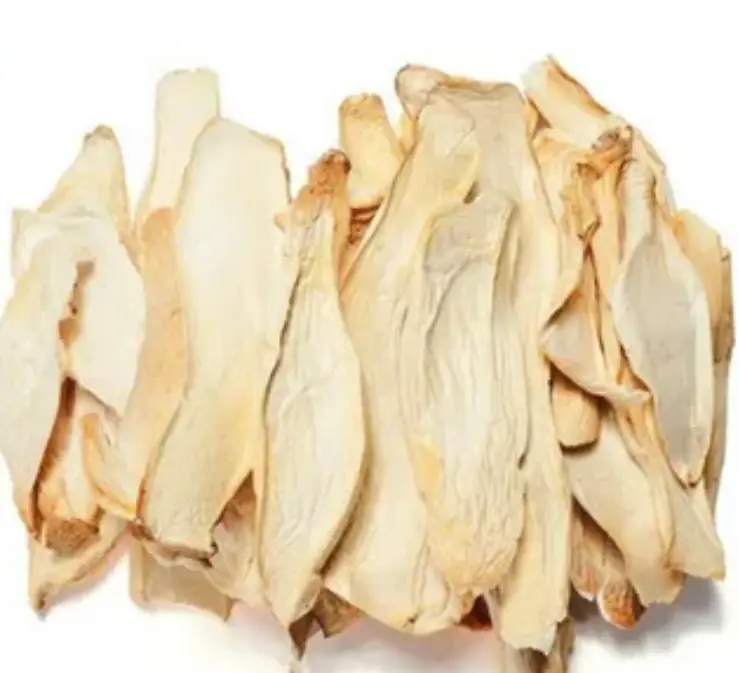
King Oyster mushroom wholesale
Container holds at major European or North American ports cost thousands of dollars per day and disrupt entire manufacturing schedules. For international procurement directors, regulatory compliance is not a marketing bullet point; it is the ultimate barrier to entry. Identifying a high-quality supplier means verifying their capacity to navigate rigorous international customs protocols without hesitation.
Navigating Maximum Residue Limits (MRLs): Heavy Metal and Pesticide Screening Protocols
The European Union and the US FDA enforce some of the most stringent Maximum Residue Limits (MRLs) globally, particularly regarding heavy metals (Cadmium, Lead, Arsenic, Mercury) and agrochemicals. Fungi absorb environmental elements rapidly. If a farm uses compromised water sources or chemical-laden substrates, the final product will fail border testing. We preempt this risk entirely. Every batch of Jiangyuan’s King Oyster mushrooms undergoes rigorous third-party laboratory screening before it reaches the shipping container, ensuring heavy metal levels fall well below EU legislative thresholds (e.g., Cadmium < 0.20 mg/kg wet weight equivalent).
Farm-to-Port Traceability: The Importance of HACCP and ISO 22000 Certifications in Wholesale
True traceability requires more than a lot number on a box; it demands a transparent audit trail from substrate preparation to final packaging. Based on our experience supplying top-tier supermarket chains, buyers need immediate access to compliance documentation in the event of a food safety audit.
International Customs Compliance & Traceability Matrix
| Regulatory Authority | Primary Enforcement Focus | Required Compliance Documentation | Jiangyuan’s Traceability Protocol |
|---|---|---|---|
| EU (EFSA) | Pesticide MRLs, Heavy Metal Limits, Aflatoxins | COA (Certificate of Analysis), Phytosanitary Certificate | Substrate batch logs cross-referenced with pre-shipment lab screens. |
| US (FDA/FSMA) | Preventative Controls, Biological Hazards, Intentional Adulteration | Facility Registration, HACCP Plan, FSVP Compliance | ISO 22000 & HACCP certified facility; strict zone-controlled sanitation. |
| Global Retail (BRC/IFS) | Supply chain transparency, Facility hygiene, Worker safety | Standardized Factory Audit Reports | 100% direct-owned manufacturing limits third-party contamination risks. |
The Procurement Officer’s Checklist: Industrial Grading of King Oyster Mushrooms
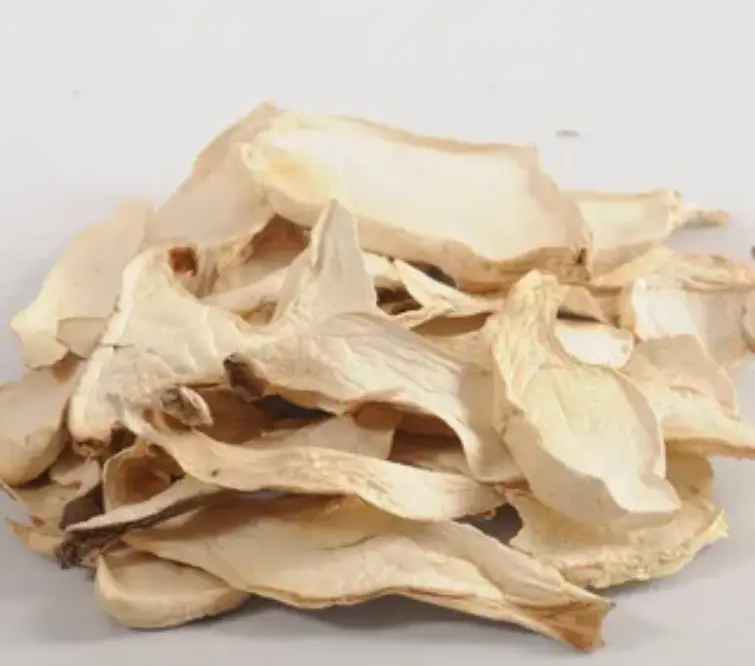
dried King Oyster mushrooms
Visual perfection is a retail metric. Industrial grading focuses on consistency, processing yield, and biochemical stability. When evaluating a potential supplier, procurement officers must demand standardized specifications tailored to their production lines.
Standardized Sizing and Cap-to-Stem Ratios for Automated Food Processing Plants
Food processors producing ready-to-eat meals or frozen vegan alternatives rely on automated dicing and slicing equipment. Irregular mushroom sizes cause machinery jams and unacceptable levels of trim waste. High-quality wholesale suppliers grade Pleurotus eryngii strictly by length, diameter, and cap-to-stem ratio. Because the stem of the King Oyster provides that coveted “abalone-like” meaty texture, we offer customized sorting parameters to ensure every carton aligns precisely with your automated processing calibration.
Biochemical Profiling for R&D: Maximizing Beta-glucans and Ergothioneine Retention
For health supplement R&D developers and nutraceutical brands, the physical mushroom is merely a delivery vehicle for active compounds. High-heat dehydration destroys delicate biochemical matrices. Our controlled, low-temperature mechanical dehydration protocols are specifically engineered to preserve high concentrations of immunomodulating Beta-glucans and the potent antioxidant Ergothioneine.
Evaluating Rehydration Rates and Sensory Profiles (Texture, Aroma, Color)
A premium dehydrated King Oyster mushroom must “bounce back.” When submerged in ambient or warm water, it should exhibit a rapid rehydration rate (typically achieving a 1:4 to 1:5 weight yield) without turning mushy. The rehydrated flesh must retain a firm, elastic texture, a clean umami aroma, and a natural pale-creamy color, entirely free from the dark oxidation spots caused by poor processing environments.
Securing Your Supply Chain: Partnering with a Verified Direct Source Manufacturer
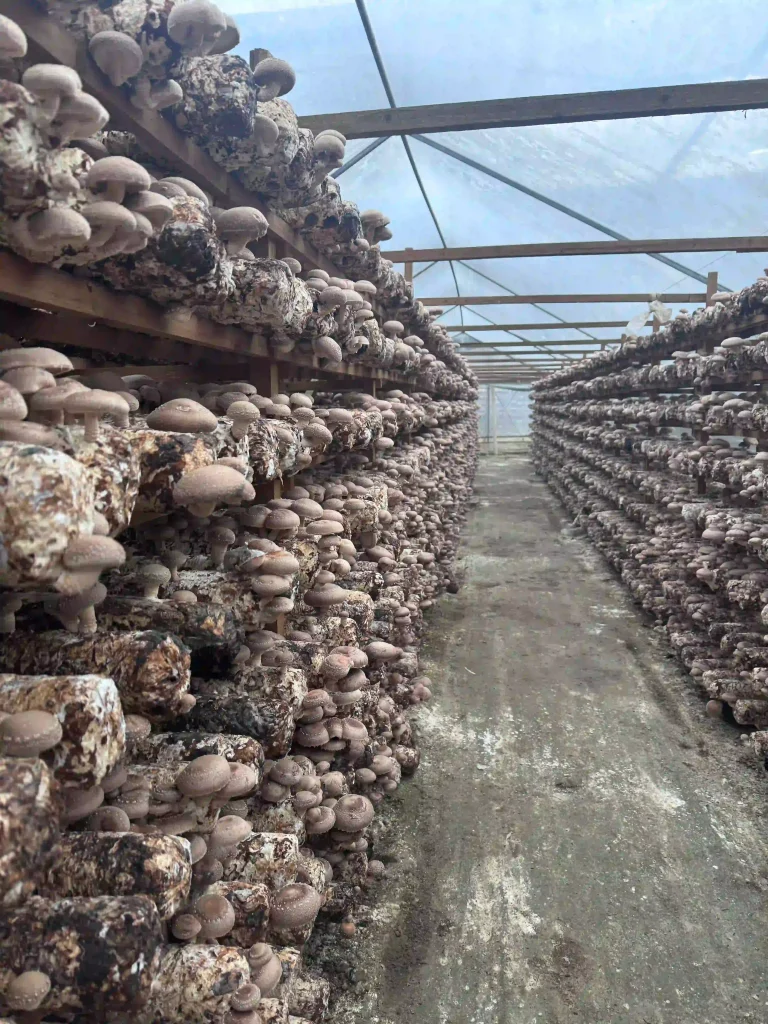
mushroom manufacturer
Supply chain volatility is the primary threat to modern food manufacturing. Relying on middlemen exponentially increases your exposure to fraud and inconsistent quality.
Avoiding Brokers: The Financial and Quality Benefits of Direct Factory Purchasing
Brokers and trading companies frequently mix batches from dozens of unverified rural farms to meet volume quotas. This practice obliterates traceability, introduces wild variations in moisture content, and significantly increases the risk of MRL failures. Purchasing directly from the manufacturer eliminates these blind spots. It allows buyers to lock in stable volume pricing, demand specific cultivation protocols, and secure direct lines of communication for custom R&D requirements.
Jiangyuan Mushroom’s Capacity: Supplying Global Supermarkets and Manufacturers Since 1998
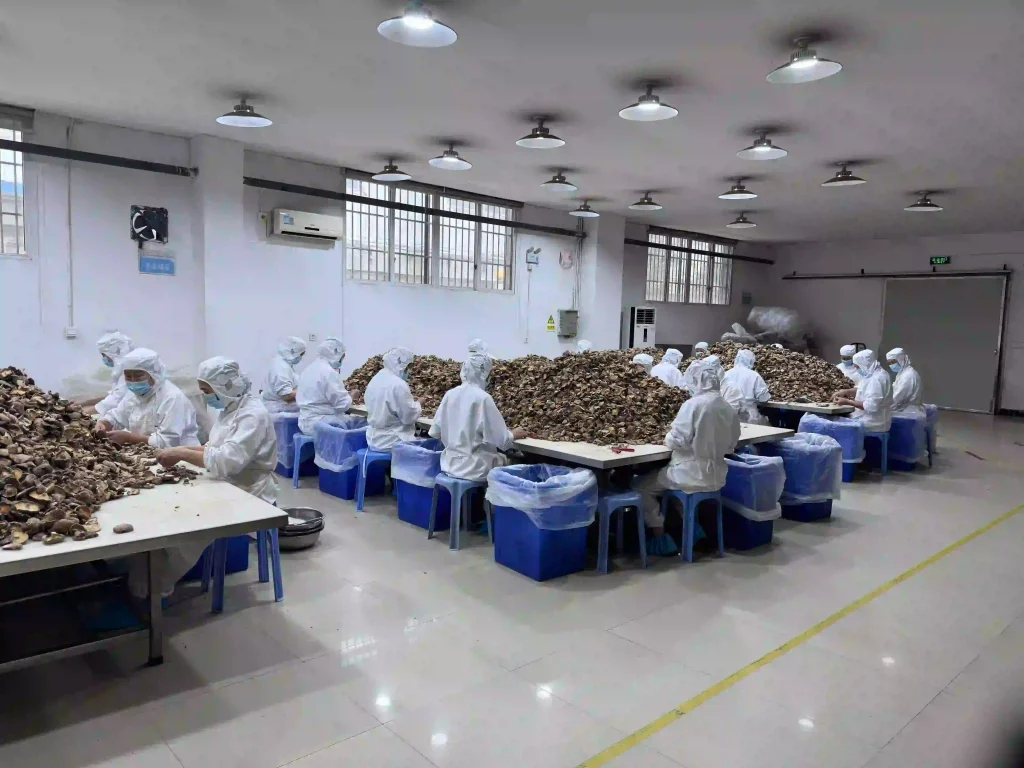
Operating directly from Qingyuan, Jiangyuan Mushroom has spent 28 years mastering the industrial cultivation and export of premium fungi. We are not a trading house; we are the source. By controlling the entire lifecycle—from substrate formulation to HACCP-certified mechanical dehydration and export logistics—we guarantee that every container delivers the yield, compliance, and consistency that global food brands demand.
5 Frequently Asked Questions for Global B2B Buyers
reliable mushroom manufacturer
1. How long do dehydrated King Oyster mushrooms last in wholesale storage?
When processed to a strict moisture content of ≤12% and stored in a cool, dry, dark warehouse, our mechanically dehydrated King Oyster mushrooms maintain optimal biochemical and sensory stability for 12 to 18 months.
2. What is the standard rehydration yield for commercial processing?
Premium Pleurotus eryngii should yield a rehydration ratio between 1:4 and 1:5. This means 1 kg of our dried mushrooms will yield approximately 4 to 5 kg of usable, firm-textured product for your processing line.
3. Do you provide heavy metal and pesticide testing reports for EU customs clearance?
Yes. Every export container is backed by comprehensive Certificates of Analysis (COAs) from accredited third-party laboratories, guaranteeing compliance with all EU and FDA MRLs for heavy metals and pesticides.
4. Can I request specific grading or cap-to-stem ratios for my manufacturing line?
Absolutely. We offer customized manual sorting post-dehydration. Whether your automated dicing machinery requires thick stems or specific overall lengths, we grade the product to your exact industrial specifications.
5. Why should nutraceutical extraction brands care about mechanical vs. sun-drying?
Traditional sun-drying utilizes unregulated UV heat, which degrades heat-sensitive antioxidants like Ergothioneine and causes uneven cellular collapse. Our low-temperature mechanical dehydration preserves the cellular matrix, resulting in significantly higher, more predictable extraction yields of Beta-glucans.
Expert Verdict for Procurement Officers
Your food supply chain is only as resilient as your most opaque supplier. Stop gambling container clearances on trading companies that obscure their sourcing. If your current supplier cannot immediately produce a verifiable HACCP audit, substrate heavy-metal screens, and guaranteed moisture metrics below 12%, you are operating at an unacceptable risk level. Secure your production lines by partnering directly with verified origin manufacturers who treat compliance as a baseline, not an afterthought. Contract Jiangyuan Mushroom to audit your current fungi specifications and stabilize your global procurement today.
References: