The global edible fungi market—valued at over USD 50 billion—is currently navigating a critical transition. For high-volume procurement officers at food processing plants and international wholesalers, the romanticized “forest-to-table” narrative of wild-picked mushrooms is increasingly colliding with the harsh realities of international food safety regulations (MRLs), heavy metal limits, and supply chain volatility. In the B2B sector, the choice between factory-cultivated fungi and wild-picked varieties is no longer a culinary preference; it is a strategic risk management decision.
The Procurement Decider’s Matrix vs. Wild Harvesting
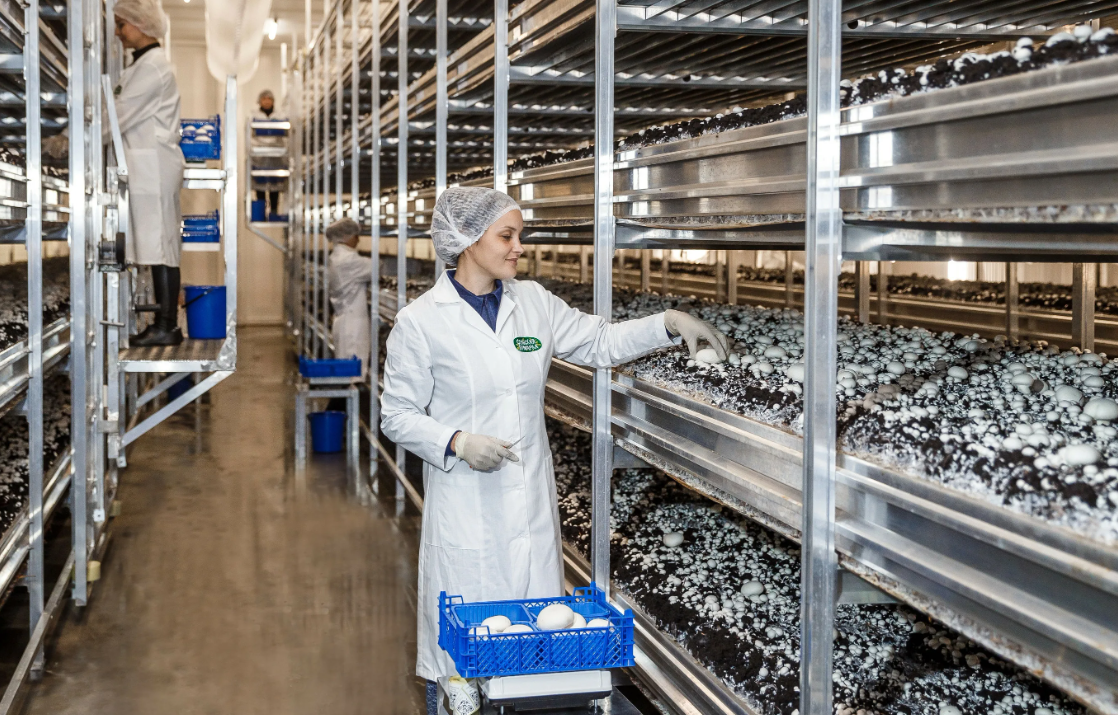
Before analyzing the technical nuances, the following table summarizes the operational differences that impact large-scale food manufacturing and distribution.
| Feature | Factory-Produced (CEA) | Wild-Picked (Foraged) | B2B Impact |
|---|---|---|---|
| Traceability | Full (Batch-to-Substrate) | Minimal (Regional only) | Compliance with FSMA/HACCP |
| Contaminant Control | Sterile Environment | Soil-Dependent | Rejection risk at EU/FDA borders |
| Quality Consistency | Uniform (Size/Color/Moisture) | Highly Variable | Automated processing efficiency |
| Supply Stability | Year-round (Contract-based) | Seasonal (Weather-dependent) | Inventory & Price Stability |
| Chemical Residue | Lab-verified (Zero-pesticide) | Risk of environmental runoff | Brand reputation protection |
The Procurement Reality: Through our 28 years of exporting from Qingyuan—the world’s recognized “Home of the Shiitake”—Jiangyuan Mushroom has observed that while wild mushrooms may suit boutique restaurants, they cannot sustain the 20-ton-per-month requirements of a global extract manufacturer or a supermarket private label. The “wild” label often masks a lack of standardization that can lead to catastrophic border rejections due to Cadmium or Lead levels that naturally occur in forest soils but are strictly regulated in the EU and North America.
The Evolution of Sourcing: “Origin” and “Method” Define Commercial Value
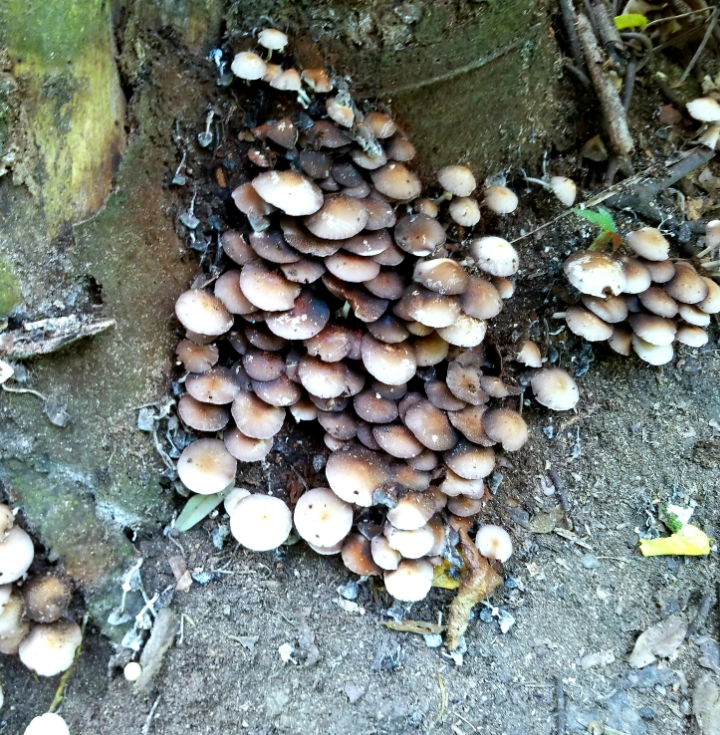
wild mushrooms
In the edible fungi trade, origin is the ultimate proxy for quality. However, the industry is moving toward a hybrid model where Geographical Indication (GI) status is paired with Controlled Environment Agriculture (CEA).
The 800-Year Heritage: Qingyuan Modernized Traditional Wisdom
Qingyuan is not merely a production hub; it is the birthplace of cultivated shiitake (Lentinus edodes). The traditional “Duankou” method, pioneered here eight centuries ago, laid the groundwork for modern mycology. At Jiangyuan Mushroom, we have transitioned this heritage into a factory setting that replicates the unique climatic conditions of the Qingyuan mountains—high altitude, specific diurnal temperature swings, and mineral-rich water—while eliminating the variables of the wild.
Wild Harvesting Realities: Challenges of Seasonality
Wild picking relies on the “fruiting window” of the forest. For a B2B buyer, this presents three major bottlenecks:
Price Spikes
Low yields during dry seasons lead to volatile pricing.
Adulteration
The risk of “filler” species being mixed into a shipment of premium wild mushrooms is a common industry pain point.
Moisture Inconsistency
Wild mushrooms are often dried using primitive methods in the field, leading to moisture levels above the 13% export standard, which triggers mold growth during sea freight.
Controlled Environment Agriculture (CEA) vs. Foraging on Food Safety
For a Chief Food Safety Officer, the “factory” is a bio-secure facility designed to mitigate biological and chemical hazards. The fundamental difference lies in the Growth Substrate.
Eliminating Soil Contamination: Substrate vs. Forest Floors
Mushrooms are hyper-accumulators; they absorb whatever is in their environment. Wild mushrooms grow in forest soil that may contain legacy heavy metals or environmental pollutants from distant industrial runoff.
At Jiangyuan, our factory production utilizes a standardized substrate: a precise mix of FSC-certified hardwood sawdust, rice bran, and calcium carbonate. This substrate is steam-sterilized at 100°C+ for 10–12 hours, ensuring that the mycelium colonizes a clean environment. This process eliminates the risk of Listeria and other soil-borne pathogens common in wild-harvested products.
Rigorous Heavy Metal Screening: EU/FDA Standards
The most significant risk for importers of dried fungi is the presence of Cadmium, Lead, and Mercury.
| Contaminant | EU/FDA Limit (Typical) | Wild Picking Risk | Jiangyuan Factory Standard |
|---|---|---|---|
| Cadmium (Cd) | ≤1.0 mg/kg (dried) | High (Soil dependent) | <0.2 mg/kg |
| Lead (Pb) | ≤1.0 mg/kg | Moderate | <0.1 mg/kg |
| Pesticide Residue | <LOQ | Risk from runoff | 0% (Physical barriers used) |
According to our internal lab data (conducted via ICP-MS testing), 98% of our factory-produced batches fall 70% below the Maximum Residue Limits (MRLs) required by the European Food Safety Authority (EFSA). This level of precision is impossible to guarantee with wild-picked fungi, where the “batch” consists of thousands of individual mushrooms from hundreds of different forest locations.
Pesticide-Free Protocols: Factory Advantage
Wild-picked mushrooms are often marketed as “natural,” but they are susceptible to environmental drift from nearby agricultural land. In a controlled factory environment, we use physical insect barriers and HEPA-filtered air to prevent pest infestation. This allows Jiangyuan to issue a Non-Pesticide Guarantee, a critical document for organic-certified food processors and infant food manufacturers.
Processing Excellence: Shelf Life and Nutritional Density
In the B2B supply chain, the value of a mushroom is not just determined by its growth, but by how it is preserved. For international shipments spanning 30 to 45 days at sea, the dehydration process is the difference between a premium arrival and a total loss due to microbial spoilage.
Precision Dehydration: <13% Moisture is the Non-Negotiable Standard
Wild-picked mushrooms are frequently air-dried in the field or using makeshift solar racks. While traditional, these methods lack humidity control, often leaving the “core” of the mushroom moist. In contrast, Jiangyuan’s factory utilizes Industrial Heat Pump Dehydration Technology.
By controlling the temperature curve—starting at 35°C and gradually increasing to 60°C—we achieve a uniform moisture content of under 13%. This precision ensures a 12-to-24-month shelf life without the need for sulfur dioxide (SO2) or other chemical preservatives.
The Maillard Reaction: Flavor Profiles
For food processors and soup manufacturers, the “umami” intensity of Lentinus edodes is paramount. Our mechanical drying process triggers a controlled Maillard reaction and the breakdown of nucleic acids into guanylate. Unlike the inconsistent drying of wild harvests, our factory process ensures that every 10-ton batch possesses the same concentrated aromatic profile, allowing R&D teams to maintain flavor consistency in their final products.
Technical Comparison for Procurement Officers (The “Factory Advantage”)
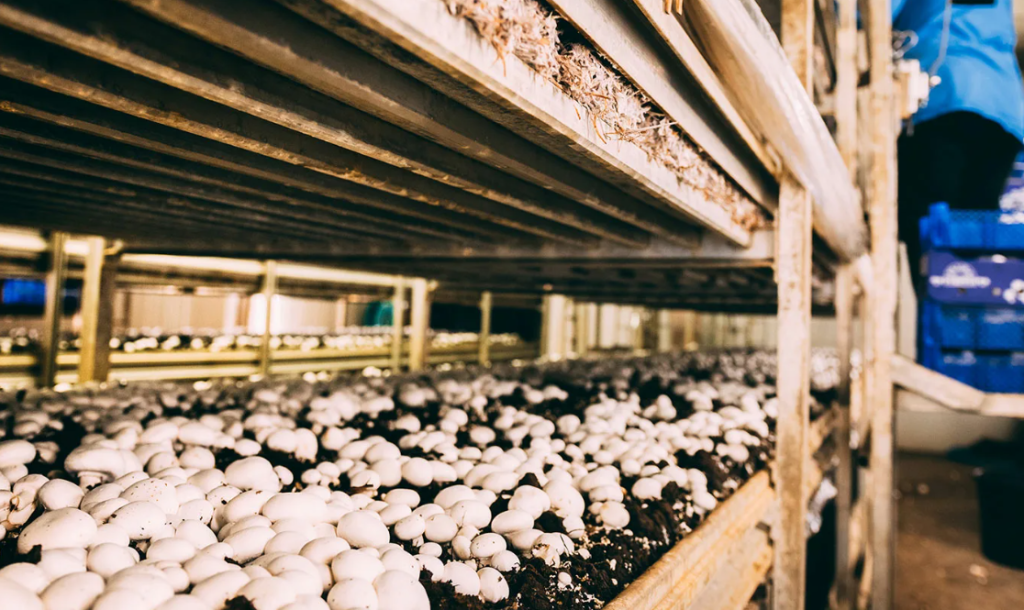
factory mushrooms
For a global wholesaler, the “romance” of foraged fungi quickly fades when faced with the logistical nightmare of non-uniform stock. Factory-produced mushrooms are engineered for industrial efficiency.
Uniformity and Automated Processing
If your facility uses automated slicing or dicing machinery, wild mushrooms are an operational liability. Their irregular shapes and sizes lead to high waste percentages. Jiangyuan’s factory-grown shiitake are graded by cap diameter (e.g., 3–4 cm, 4–5 cm) and stem length with 95% precision.
| Operational Metric | Jiangyuan Factory Production | Wild/Traditional Sourcing | Impact on Buyer ROI |
|---|---|---|---|
| Rehydration Ratio | 1:6 to 1:8 (Consistent) | 1:4 to 1:9 (Unpredictable) | Accurate yield calculation for recipes |
| Defect Rate | <2% (Insect-free, no grit) | 10%–15% (Sand, larvae, chips) | Lower labor costs in sorting |
| Packaging Options | Bulk (10 kg/25 kg) or OEM Retail | Mixed Sacks | Reduced repackaging overhead |
| Shipping Lead Time | 7–14 Days (Stocked year-round) | 30–60 Days (Seasonal wait) | Optimized inventory turnover |
Year-Round Supply Chain Resiliency
Wild picking is at the mercy of the “mushroom season.” A drought or an early frost in the forest can wipe out a buyer’s entire Q4 inventory. By utilizing climate-controlled fruiting rooms, we provide a “Rolling Supply” contract. This allows our partners to avoid the capital-heavy practice of over-stocking, as we can guarantee fresh production regardless of the external climate.
Verification & Certification to Vet a Global Mushroom Supplier
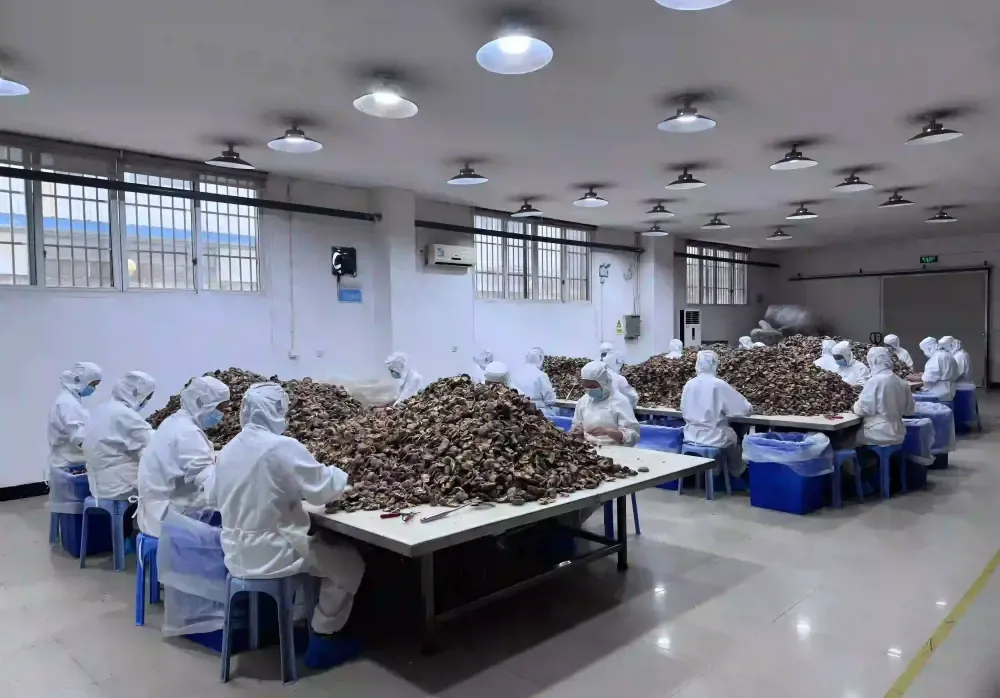
mushroom supplier
As an international supply chain director, I emphasize that a “Quality Guarantee” is only as good as the paper it is written on. In the B2B edible fungi trade, three pillars of verification are required to bypass customs friction.
HACCP & ISO 22000
These are not optional for the US and EU markets. They prove that the factory has identified and mitigated Biological, Chemical, and Physical hazards at every step, from substrate mixing to final vacuum sealing.
The COA (Certificate of Analysis)
Every batch must be accompanied by a COA that specifically lists moisture content, ash, and heavy metal levels (Cd, Pb, Hg).
Traceability Codes
At Jiangyuan, each carton contains a batch code that traces back to the specific “Growing Room” and “Substrate Batch.” This level of transparency is physically impossible with wild-picked fungi, where the source is “the forest.”
FAQ: Sourcing Intelligence
Q1: Do factory-grown mushrooms have less Vitamin D than sun-dried wild mushrooms?
Direct Answer: Wild mushrooms synthesize Vitamin D via natural sunlight, but they also accumulate environmental pollutants. Jiangyuan can provide UV-B irradiated mushrooms upon request, which triggers the conversion of ergosterol to Vitamin D2 in a sterile environment, offering the nutritional benefits of “sun-drying” without the safety risks.
Q2: How does the rehydration time compare between factory and wild varieties?
Direct Answer: Factory production yields mushrooms with consistent cellular density, so rehydration times are standardized (typically 45–60 minutes in lukewarm water). Wild mushrooms vary significantly; older, tougher wild specimens may remain “woody” even after hours of soaking.
Q3: Does factory production meet “Organic” standards?
Direct Answer: Because we control the substrate (sawdust/bran) and use no chemical pesticides, factory production is actually easier to certify than wild picking, where the “organic” status of the surrounding forest can be difficult to legally prove to certification bodies like Ecocert or the USDA.
Q4: Is there a price difference between “Lentinus edodes” and “Wild Forest Mushrooms”?
Direct Answer: Lentinus edodes (Shiitake) offers a lower Total Cost of Ownership. While wild mushrooms may occasionally have a lower raw price during peak season, the costs associated with cleaning, sorting, and high rejection rates at customs make them more expensive in the long run.
Q5: What is the maximum Cadmium level I should accept for EU imports?
Direct Answer: For dried mushrooms, the EU limit for Cadmium is typically 1.0 mg/kg. However, premium buyers usually demand <0.5 mg/kg. Jiangyuan factory standards consistently hit <0.2 mg/kg, providing a significant “safety buffer” for your brand.
The Expert Verdict: Sourcing for 2026 and Beyond
If your business model relies on culinary storytelling for a low-volume, boutique audience, wild-picked mushrooms offer an artisanal appeal that is hard to replicate.
However, if your objective is commercial scalability, regulatory compliance, and bottom-line stability, factory production is the only viable path. The risks of wild sourcing—ranging from heavy metal contamination to seasonal “dark periods”—are incompatible with the requirements of modern global food supply chains.
At Jiangyuan Mushroom, our 28-year history in Qingyuan has taught us that the most successful global brands choose the Factory Model because it turns a biological variable into a reliable industrial ingredient. Secure your supply chain with data, not just folklore.
References:
Pennsylvania State University — Mushroom Production Technology
Cornell University — Growing Specialty Mushrooms: Outdoors vs Indoors