A shipment of dried shiitake mushrooms can arrive with beautiful golden-brown caps, a deep earthy aroma, and the firm texture buyers expect. Yet a few months in a poorly managed warehouse can change that picture. Aroma fades, color shifts, and moisture may creep back into the product. For importers, the consequences extend beyond quality: rejected stock, inventory losses, and difficult conversations with downstream customers.
What is the shelf life of dried shiitake mushrooms?
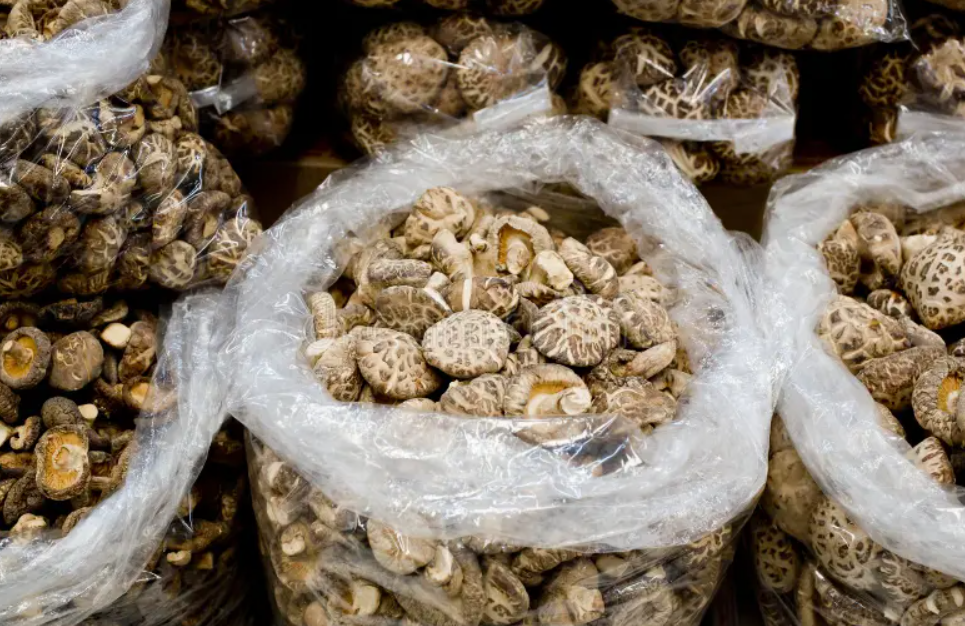
What is the shelf life of dried shiitake mushrooms
A commonly published estimate for optimal quality is around 12–18 months, while some commercial suppliers declare periods of 24 months or longer. Neither figure is a universal guarantee. The actual shelf life depends on the initial drying quality, packaging, storage environment, and evidence supporting the manufacturer’s declaration.
A Japanese study published in 2000 found that sealed dried shiitake samples retained their measured appearance,components,and functional characteristics during one year of storage under the study conditions.Samples stored at room temperature in bags that were repeatedly opened and reclosed showed greater changes after six months.The researchers considered approximately one year an acceptable best-before period for the products they studied.These findings provide useful evidence,but they do not establish a universal shelf life for every commercial product.(Source:Journal of Integrated Studies in Dietary Habits)
For global food wholesalers, processors, and supermarket procurement teams, the practical question is not simply how long dried mushrooms can remain on a shelf. It is how long they can retain the quality required by the intended application, under documented storage conditions.
How Long Do Dried Shiitake Mushrooms Last?
The shelf life of dried shiitake mushrooms varies with product specifications and storage conditions. Buyers should distinguish a general quality estimate from the shelf life declared for a particular batch.
Typical Shelf-Life Estimates and What They Mean
The following table separates commonly encountered commercial estimates from the evidence needed to assess them.
| Storage or product scenario | Indicative period | Key conditions and limitations | Recommended buyer action |
|---|---|---|---|
| Dried shiitake in unopened packaging | 12–18 months as a published optimal-quality estimate | Depends on drying quality, packaging integrity, and storage conditions | Check the supplier’s declared shelf life and supporting documentation |
| Commercial products declaring 24 months | Supplier-specific claim | The declaration must be assessed against the product specification and supporting evidence | Request the product specification and shelf-life rationale |
| Opened and repeatedly handled packages | No universal period can be assigned | Exposure to ambient humidity, air, and handling conditions varies | Reseal promptly and follow the manufacturer’s instructions |
| Dried mushrooms exposed to moisture | Remaining shelf life becomes uncertain | Moisture uptake may affect texture, aroma, and stability | Isolate the affected lot and assess it before release |
| Rehydrated shiitake mushrooms | Separate, much shorter storage scenario | Added water changes the product’s preservation conditions | Follow validated refrigerated handling and food-safety procedures |
These periods are not interchangeable guarantees. A product with a declared 24-month shelf life is not automatically superior to one carrying a 12-month declaration. The relevant questions are whether the specification fits the buyer’s requirements, whether the packaging maintains the intended conditions, and whether the declared period is adequately supported.
Shelf Life vs. Best-Before Date vs. Food Safety
These terms are related, but they answer different questions.
Shelf life describes the period during which a product is expected to meet specified requirements under defined storage conditions.
A best-before date generally concerns expected quality, subject to the applicable market’s labeling rules. It should not automatically be interpreted as the exact date a product becomes unsafe.
Food safety concerns whether the product meets applicable safety requirements. A date printed on a package cannot independently prove that the product has been handled correctly or remained safe throughout distribution.
For dried shiitake mushrooms, these distinctions matter because acceptable flavor and appearance may deteriorate before obvious spoilage becomes visible. Equally, a product that looks normal is not necessarily free from every food-safety hazard.
For international buyers, the supplier’s shelf-life declaration should therefore be considered alongside the product specification, storage instructions, traceability records, and applicable destination-market requirements.
Why Different Suppliers Declare Different Shelf-Life Periods
Two suppliers may offer visually similar dried shiitake mushrooms with different declared shelf lives. That difference does not automatically indicate that either supplier is wrong.
The products may have different initial moisture levels, drying histories, packaging materials, or storage assumptions. One supplier may also have stronger product-specific evidence supporting its declaration.
According to a 2000 study published in the*Journal of Integrated Studies in Dietary Habits*, the sensory evaluation of the dried shiitake samples tended to decline after more than six months, even though several measured taste-related components changed little. The researchers also observed differences between sealed storage and storage in bags that were reopened and reclosed.
The distinction is important for buyers. Chemical composition, sensory quality, and food safety are different evaluation dimensions. A product may retain some measured components while losing part of the aroma or appearance valued by customers.
What Factors Affect the Shelf Life of Dried Shiitake Mushrooms?
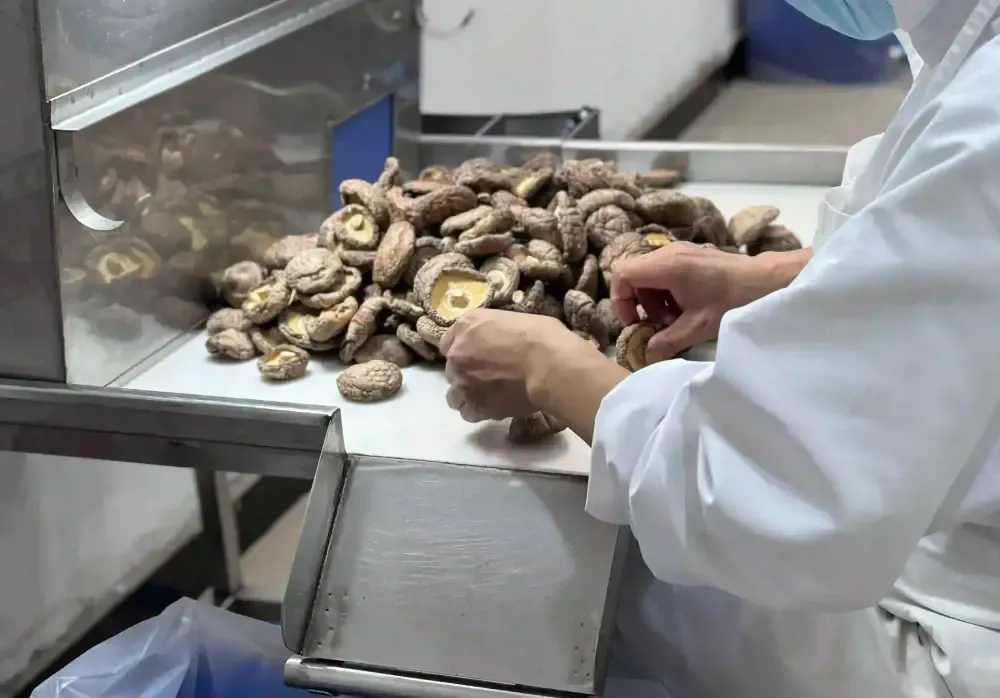
What Factors Affect the Shelf Life of Dried Shiitake Mushrooms
Dried shiitake mushrooms are more stable than fresh mushrooms because drying removes water and slows many deterioration processes. However, drying does not make the product immune to moisture absorption, oxidation, contamination, or gradual sensory changes.
Based on our experience with dried-mushroom sourcing and processing, shelf-life evaluation should consider the entire product journey, from drying and packaging to warehousing and final distribution. No single measurement can replace that broader assessment.
Initial Drying Quality and Moisture Content
Drying is the foundation of dried mushroom stability. If the product is not dried consistently, some pieces may retain more moisture than others. A batch can appear dry on the surface while still showing variation across its contents.
Moisture content measures the amount of water in a product. It is an important quality-control parameter, but it does not independently establish how available that water is for microbial growth or other deterioration processes.
A 2020 study published in*Food Science and Technology Research*examined the effects of different vacuum-microwave drying conditions on shiitake quality,including color,texture,rehydration behavior,and taste-related characteristics.Its findings reinforce an important manufacturing principle:drying methods and process conditions can influence more than the amount of water removed.They can also affect the sensory qualities buyers expect.(Source:Food Science and Technology Research)
For wholesale purchasing, request the applicable moisture specification and test method rather than assuming that every dried shiitake product meets the same target.
Water Activity and Moisture Reabsorption
Water activity, expressed asaw, describes how available water is for chemical and microbiological processes. It is not the same as total moisture content.
This distinction becomes particularly important during storage. Dried mushrooms can absorb moisture from humid surroundings, especially when packaging is damaged or left open. As conditions change, the product’s stability may change as well.
Research published in theJournal of the Science of Food and Agriculture*investigated how water status and moisture movement related to quality deterioration in dried shiitake.The study supports the importance of examining moisture behavior rather than relying solely on a single moisture-content result.Its experimental findings should not be treated as a universal commercial shelf-life formula.(Source:Wiley Online Library)
Packaging Integrity and Moisture Barrier Performance
Packaging is not merely a presentation choice. It helps maintain the conditions established during processing.
| Quality dimension | Potential concern | What commercial buyers should verify | Practical implication |
|---|---|---|---|
| Moisture barrier | Water vapor enters through the packaging material | Material specifications and relevant barrier-test data | Helps assess suitability for the intended distribution environment |
| Seal integrity | Open seams or damaged seals permit unwanted exposure | Seal checks and package inspection records | Reduces the risk of moisture ingress during storage |
| Package size | Large packages may be opened repeatedly | Pack size relative to expected usage | Helps limit repeated exposure after opening |
| Light and oxygen exposure | Quality-related changes may occur during storage | Packaging design and recommended storage conditions | Supports appropriate warehouse and retail handling |
| Transport conditions | Heat, humidity, or physical damage may compromise packaging | Shipping requirements and relevant transport records | Helps maintain product condition through distribution |
| Traceability | Affected stock cannot be easily isolated | Lot codes and associated batch documentation | Supports investigation and targeted inventory control |
A high-barrier package can help protect dried mushrooms, but its effectiveness depends on the complete packaging system, including seals, handling, and storage. Do not assume that a particular film, pouch, or container guarantees a specific number of additional storage months without supporting evidence.
Temperature, Humidity, and Light Exposure
A dry, clean, temperature-stable storage environment is generally preferable to one with repeated humidity fluctuations or direct sunlight. The exact conditions should follow the product specification and packaging instructions.
For importers serving tropical markets, warehouse management deserves particular attention. Air-conditioning alone does not guarantee suitable storage if packages are exposed to condensation during temperature changes or remain open in humid environments.
The operational priority is consistency. Store products according to the supplier’s instructions, keep packages protected from moisture, and investigate damaged or damp stock before distributing it.
The key buying principle: A longer declared shelf life has commercial value only when the product, packaging, and documented storage conditions can support it. For WUSANGONG and other dried shiitake suppliers, product-specific evidence is more useful to a buyer than an unsupported promise of long storage life.
How Can You Tell If Dried Shiitake Mushrooms Have Gone Bad?
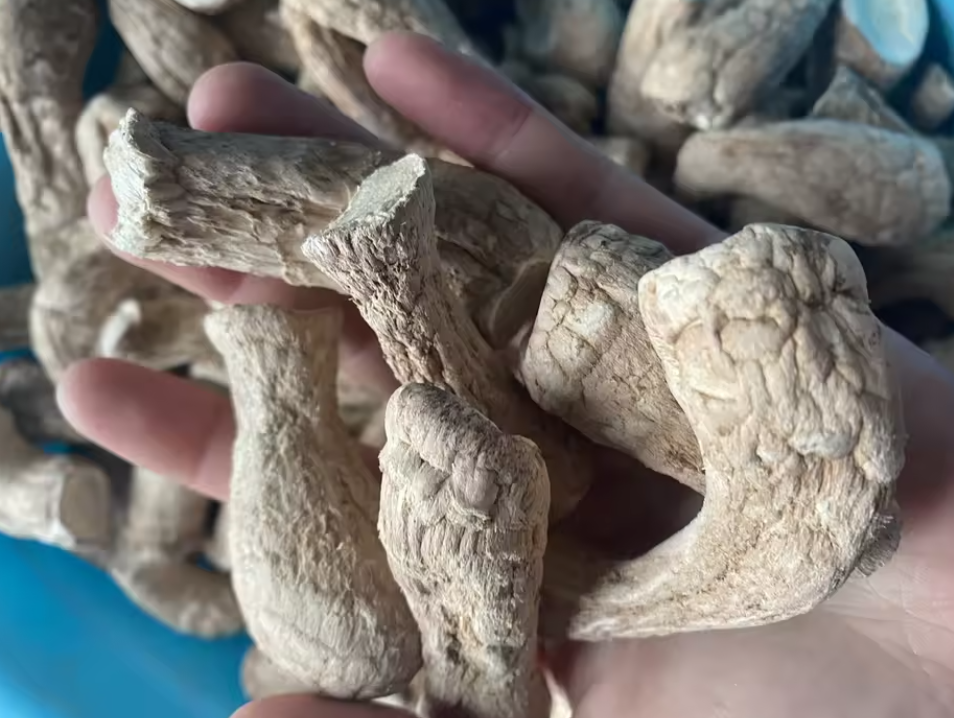
How Can You Tell If Dried Shiitake Mushrooms Have Gone Bad
A package can remain within its declared shelf life and still require inspection if it has been exposed to moisture or damaged during transport. Buyers should assess the product’s condition rather than relying on the printed date alone.
Signs of Deterioration to Watch For
- Visible mold: Fuzzy growth or suspicious spreading patches should trigger isolation of the affected lot and a food-safety assessment. Do not taste the product to determine whether it is safe.
- Unusual odors: Musty, sour, or otherwise abnormal smells may indicate deterioration or contamination.
- Moisture damage: Unexpected softness, dampness, clumping, or condensation can indicate that the product has absorbed moisture.
- Insect activity: Live insects, larvae, or unexplained debris warrant investigation.
- Significant appearance changes: Unusual discoloration may indicate quality deterioration, although color changes alone do not establish that a product is unsafe.
Some natural surface deposits can resemble mold, so appearance should be assessed carefully. If the distinction cannot be established confidently, do not release the affected product for sale or processing until it has been evaluated appropriately.
How Commercial Buyers Can Verify Dried Shiitake Shelf Life
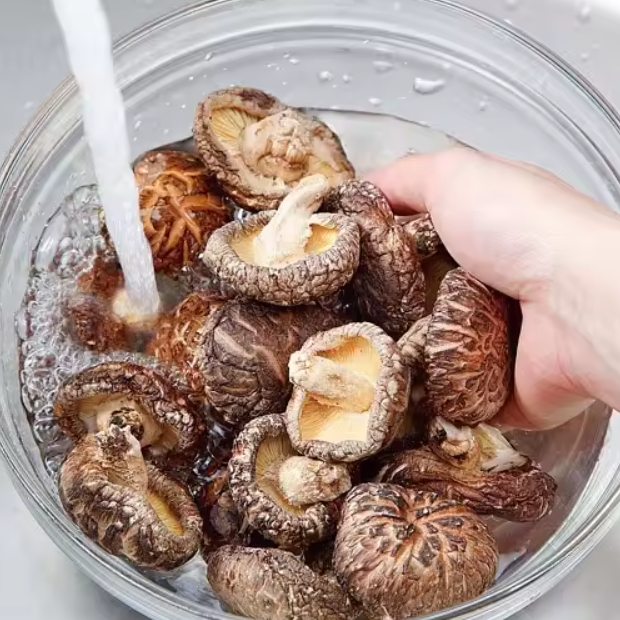
How Commercial Buyers Can Verify Dried Shiitake Shelf Life
For importers and food manufacturers, shelf-life verification should begin before a purchase order is confirmed. A supplier’s declaration is an important starting point, but buyers also need to understand the conditions under which that declaration applies.
Quality Assurance Checklist for Bulk Dried Shiitake Mushrooms
| Verification point | Evidence to request | Why it matters |
|---|---|---|
| Declared shelf life | Product specification and date-marking details | Establishes the supplier’s stated storage period |
| Moisture content | Batch test results and measurement method | Helps assess drying consistency |
| Water activity | Relevant test results and product-specific acceptance criteria | Provides information about water availability and stability |
| Packaging integrity | Packaging specifications and seal inspection records | Helps assess protection against moisture ingress |
| Food safety | Applicable hazard-control documentation and relevant test reports | Supports risk assessment and supplier qualification |
| Batch traceability | Lot codes and production records | Enables targeted investigation if a problem arises |
| Storage instructions | Written handling and warehouse requirements | Helps maintain the intended product conditions |
| Remaining shelf life | Production or date-marking information and agreed delivery requirements | Reduces the risk of receiving stock with insufficient time for distribution |
HACCP-based controls can help identify and manage relevant food-safety hazards, while ISO 9001 concerns quality management systems. Neither certification, by itself, proves that a particular dried shiitake product will retain its quality for a specific number of months.
Inventory Management for International Distributors
Long transit times make stock rotation especially important. A shipment may arrive with substantial shelf life remaining, but delays in customs clearance, warehouse handling, or customer distribution can reduce the time available for sale.
Use FEFO(First Expired, First Out)to prioritize stock with the earliest applicable expiry or best-before date. Maintain batch-level records, inspect incoming packaging, and store products according to their documented requirements.
For buyers serving humid markets, warehouse conditions deserve particular attention. A moisture-resistant package cannot compensate for damaged seals or careless handling after opening.
Frequently Asked Questions About Dried Shiitake Shelf Life
- Can dried shiitake mushrooms last for two years?
Some commercial suppliers declare a 24-month shelf life or longer. However, this should not be assumed for every product. Buyers should check the manufacturer’s specification, packaging conditions, and supporting shelf-life evidence before accepting the declaration.
- Do dried shiitake mushrooms expire if they remain sealed?
Yes, they can lose quality over time even when sealed. Packaging helps limit exposure to moisture and other environmental factors, but it does not stop every deterioration process. Follow the manufacturer’s date marking and storage instructions.
- Should dried shiitake mushrooms be refrigerated?
Refrigeration is not automatically necessary for properly dried, shelf-stable products stored under their specified conditions. If refrigeration is recommended, follow the supplier’s instructions and protect the product from condensation when it is moved between temperatures.
- How long do rehydrated shiitake mushrooms last?
Rehydrated mushrooms require a separate storage assessment because added water changes their preservation conditions. Refrigerate them promptly, use clean handling practices, and follow a validated food-safety procedure for the intended application. Do not apply the shelf life of dried mushrooms to the rehydrated product.
- What shelf-life documents should a bulk buyer request?
Request a current product specification, declared shelf life, date-marking details, storage instructions, relevant moisture and water-activity results, packaging information, and batch traceability records. Depending on the product and destination market, additional food-safety documentation or testing may be appropriate.
Choosing a Reliable Dried Shiitake Supplier
For global buyers, the most useful supplier is one that can explain how its products are processed, graded, packaged, and controlled. WUSANGONG‘s stated background in Qingyuan shiitake sourcing and processing provides a relevant starting point for discussing product specifications and wholesale requirements.
Before committing to a large order, confirm the available grades, packaging formats, traceability arrangements, declared shelf life, and documentation relevant to your destination market. Any product-specific performance claim should be supported by verifiable records.
Expert Verdict: Do not purchase dried shiitake mushrooms on shelf-life claims alone. Evaluate the product specification, moisture control, packaging integrity, and supporting evidence together. A defensible shelf-life declaration and consistent storage practices are more valuable than an impressive number printed on a package.
References: