For a wholesale buyer, the most dangerous assumption is that dried mushroom prices follow a simple calendar: harvest arrives, supply increases, prices fall; the season ends, prices rise. Real procurement is less tidy. Dried mushroom seasonal price trends are shaped by the interaction of harvest volume, raw-material purchasing, drying yield, quality grade, processor inventory, market demand, and export costs. Drying itself changes the equation because the product can be stored and traded long after the fresh crop has been processed.
That means the“cheapest month” is rarely a reliable procurement strategy. A better question is: What is happening to supply, inventory, specifications, and landed cost at the moment I need to buy?
Current supplier quotations illustrate why simple online price comparisons can mislead. Recent China marketplace listings show dried shiitake offers ranging widely depending on product form, MOQ and specification, rather than presenting one standardized market price. CBI’s European market research also distinguishes raw-material, FOB, CIF, wholesale and retail price stages, demonstrating that the number attached to“mushroom price” depends heavily on where in the supply chain it is measured.
For international buyers, this distinction matters. A food manufacturer buying sliced material by the tonne has a very different purchasing equation from a supermarket buyer sourcing visually uniform whole caps. **The right benchmark is therefore not simply the lowest quotation. **It is the quality-adjusted and delivery-adjusted cost of a specification that can actually be supplied consistently.
What Are Dried Mushroom Seasonal Price Trends?
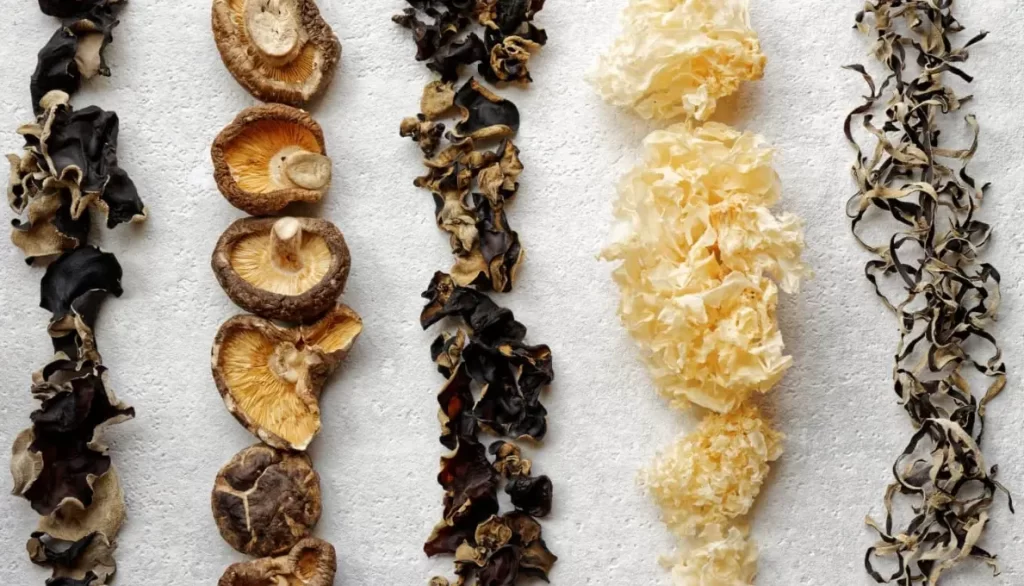
What Are Dried Mushroom Seasonal Price Trends
Dried mushroom seasonal price trends describe the recurring or irregular changes in wholesale and export quotations associated with harvest cycles, raw-material availability, processing conditions, inventory levels and market demand.
But there is an important distinction between seasonality and short-term price movement.
Seasonality is linked to recurring production or demand patterns. Price movement can happen for many other reasons: a smaller crop, an unexpected weather event, a processor replenishing inventory, stronger export orders, changing freight costs, or buyers suddenly competing for a particular grade.
USDA Economic Research Service research on food pricing provides a useful general principle: processing methods such as drying can reduce seasonal price variation compared with fresh products because processed products can be stored for longer periods. This is why a dried shiitake quotation should not be treated as a direct mirror of the fresh mushroom market.
The Supply Chain Behind a Dried Mushroom Price
The commercial path is better understood as:
Cultivation → Harvest → Raw Mushroom Procurement → Drying → Grading → Inventory → Export Quotation → Shipment
Each stage can introduce a different cost or supply signal.
For example, a strong harvest does not automatically mean every dried mushroom grade becomes cheaper immediately. A processor may have purchased raw material earlier, may be holding existing inventory, or may be processing different grades for different customers. Conversely, a seemingly stable harvest can coexist with higher quotations if demand for a particular grade exceeds available inventory.
Based on our experience with dried mushroom sourcing, this is where many international buyers make their first mistake: they compare a supplier’s current quotation with an old quotation without checking whether the crop, grade, moisture specification, processing form and inventory position are actually comparable.
| Price Signal | What It Can Indicate | What Buyers Should Verify | Procurement Risk |
|---|---|---|---|
| New-crop availability | Freshly processed supply is entering the market | Harvest volume, grade and actual available stock | Assuming all grades become cheaper |
| Limited raw-material supply | Higher processor purchasing pressure | Crop yield and supplier inventory | Waiting too long for a lower quote |
| Higher-grade shortage | Premium products may command stronger quotations | Cap size, appearance, broken rate and grade definition | Comparing premium product with standard grade |
| Large supplier inventory | Existing stock may be available for immediate shipment | Production date, storage conditions and batch consistency | Treating old inventory as equivalent to new crop |
| Strong export demand | More competition for available supply | Destination market demand and order backlog | Delaying an urgent purchase |
| Higher logistics cost | Export quotation may increase even if product cost is stable | Incoterm, freight, packaging and destination | Comparing FOB with landed cost |
| Different processing form | Whole, sliced and broken products can have different economics | Processing specification and intended application | Choosing by price alone |
The practical lesson is simple: seasonal supply is only one layer of the quotation.
A current 2026 supplier guide similarly identifies variety, grade, size, moisture, processing form, order quantity, seasonality and export requirements as separate pricing variables.
Why Dried Mushrooms Do Not Move Like Fresh Mushrooms
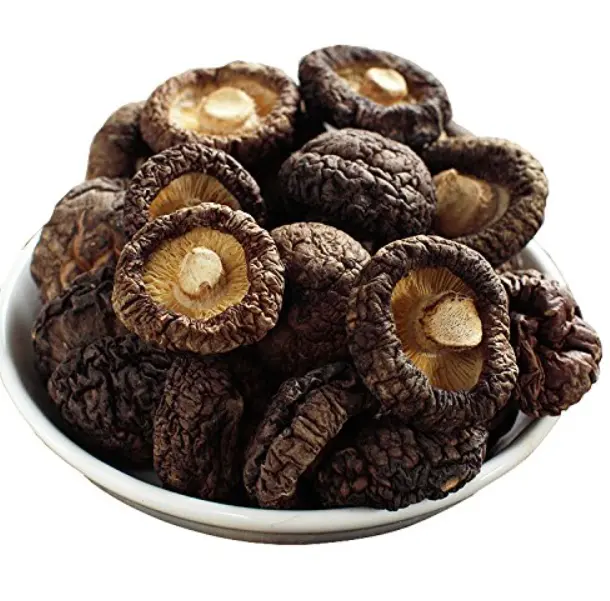
Why Dried Mushrooms Do Not Move Like Fresh Mushrooms
Fresh mushrooms are highly time-sensitive. Dried mushrooms are not.
That single difference changes the procurement model.
When fresh mushrooms reach the market, timing and perishability can exert strong pressure on prices. Once mushrooms have been properly dried, graded and packed, the seller has greater flexibility over when the inventory is released. The market therefore develops a second layer: inventory timing.
For B2B buyers, this means the harvest calendar should be treated as a supply signal, not a guaranteed price calendar.
A useful way to think about it is:
Fresh harvest availability influences the raw-material market. **Drying converts part of that crop into storable inventory. ** Inventory determines how much supply is immediately available to buyers.
Grade determines which portion of that inventory can meet a particular specification.
Demand determines how quickly that inventory is absorbed.
This explains why two suppliers can quote different prices on the same day without either quotation necessarily being unreasonable.
One supplier may have new-crop stock available in a standard grade. Another may have limited premium whole-cap inventory. A third may quote sliced material designed for food processing. On a marketplace, these products can all appear under“dried shiitake, ” yet they are not commercially identical. Current marketplace listings demonstrate substantial differences in advertised prices and MOQs across China-origin dried shiitake products.
Why New Crop Does Not Automatically Mean the Lowest Price
“New crop” is an important purchasing signal, but it should never be interpreted as a guaranteed discount. **New crop can mean that more raw material has recently entered the processing chain. **It does not by itself tell a buyer:
- how large the crop was;
- what percentage meets premium grades;
- what the processor paid for raw material;
- how much inventory has already been contracted;
- what moisture specification is being offered;
- whether the product is whole, sliced or broken;
- or what export and packaging costs apply.
CBI’s market information provides another useful reminder: the price of dried mushrooms accumulates through several stages, from raw material through processing and packing to FOB and later distribution stages.
| Procurement Variable | Effect on the Quotation | Why It Matters to B2B Buyers |
|---|---|---|
| Harvest volume | Can influence raw-material availability | Determines whether supply is abundant or constrained |
| Drying yield | Changes the economics of converting fresh mushrooms into dried product | Affects processor cost calculations |
| Cap size and grade | Can create major price differences | Premium retail specifications require tighter sorting |
| Moisture specification | Influences stability, weight and processing requirements | Important for long-distance storage and transport |
| Whole vs sliced vs broken | Changes sorting and processing requirements | Different applications need different specifications |
| Order volume | Can affect commercial pricing | A tonne-scale contract is not equivalent to a small trial order |
| Inventory age and condition | Can affect availability and commercial value | Buyers need batch and storage information |
| Incoterm | Changes what is included in the quoted price | FOB, CIF and other terms are not directly interchangeable |
| Destination requirements | Can add documentation, inspection or packaging costs | Export compliance must be included in the purchasing calculation |
This is why experienced buyers ask for a specification-based quotation, not merely“your best price per kilogram. ”
For Jiangyuan Mushroom’s international customers, the useful starting point is to define the product before discussing seasonal pricing: mushroom type, grade, size, whole or processed form, moisture requirement, packaging, quantity, destination and expected delivery period. Once those variables are fixed, a supplier can provide a quotation that is much more meaningful for procurement planning.
And that leads to the next question: which factors actually move dried mushroom prices during and after the harvest cycle?
What Actually Drives Dried Mushroom Seasonal Price Trends?
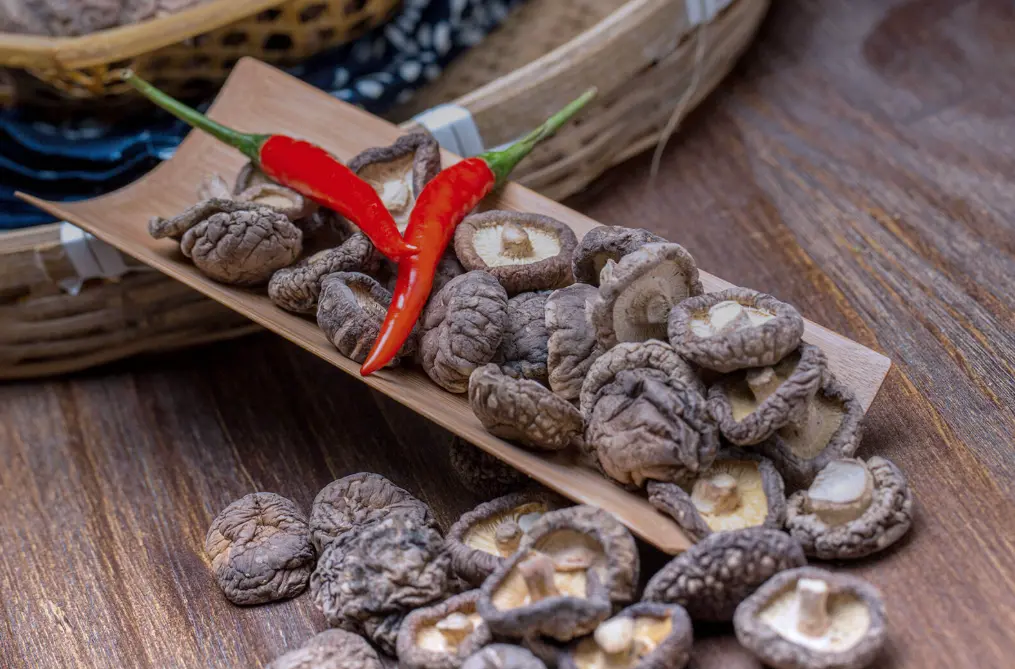
What Actually Drives Dried Mushroom Seasonal Price Trends
The most useful price signal is rarely the month on the calendar. It is the relationship between available inventory and the specification a buyer needs.
Harvest volume is the starting point, but it is only the starting point. A strong crop can increase raw-material availability while premium-grade whole mushrooms remain relatively limited. Conversely, a weaker crop does not necessarily push every dried mushroom quotation upward if processors are carrying sufficient inventory.
Recent 2026 trade data illustrates why buyers should read market statistics carefully. China-origin dried shiitake reported by Tridge showed very different observed unit prices across transactions and destinations, while the dataset itself covers multiple specifications and trade flows. Chinese industry data also reported that June 2026 dried shiitake exports totaled 1, 746.95 tonnes, with an average export price of RMB 81.38/kg, down 18.8% year on year. That is an export-market observation for that month, not a universal supplier price or a forecast.
This distinction matters enormously.
Harvest Yield and Raw-Material Availability
When the new crop enters the processing chain, processors have more raw mushrooms to select, dry and grade. But the commercial effect depends on how much usable material actually meets the buyer’s specification.
For a food manufacturer, 10 tonnes of mixed-quality raw material does not have the same value as 10 tonnes capable of producing the required grade consistently.
Weather can amplify this effect. Excessive rain, temperature changes, cultivation conditions and harvesting conditions may influence both yield and quality. The result is often a more complicated price movement than a simple supply-demand chart suggests.
Grade, Size and Processing Form
A quotation for premium whole-cap shiitake should never be benchmarked directly against sliced or broken mushrooms.
The difference is not cosmetic. Sorting intensity, usable yield, appearance requirements and intended application all influence commercial value.
For example, a supermarket buyer may prioritize uniform whole caps, while a sauce manufacturer may care more about flavor, consistency and processing efficiency. The second buyer may have little reason to pay a premium for appearance.
Moisture and Drying Yield
Moisture is another variable that can quietly distort price comparisons.
Two products may both be described as“dried shiitake, ” yet their moisture specifications, drying processes and batch characteristics may differ. Buyers should therefore ask for the agreed specification before comparing quotations on a per-kilogram basis.
Demand and Export Markets
Demand can also move independently of the harvest cycle.
In June 2026, China’s dried shiitake exports were distributed across Southeast Asia, East Asia, North America, Hong Kong/Macau/Taiwan and Western Europe, with Japan, Vietnam and Thailand among the largest destinations by reported volume.
For a supplier, therefore, domestic availability is only one part of the equation. Export demand, destination-market requirements and order timing can all influence inventory allocation.
How Global Buyers Should Plan Around Seasonal Price Movement
The objective should not be to predict the exact month when dried mushrooms will be cheapest. That level of certainty is rarely justified without a sufficiently long, specification-matched transaction history.
A better strategy is staged procurement.
Instead of purchasing 100% of annual requirements at one moment, a buyer can evaluate whether a portion should be contracted when suitable new-crop inventory becomes available, while retaining flexibility for later replenishment.
This approach can reduce dependence on one price point.
For Food Wholesalers
Wholesalers should monitor:
- annual volume;
- customer grade preferences;
- inventory turnover;
- supplier lead time;
- storage capacity;
- replenishment frequency.
A wholesaler selling several grades should not necessarily use one purchasing strategy for all of them.
For Food Manufacturers
Manufacturers should start with specification rather than price.
If sliced or broken mushrooms meet the formulation requirement, there may be no commercial reason to purchase premium whole-cap material. Conversely, replacing a required premium grade with a cheaper specification simply to reduce the purchase price can create downstream quality problems.
For Supermarket Buyers
Retail procurement has a different priority. Appearance, consistency, packaging, labeling and documentation can be as important as the underlying mushroom cost.
The relevant calculation is therefore not simply:
Price per kg
but:
Product cost + packaging + logistics + compliance costs + inventory cost = procurement cost
For Supplement and Ingredient Developers
Ingredient buyers should pay particular attention to batch consistency, traceability, processing form and testing requirements.
A low spot quotation is of limited value if the next shipment does not match the first shipment’s specification.
Quality Assurance: What Should Buyers Check Before Accepting a Seasonal Quote?
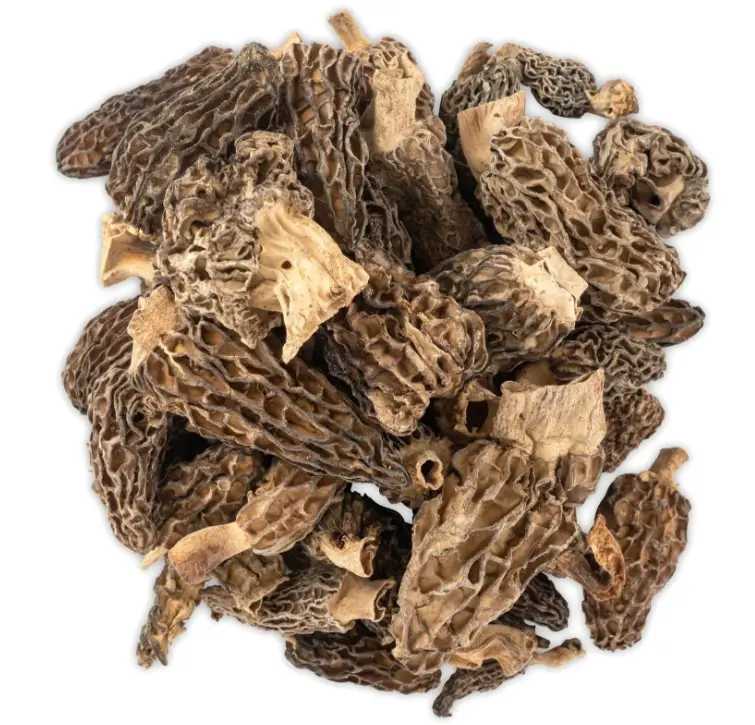
What Should Buyers Check Before Accepting a Seasonal Quote
A seasonal quotation should come with a specification sheet. Without it, the number is incomplete.
Based on our experience with dried mushroom sourcing, a serious B2B quotation should allow the buyer to answer one question:
“What exactly am I receiving for this price? ”
| Quality/Commercial Factor | What Buyers Should Request | Why It Affects Procurement |
|---|---|---|
| Mushroom type | Exact species/product name | Prevents comparison between different products |
| Grade | Supplier’s documented grading specification | Makes quotations comparable |
| Size | Cap diameter or agreed size range | Influences appearance and application |
| Processing form | Whole, sliced or broken | Different processing economics |
| Moisture | Contractual moisture specification | Relevant to storage and product stability |
| Foreign matter | Agreed specification and inspection method | Supports food-safety control |
| Packaging | Material, net weight and format | Affects handling and landed cost |
| Batch information | Production/lot identification | Supports traceability |
| Documentation | Applicable food-safety and export documents | Important for destination-market clearance |
| Incoterm | EXW, FOB, CIF or agreed term | Determines what the quoted price includes |
This is also where supplier transparency becomes more valuable than a headline discount.
A buyer should be cautious when two quotations appear dramatically different but the suppliers cannot provide equivalent specifications. **A quality-adjusted price is more meaningful than a nominal price. ** ## How to Build a More Reliable Dried Mushroom Procurement Benchmark
For repeated purchasing, create a historical quotation sheet rather than relying on memory.
Record:
- quotation date;
- supplier;
- origin;
- grade;
- size;
- moisture specification;
- processing form;
- quantity;
- packaging;
- Incoterm;
- destination;
- expected shipment date.
After several purchasing cycles, buyers can begin to identify genuine price signals within their own specification.
This is far more useful than copying a generic online“seasonal price chart. ”
Public market data can provide context, but it should not replace product-level verification. For example, current Tridge data reports observed trade and price signals across multiple countries, while China industry data provides national export statistics; neither should be treated as a direct quotation for a particular Jiangyuan Mushroom specification.
5 FAQs Global Buyers Ask About Dried Mushroom Seasonal Prices
When is the best time to buy dried shiitake mushrooms wholesale?
There is no universally verified cheapest month for every dried shiitake specification. Buyers should monitor new-crop availability, grade, supplier inventory, demand and delivery requirements together. A staged procurement strategy can be more practical than trying to predict one annual price bottom.
Do dried mushroom prices rise when the harvest season ends?
Not necessarily. Drying creates storable inventory, so export prices do not automatically follow fresh-mushroom seasonality. Inventory levels, grade availability and demand can delay or amplify seasonal effects.
Why do two Chinese dried mushroom suppliers quote different prices?
The products may not actually be equivalent. Grade, cap size, moisture, processing form, packaging, MOQ, inventory status and Incoterms can all create meaningful quotation differences.
Should food manufacturers buy premium whole dried shiitake for processing?
Not automatically. If the application uses the mushroom as an ingredient rather than a visual centerpiece, sliced or broken material may better match the manufacturing requirement. The correct choice should be based on specification, yield and application cost rather than appearance alone.
What should I provide when requesting a dried mushroom wholesale quotation?
Provide the mushroom type, grade, size, whole/sliced/broken requirement, moisture specification, estimated quantity, packaging format, destination and desired delivery period. The more precise the specification, the more useful the quotation comparison becomes.
Expert Verdict: Buy Against a Specification, Not a Calendar
Dried mushroom seasonal price trends are useful as a procurement signal, but they are not a reliable standalone buying calendar.
For global buyers, the stronger approach is straightforward: standardize the specification, monitor new-crop and inventory signals, compare quality-adjusted quotations, and divide procurement according to actual consumption and lead time.
For a China-origin supplier such as Jiangyuan Mushroom, this also creates a more transparent buying conversation. Instead of asking only, “What is your lowest price? ”, buyers can ask the question that matters more:
“What specification can you supply, in what volume, for what delivery window, and under which trade terms? ”
That is where seasonal market information becomes a practical sourcing decision rather than just another price chart. Pricing Note: Dried mushroom prices may vary according to grade, size, moisture specification, processing form, order quantity, packaging, delivery terms, destination, and market conditions. Please treat online prices and historical quotations as references only, and request a current, specification-based quotation from the supplier before placing an order.
References:
USDA Economic Research Service — Food Price Seasonality and Processing