Before approving a bulk mushroom order, do not start with the lowest quotation. Start with the specification. A professional buyer should verify product identity, grade and physical quality, moisture or temperature requirements, food-safety documentation, traceability, supplier capacity, and the sample-to-bulk consistency before comparing final landed costs. For international purchases, destination-market requirements should also be checked before the purchase order is issued.
| Buyer checkpoint | What to verify | Evidence to request | Why it matters |
|---|---|---|---|
| Product identity | Species, form, application | Product specification | Prevents specification mismatch |
| Grade & size | Dimensions, appearance, defect tolerance | Grade specification + sample | Controls batch consistency |
| Food safety | Applicable microbiological and chemical requirements | Batch COA / laboratory report | Supports market compliance |
| Traceability | Origin, lot and processing history | Traceability records | Enables investigation and recalls |
| Commercial terms | MOQ, packaging, lead time, Incoterm | Formal quotation | Reveals actual procurement cost |
This is the starting point for answering what should I check before buying mushrooms wholesale. The principle is simple: approve evidence, not promises.
A supplier can quote an attractive price and still create problems later if the shipment contains excessive breakage, inconsistent grades, unsuitable moisture, inadequate documentation, or packaging that does not survive international transport. The cheapest kilogram is not necessarily the cheapest usable kilogram.
Based on our experience with dried shiitake and other edible mushroom supply chains, most avoidable procurement problems begin much earlier than the container leaves the factory. They begin when a buyer accepts a vague description such as “premium grade” without defining what “premium” actually means.
1. Define the Mushroom Specification Before You Compare Suppliers
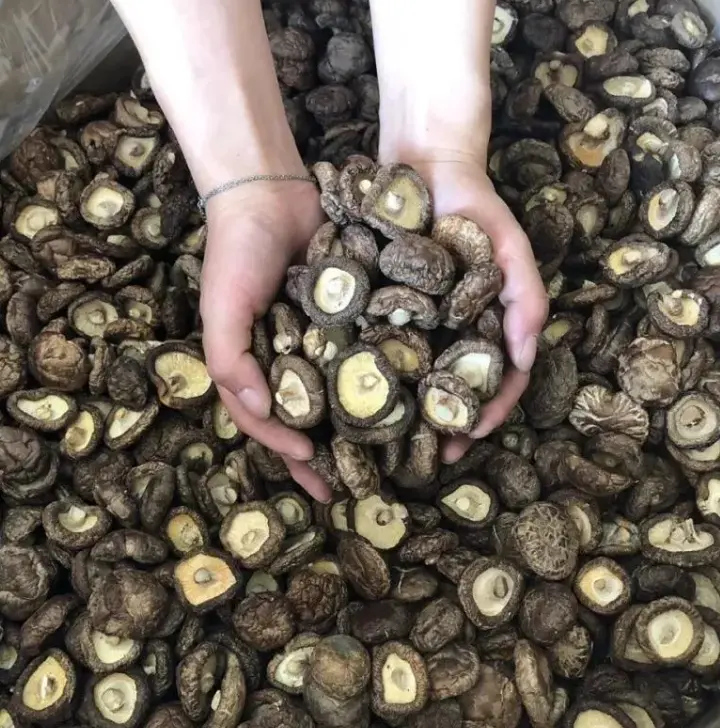
buying mushrooms wholesale
A wholesale mushroom purchase should begin with a written specification sheet, not a price list.
For fresh, dried and frozen mushrooms, the relevant acceptance criteria are different. A restaurant distributor buying fresh shiitake has very different priorities from a food manufacturer purchasing dried shiitake for soup base, seasoning, instant noodles or ready meals.
At minimum, the specification should identify the mushroom species, product form, intended application, grade, size, packaging format, storage conditions and applicable quality requirements.
For dried shiitake, buyers may also need to specify characteristics such as cap size, cap thickness, color, aroma, breakage and moisture. A supplier’s internal grade names can be useful, but they should not replace an actual specification.
This distinction matters because terms such as A, AA or AAA are not automatically universal quality standards. A buyer needs to know what physical characteristics those labels represent.
A practical specification framework for wholesale buyers
| Specification dimension | Dried mushroom example | Fresh mushroom example | Buyer question |
|---|---|---|---|
| Product identity | Dried shiitake, whole | Fresh shiitake | Is the species and form clearly defined? |
| Size | Cap diameter range | Cap diameter / size class | Is the size measurable? |
| Appearance | Color, cap integrity | Color, firmness, bruising | What defects are acceptable? |
| Moisture | Defined buyer requirement | Not the same metric as dried product | Is the target documented? |
| Physical defects | Broken pieces, foreign matter | Damage, decay, bruising | Is tolerance specified? |
| Aroma | Characteristic mushroom aroma | Fresh, clean odor | Can sensory acceptance be checked? |
| Packaging | Bulk bag / carton format | Ventilated fresh-food packaging | Does packaging fit the supply chain? |
The goal is not to create paperwork for its own sake. It is to make two suppliers comparable.
Without a defined specification, a buyer may compare US$ per kilogram against US$ per kilogram while unknowingly comparing different grades, different usable yields and different quality expectations.
2. Check Physical Quality — Not Just the Product Photograph
Supplier photographs can introduce a product, but they cannot establish batch quality.
For dried mushrooms, inspect the sample for visible consistency in size, color, cap structure, breakage, foreign matter and aroma. Where relevant to the application, evaluate how the product performs after rehydration rather than judging it only while dry.
For fresh mushrooms, the inspection shifts toward firmness, bruising, surface condition, odor, condensation, packaging integrity and delivery temperature.
For frozen mushrooms, physical appearance alone is also insufficient. Buyers should consider temperature control, ice formation, clumping, packaging integrity and the condition of the product after thawing or processing, depending on its intended use.
The key question is:
Can the supplier repeatedly deliver the same specification, rather than produce one attractive sample?
That is where supplier qualification becomes more important than visual selection.
3. Treat Moisture and Other Product Parameters as Procurement Controls
Moisture deserves special attention when purchasing dried mushrooms.
A product can look acceptable while still failing the buyer’s agreed specification. Excessive or inconsistent moisture can affect storage behavior, transport stability and downstream processing. But the acceptable target should be established according to the specific product, buyer specification and applicable requirements — not copied from an unrelated supplier or generic online article.
The same principle applies to other analytical parameters.
According to the U.S. Food and Drug Administration (FDA), food importers operating under the Foreign Supplier Verification Program have responsibilities involving risk-based evaluation and verification of foreign suppliers. That means international procurement is not simply a question of finding a supplier who says the product is “export quality.” The importer needs an appropriate verification process for the food and supply chain involved.
For European buyers, pesticide-residue requirements should likewise be checked against the applicable current EU rules and Maximum Residue Levels (MRLs), rather than relying on a generic statement such as “EU standard.” The European Commission maintains an official EU Pesticides Database for checking applicable MRL information.
4. Check the COA Against the Actual Product Batch
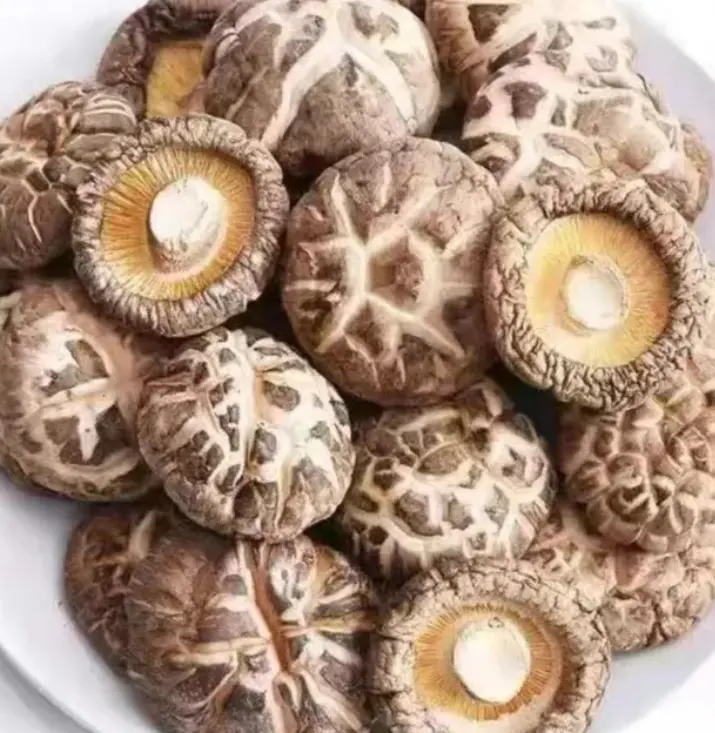
mushrooms wholesale
A Certificate of Analysis can be valuable, but the document needs context.
A buyer should ask:
- Is the report associated with a specific production batch?
- What product and specification does it cover?
- Which laboratory performed the testing?
- What parameters were tested?
- When was the sample collected?
- Do the results correspond to the product being purchased?
This is an important distinction between documentation and evidence.
A supplier may have a food-safety management system and still need to demonstrate that a particular shipment meets the agreed product requirements. Similarly, a certificate on a company website does not automatically establish the quality of every batch.
For different mushrooms and markets, the appropriate testing scope can vary. Depending on the product and destination, buyers may need to consider microbiological parameters, pesticide residues, heavy metals, moisture or other specified analyses. The testing plan should be based on the actual risk profile and regulatory requirements.
5. Verify the Supplier’s Traceability and Processing Controls
A reliable mushroom supply chain should allow the buyer to understand where the raw material came from and how it moved through processing.
For dried mushrooms, a practical process may include:
Raw Mushroom Selection → Cleaning & Sorting → Grading → Drying → Quality Inspection → Packaging → Export Shipment
The value of this process is not the number of steps. It is whether each step has defined controls and records.
Ask the supplier:
- Can the production lot be traced?
- Can raw-material origin be identified?
- How are mushrooms sorted and graded?
- How is drying controlled?
- How are finished products inspected?
- Can the finished batch be connected to its packaging and shipment records?
Based on our experience with mushroom procurement, traceability becomes particularly valuable when something goes wrong. A buyer does not want a supplier who can only say, “This batch came from our factory.” The useful question is much narrower: Which raw materials, processing records and test results are connected to this specific lot?
This is also where a supplier’s origin story needs to be separated from its verification system. For a Qingyuan-based mushroom producer, for example, regional production heritage can provide useful sourcing context, but the buyer still needs product specifications, batch controls and documentation.
6. Do Not Treat HACCP or ISO Certification as a Substitute for Product Verification
Food-safety management systems and product testing answer different questions.
HACCP is concerned with controlling food-safety hazards through a structured preventive system. ISO 22000 is a food-safety management-system standard. Neither concept should be reduced to the simplistic statement that a certificate automatically guarantees every product batch.
When reviewing supplier credentials, check the certificate scope, validity, issuing organization, covered site and relevant activities.
Then connect that system-level evidence with product-level evidence:
Supplier system → Process controls → Batch records → Laboratory evidence → Finished-product specification
That chain is much more meaningful to a professional procurement team than a collection of logos.
7. Use a Sample-to-Bulk Verification Process
A sample should not be treated as a ceremonial step before placing a large order.
The sample should represent the specification you intend to buy.
A practical sequence is:
Supplier screening → Document review → Sample evaluation → Specification approval → Commercial negotiation → Bulk production → Pre-shipment verification → Arrival inspection
For dried shiitake, the sample review can include physical appearance, grade consistency, aroma, breakage, moisture testing where applicable, packaging and rehydration performance.
For a food manufacturer, the evaluation may go one step further: does the mushroom perform consistently in the buyer’s actual process?
That matters because a visually attractive mushroom is not necessarily the most suitable ingredient for every manufacturing application.
What should I check before buying mushrooms wholesale?
The short answer is: check the specification first, then the evidence behind it.
Verify the product identity and grade. Confirm measurable quality requirements. Review batch-specific food-safety documentation. Trace the raw material and processing route. Evaluate a representative sample. Then examine MOQ, packaging, lead time and total landed cost.
A serious supplier should be able to discuss these points without turning every question into a sales pitch. That conversation itself can reveal how mature the procurement relationship is likely to become.
How Should You Compare Wholesale Mushroom Suppliers?
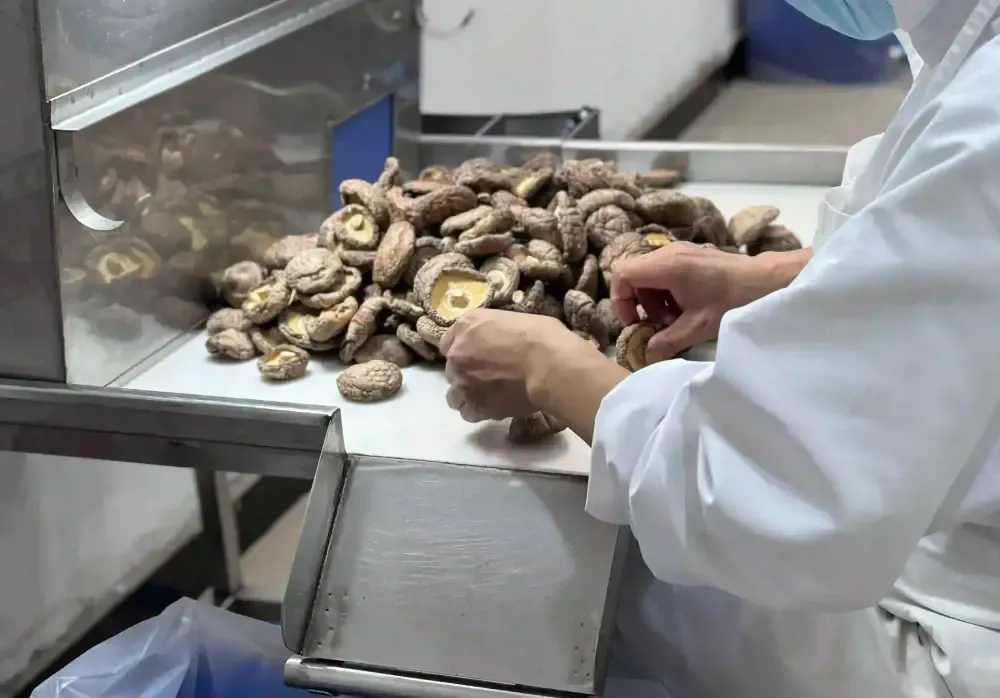
Wholesale Dried Mushrooms from China
Once product quality and food-safety documentation have been reviewed, the next question becomes harder: which supplier can consistently deliver the approved specification at the agreed commercial terms?
A quotation tells you what a supplier wants to charge. It does not tell you the real cost of purchasing the product.
For global buyers, supplier comparison should include product yield, packaging, MOQ, lead time, documentation, logistics and the cost of handling non-conforming goods. A supplier offering a lower price per kilogram may not produce the lower procurement cost if more product is broken, rejected, downgraded or unsuitable for the intended application.
Based on our experience with mushroom supply chains, the most useful comparison is therefore not simply Supplier A vs. Supplier B on price. It is Specification A vs. Specification B, evidence A vs. evidence B, and supply performance A vs. supply performance B.
Build a Supplier Comparison Before Placing the Purchase Order
| Procurement factor | What the buyer should verify | Evidence / document | Potential risk if unclear |
|---|---|---|---|
| Product specification | Species, form, grade and size | Signed specification sheet | Wrong product or inconsistent batches |
| Quality criteria | Moisture, defects, breakage, appearance | COA + approved sample | Disputes over acceptance |
| Traceability | Raw-material and production lot | Batch records | Difficult investigation |
| Food safety | Applicable testing requirements | Laboratory report / COA | Import or customer compliance problems |
| Production capability | Ability to repeat approved quality | Supplier questionnaire / audit | Supply interruptions |
| MOQ | Minimum order by SKU or grade | Formal quotation | Excess inventory |
| Lead time | Production and dispatch schedule | Purchase terms | Production delays |
| Packaging | Material, weight and protection | Packaging specification | Transit damage |
| Logistics | Incoterm, transport and storage | Commercial quotation | Unexpected landed costs |
| Claims | Procedure for non-conforming goods | Written agreement | Difficult dispute resolution |
The table should be treated as a procurement tool, not a supplier scorecard. Different buyers will assign different importance to each factor according to their product, market and risk profile.
Don’t Compare Mushroom Prices Without Comparing Usable Yield
Price per kilogram is one of the easiest figures to compare — and one of the easiest to misunderstand.
For dried mushrooms, a buyer may need to account for broken pieces, foreign matter, moisture, grading distribution and the percentage that can actually be used in the intended application. For fresh mushrooms, shelf life, transport losses and rejected units can materially change the economics. For frozen products, packaging condition, temperature control and processing yield may matter more.
This is why the commercial calculation should move from:
Quoted price per kg
to:
Cost per usable kg or cost per usable production input
The exact calculation depends on the buyer’s application, so no universal loss percentage should be assumed without product-specific evidence.
For food manufacturers, the question can be even more specific:
How much finished product can this mushroom specification reliably produce?
That connects purchasing with production rather than treating procurement and manufacturing as separate decisions.
Check MOQ, Packaging and Lead Time Before You Negotiate Price
Minimum order quantity can become a hidden cost when buyers are testing a new SKU or entering a new market.
Ask whether MOQ applies:
- per product,
- per grade,
- per packaging format,
- per private-label design,
- or across the entire order.
Packaging also deserves more attention than it usually receives. A bulk food ingredient may require a very different packaging format from a supermarket retail product. Buyers should confirm pack weight, inner and outer packaging, labeling information, palletization where applicable, storage requirements and protection during transport.
Lead time should likewise be separated into stages:
Raw-material availability → Production → Quality inspection → Packaging → Documentation → Dispatch
A supplier saying “15 days lead time,” for example, is not meaningful unless both sides define when the clock starts and what activities are included.
What Regulatory Checks Matter When Importing Mushrooms?
International mushroom procurement adds another layer: the product must satisfy the requirements of the destination market and the buyer’s intended use.
U.S. Buyers: Understand the FSVP Responsibility
For covered U.S. food imports, the Foreign Supplier Verification Program places risk-based verification responsibilities on the importer. FDA states that the FSVP importer is generally the U.S. owner or consignee at the time of entry, or, in certain circumstances, a U.S. agent or representative of the foreign owner or consignee.
The process can involve hazard analysis, evaluation of the food and supplier, supplier verification activities, corrective actions and recordkeeping. FDA identifies activities such as sampling and testing, review of relevant food-safety records and, where appropriate, onsite audits as possible verification methods.
That creates a practical lesson for mushroom buyers:
Do not wait until customs clearance to discover that your supplier documentation is incomplete.
The supplier should be able to provide the information your verification process requires before the order is finalized.
EU Buyers: Verify Current MRL Requirements
For European procurement, pesticide Maximum Residue Levels should be checked against the applicable current requirements for the relevant food product and residue.
The European Commission’s EU Pesticides Database allows users to search food products and applicable MRL information, while noting that the database itself is informational and that legally applicable information is published through EU legislation.
For this reason, “EU compliant” should not be accepted as a complete specification. The buyer should identify the applicable requirement and then determine whether the supplier’s testing and documentation demonstrate conformity.
How Should Buyers Interpret HACCP and ISO Documentation?
A food-safety certificate is useful evidence of a management system, but it should not be treated as a substitute for product-level verification.
ISO currently lists ISO 22000:2018 as the published standard, with its 2024 climate-action amendment, while a revised ISO/DIS 22000 is under development in 2026.
ISO describes ISO 22000 as a food-safety management-system standard that integrates HACCP principles and is designed to help organizations in the food chain consistently provide safe products and services.
For procurement purposes, check:
- Certificate validity
- Certified site
- Scope of activities
- Relevant product or process coverage
- Certification body
- Relationship between the management system and the product being purchased
Then connect this evidence with the batch-level documents discussed earlier.
The strongest verification chain is:
Management system → Process control → Traceability → Batch testing → Finished-product specification
No single certificate should be expected to answer all five questions.
8 Red Flags to Check Before Signing a Wholesale Mushroom Order
Some warning signs are not proof of poor quality. They are simply reasons to ask for more evidence.
Product red flags
“Premium grade” without measurable criteria.
Ask what premium means in terms of size, defects, appearance, moisture or other relevant specifications.
Sample and quotation do not match.
The sample should represent the product being quoted.
Grade names without definitions.
A grade label becomes difficult to enforce if there is no written acceptance criterion.
Documentation red flags
A generic COA with no batch connection.
Ask whether the analytical report relates to the production lot being purchased.
Certificates with unclear scope or validity.
Verify what site and activities the certificate actually covers.
Origin information that cannot be traced.
A geographical description is not the same as batch traceability.
Commercial red flags
A surprisingly low quotation with no explanation.
Investigate whether the difference comes from grade, size, packaging, moisture, Incoterm, testing or another specification difference.
Unclear claims procedure.
Before the first large order, agree on how non-conforming goods will be documented, evaluated and resolved.
Lead time described only as a single number.
Clarify whether it includes production, inspection, packaging and documentation.
Wholesale Mushroom Quality Assurance Checklist
Before approving a supplier, the purchasing team should be able to answer the following questions with evidence rather than assumptions.
| QA stage | Buyer action | Minimum evidence | Decision point |
|---|---|---|---|
| Product identification | Confirm species and form | Product specification | Product matches application |
| Grade approval | Define measurable criteria | Grade sheet + sample | Specification accepted |
| Sample inspection | Compare sample with specification | Physical sample | Sample approved |
| Food-safety review | Identify relevant hazards and tests | COA / laboratory reports | Documentation acceptable |
| Supplier verification | Review process and traceability | Records / questionnaire / audit as appropriate | Supplier information sufficient |
| Regulatory review | Check destination requirements | Applicable official requirements | Import specification confirmed |
| Commercial review | Compare MOQ, packaging and logistics | Formal quotation | Total cost understood |
| Bulk production | Verify conformity before shipment where appropriate | Production / inspection records | Shipment authorized |
| Arrival inspection | Check delivered goods | Receiving records / test results where needed | Lot accepted or claim initiated |
| Corrective action | Resolve deviations | Written claim and corrective-action records | Issue closed |
This process is deliberately conservative. A buyer does not need to perform every possible test on every shipment. The verification plan should reflect the product, destination, supplier history, intended use and identified risks.
What Should I Check Before Buying Mushrooms Wholesale? 5 FAQs for Global Buyers
1. What documents should I request from a wholesale mushroom supplier?
Start with a product specification sheet, relevant COA or laboratory reports, traceability information, packaging details and applicable food-safety or certification documents. Additional documents depend on the product, destination and buyer’s compliance program.
2. How can I check the quality of dried mushrooms before placing a bulk order?
Request a representative sample and compare it with a written specification. Check characteristics such as size, color, cap integrity, breakage, aroma, foreign matter and moisture where applicable. For food manufacturing, test the sample in the intended application when practical.
3. Is a HACCP or ISO certificate enough to approve a mushroom supplier?
No single certificate should replace supplier and product verification. HACCP-based controls and ISO 22000 can provide evidence about a food-safety management system, while product specifications, traceability and batch-specific analytical evidence address different questions. ISO 22000:2018 remains the current published edition while its next revision is under development.
4. What should U.S. importers check when buying mushrooms from overseas?
Covered U.S. importers should understand their FSVP responsibilities and evaluate the imported food and foreign supplier according to the applicable requirements. FDA identifies hazard analysis, supplier evaluation, supplier verification, corrective actions and records among the relevant FSVP activities.
5. How do I compare two mushroom suppliers with different wholesale prices?
First normalize the specifications. Then compare grade, usable yield, packaging, MOQ, testing, documentation, lead time, Incoterms and logistics. A lower quoted price is meaningful only when the underlying products and commercial terms are genuinely comparable.
Expert Verdict
A wholesale mushroom order should never be approved on price, photographs or certification logos alone.
Define the specification. Verify the batch evidence. Test the sample. Check the destination-market requirements. Then compare the complete commercial cost.
For global buyers, the safest purchasing habit is straightforward: make quality measurable before you make the order large.
Price Note
Wholesale mushroom prices can vary according to species, grade, size, moisture specification, packaging, order quantity, season, origin, testing requirements, Incoterms and destination logistics. The price information discussed in this article should therefore be treated as a procurement framework rather than a fixed market quotation. Buyers are encouraged to confirm the current specification and obtain a formal quotation based on the exact product and delivery terms before placing an order.
References: