HACCP standards for dried mushroom production are built around seven principles: hazard analysis, critical control point identification, validated critical limits, monitoring, corrective actions, verification, and documentation. For international buyers, however, a supplier’s HACCP certificate is only the beginning. The real question is whether the manufacturer can demonstrate effective controls throughout raw mushroom receiving, sorting, drying, post-drying handling, packaging, and storage.
A shipment of dried shiitake may look clean, smell earthy, and meet the agreed appearance specifications. Yet visual inspection cannot establish whether microbiological hazards have been adequately controlled, pesticide residues meet destination-market requirements, or moisture protection will remain effective during transportation. For importers and food manufacturers, these are not minor technical details. They can determine whether a shipment is suitable for its intended use.
According to the peer-reviewed study Survival of Listeria monocytogenes, Bacillus cereus and Salmonella Typhimurium on sliced mushrooms during drying in a household food dehydrator, published in Food Control in 2022, the tested drying conditions did not sufficiently eliminate the investigated pathogens. The findings also showed that some pathogens could survive during storage and regrow after rehydration. These results apply to the study conditions rather than every industrial process, but they demonstrate why low moisture content alone cannot serve as proof of microbiological safety. (Read the research)
For global procurement teams, the practical lesson is straightforward: assess the complete food safety system, not just the finished product.
1. What Are HACCP Standards for Dried Mushroom Production?
Hazard Analysis and Critical Control Points (HACCP) is a preventive food safety management system used to identify, evaluate, and control biological, chemical, and physical hazards throughout food production. The internationally recognized framework is described in the Codex Alimentarius Commission’s General Principles of Food Hygiene, document CXC 1-1969.
The framework does not prescribe one universal HACCP plan for every mushroom factory. Instead, the manufacturer must assess its own products, ingredients, processing methods, equipment, intended uses, and foreseeable hazards. Two factories producing dried shiitake may therefore require different control measures, even when their final products appear similar.
The seven HACCP principles provide the foundation for that assessment.
| HACCP Principle | Application to Dried Mushroom Production | Evidence Buyers Can Review |
|---|---|---|
| 1. Conduct hazard analysis | Assess biological, chemical, and physical hazards at relevant production stages. | Documented hazard analysis and control measures. |
| 2. Determine CCPs | Identify steps where control is essential for significant hazards. | Process-specific CCP rationale. |
| 3. Establish critical limits | Set scientifically supported limits for identified CCPs. | Validated limits and supporting technical evidence. |
| 4. Establish monitoring | Define how and when controls are checked. | Completed monitoring records. |
| 5. Establish corrective actions | Specify the response to deviations and affected product. | Deviation reports and disposition records. |
| 6. Establish verification procedures | Confirm the plan is valid and operating as intended. | Verification results, review records, and applicable test reports. |
| 7. Establish documentation | Maintain records supporting the HACCP system. | Controlled procedures, production records, and traceability documentation. |
Source: Codex Alimentarius, General Principles of Food Hygiene, CXC 1-1969; US FDA HACCP Principles and Application Guidelines.
These principles work together. A monitoring log is of limited value if the critical limit has no scientific basis. Similarly, a well-designed hazard analysis cannot protect a shipment if employees do not follow the documented procedures.
HACCP, Good Hygiene Practices, and Certification: What Is the Difference?
HACCP operates alongside prerequisite hygiene programmes, often described through Good Hygiene Practices (GHPs) and related good manufacturing practices. These foundational measures address the conditions needed for hygienic production, including cleaning, personnel hygiene, pest control, equipment maintenance, and prevention of cross-contamination.
Certification is a separate consideration. A certificate may provide evidence that a specified facility or system has undergone an assessment within a defined scope. It does not automatically establish that every product, batch, process, or importing-market requirement has been satisfied.
Based on our experience with international food supply chain requirements, buyers should examine three separate questions: Is the relevant management system documented? Is it implemented consistently? And can the supplier provide records demonstrating that the controls are effective for the product being purchased?
Those questions are more informative than simply asking whether a factory has a certificate.
2. Which Food Safety Hazards Must Dried Mushroom Producers Assess?
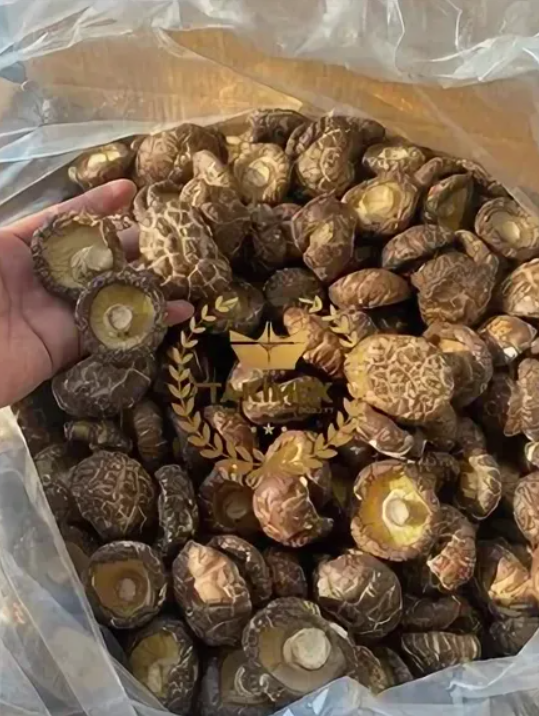
Dried Mushroom Producers
Dried mushrooms are low-moisture food ingredients, but low moisture does not mean the absence of food safety hazards. A useful HACCP assessment considers the entire production process, from the growing environment and incoming raw materials to the conditions in which the finished product is packed and transported.
The following table provides an illustrative starting point for buyer discussions. It is not a validated HACCP plan for WUSANGONG or any other specific facility.
| Hazard Category | Potential Concern | Relevant Production Stages | Possible Control or Verification Approach |
|---|---|---|---|
| Biological | Survival of foodborne pathogens, including Salmonella or other organisms relevant to the product and process. | Raw material receiving, drying, handling, and packaging. | Risk-based supplier controls, validated pathogen-reduction measures where required, hygiene controls, and appropriate verification. |
| Chemical | Pesticide residues or heavy metals associated with raw materials. | Cultivation, sourcing, and incoming material acceptance. | Supplier approval, origin-related risk assessment, and testing against applicable legal or contractual limits. |
| Physical | Stones, soil particles, metal fragments, or other foreign materials. | Receiving, sorting, grading, processing, and packaging. | Visual inspection, equipment maintenance, and suitable foreign-material detection controls. |
| Post-process contamination | Recontamination from personnel, equipment, surfaces, or the processing environment. | Cooling or holding after drying, handling, and packaging. | Hygiene programmes, sanitation verification, controlled handling, and process monitoring. |
| Moisture-related deterioration | Moisture ingress that compromises product stability or promotes microbial growth under suitable conditions. | Drying, packaging, warehousing, and transportation. | Appropriate product specifications, moisture-barrier packaging, storage controls, and relevant moisture or water-activity measurements. |
Biological Hazards: Why Drying Requires Careful Assessment
Drying reduces the amount of water available for microbial growth. However, the effect on microorganisms depends on factors such as the organism, product characteristics, drying conditions, and the initial level of contamination.
This distinction matters commercially. A drying process designed primarily to achieve a target moisture content is not automatically a validated pathogen-reduction process. If a significant microbiological hazard has been identified, the manufacturer must establish an appropriate control strategy supported by scientific and technical evidence.
The exact control measures depend on the product and intended use. Where dried mushrooms will be incorporated into soups, sauces, seasonings, or other manufactured foods, the buyer should clarify whether the ingredient will undergo a subsequent validated treatment and whether that treatment is adequate for the identified hazard. A later cooking step should not be assumed to compensate for every upstream control failure.
Chemical Hazards: Residues and Heavy Metals
Chemical hazards require a different approach from microbiological hazards. Drying does not reliably eliminate pesticide residues or heavy metals, and concentration effects can complicate comparisons between fresh and dried material.
Suppliers should understand the relevant sourcing risks and the limits applicable to the intended destination market. Buyers may request laboratory reports, but the usefulness of a report depends on the analytes tested, analytical method, reporting limits, sample identity, and relevance to the shipment.
A generic statement such as “tested for food safety” provides little assurance without those details.
Physical Hazards: Inspection Must Match the Risk
Sorting and grading help remove visible foreign materials and segregate mushrooms according to commercial specifications. They should not, however, be treated as proof that all physical hazards have been controlled.
The manufacturer should assess where contamination could enter the process and determine whether inspection, screening, metal detection, or another measure is appropriate. The equipment and control strategy should be selected according to the actual hazard assessment rather than included in a checklist merely because another factory uses them.
The central principle is simple: a hazard list identifies what could go wrong; an effective HACCP system demonstrates how significant hazards are controlled, how deviations are handled, and how the manufacturer verifies that the controls continue to work.
3. How to Verify HACCP Controls During Production
A documented HACCP plan only has value when its controls are implemented consistently. For dried shiitake manufacturers, buyers should understand how the factory manages drying, post-drying handling, packaging, and product release.
Drying Parameters, Moisture Content, and Water Activity
Moisture content and water activity measure different properties. Moisture content describes the quantity of water in a product, while water activity indicates how available that water is for microbial activity. Neither measurement alone proves that a pathogen-reduction process has been effective.
The manufacturer should establish product specifications appropriate to the mushroom type, intended use, packaging, and storage conditions. If drying is intended to control a significant biological hazard, the process requires suitable scientific validation rather than an assumed temperature or drying time.
Post-Drying Handling and Packaging
Once mushrooms have been dried, uncontrolled handling can introduce new contamination. Clean handling areas, appropriate personnel hygiene, equipment sanitation, and packaging integrity all contribute to the overall food safety system.
Packaging also protects product quality. Moisture ingress during storage or transportation can compromise stability, even if the product initially met its specifications. Buyers should therefore review packaging suitability, storage conditions, and the supplier’s approach to monitoring moisture-related quality changes.
4. Quality Assurance: A Practical HACCP Supplier Audit Checklist
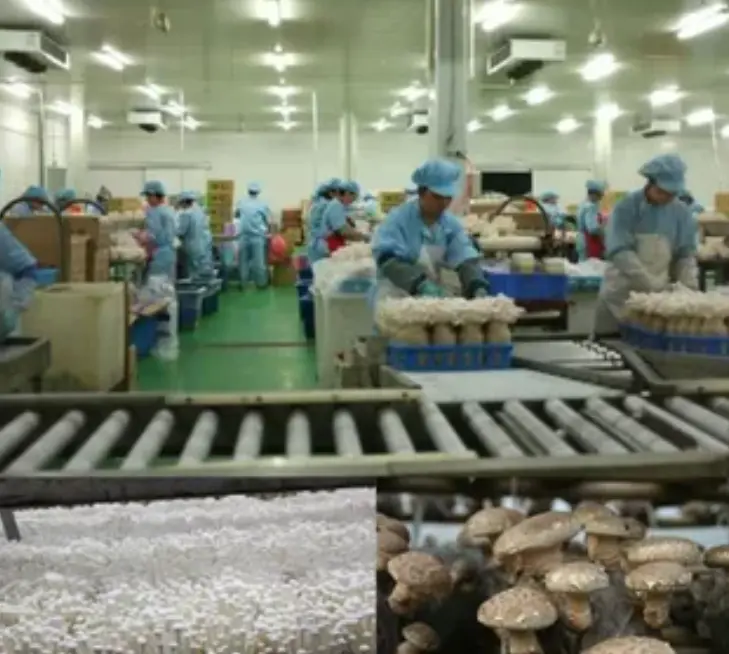
A Practical HACCP Supplier Audit Checklist
For wholesale buyers, food processors, and supermarket procurement teams, the most useful assessment connects each production stage with a potential hazard, the control measure, and evidence that the control is working.
The following table is an illustrative supplier-audit framework, not a representation of WUSANGONG’s internal HACCP records or a universal list of CCPs.
| Audit Area | Questions for the Supplier | Evidence to Request | Warning Sign |
|---|---|---|---|
| Raw material sourcing | How are growers and incoming lots approved? | Supplier approval procedures, incoming inspection records, and lot identification. | Unclear origin or inconsistent lot records. |
| Drying process | How are relevant parameters established and monitored? | Process specifications, monitoring records, and validation evidence where required. | Limits based solely on habit without technical justification. |
| Microbiological safety | How are significant biological hazards controlled? | Hazard analysis, applicable laboratory reports, and evidence supporting control measures. | Reliance on low moisture as the sole safety assurance. |
| Chemical residues | How are relevant pesticide and heavy-metal risks assessed? | Risk assessment and suitable laboratory reports against applicable limits. | Generic testing claims without analyte or sample details. |
| Packaging and storage | How is moisture ingress and post-process contamination prevented? | Packaging specifications, storage procedures, and relevant inspection records. | Damaged packaging or no defined storage controls. |
| Traceability and corrective action | Can affected lots be identified and controlled when a deviation occurs? | Traceability procedure, batch records, and corrective-action documentation. | Missing links between raw materials, production batches, and shipments. |
A buyer should also verify the identity of the laboratory, the analytical method, the sample date, the batch or lot reference, and the criteria used to judge results. A laboratory report is only as useful as its relevance to the product and decision being made.
For higher-risk products or applications, additional verification may be appropriate. The scope and frequency should reflect the hazard assessment, supplier performance, applicable regulations, and the buyer’s specifications rather than an arbitrary testing schedule.
5. HACCP Compliance for Global Dried Mushroom Imports
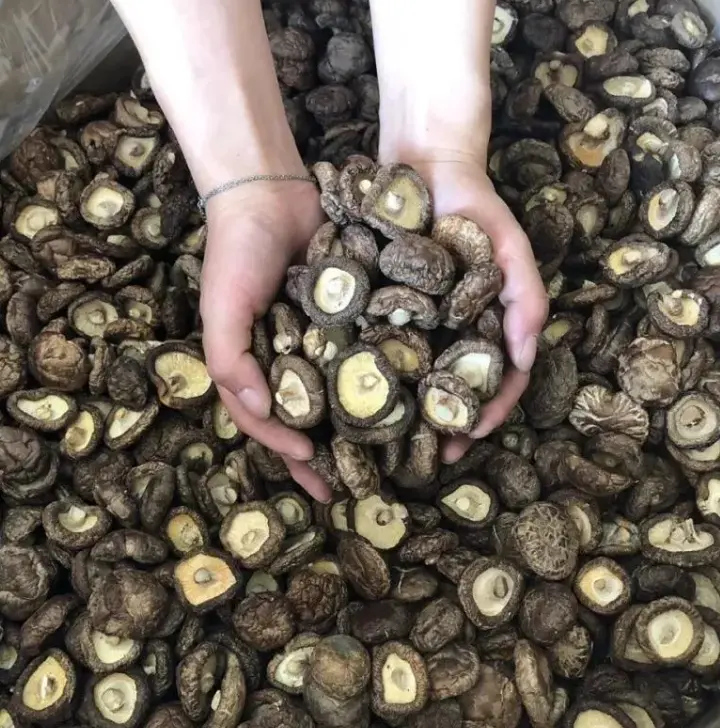
HACCP Compliance for Global Dried Mushroom Imports
Food safety requirements depend on the destination market, product classification, processing method, and intended use. Importers should therefore distinguish international HACCP guidance from legally binding national requirements.
For US imports, the FDA’s Foreign Supplier Verification Program (FSVP) generally requires covered importers to conduct risk-based activities to verify that imported food meets applicable US food safety requirements. The precise obligations and exemptions depend on the circumstances. A foreign supplier’s HACCP certificate does not, by itself, fulfill every importer responsibility.
Before placing a bulk order, buyers should confirm the applicable requirements with their compliance team or qualified regulatory adviser. The supplier should be able to provide relevant product specifications, traceability information, available laboratory reports, and food safety documentation appropriate to the transaction.
Five Questions Global Buyers Should Ask
1. Can the Supplier Trace a Finished Lot Back to Its Raw Materials?
Ask how incoming materials, processing batches, packaging records, and finished shipments are linked. Traceability should support an investigation and help identify affected product if a problem arises.
2. Are Laboratory Reports Relevant to the Actual Product?
Confirm the mushroom type, lot identification, analytes tested, methods, and applicable acceptance criteria. A report for one batch should not automatically be treated as evidence for every subsequent shipment.
3. Has the Drying Process Been Validated for Its Intended Safety Purpose?
Request appropriate technical evidence when drying is relied upon to control a significant biological hazard. Do not assume that a moisture specification alone establishes pathogen reduction.
4. Does the Supplier Investigate Deviations and Document Corrective Actions?
A mature food safety system should explain how affected product is controlled, how the cause of a deviation is investigated, and how corrective measures are documented.
5. Can the Supplier Support the Intended Import and Manufacturing Application?
Clarify whether the mushrooms are intended for direct retail sale, further cooking, seasoning production, soup bases, or other food manufacturing applications. The intended use affects specifications, hazard assessment, and documentation needs.
6. Frequently Asked Questions About HACCP Standards for Dried Mushroom Production
Is HACCP Mandatory for Every Dried Mushroom Producer?
Not universally under one worldwide rule. Applicable obligations depend on the jurisdiction, product, and business activity. Buyers should check the requirements of the producing and importing markets rather than assume that one certification applies everywhere.
Does HACCP Certification Guarantee That Dried Mushrooms Are Safe?
No. Certification provides evidence within a defined scope, but buyers should also assess implementation, monitoring records, verification, traceability, and corrective actions. No certificate replaces appropriate product-specific evaluation.
Is Low Moisture Content Enough to Control Pathogens in Dried Shiitake Mushrooms?
No. Low moisture and low water activity can restrict microbial growth, but they do not necessarily eliminate pathogens already present. Where required, pathogen-reduction measures need suitable scientific validation.
What Food Safety Documents Should a Wholesale Dried Mushroom Buyer Request?
Depending on the product and transaction, buyers may request relevant HACCP documentation, current certificates, product specifications, lot traceability records, laboratory reports, monitoring evidence, and corrective-action procedures. The required package should be based on risk and applicable regulations.
What Should US Importers Verify When Sourcing Dried Mushrooms from China?
US importers should determine whether they are subject to FSVP and identify the applicable verification requirements. They should evaluate the foreign supplier, relevant food safety hazards, supporting records, and product compliance. Official guidance is available from the FDA FSVP programme.
Expert Verdict: Verify the System Behind the Shipment
Effective HACCP standards for dried mushroom production are not demonstrated by appearance, low moisture, or a certificate alone. They are demonstrated through a risk-based food safety system, scientifically justified controls, reliable production records, and traceability that stands up to scrutiny.
For global buyers, the best supplier is not simply the one offering the lowest quotation. It is the one that can substantiate its food safety claims with relevant evidence and support the requirements of your intended market.
References:
Codex Alimentarius – General Principles of Food Hygiene (CXC 1-1969)
University of Missouri Extension – Safety of Home Dried Mushrooms