A certificate can open the door to a supplier relationship, but it cannot tell you everything about the mushrooms arriving at your warehouse. When evaluating an ISO 9001 mushroom manufacturer in China, international buyers should verify three things before discussing long-term supply: whether the certificate is valid and covers the relevant manufacturing activities, whether the factory can demonstrate consistent product controls, and whether the documentation matches the actual shipment. These checks matter particularly for dried shiitake mushrooms, where moisture variation, grading inconsistency, damaged packaging, and incomplete batch records can turn an apparently competitive quotation into an expensive procurement problem.
| Buyer verification priority | Evidence to request | Why it matters |
|---|---|---|
| ISO 9001 certification | Current certificate, certified legal entity, site, scope, and certification status | Establishes whether the claimed quality management system is appropriately certified |
| Product quality | Written specifications, inspection criteria, and relevant test reports | Helps determine whether the mushrooms meet the intended commercial application |
| Traceability | Lot identification and linked processing, inspection, and shipment records | Supports investigations and accountability when a quality issue occurs |
| Export readiness | Applicable product documents, packaging details, and destination-market requirements | Reduces avoidable documentation and import-compliance problems |
ISO 9001 certification Current certificate, certified legal entity, site, scope, and certification status Establishes whether the claimed quality management system is appropriately certified
Product quality Written specifications, inspection criteria, and relevant test reports Helps determine whether the mushrooms meet the intended commercial application
Traceability Lot identification and linked processing, inspection, and shipment records Supports investigations and accountability when a quality issue occurs
Export readiness Applicable product documents, packaging details, and destination-market requirements Reduces avoidable documentation and import-compliance problems
The distinction is straightforward: a certified management system is a starting point for supplier qualification, not proof that every batch meets your requirements. A serious buyer looks beyond the certificate and asks how quality is controlled, recorded, and verified from incoming raw materials to finished goods.
What ISO 9001 Means for a Mushroom Manufacturer in China
What ISO 9001 Means for a Mushroom Manufacturer in China
ISO 9001 specifies requirements for a quality management system. It addresses how an organization establishes processes, meets applicable requirements, monitors performance, manages nonconformities, and improves its operations. It is not a mushroom grading standard, a laboratory test, or a blanket guarantee of food safety.
For an overseas procurement team, the practical question is not simply whether a supplier displays an ISO logo. It is whether the supplier can demonstrate that its management system applies to the relevant site and activities, and whether the controls are appropriate for the products being purchased.
Consider a bulk order of dried shiitake mushrooms. The buyer may specify cap size, appearance, aroma, moisture limits, packaging, and acceptable defect levels. A functioning quality management system should help the supplier define responsibilities, communicate those requirements, inspect output, retain relevant records, and respond when results fall outside the agreed specification.
That is where certification becomes commercially meaningful.
What ISO 9001 Can and Cannot Establish
Evaluation dimension What ISO 9001 can support What requires additional evidence
Process management A structured approach to documented processes and responsibilities Records showing how specific production controls operate
Product consistency Systematic monitoring and handling of nonconformities Batch inspection results and comparisons against agreed specifications
Traceability Controlled information and records where applicable to the system Actual lot-level records connecting raw materials, processing, and shipment
Food safety Management processes that may support consistent operations Relevant hazard controls, microbiological results, contaminant testing, and other applicable evidence
Regulatory compliance Processes for identifying and addressing applicable requirements Proof that the particular product and shipment meet destination-market obligations
The distinction between ISO 9001 and HACCP deserves particular attention. HACCP focuses on identifying food-safety hazards and establishing controls to prevent, eliminate, or reduce those hazards to acceptable levels. ISO 9001 addresses quality management more broadly. One does not automatically substitute for the other.
A buyer sourcing mushrooms for a food processing plant may need both an understanding of the manufacturer’s management system and product-specific evidence addressing the risks associated with the intended use.
How to Verify an ISO 9001 Certificate Before Placing an Order
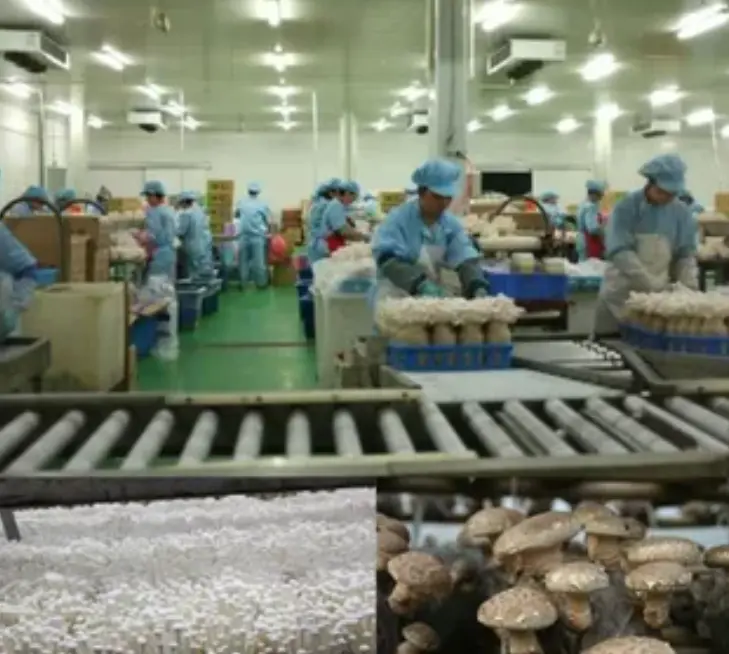
How to Verify an ISO 9001 Certificate Before Placing an Order
A PDF certificate received by email is useful, but it should not end the verification process. Check the details against the issuing certification body’s records and, where relevant, its accreditation status.
Check the Legal Entity, Site, and Certification Scope
First, confirm that the legal entity named on the certificate corresponds to the business you intend to contract with. Then check the certified site and the scope of activities. A certificate held by a related company or another facility does not automatically establish that the factory handling your order is covered.
The scope also matters. Buyers should examine whether the stated activities are relevant to the manufacturing or processing operations being offered. Avoid assuming that every product in a supplier’s catalog is necessarily covered by the same certificate.
Verify Validity and the Certification Body
Check the certificate number, issue details, validity status, and certification body’s information. Where applicable, confirm accreditation through the relevant accreditation body’s official resources. If the information is inconsistent or cannot be independently verified, request clarification before proceeding.
Standards also change. ISO 9001: 2026 was published in September 2026, replacing ISO 9001: 2015 as the latest edition. Buyers should check the current status of the supplier’s certificate and obtain transition guidance from the certification body rather than assuming that every older-edition certificate is automatically invalid.
The official starting point is the International Organization for Standardization: ISO 9001 official standard page. ISO develops standards; it does not itself certify individual mushroom manufacturers.
Seven Practical Checks for Evaluating Mushroom Manufacturing Quality
A certificate tells you something about the management system. The next step is to examine the processes that determine whether a shipment meets your specification.
Based on our experience with the commercial requirements of dried mushroom sourcing, buyers should pay particular attention to the relationship between raw-material grading, drying conditions, finished-product inspection, and lot identification. These controls are connected. A weakness at one stage can affect the final product even when the supplier’s documentation looks organized.
Check 1: Raw- Material Selection and Origin Records
Ask how incoming mushrooms are identified, inspected, and accepted. For dried shiitake, relevant criteria may include cap size, thickness, color, aroma, visible damage, and suitability for the intended application.
If origin is commercially important, request supporting records that connect the claimed source to the relevant product lot. A supplier’s location in Qingyuan, for example, should not automatically be treated as proof that every mushroom it sells originated there.
Check 2: Sorting, Grading, and Product Specifications
Different buyers have different commercial priorities. A restaurant distributor may prefer attractive whole caps, while a soup manufacturer may prioritize consistent cut size, flavor, and performance during rehydration.
Agree on measurable acceptance criteria before placing a bulk order. Terms such as “premium quality” or “uniform grade” are insufficient unless both parties understand what they mean in practice.
Check 3: Drying and Moisture Control
Drying affects storage stability, texture, aroma, and handling. Buyers should request the supplier’s finished-product moisture specification, measurement method, and inspection records.
Do not assume that one moisture threshold applies to every mushroom product, market, or contractual specification. Acceptance limits should be supported by the product’s intended use, applicable requirements, and agreed purchasing terms.
Check 4: Product- Specific Testing
Request relevant test reports for the actual product and, where appropriate, the lot being purchased. Depending on the product, source, destination, and intended application, these may address microbiological hazards, pesticide residues, heavy metals, or other relevant contaminants.
A report should identify what was tested and how results relate to the applicable acceptance criteria. A general statement that a supplier conducts quality testing is not equivalent to reviewing the results.
Check 5: Traceability and Corrective Action
Ask the supplier to demonstrate how a finished-product lot can be linked to relevant incoming materials, processing records, inspection results, and shipment documents.
Also ask what happens when a batch fails inspection. A credible process should identify how nonconformities are documented, investigated, corrected, and reviewed to prevent recurrence. The actual records are more useful than a promise that problems will never occur.
Quality Assurance: What Should Buyers Compare?
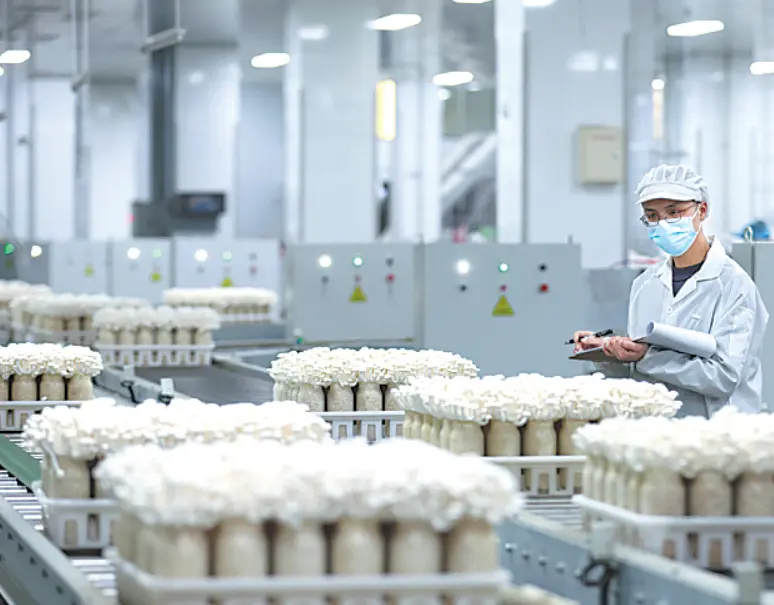
Quality Assurance: What Should Buyers Compare
The following table can serve as a starting point for supplier evaluation. The acceptance criteria must be tailored to the product and purchase agreement rather than treated as universal industry limits.
| Quality dimension | What to specify or review | Evidence to request | Warning sign |
|---|---|---|---|
| Appearance and grade | Cap dimensions, color, defects, and grade definitions | Product specification and inspection records | Vague grade names without defined criteria |
| Moisture | Agreed limit and measurement method | Relevant test results and inspection records | No documented acceptance criteria |
| Aroma and sensory quality | Acceptable aroma and absence of specified undesirable characteristics | Sample evaluation against agreed requirements | Sample differs materially from the approved reference |
| Food safety | Applicable hazards and destination-market requirements | Relevant laboratory reports and control documentation | Generic safety assurances without supporting evidence |
| Packaging | Material, sealing, labeling, and transport requirements | Packaging specification and shipment checks | Unclear lot identification or inadequate packaging details |
| Traceability | Lot coding and record-linking requirements | Traceability records for a representative lot | Inability to connect product and shipment records |
| Corrective action | Process for investigating and resolving failures | Relevant nonconformity and corrective-action records | No clear method for documenting recurring problems |
Appearance and grade Cap dimensions, color, defects, and grade definitions Product specification and inspection records Vague grade names without defined criteria
Moisture Agreed limit and measurement method Relevant test results and inspection records No documented acceptance criteria
Aroma and sensory quality Acceptable aroma and absence of specified undesirable characteristics Sample evaluation against agreed requirements Sample differs materially from the approved reference
Food safety Applicable hazards and destination-market requirements Relevant laboratory reports and control documentation Generic safety assurances without supporting evidence
Packaging Material, sealing, labeling, and transport requirements Packaging specification and shipment checks Unclear lot identification or inadequate packaging details
Traceability Lot coding and record-linking requirements Traceability records for a representative lot Inability to connect product and shipment records
Corrective action Process for investigating and resolving failures Relevant nonconformity and corrective-action records No clear method for documenting recurring problems
According to the International Organization for Standardization, more than one million ISO 9001 certificates have been issued to organizations across 189 countries. This illustrates the standard’s broad international adoption, but it does not establish the quality of any particular mushroom supplier.
For procurement teams, that distinction is decisive: certification provides a framework for evaluating management practices, while product specifications, inspection records, and relevant testing provide evidence about the goods being purchased.
Which Documents Should Mushroom Importers Request?
Choosing an ISO 9001 mushroom manufacturer in China requires more than checking a certificate. Importers need a documentation package that connects the supplier’s declared capabilities to the product, production lot, and destination market.
For US buyers, the FDA’s Foreign Supplier Verification Program(FSVP) establishes obligations for covered food importers. A manufacturer’s ISO 9001 certificate does not, by itself, satisfy those obligations. European buyers must likewise assess the applicable EU food-safety, contaminant, traceability, and import requirements for their specific products.
Build a Practical Supplier Documentation Checklist
| Document or record | What buyers should verify | Procurement purpose |
|---|---|---|
| ISO 9001 certificate | Legal entity, certified site, scope, current status | Verify the claimed quality management system |
| Product specification | Product form, grade, dimensions, moisture limits, packaging | Establish measurable acceptance criteria |
| Certificate of Analysis (COA) | Product or lot identity, test parameters, methods, results, and laboratory details | Evaluate relevant product-quality or safety results |
| Traceability records | Lot codes and links to relevant production and shipment records | Support investigations and product identification |
| Packaging and labeling details | Packaging material, declared net weight, lot marking, and applicable labeling requirements | Confirm suitability for transport and intended market |
| Export and shipment documents | Product descriptions and consistency across applicable records | Support shipment processing and buyer receiving checks |
| Corrective-action documentation | How nonconformities are investigated and resolved | Assess the supplier’s response to quality failures |
ISO 9001 certificate Legal entity, certified site, scope, current status Verify the claimed quality management system
Product specification Product form, grade, dimensions, moisture limits, packaging Establish measurable acceptance criteria
Certificate of Analysis(COA) Product or lot identity, test parameters, methods, results, and laboratory details Evaluate relevant product-quality or safety results
Traceability records Lot codes and links to relevant production and shipment records Support investigations and product identification
Packaging and labeling details Packaging material, declared net weight, lot marking, and applicable labeling requirements Confirm suitability for transport and intended market
Export and shipment documents Product descriptions and consistency across applicable records Support shipment processing and buyer receiving checks
Corrective-action documentation How nonconformities are investigated and resolved Assess the supplier’s response to quality failures
Not every order requires every document in the same form. The appropriate package depends on product type, destination, customer specifications, and applicable law. Buyers should agree on documentation requirements before production begins, not after the shipment has left the factory.
How WUSANGONG Can Support Bulk Mushroom Buyers
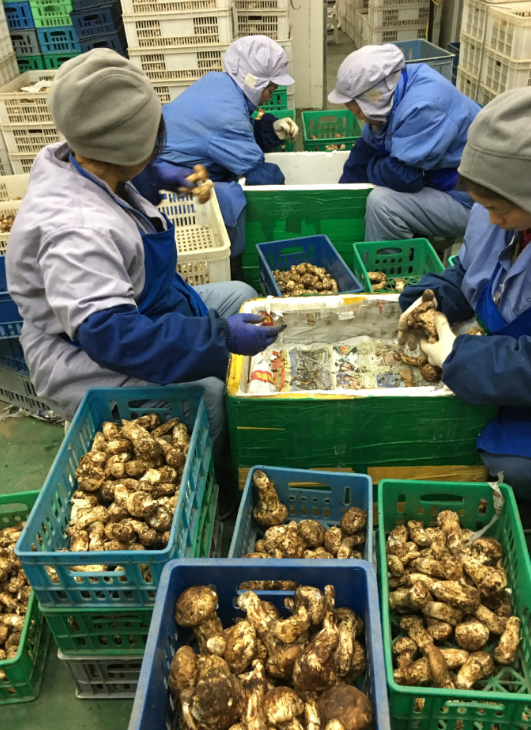
How WUSANGONG Can Support Bulk Mushroom Buyers
For procurement teams sourcing dried shiitake mushrooms, supplier evaluation should connect the company’s origin, processing operations, product specifications, and documentation to the buyer’s actual requirements.
WUSANGONG’s supplied company profile identifies its roots in Qingyuan, Zhejiang, and its establishment in 1996. Qingyuan’s longstanding shiitake tradition provides relevant regional context, while the company’s stated focus on mushroom production, processing, and sales offers a basis for discussing sourcing and manufacturing capabilities.
These background details are useful, but professional procurement decisions should rest on verifiable evidence for the specific order.
Match the Product to the Application
Different commercial applications call for different specifications.
- Food wholesalers: Prioritize consistent grading, clear packaging specifications, traceable lots, and dependable order communication.
- Food processing factories: Define requirements for whole caps, slices, small mushrooms, or broken pieces according to the production process.
- Retail and supermarket buyers: Confirm packaging formats, labeling, lot identification, and the evidence needed for supplier approval.
- Ingredient and supplement developers: Request documentation appropriate to the specific ingredient, intended use, analytical requirements, and applicable regulatory framework.
-Food processing factories: Define requirements for whole caps, slices, small mushrooms, or broken pieces according to the production process.
-Retail and supermarket buyers: Confirm packaging formats, labeling, lot identification, and the evidence needed for supplier approval.
-Ingredient and supplement developers: Request documentation appropriate to the specific ingredient, intended use, analytical requirements, and applicable regulatory framework.
WUSANGONG’s stated product portfolio includes dried shiitake, fresh shiitake, black fungus, and customized mushroom products. Availability, specifications, and any product-specific testing should be confirmed directly before a purchasing commitment.
Establish Acceptance Criteria Before Ordering
An approved sample is useful only when both parties understand what it represents. Before confirming a bulk order, agree on the product grade, dimensions where relevant, moisture specification, acceptable defects, packaging, inspection approach, and documentation requirements.
Keep the approved sample or its documented specification as a reference for subsequent shipments. This makes quality discussions more objective and reduces the risk of disagreements based on subjective descriptions such as “excellent quality” or “premium grade.”
Frequently Asked Questions from Global Mushroom Buyers
1. How can I verify an ISO 9001 mushroom manufacturer in China?
Request the current certificate and check the legal entity, certified site, scope, certificate status, and certification body. Where applicable, verify accreditation through the relevant accreditation body’s official records. Confirm that the certified activities are relevant to the manufacturing or processing operations offered for your order.
2. Does ISO 9001 guarantee the food safety of dried shiitake mushrooms?
No. ISO 9001 establishes requirements for a quality management system; it does not independently demonstrate that a specific mushroom batch meets every food-safety requirement. Buyers should review relevant hazard controls, product specifications, and laboratory results, including microbiological or chemical testing where appropriate.
3. What documents should I request from a bulk dried mushroom supplier?
Start with the applicable ISO certificate, product specification, relevant COA or test reports, lot traceability records, packaging details, and shipment documentation. Additional evidence may be necessary depending on the destination market and intended application. Agree on the required documents before placing the order.
4. Is ISO 9001 enough to import mushrooms into the United States?
No. Covered US food importers must evaluate and comply with applicable FDA requirements, including FSVP where relevant. The supplier’s certification may support the wider qualification process, but it does not replace the importer’s legal responsibilities. Requirements should be assessed for the specific product and transaction.
5. How do I compare a mushroom manufacturer with a trading company?
Ask who actually manufactures and processes the product, which site handles your order, and whether the supplier can provide relevant production and traceability records. Clarify whether any operations are outsourced. A trading company can be a legitimate supplier, but buyers should understand the production arrangement and verify that the evidence covers the actual supply chain.
Expert Verdict
When selecting an ISO 9001 mushroom manufacturer China, prioritize evidence over promises. Verify the certificate, define product acceptance criteria, review relevant testing and traceability records, and confirm the documentation required for your destination market.
For WUSANGONG and any prospective supplier, the strongest foundation for a lasting B2 B relationship is straightforward: clear specifications, verifiable quality controls, and documentation that matches the shipment.
References:
ISO — ISO 9001:2026: Quality Management Systems — Requirements