Premium dried mushrooms are not judged by appearance alone. For international buyers, moisture content standards for premium dried mushrooms provide a measurable starting point for evaluating product quality, storage stability, and supplier consistency. Under Codex CXS 39-1981, the maximum water content is 13% by mass for dried shiitake mushrooms, 12% for other dried edible fungi excluding freeze-dried products, and 6% for freeze-dried fungi. These figures apply to their specified product categories; they are not universal definitions of premium quality.
For wholesalers and food manufacturers, the real question is more practical: does the product meet the agreed specification, and will it remain consistent after packaging, shipping, and storage? A shipment can satisfy a moisture limit yet still disappoint because of uneven drying, weak packaging, inconsistent grading, or inadequate quality documentation. The smartest buyers look beyond one laboratory result.
1. Understanding Moisture Content Standards for Premium Dried Mushrooms
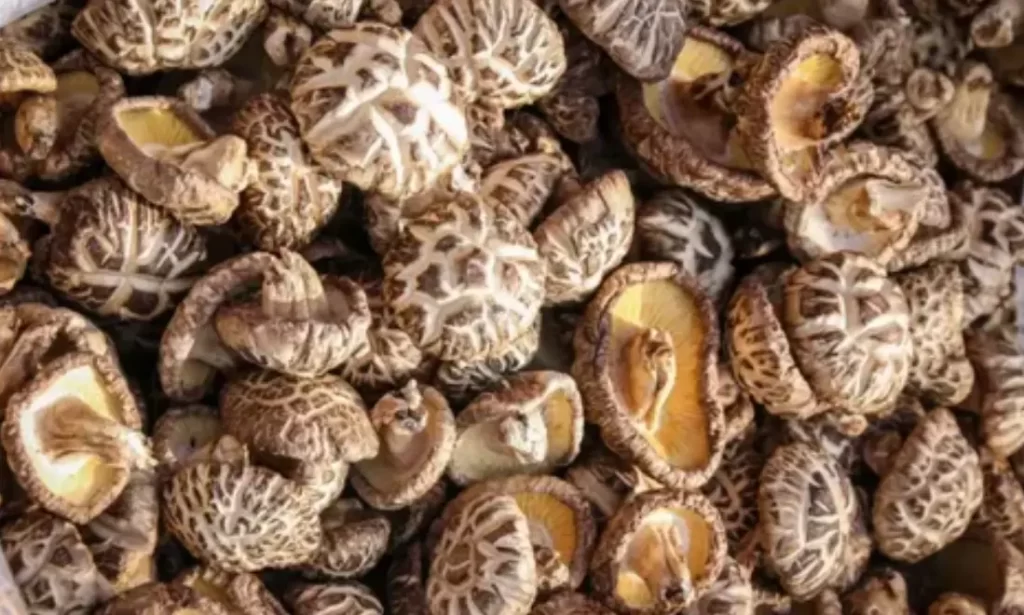
Understanding Moisture Content Standards for Premium Dried Mushrooms
Codex limits versus premium purchasing specifications
A recognized standard provides a reference point, but buyers must distinguish three separate requirements:
- Regulatory or standards-based limits: The maximum moisture content established by an applicable standard for a defined product category.
- Contractual specifications: The acceptance criteria agreed between the buyer and supplier for a particular order.
- Premium quality targets: Commercial requirements that may cover moisture, aroma, cap integrity, color, size, defects, and performance during rehydration.
These categories serve different purposes. A supplier’s claim that a product is “extra dry” or “premium grade” is not a substitute for a documented numerical specification.
According to the Codex standard for dried edible fungi, the maximum water content depends on the product category. Buyers should therefore confirm the exact product form before comparing supplier quotations or reviewing certificates of analysis.
| Quality dimension | What buyers should verify | Why it matters commercially |
|---|---|---|
| Product identity | Shiitake, other dried fungi, or freeze-dried product | Determines which reference limit may apply |
| Moisture specification | Maximum percentage and reporting basis | Establishes a measurable acceptance criterion |
| Test method | Recognized method appropriate to the product | Makes results easier to interpret and compare |
| Batch consistency | Representative sampling and lot identification | Helps identify variation within a shipment |
| Physical quality | Color, aroma, cap integrity, and visible defects | Moisture alone cannot establish premium grade |
| Documentation | Test results, inspection records, and traceability | Supports purchasing decisions and dispute resolution |
For procurement teams, the practical lesson is straightforward: specify the product first, identify the applicable standard second, and agree on the purchasing tolerance before production begins.
2. Why Moisture Content and Water Activity Must Be Evaluated Separately
A moisture reading tells only part of the story. Two batches of dried shiitake may have similar moisture percentages yet behave differently during storage because the availability of water is not determined by total water content alone.
Water activity, expressed as a_w, measures the availability of water for biological and chemical processes. It is particularly relevant when assessing microbial growth potential and storage stability. Moisture content and water activity are related, but there is no single conversion that applies to every mushroom variety, processing method, and product condition.
Based on our experience with dried mushroom sourcing and processing requirements, buyers should avoid approving a shipment solely because its moisture percentage falls below a stated maximum. The product’s intended application, packaging, storage conditions, and other quality indicators must also be considered.
For example, a restaurant distributor purchasing whole dried shiitake may prioritize cap integrity, aroma, and consistent rehydration. A food-processing factory purchasing sliced mushrooms may place greater emphasis on uniformity and predictable ingredient performance. Both buyers need moisture control, but their complete acceptance specifications may differ.
Moisture content versus water activity: a buyer’s comparison
| Evaluation factor | Moisture content | Water activity |
|---|---|---|
| What it measures | Total water relative to sample mass | Availability of water for biological and chemical processes |
| Typical expression | Percentage by mass | Dimensionless value, commonly expressed from 0 to 1 |
| Primary application | Product specification and drying control | Storage stability and microbial risk assessment |
| Main limitation | Does not independently establish microbiological safety | Does not independently establish overall product quality or safety |
| Purchasing application | Verify the agreed moisture limit | Assess additional stability requirements where appropriate |
Neither measurement replaces a complete food safety assessment. Buyers should establish appropriate microbiological controls and storage requirements rather than assume that a particular moisture percentage guarantees a safe product.
3. How to Measure Moisture Content in Dried Shiitake Mushrooms
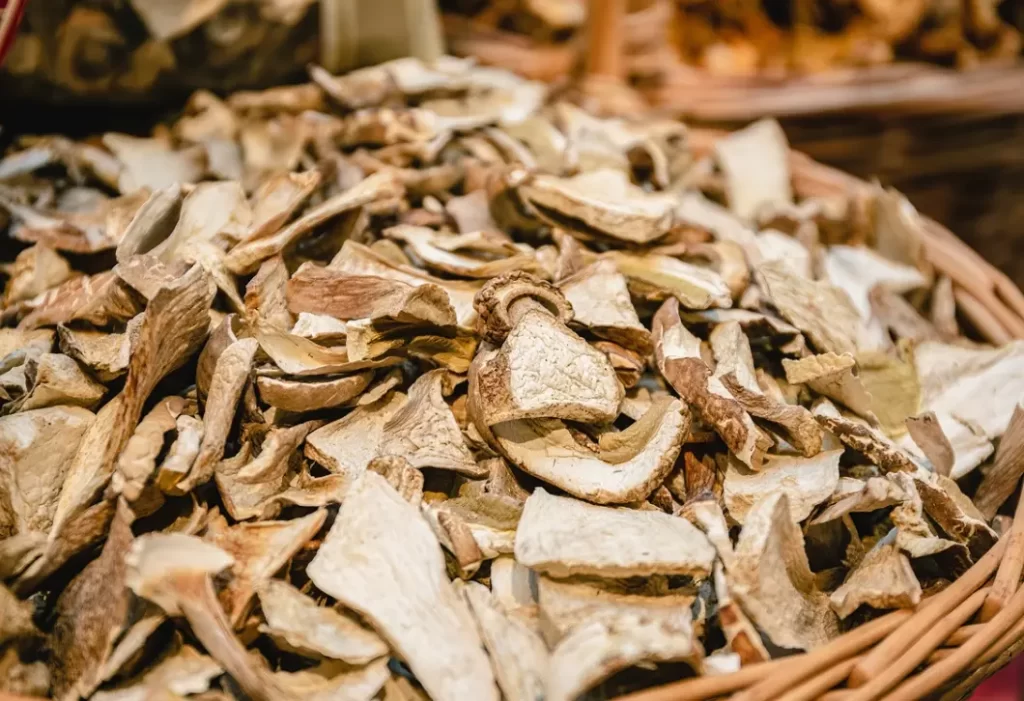
How to Measure Moisture Content in Dried Shiitake Mushrooms
A laboratory result is only as useful as the method and sample behind it. This is where procurement decisions can become unnecessarily complicated: two suppliers may report different values because they use different analytical methods, sample preparation procedures, or reporting conventions.
Laboratory testing and sampling procedures
Moisture testing may involve gravimetric methods, such as loss on drying, or other suitable analytical techniques. The appropriate method depends on the product and the applicable specification. Loss on drying measures mass lost under defined conditions; that loss may include substances other than water, depending on the sample and method.
Buyers should therefore ask suppliers to identify the method used instead of accepting a percentage without supporting information.
According to the Codex standard for dried edible fungi, the relevant sampling and analysis provisions should be considered when evaluating compliance. For contractual acceptance, the buyer and supplier should agree in advance on the test method, sampling procedure, and approach to resolving conflicting results.
A practical inspection process should include:
- Confirming the product name, grade, and production lot.
- Collecting representative samples according to the agreed sampling plan.
- Using a suitable, documented analytical method.
- Recording the result, units, test date, and sample identification.
- Comparing the result with the contractual specification.
- Retaining records and, where agreed, a reference sample for dispute resolution.
A single measurement should not automatically be treated as representative of every package in a large shipment. Sampling quality matters.
What should a moisture test report contain?
| Report element | What to check | Warning sign |
|---|---|---|
| Product and lot identity | Exact product form and traceable batch number | Generic report with no identifiable lot |
| Test method | Method name or reference and relevant conditions | Percentage reported without a method |
| Test result | Numerical result, units, and reporting basis | Ambiguous units or unclear basis |
| Sampling information | Sample identification and applicable sampling procedure | No information about sample representativeness |
| Laboratory details | Identifiable testing organization and relevant competence | Unverifiable laboratory information |
| Acceptance criteria | Agreed limit and procedure for borderline results | No documented basis for approving or rejecting the lot |
A certificate of analysis (COA) is useful only when its results can be connected to the actual shipment and compared with the agreed purchasing specification. Buyers should also confirm whether additional tests are needed for their market, product category, and intended use.
4. How Drying, Packaging, and Shipping Affect Moisture Control
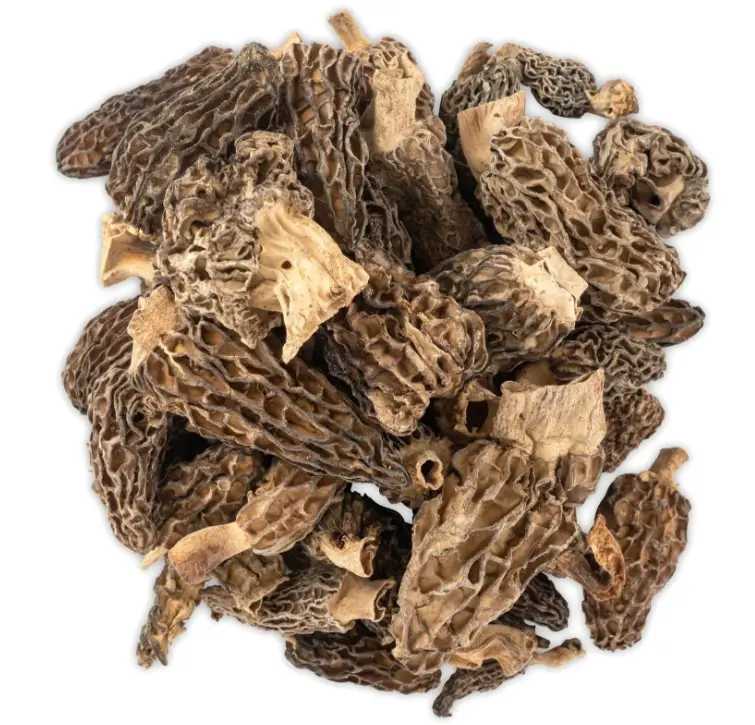
How Drying, Packaging, and Shipping Affect Moisture Control
Meeting a specification at the factory gate does not guarantee that a product will arrive in the same condition. Dried mushrooms can absorb moisture when exposed to humid environments, and poorly sealed packaging can undermine otherwise satisfactory processing.
The objective is not simply to achieve a low reading once. It is to maintain the required condition throughout the supply chain.
Three control points for importers
During processing: Consistent drying, appropriate grading, and product-specific inspection help reduce variation between pieces and batches. Natural and mechanical drying should be assessed by their demonstrated process control and resulting product quality, not by an assumption that one method is always superior.
During packaging: Buyers should confirm the suitability of the packaging for the product, the intended storage period, and the expected transport conditions. Moisture-barrier performance and seal integrity deserve particular attention.
During receiving and storage: Inspect packaging for damage, condensation, or signs of moisture exposure. Where specified, perform receiving tests and compare the results with pre-shipment documentation. Store the product under conditions appropriate to its validated storage requirements.
These checks are especially valuable for international shipments, where a quality dispute may involve multiple parties and the cost of returning or replacing a consignment can be substantial.
Expert Verdict: Specify Before You Purchase
The most reliable approach to moisture content standards for premium dried mushrooms is to combine an applicable reference standard with a clear contractual specification, suitable testing, representative sampling, and effective moisture protection throughout transportation and storage.
For buyers sourcing dried shiitake in bulk, a supplier’s percentage alone is not enough. Verify the method, inspect the documentation, and agree on acceptance criteria before the order is confirmed.
5. Quality Assurance: How to Set a Wholesale Dried Mushroom Specification
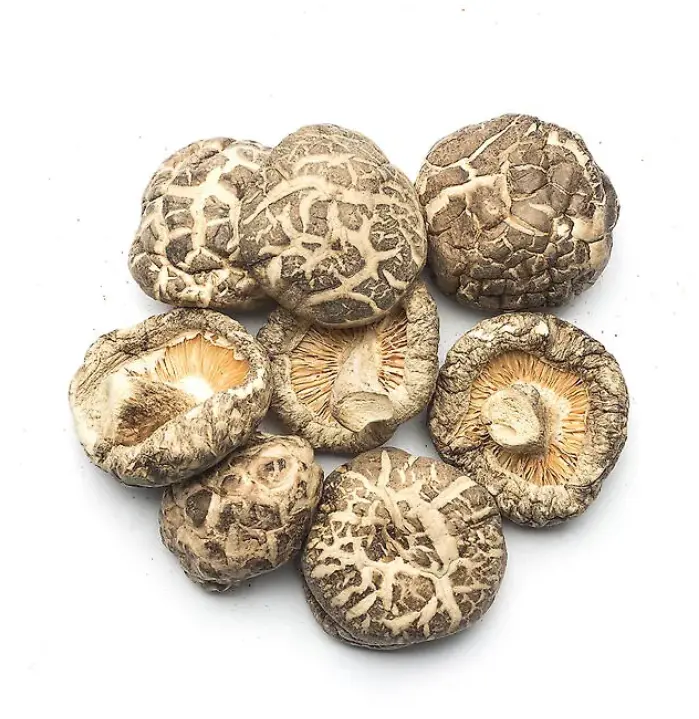
How to Set a Wholesale Dried Mushroom Specification
A reliable procurement specification should be written before the purchase order is confirmed, not negotiated after a shipment fails inspection. For international buyers, the objective is to make quality measurable and responsibilities clear.
The following checklist can be adapted for whole dried shiitake, sliced mushrooms, and other dried edible fungi. The numerical acceptance limits must be agreed for the specific product and verified against applicable requirements.
| QA checkpoint | What the buyer should specify | Evidence to request |
|---|---|---|
| Moisture content | Maximum percentage and reporting basis | Lot-specific laboratory result |
| Test method | Agreed analytical method suitable for the product | Method reference and test report |
| Sampling | Representative sampling plan and sample identification | Sampling record |
| Product grade | Size, cap integrity, color, aroma, and permitted defects | Product specification and inspection results |
| Packaging | Required moisture protection and package integrity | Packaging specification and inspection records |
| Traceability | Batch identification and shipment linkage | Lot codes and traceability documentation |
| Dispute resolution | Retesting procedure and acceptance rules | Written purchase agreement |
Establishing clear acceptance criteria
Three details deserve particular attention.
First, buyers should distinguish the maximum moisture limit from a target value used for routine production. If a buyer requires a stricter limit than the applicable standard, that requirement should appear explicitly in the purchase agreement.
Second, measurement uncertainty and sampling variation should be addressed before testing begins. A result close to the contractual limit may require an agreed confirmation procedure rather than an informal decision based on one reading.
Third, the supplier’s documentation should correspond to the actual product and lot. A generic specification sheet is useful for defining expectations, but it cannot replace batch-specific evidence when the contract requires it.
Codex CXS 39-1981 also addresses product condition, cleanliness, defects, packaging, and methods of analysis and sampling. Moisture is therefore one part of a broader quality assessment, not a substitute for it.
6. What Global Buyers Should Confirm With WUSANGONG
For buyers sourcing dried shiitake from Qingyuan, Zhejiang, the supplier discussion should focus on verifiable production controls rather than broad descriptions such as “premium quality” or “advanced technology.”
WUSANGONG’s stated business scope includes mushroom processing, grading, quality inspection, packaging, and export supply. Before placing a bulk order, buyers should confirm which controls are documented for the specific product being purchased.
Useful questions include:
- What moisture specification applies to the requested grade and product form?
- Which test method is used, and can the result be linked to the shipment’s lot number?
- How are sampling and borderline results handled?
- What packaging is used to limit moisture absorption during transport?
- Which traceability and food safety documents can be supplied for the destination market?
These questions help buyers assess whether a supplier’s stated capabilities match the requirements of their own supply chain. They also create a more useful basis for comparing quotations than price alone.
7. Frequently Asked Questions for Global Buyers
7.1 What is the maximum moisture content for dried shiitake mushrooms?
Codex CXS 39-1981 specifies a maximum water content of 13% by mass for dried shiitake mushrooms. Other dried edible fungi, excluding freeze-dried products, have a 12% maximum, while freeze-dried fungi have a 6% maximum. Buyers must also verify applicable destination-market requirements and contractual specifications.
7.2 Is lower moisture always better for premium dried mushrooms?
No. Lower moisture is not, by itself, proof of superior quality. Buyers should also evaluate aroma, color, texture, defects, drying consistency, and suitability for the intended application. The appropriate purchasing target should be established through a documented product specification rather than an arbitrary universal percentage.
7.3 What is the difference between moisture content and water activity?
Moisture content measures the amount of water in a product, while water activity measures how available that water is. The two measurements provide different information about product characteristics and storage stability. The U.S. FDA explains that water activity is affected by water-binding properties and storage conditions.
7.4 How can importers verify a dried mushroom supplier’s moisture results?
Request a batch-specific certificate of analysis, identify the analytical method, confirm the sample and lot numbers, and compare the reported result with the agreed specification. For high-volume purchases, establish representative sampling, independent testing where appropriate, and written procedures for resolving conflicting results.
7.5 Can dried mushrooms absorb moisture during international shipping?
Yes. Dried mushrooms can absorb moisture when exposed to humid conditions, particularly if packaging is damaged or insufficiently protective. Codex CXS 39-1981 specifies that packaging should adequately protect dried fungi against humidity during storage and transport. Buyers should confirm packaging suitability, inspect shipment condition, and agree on receiving checks.
Expert Verdict
Set the specification before placing the order, verify the test result, and protect the product throughout the supply chain. That is a more defensible purchasing strategy than choosing a supplier solely because it advertises an unusually low moisture percentage.
For WUSANGONG and its international buyers, consistent documentation, product-specific acceptance criteria, and reliable moisture control provide a stronger foundation for long-term B2B relationships than an unsupported claim of premium quality.
References:
U.S. Food and Drug Administration (FDA) — Water Activity (aw) in Foods
USDA Food Safety and Inspection Service — Shelf-Stable Food Safety