Last quarter, a European organic supermarket chain contacted our export desk in a panic. They had just lost a $40,000 maritime shipment of dried mushrooms to mold during transit. The culprit? They purchased pure sun-dried shiitake from a trading company without verifying the moisture content. The stark reality is that buyers routinely sabotage their own supply chains because they completely misunderstand the sun-dried vs machine-dried shiitake quality difference.
If you are sourcing for a food processing plant, a restaurant chain, or a dietary supplement line, choosing how your mushrooms are dehydrated is just as critical as choosing where they are grown. Let me be blunt: there is no single “best” method. The right choice depends entirely on your industrial application. To save your procurement team weeks of trial and error, here is the immediate, non-negotiable conclusion:
Table 1: Immediate B2B Procurement Decision Matrix
| Your Primary Business Application | Dehydration Method Required | The Core B2B Rationale |
|---|---|---|
| Dietary Supplement & Extract R&D | Pure Sun-Dried (or UV Exposed) | Maximizes Ergocalciferol (Vitamin D2) synthesis through natural UV-B exposure. |
| Instant Noodles & Frozen Foods | Pure Machine-Dried (Hot-Air) | Guarantees exact rehydration weights and strict moisture control (less than 12%) for automated production lines. |
| Premium Retail / Supermarket Brands | Hybrid-Dried (Sun + Machine) | Balances intense Lenthionine aroma with zero foreign-matter contamination and shelf stability. |
| Sauce & Seasoning Manufacturing | Machine-Dried Broken Pieces | Most cost-effective bulk sourcing with standardized 5′-GMP (umami) levels per ton. |
Based on our experience with exporting thousands of tons from Qingyuan, relying purely on traditional methods for trans-oceanic freight is a gamble you cannot afford to take. Let’s break down exactly what happens inside the mushroom during these processes.
The Science of Drying: How Method Dictates Mushroom Quality
Dehydrating a fresh shiitake is not merely about water evaporation; it is a violent, beautiful biochemical reactor. When you subject a fresh mushroom to heat or sunlight, you are fundamentally altering its cellular structure and flavor compounds.
Traditional Sun-Drying: The Biochemical Flavor Engine
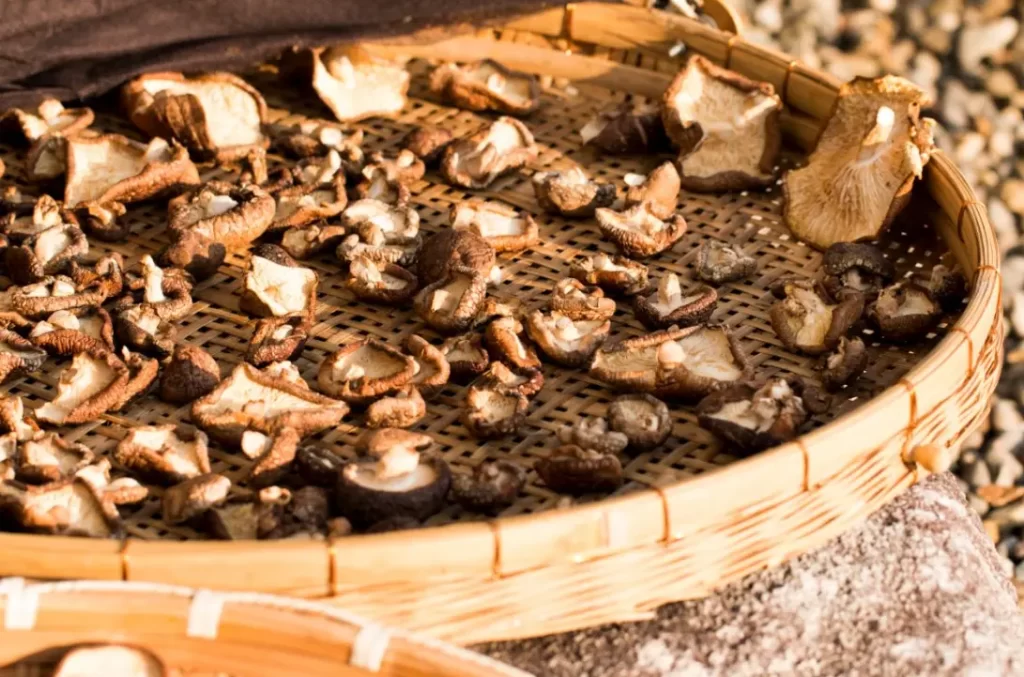
sun-dried shiitake mushrooms
For centuries in the mountains of Qingyuan, farmers laid shiitake on bamboo racks under the open sky. From a culinary and biochemical standpoint, this method is spectacular.
When shiitake gills are exposed to natural UV-B radiation from the sun, the naturally occurring ergosterol undergoes a photochemical conversion directly into ergocalciferol (Vitamin D2). Simultaneously, the slow, multi-day reduction of water allows specific enzymes to degrade the mushroom’s RNA into 5′-Guanosine Monophosphate (5′-GMP) — the nucleotide responsible for that explosive, savory umami flavor.
However, from a modern Chief Food Safety Officer’s perspective, pure sun-drying is a logistical nightmare. You are entirely at the mercy of the weather. A sudden drop in temperature or an unexpected humid afternoon means the water activity (aw) remains dangerously high. Furthermore, open-air drying inevitably introduces severe risks of foreign matter contamination: agricultural dust, insects, and airborne micro-plastics. If you are auditing for ISO or HACCP compliance, raw sun-drying simply fails the test.
Machine-Drying (Hot-Air Convection): The Standard of Consistency
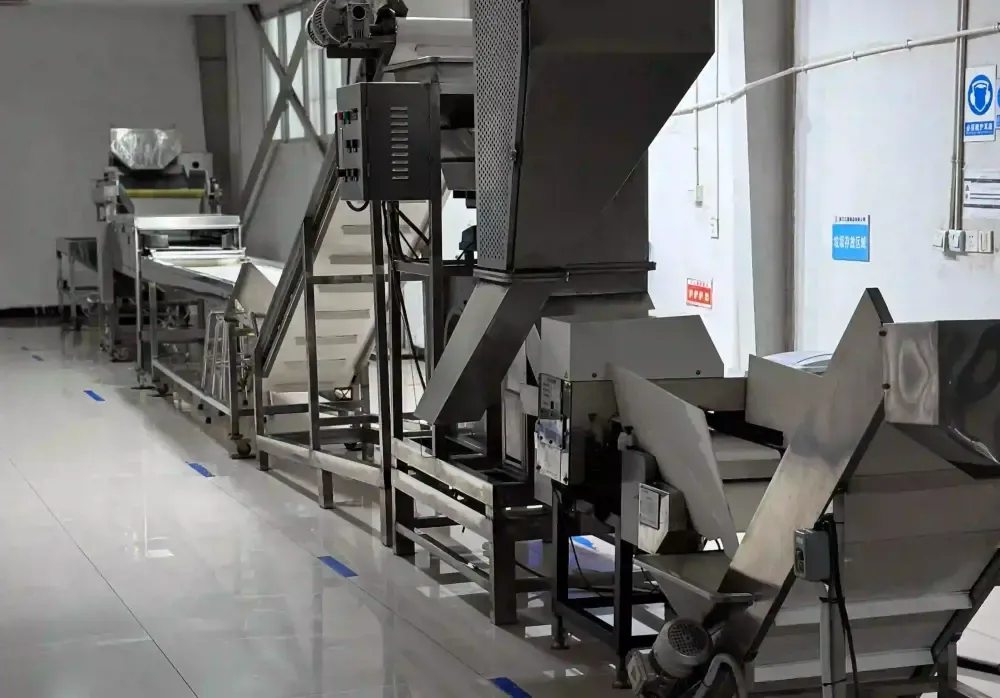
machine-dried shiitake mushrooms
Enter modern Hot-Air Convection Drying. This is where industrial consistency takes over. By placing sorted mushrooms into sealed, temperature-controlled chambers, factory operators can execute precise thermal profiling.
According to industry benchmark standards for maritime freight, export-grade dried mushrooms must maintain a moisture content below 12–13%. Machine drying achieves this with ruthless efficiency. It rapidly drops the water activity to a level where microbial growth and mold development are biologically impossible. Furthermore, the enclosed environment guarantees zero foreign matter intrusion.
But there is a fatal flaw if the machines are run too fast. Rapid dehydration causes the surface of the mushroom cap to harden prematurely, trapping moisture inside the core. More importantly, fast machine drying does not allow enough time for the enzymatic reactions to fully develop Lenthionine — the sulfur-containing compound that gives shiitake its signature, pungent aroma. The result? A perfectly safe, beautiful mushroom that smells incredibly weak.
Sun-Dried vs Machine-Dried Shiitake Quality Difference: Core Metrics Analyzed
To engineer the perfect supply chain, buyers must evaluate these two methods across specific, measurable metrics.
Aroma Profile and Flavor Intensity (The Lenthionine Factor)
If your R&D team is formulating a premium vegan soup base, aroma is your primary KPI. The development of Lenthionine requires a specific temperature curve that pure sun-drying naturally mimics. The slow degradation of lentinic acid over several days under the sun creates an intense, lingering scent that pure high-heat machine drying often destroys. Machine-dried mushrooms, while yielding a clean taste, will require your formulation team to use a higher volume of product to achieve the same flavor intensity.
Nutritional Yield (The Vitamin D2 Pursuit)
Health food brands and dietary supplement manufacturers demand verifiable nutritional panels. Here, the sun-dried vs machine-dried shiitake quality difference is undeniable. Pure machine-dried mushrooms grown indoors and dried in dark ovens contain almost no Vitamin D. Period. UV exposure is the biological trigger. If your label claims high Vitamin D2, you must source raw materials that have undergone natural sun-curing or specialized artificial UV-tunnel exposure before final dehydration.
Table 2: Deep-Dive Logistical & Biochemical Comparison
| Quality Parameter | Pure Sun-Dried Shiitake | Machine-Dried Shiitake (Hot-Air) | Impact on Global Supply Chain |
|---|---|---|---|
| Moisture Content (aw) | Fluctuates (13%–18%+) | Strict Control (less than 12%) | High moisture leads to container mold; machine drying ensures safe maritime transport. |
| Ergocalciferol (Vitamin D2) | Extremely High | Negligible (unless UV treated) | Dictates viability for health supplement extraction and vegan nutritional claims. |
| Aroma (Lenthionine) | Intense & Pungent | Mild & Clean | Impacts formulation costs for sauce and soup base manufacturers. |
| Rehydration Ratio | Unpredictable | Highly Consistent (e.g., 1:4 weight) | Consistency is mandatory for instant noodle and frozen food automated assembly lines. |
| Hygiene & Safety | High Risk (Dust, Insects) | HACCP Compliant (Enclosed) | Crucial for clearing strict EU / US FDA customs and border protection audits. |
Physical Appearance, Color, and Cap Integrity
For buyers sourcing whole premium mushrooms for retail packaging, shelf appeal is a critical commercial metric. The dehydration method physically alters the cellular structure of the cap and gills.
Traditional sun-drying, because of its slow, uneven evaporation rate, often results in significant shrinkage. The caps may warp, and prolonged exposure to natural elements can cause the pale yellow gills underneath to darken to a deeper brown. While this rustic appearance appeals to traditional Asian wet markets, it often falls short of the uniformity required by high-end Western supermarket chains.
Conversely, machine-drying is an exercise in structural preservation. By controlling the airflow and temperature gradient, the rapid extraction of surface moisture locks the mushroom’s shape in place. The caps remain thick, round, and visually intact, while the gills retain their pristine, pale-golden hue. When European distributors are fighting for prime eye-level supermarket shelf space, this visual consistency commands a premium price point.
The Jiangyuan Solution: Hybrid Drying Technology in Qingyuan
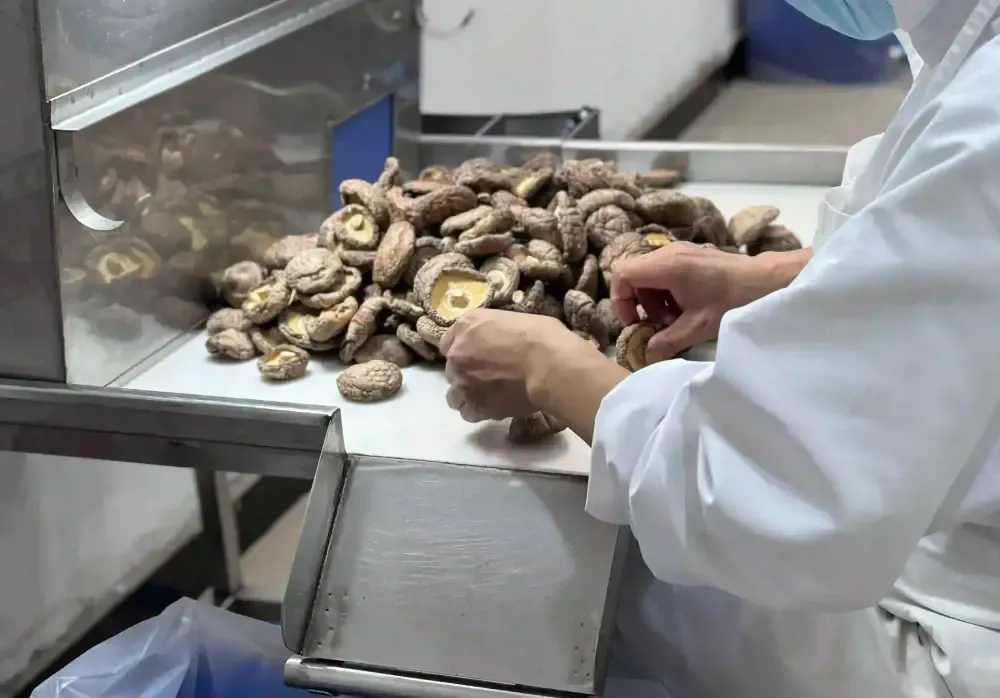
Wholesale Dried Mushrooms from China
So, how do the top global brands resolve this conflict between flavor and food safety? They don’t choose. They combine. Based on our decades of manufacturing experience in Zhejiang, we realized that forcing buyers to compromise was a failure of the supply chain.
Combining the Best of Both Worlds
At Jiangyuan Mushroom, we engineered a “Hybrid Drying” protocol that effectively neutralizes the sun-dried vs machine-dried shiitake quality difference dilemma.
The process begins with a crucial 12 to 24 hours of natural sun exposure in the crisp, high-altitude air of Qingyuan. This initial step is non-negotiable; it triggers the enzymatic cascade that develops the Lenthionine aroma and forces the biochemical conversion of ergosterol into Vitamin D2. We capture the traditional flavor profile before the risks of open-air drying can take hold.
Immediately following this natural curing phase, the mushrooms are transferred into our ISO-certified hot-air convection chambers. Here, precise thermal profiling takes over. The machines rapidly draw out the remaining internal moisture, bringing the water activity strictly below the 12% industry benchmark. This secondary phase permanently locks the flavor inside while sterilizing the batch, ensuring absolute HACCP compliance and zero foreign matter contamination.
The Qingyuan Origin Advantage
Technology alone cannot rescue inferior raw materials. Qingyuan is universally recognized as the historical birthplace of shiitake cultivation, boasting over 800 years of mycological heritage. Our unique micro-climate — characterized by dramatic diurnal temperature shifts — forces the mushrooms to grow slowly, developing incredibly thick caps and dense cellular structures. When you apply hybrid drying to a Qingyuan-origin mushroom, the resulting umami concentration and structural integrity simply outclass commodities grown in lowland regions.
How to Choose the Right Dried Shiitake for Your Industry
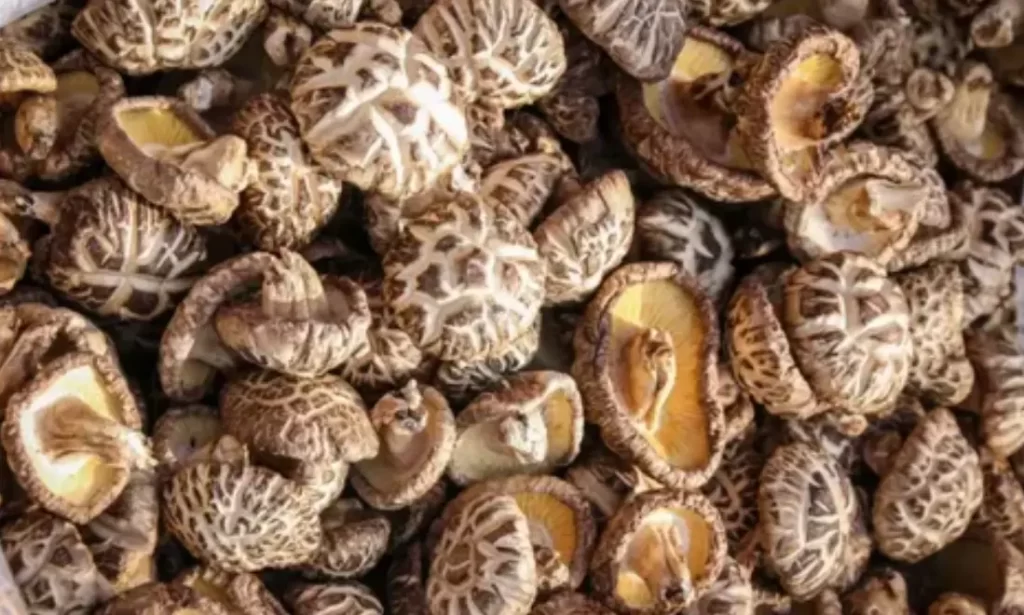
sun-dried shiitake mushrooms
Your procurement strategy must align with your final product’s journey. Stop buying blindly and start specifying your dehydration requirements.
Table 3: B2B Sourcing Specification Guide
| Industry Sector | Recommended Product Spec | Primary Procurement Focus |
|---|---|---|
| Retail Private Labels (Supermarkets) | Hybrid-Dried Whole Shiitake (Premium Grade) | Visual uniformity, pristine gill color, intense aroma for consumer satisfaction upon opening. |
| Food Processors (Sauces, Soups, Noodles) | Machine-Dried Sliced or Broken Pieces | Cost-efficiency, exact rehydration ratios for automated lines, strict moisture limits to prevent clumping. |
| Dietary Supplement & Extract Firms | Pure Sun-Dried / UV-Exposed Raw Material | Maximum Ergocalciferol (Vitamin D2) yield, full traceability back to the cultivation log. |
Partnering with a Verified Source Manufacturer
The most dangerous link in your supply chain is the middleman who doesn’t understand the science of their own product.
Why Trading Companies Can’t Guarantee Drying Quality
When you purchase from generic trading companies, you are almost always buying a blended batch. They aggregate mushrooms from dozens of small farmers, mixing pure sun-dried, machine-dried, and everything in between. The result? A single 40-foot container where half the bags rehydrate in 20 minutes, and the other half take an hour. Worse, the inconsistent moisture levels within the container create localized micro-climates during ocean transit, leading to catastrophic mold blooms.
Jiangyuan Mushroom’s Supply Chain Capabilities
As a source manufacturer, Jiangyuan Mushroom eliminates this volatility. Because we control the process from the sawdust log to the final export carton, we guarantee batch consistency. Whether you need custom OEM retail packaging for North America, strict residue testing documentation for European organic markets, or bulk broken pieces for Southeast Asian condiment factories, we calibrate our drying parameters to meet your exact specifications.
Frequently Asked Questions (B2B FAQ)
1. Can machine-dried shiitake achieve the same Vitamin D levels as sun-dried?
No, not naturally. Standard hot-air drying occurs in closed, dark chambers, meaning the necessary UV-B exposure never happens. To achieve high Vitamin D levels, the mushrooms must undergo either natural sun-curing or specialized artificial UV-light tunneling prior to or during the dehydration process.
2. What is the maximum acceptable moisture content for importing wholesale dried shiitake?
Industry Benchmark: For safe trans-oceanic shipping and compliance with major global customs regulations, the moisture content must be strictly maintained below 13%. We target ≤12% to guarantee shelf stability and eliminate mold risk during long-haul logistics.
3. Does the drying method affect the rehydration ratio of wholesale shiitake?
Significantly. Machine-dried mushrooms, due to their controlled cellular contraction, offer highly predictable and uniform rehydration ratios (typically 1:4 or 1:5 by weight). Sun-dried batches often rehydrate unevenly due to varying cap thicknesses and inconsistent initial drying rates.
4. How does the drying process impact the umami flavor (5′-GMP)?
The degradation of RNA into 5′-GMP requires time and moderate heat. Sun-drying naturally facilitates this slow enzymatic breakdown. Overly aggressive, fast machine drying can halt this process prematurely, resulting in a physically intact but flavorless mushroom. Controlled, stepped-temperature machine drying is required to maximize umami.
5. Are sun-dried mushrooms safe for industrial food manufacturing?
Pure, open-air sun-dried mushrooms pose high risks for strict HACCP / ISO food manufacturing due to potential contamination (dust, insects) and high microbial loads. They require intensive washing and sterilization before processing. Hybrid-dried mushrooms are the safer, compliance-ready alternative.
Expert Verdict
Your supply chain’s integrity shouldn’t evaporate the moment the container doors close. The distinction between sun-drying and machine-drying isn’t just a culinary debate; it’s a critical logistical metric that dictates shelf life, flavor profiles, and customs clearance. Stop accepting mixed-batch commodities from middlemen. If your current supplier cannot articulate the exact thermal profile and water activity of your order, you are absorbing unnecessary risk. Audit your sourcing strategy today, specify your dehydration requirements, and demand absolute batch consistency.
References:
Water Activity (aw) in Foods — U.S. Food and Drug Administration (FDA)
Effect of UV-B Exposure on the Concentration of Vitamin D₂ in Sliced Shiitake Mushroom — NIH PubMed