If you are planning to import dried mushrooms from China, start with the specification—not the supplier’s price.
A professional purchasing process should look more like this:
| Import Stage | Buyer Decision | What Must Be Confirmed | Main Risk if Skipped |
|---|---|---|---|
| Product specification | What exactly are you buying? | Species, form, grade, size, moisture, packaging | Inconsistent quotations |
| Supplier verification | Who actually produces or processes it? | Business identity, production capability, traceability | Unclear supply chain |
| Sample approval | Does the physical product meet your needs? | Appearance, aroma, size, moisture, cooking performance | Bulk-order mismatch |
| Laboratory testing | Is the lot suitable for the destination market? | Residues, microbiology, contaminants as applicable | Compliance failure |
| Documentation | Can the shipment be cleared? | Invoice, packing list, COA and destination-specific documents | Customs delays |
| Pre-shipment control | Does the final lot match the approved specification? | Lot, quantity, packaging, test results | Receiving disputes |
That order matters. A quotation can look attractive until you discover that the quoted product is a different grade, the packaging does not suit your market, or additional testing is required before release.
Based on our experience with dried mushroom processing and export preparation, the strongest B2B purchasing decisions are made before the container is loaded. The objective is not simply to buy dried mushrooms from China. It is to make the specification, quality evidence and shipment documentation agree with each other.
For U.S. buyers, for example, FDA currently identifies requirements including Food Facility Registration and Prior Notice within its human-food import framework, while USDA APHIS separately addresses plant-health considerations for mushrooms intended for consumption.
So the first question is not “Which supplier is cheapest?”
It is:
“Can this supplier consistently produce the exact product I have specified, and can I document that the shipment meets my destination market’s requirements?”
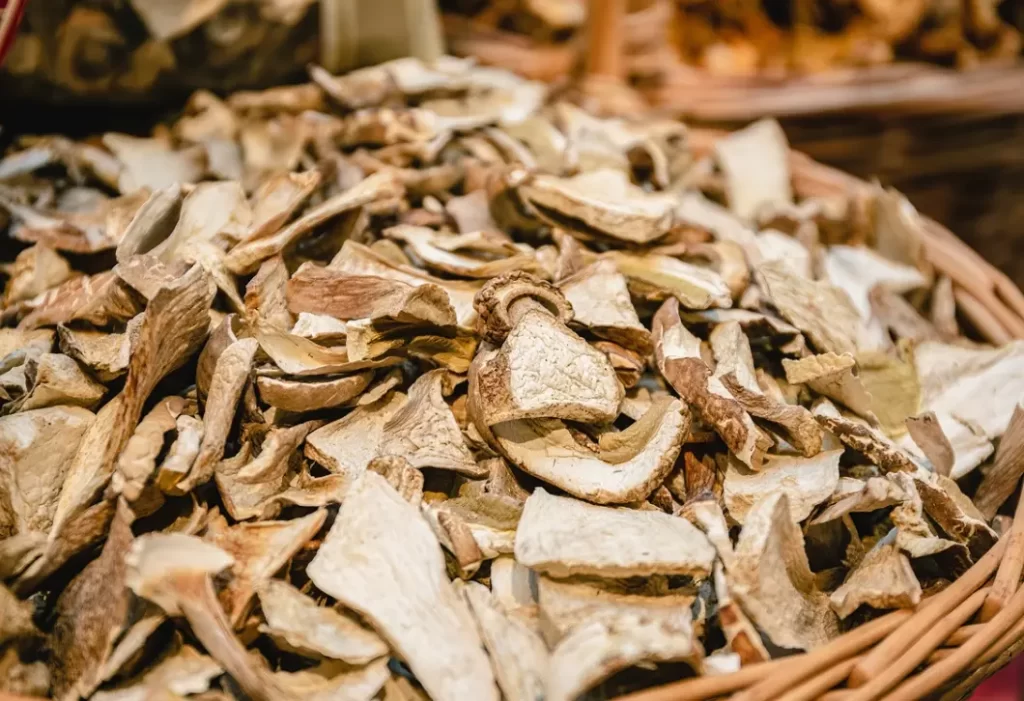
how to import dried mushrooms from China
Step 1: Define Your Dried Mushroom Import Specification Before Requesting a Quote
A surprising number of international sourcing problems begin with one vague sentence:
“Please quote your dried shiitake mushrooms.”
For a small trial purchase, that may be enough to start a conversation. For commercial importing, it is not enough.
A Chinese supplier may interpret “premium dried shiitake” according to its own grading system. Another supplier may quote a different cap size, thickness, stem ratio or moisture specification. Both quotations can be technically accurate—and completely different products.
This is why the specification should be written before comparing prices.
For dried shiitake, a commercial specification can include species, product form, grade, size, appearance, aroma, moisture, foreign-material requirements, packaging and intended application. For sliced mushrooms or broken pieces, additional requirements may be appropriate because the buyer’s processing application changes the quality priorities.
What Should Be Included in a Buyer Specification?
| Specification Dimension | Example Buyer Requirement | Why It Matters Commercially | Verification Method |
|---|---|---|---|
| Species | Lentinula edodes/dried shiitake | Prevents product substitution or misunderstanding | Product documentation + sample |
| Product form | Whole, sliced or broken pieces | Determines application and yield | Visual inspection |
| Size/grade | Defined according to agreed grading system | Affects appearance, cooking use and price | Sample + lot inspection |
| Cap characteristics | Diameter, thickness, shape where applicable | Important for retail and foodservice consistency | Physical inspection |
| Color | Agreed acceptable range | Helps maintain retail and recipe consistency | Sample comparison |
| Aroma | Characteristic dried mushroom aroma | Can reveal storage or processing issues | Sensory evaluation |
| Moisture | Contractually specified limit | Influences stability, weight and storage performance | Laboratory or calibrated testing |
| Foreign material | Defined acceptance requirement | Direct food-safety and commercial concern | Inspection/testing |
| Packaging | Bulk, foodservice or retail format | Affects transport, shelf presentation and repacking | Packaging approval |
| Intended use | Retail, restaurant, soup base, seasoning, extraction etc. | Determines which attributes deserve priority | Buyer specification |
The important point is that quality is application-dependent.
A supermarket buyer purchasing attractive whole dried shiitake may care heavily about cap appearance and size uniformity. A food manufacturer purchasing sliced mushrooms may place more emphasis on particle consistency, processing yield and batch-to-batch stability. An ingredient developer buying broken pieces or powder may have a different specification altogether.
There is no single “best” dried mushroom specification for every buyer.
There is only a specification that is appropriate—or inappropriate—for the intended use.
Do Not Treat Moisture as a Single Number Without Context
Moisture deserves particular attention because it affects both commercial weight and product stability. But a buyer should not simply copy a moisture figure from another supplier and assume it is universally correct.
The specification should define:
- the required moisture criterion;
- how the test is performed;
- the sampling method;
- the acceptable tolerance;
- which party performs the final test;
- what happens if the result falls outside the agreed specification.
This is where a purchasing specification becomes more than a product description. It becomes a quality-control document.
Build the Specification Around the Final Application
For Jiangyuan Mushroom, dried shiitake can be supplied in different forms and grades for applications ranging from food manufacturing and restaurant supply to bulk ingredient use.
That means a buyer should tell the supplier what the mushrooms will actually be used for.
If you are producing soup base, instant noodles or sauces, a visually perfect whole mushroom may not create the best economic value. If you are supplying premium retail packs, however, appearance becomes much more important.
The purchasing question changes from:
“What mushroom do you sell?”
to:
“What mushroom specification does my finished product require?”
That is the right starting point for a serious import program.
Step 2: How to Verify a Chinese Dried Mushroom Supplier Before Ordering
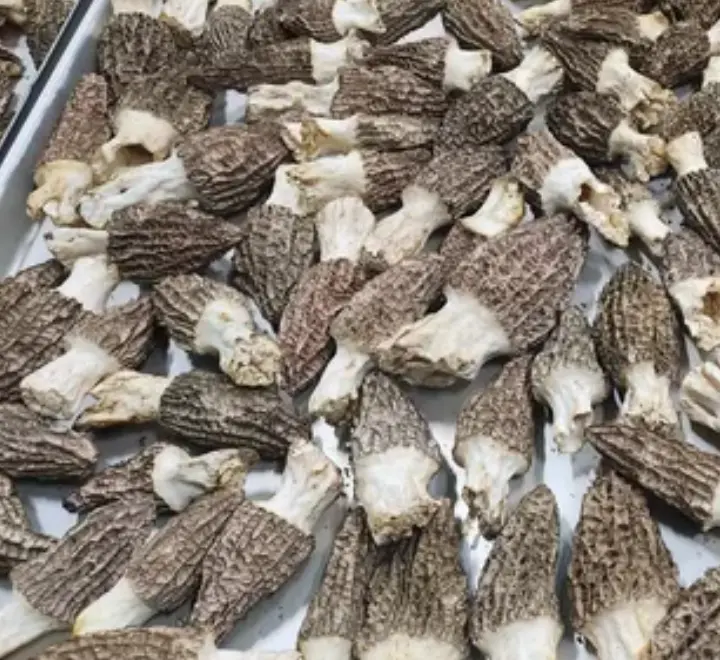
How to Verify a Chinese Dried Mushroom Supplier Before Ordering
Once the specification is clear, supplier selection becomes much easier.
The mistake is to judge suppliers from a product page alone.
A polished website, a long product list or a low quotation does not by itself establish production capability, food-safety control or consistent export performance.
The buyer needs to verify the supply chain behind the product.
Manufacturer, Processor or Trading Company?
China’s mushroom supply chain can include growers, processors, manufacturers, exporters, trading companies and sourcing intermediaries. These roles can overlap.
Being a trading company is not automatically a quality problem. Likewise, calling a business a “factory” does not automatically prove that every processing stage is controlled by that company.
The useful question is:
Which company controls the critical stages that determine the quality of the product you are buying?
For dried mushrooms, those stages may include raw-material selection, sorting, grading, drying, inspection, packaging and traceability.
Supplier Due-Diligence Checklist
| Verification Area | Questions for the Supplier | Evidence to Request | Why a Buyer Should Care |
|---|---|---|---|
| Legal identity | What is the company’s registered business identity? | Company documentation | Establishes who you are contracting with |
| Production role | Manufacturer, processor, exporter or trader? | Production/business information | Clarifies supply-chain responsibility |
| Raw-material source | Where are mushrooms sourced or cultivated? | Origin and traceability information | Helps assess consistency |
| Processing | Where are sorting, grading and drying performed? | Process description/facility information | Identifies quality-control points |
| Food safety | What food-safety systems are implemented? | Valid certificates where applicable | Supports supplier evaluation |
| Testing | What routine tests are performed? | Recent relevant test reports/COAs | Provides batch-level evidence |
| Traceability | Can a shipment be traced to its production lot? | Lot records/traceability documents | Important for recalls and disputes |
| Packaging | Can packaging be customized to market requirements? | Packaging specification/samples | Prevents packaging mismatch |
| Export capability | Can the supplier prepare required export documents? | Sample documentation | Reduces shipment administration risk |
| Repeat supply | Can the approved specification be maintained? | Written specification + QC procedure | Critical for long-term procurement |
Look for Evidence, Not Vocabulary
Words such as “premium,” “high quality,” “factory direct,” “organic,” “export quality” and “certified” have little value without supporting evidence.
For example, if a supplier says it operates under HACCP or ISO-based systems, ask which entity holds the certification, what scope it covers and whether the document is current. Do not assume that a certificate covering one company, facility or activity automatically covers every product being quoted.
The same principle applies to laboratory reports.
A COA is much more useful when the buyer can establish:
- which product was tested;
- which lot was tested;
- when the sample was collected;
- which laboratory performed the analysis;
- which analytical parameters were tested;
- whether the results correspond to the destination-market requirements.
According to industry data and regulatory guidance from the U.S. FDA and European market-entry research, dried mushrooms can face controls involving contaminants, foreign materials, pesticide residues and microbiological safety, depending on the market and product.
That makes supplier verification more than a commercial exercise.
It is an early food-safety control.
Why Origin Matters—but Does Not Replace Quality Control
Jiangyuan Mushroom is based in Qingyuan, Zhejiang, an established mushroom-producing region, and the company has operated since 1996 according to its supplied company information.
Origin can provide useful context for buyers evaluating raw-material sourcing and processing expertise. But origin should never be treated as a substitute for specification, testing or traceability.
A mushroom’s geographical origin does not, by itself, prove that a particular shipment meets the importer’s requirements.
The stronger procurement model is:
Origin + controlled processing + documented specification + batch evidence + traceability.
That combination gives the buyer something much more valuable than a marketing claim: a system that can be checked.
The next stage is where the specification meets the physical product—sample approval and pre-shipment testing. This is also where many first-time importers discover that a supplier’s quotation and their actual purchasing requirements are not quite the same thing.
Step 3: Approve Samples Before Placing a Bulk Order
A sample is not just something to “have a look at.” It is the physical reference against which the commercial shipment should eventually be judged.
For dried shiitake, buyers should evaluate more than appearance. Check the mushroom size and form, cap condition, color, aroma, stem ratio, moisture, foreign material and rehydration performance. If the product will be used in manufacturing, test it in the actual production process whenever practical.
The key is to turn the approved sample into a written product specification.
Do not leave important requirements in a WhatsApp conversation or an informal email such as “same as the sample.” The final purchase order should identify the product form, grade, agreed tolerances, packaging and applicable testing requirements.
This becomes particularly important when the first shipment performs well and the buyer moves to repeat orders. Without a written specification, “same product” can mean something different to the buyer and supplier.
Step 4: Test Dried Mushrooms Before Shipment
Food-safety testing should be designed around the destination market and product risk, rather than ordering every possible laboratory test.
For example, European market guidance identifies pesticide residues, heavy metals, microbiological organisms, radioactivity and foreign materials among the areas that can require attention for dried mushrooms. It also notes that European buyers commonly request food-safety certification and laboratory evidence.
For a commercial shipment, the testing plan should therefore be agreed before production is completed.
| Quality/Compliance Area | What the Buyer Should Define | Typical Evidence | Decision Point |
|---|---|---|---|
| Moisture | Contractual specification and test method | Laboratory report/COA | Before shipment |
| Pesticide residues | Destination-market requirements | Accredited laboratory report | Compliance review |
| Microbiology | Applicable organisms and limits | Laboratory report | Pre-shipment |
| Heavy metals | Destination-specific limits | Laboratory report | Compliance review |
| Foreign material | Acceptance criteria and inspection method | Inspection record/test evidence | Production + loading |
| Additives | Whether additives are permitted or declared | Specification + laboratory test where appropriate | Before production |
| Traceability | Lot identification and production records | Batch/lot records | Shipment release |
| Packaging | Food-contact suitability and agreed format | Packaging specification/sample | Before loading |
The important distinction is between supplier quality control and importer verification.
A supplier may conduct routine testing as part of its own quality system. The buyer may still require independent testing for particular products, markets or risk categories.
Neither should automatically replace the other.
A Special Point for U.S. Buyers
The United States deserves particular attention.
FDA’s current Import Alert 25-05, published July 22, 2026, specifically covers dried fungi and dried mushrooms from China and Hong Kong for filth and allows detention without physical examination for products falling within the alert, subject to the conditions described by FDA. FDA also states that evidence such as private laboratory analysis may be used in seeking release of an affected shipment.
This does not mean that every Chinese dried mushroom shipment will be detained. It does mean that U.S. buyers should treat contamination and foreign-material controls as a serious procurement issue rather than something to investigate after arrival.
That changes the practical sourcing strategy.
Test before shipment. Keep the lot traceable. Retain the relevant reports. Make sure the laboratory result can be connected to the actual production lot.
USDA APHIS currently states that mushrooms imported for consumption do not require a PPQ permit, but they must be free of soil, wood or wood chips, pests and diseases and may be inspected at the U.S. port of entry.
FDA separately identifies requirements such as Prior Notice, Food Facility Registration, FSMA-related requirements and food labeling within its human-food import framework.
The buyer should therefore avoid treating “FDA compliant” as a vague supplier marketing label. Compliance is a combination of the product, importer, facility, shipment, documentation and applicable requirements.
Step 5: Check Destination-Market Requirements Before Shipping
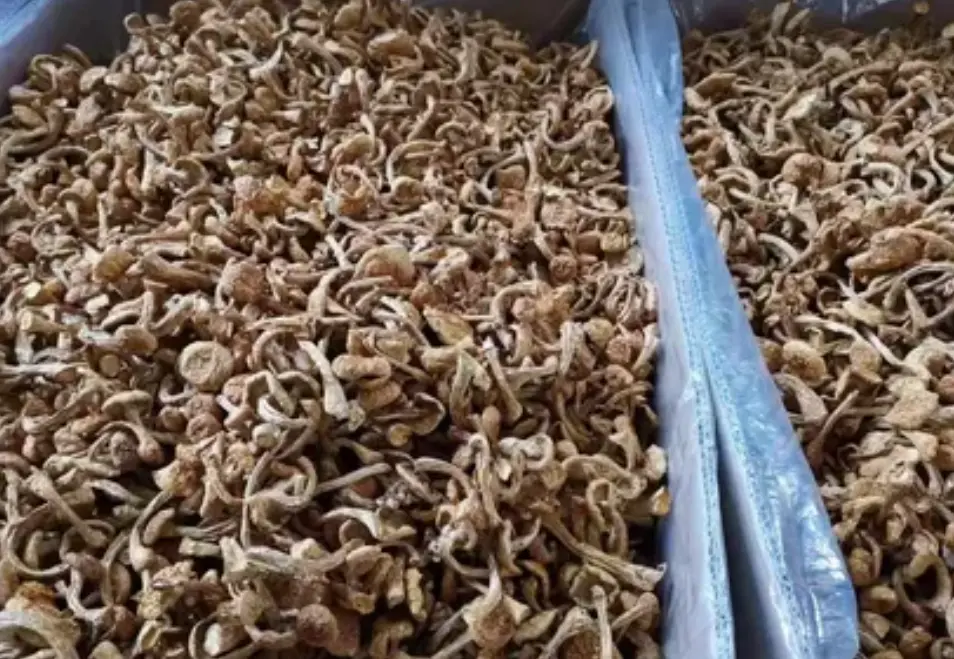
Check Destination-Market Requirements Before Shipping
There is no single global “dried mushroom import certificate.”
Requirements depend on the destination country, product form, intended use and current regulatory controls.
United States
A U.S. importer should verify the applicable FDA requirements, importer responsibilities, Prior Notice, facility registration and labeling obligations before shipment. Plant-health requirements should also be checked where relevant.
European Union
For EU buyers, the regulatory picture is broader than simply checking whether the supplier has HACCP or ISO certification.
The European Commission’s Access2Markets platform provides current information on import requirements and should be checked against the exact product and destination.
CBI’s current dried-mushroom guidance highlights contaminants including pesticide residues, heavy metals and microbiological hazards, while also identifying foreign materials and food-safety certification as important commercial concerns for European buyers.
The practical rule is simple:
Verify the destination-market requirement before production is finalized—not after the cargo reaches the port.
Step 6: Prepare Customs and Shipment Documents
Once the product and compliance requirements are confirmed, documentation becomes the next control point.
Depending on the transaction and destination, the buyer may need documents such as:
- Commercial Invoice
- Packing List
- Bill of Lading
- Certificate of Origin
- Certificate of Analysis
- Product specification
- Food-safety or certification documents where applicable
- Additional documents requested by the destination authority or buyer
HS classification also needs care.
Do not copy an HS code from another supplier’s invoice simply because the product appears similar. Whole dried mushrooms, sliced products, broken pieces and further-processed mushroom products may require different classification analysis.
Your customs broker or relevant customs authority should confirm the classification applicable to your shipment.
Step 7: Perform Pre-Shipment Quality Assurance
This is where all the earlier work comes together.
The approved sample, written specification, laboratory results and final shipment should tell the same story.
| Pre-Shipment Check | Buyer Should Verify | Evidence to Keep | If Something Fails |
|---|---|---|---|
| Product identity | Species and product form | Specification + packing record | Hold shipment |
| Grade | Size, appearance and agreed tolerances | Inspection report | Investigate lot |
| Moisture | Meets agreed requirement | COA/lab report | Re-test or reject |
| Food safety | Required parameters within applicable limits | Laboratory report | Do not release automatically |
| Packaging | Correct material, weight and labeling | Photos + packing list | Correct before loading |
| Quantity | Carton and net-weight accuracy | Loading record | Reconcile before shipment |
| Traceability | Lot number linked to records | Batch documentation | Require clarification |
| Shipping documents | Names, quantities and descriptions match | Final document set | Correct before departure |
Based on our experience with export-oriented mushroom processing, this stage is where a written specification proves its value. Quality discussions become much easier when both parties are comparing the shipment against an agreed document rather than debating subjective terms such as “premium” or “large size.”
The goal is not to create paperwork for its own sake.
The goal is to make the shipment predictable.
Step 8: Inspect the Shipment After Arrival
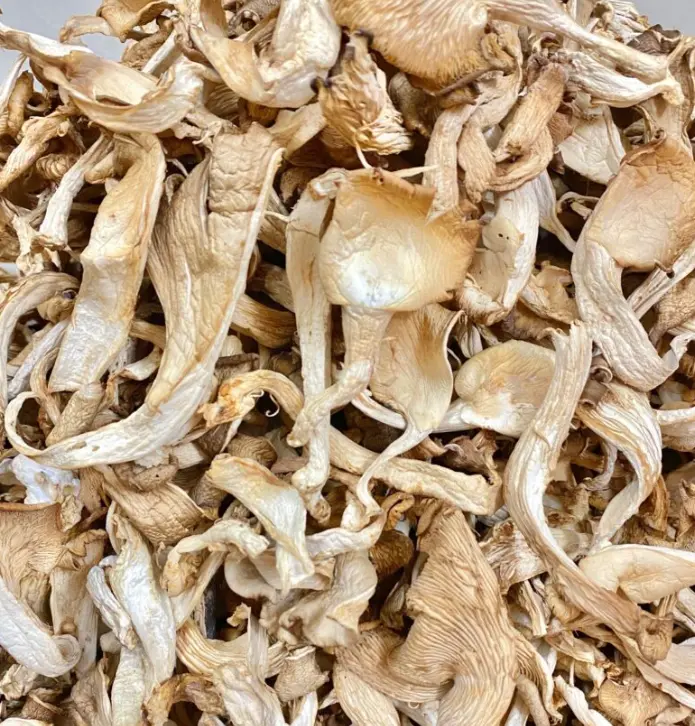
Inspect the Shipment After Arrival
Import control should not end at the port.
When the goods arrive, compare the received product with the approved sample and purchase specification. Check carton condition, packaging integrity, lot identification, moisture condition and visible foreign material.
For larger or strategically important purchases, buyers may also consider retaining samples from received lots. This creates a physical reference for future quality discussions and helps identify whether a problem is isolated or recurring.
A strong supplier relationship is not built by assuming every shipment will be perfect.
It is built by having a process that can identify deviations quickly.
5 FAQs Global Buyers Ask Before Importing Dried Mushrooms from China
1. Can I import dried mushrooms from China into the United States?
Yes, dried mushrooms for consumption can enter the U.S., but the importer must meet applicable U.S. food-import requirements. USDA APHIS states that mushrooms for consumption do not require a PPQ permit but must be free of soil, wood or wood chips, pests and diseases. FDA requirements, including applicable Prior Notice, facility registration, labeling and other food-import obligations, also need to be checked.
2. What tests should I request when importing dried shiitake mushrooms?
There is no universal test panel for every destination. Depending on the product and market, buyers may need to consider moisture, pesticide residues, microbiological parameters, heavy metals, foreign material and other contaminants. EU market guidance specifically identifies several of these areas as relevant to dried mushrooms.
3. How do I verify a dried mushroom supplier in China?
Start by identifying the supplier’s actual role in the supply chain. Then verify processing capability, traceability, food-safety systems, laboratory testing, product specifications and export documentation. Most importantly, request samples and establish a written specification before committing to a large order.
4. What documents are needed to import dried mushrooms?
The exact document package varies by destination and transaction. Common commercial documents include the Commercial Invoice, Packing List and Bill of Lading, while a Certificate of Origin, COA and other food-safety or regulatory documents may be required depending on the market and buyer specification.
5. How can I prevent quality differences between repeat mushroom shipments?
Use the first approved sample as a documented reference, establish measurable specifications, assign lot numbers, require appropriate batch testing and compare subsequent shipments against the same criteria. A repeat-order system should be based on documented specifications and evidence, not simply the phrase “same as last time.”
Expert Verdict: Control the Shipment Before You Control the Price
The safest way to import dried mushrooms from China is not to start with the cheapest quotation.
Start with a clear specification. Verify the supplier. Approve the sample. Match testing to the destination market. Check the documents. Inspect the final lot.
Then compare landed cost.
For global food buyers, that sequence turns sourcing from a price negotiation into a controlled procurement process—and that is the difference between buying one shipment and building a reliable mushroom supply chain.
References: