A reliable dried mushroom production process begins long before a mushroom enters a drying chamber. For an international buyer, the real production chain is closer to origin selection→raw material inspection→cleaning and sorting→grading→controlled drying→moisture verification→quality inspection→packaging→traceability→export shipment. Each stage leaves a mark on the final product.
That distinction matters. A mushroom can look attractive when it arrives at a warehouse and still fail a buyer’s specification because its moisture is inconsistent, its grade is mixed, its aroma has been weakened by excessive heat, or the raw material cannot be traced back to a controlled source.
Based on our experience with dried shiitake supply, the most expensive quality problems rarely begin at the packaging table. They usually begin much earlier, when unsuitable raw material enters the production line or when drying conditions are not matched to mushroom size and condition.
For buyers sourcing by container, pallet, or recurring production contract, the question is therefore not simply“How are mushrooms dried? ”The better question is: “How does the manufacturer control the mushroom from origin to finished batch?”
| Production Stage | Main Quality Objective | Buyer Concern | Typical Verification |
|---|---|---|---|
| Raw material sourcing | Consistent origin and quality | Authenticity, supply stability | Supplier/source records |
| Receiving & inspection | Remove unsuitable material | Damage, insects, foreign matter | Visual inspection |
| Sorting & grading | Uniform processing groups | Mixed grades | Size, cap, color, condition |
| Drying | Controlled moisture removal | Mold, aroma loss, uneven drying | Drying records, moisture checks |
| Quality inspection | Confirm finished specification | Batch inconsistency | Physical and laboratory checks |
| Packaging | Prevent moisture reabsorption | Shelf-life deterioration | Packaging and seal inspection |
| Traceability | Link product to production batch | Recall and complaint management | Batch/lot records |
The difference between a small-scale drying operation and an export-oriented manufacturer is often found in these controls.
What Is the Dried Mushroom Production Process?
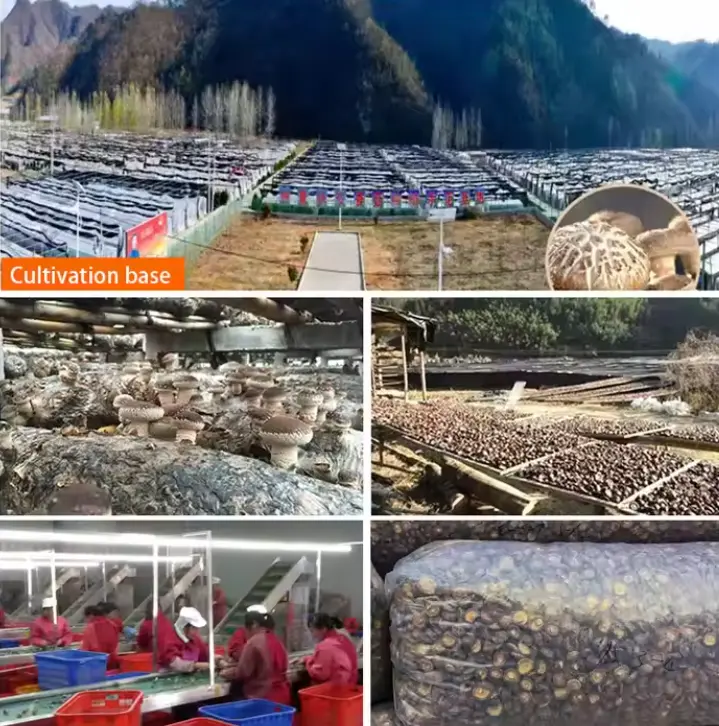
What Is the Dried Mushroom Production Process
At industrial scale, dried mushrooms are not simply exposed to heat until they become dry. The objective is to remove enough moisture to create a stable product while protecting the characteristics that buyers pay for: mushroom shape, color, aroma, texture after rehydration, and consistent grade.
For shiitake, scientifically known as Lentinula edodes, this balance becomes particularly important because cap thickness and mushroom size can vary considerably within a harvested lot. If different sizes are pushed through the same drying cycle without appropriate separation, the smaller pieces may become excessively dry while thicker mushrooms retain more moisture.
That is why professional processing begins with selection and grading, not with the dryer.
Step 1: Raw Mushroom Receiving
Fresh mushrooms enter the processing facility and are inspected before they are accepted into the production flow.
- The inspection focuses on characteristics such as:
- Mushroom size and maturity
- Cap condition
- Color
- Physical damage
- Insect damage
- Foreign material
- Abnormal odor or appearance
Raw materials that do not meet the required production specification should be separated rather than allowed to dilute an otherwise consistent batch.
For a B2B buyer, this first checkpoint is significant. A supplier may have excellent drying equipment, but technology cannot completely compensate for poor incoming material.
Step 2: Cleaning and Sorting
After receiving, mushrooms are cleaned and sorted according to the product specification.
The purpose is not merely cosmetic. Foreign material, damaged mushrooms, and unsuitable pieces can create downstream problems during drying, packaging, and final inspection.
Sorting also prepares the mushrooms for more consistent dehydration.
Large whole caps, smaller mushrooms, and processing pieces do not necessarily behave identically during drying. Separating them before the main drying stage gives the manufacturer greater control over the final moisture profile.
Step 3: Grading by Commercial Specification
Grading is where agricultural raw material begins to become a commercial ingredient.
For wholesale and food manufacturing customers, grading can consider:
Cap diameter
Cap thickness
Shape
Color
Aroma
Degree of physical integrity
Moisture specification
A premium whole-mushroom buyer may prioritize appearance and intact caps. A soup manufacturer may care more about consistent flavor and processing yield. A seasoning producer may have completely different requirements for broken pieces or smaller mushrooms.
This is why“premium”should never be treated as a single universal grade.
Premium for retail is not necessarily the same as premium for industrial processing.
A good production system matches the mushroom grade with its intended application.
Step 4: Drying—Where Process Control Becomes Critical
Drying is the defining stage of the process.
Two broad approaches are commonly discussed: traditional sun drying and controlled mechanical drying. They should not be presented as a simplistic battle between“natural”and“industrial.”
Sun drying can contribute to traditional flavor characteristics and may reduce dependence on conventional energy sources under suitable environmental conditions. But it is weather-dependent. Humidity, rainfall, temperature fluctuations, dust, and drying time can all affect consistency.
Mechanical drying offers a different advantage: control.
Temperature, airflow, drying duration, and loading conditions can be managed much more consistently. That matters when a buyer expects the second shipment to resemble the first.
According to industry and food-preservation guidance, controlled dehydration is fundamental to reducing available moisture and extending the storage stability of dried foods. FAO material on dried fungi also emphasizes the importance of protecting dried products from moisture absorption during storage.
For Jiangyuan’s production philosophy, the more useful comparison is therefore:
| Drying Method | Main Strength | Main Limitation | Best B2B Consideration |
|---|---|---|---|
| Traditional sun drying | Traditional processing character; low direct energy demand | Weather-dependent | Specialty and traditional-style products |
| Mechanical drying | Temperature and airflow control | Energy consumption and equipment cost | Consistent commercial production |
| Hybrid approach | Combines traditional characteristics with process control | Requires careful process management | Buyers seeking quality plus scalability |
| Poorly controlled drying | Low process complexity | Uneven moisture, quality loss | High procurement risk |
The key metric is not simply how quickly the mushroom becomes dry.
It is whether the finished batch reaches the required specification consistently.
Step 5: Moisture Stabilization and Inspection
After drying, the product should be checked before packaging. Moisture is one of the most important quality variables because excessive residual moisture can increase storage risk, while excessive drying can affect texture, appearance, yield, and commercial value.
A frequently used commercial specification is moisture below approximately 13%, but buyers should not assume that one number applies universally. Actual specifications should be established according to the product, customer contract, destination-market requirements, and validated quality-control procedures.
Water activity can also be relevant when assessing storage stability because total moisture and available moisture are not exactly the same thing.
For an export buyer, the practical question is straightforward:
Can the supplier demonstrate how moisture is measured, recorded, and controlled from batch to batch?
That question is more valuable than asking whether the product was“naturally dried.”
Why Raw Material Origin Matters Before Drying Begins
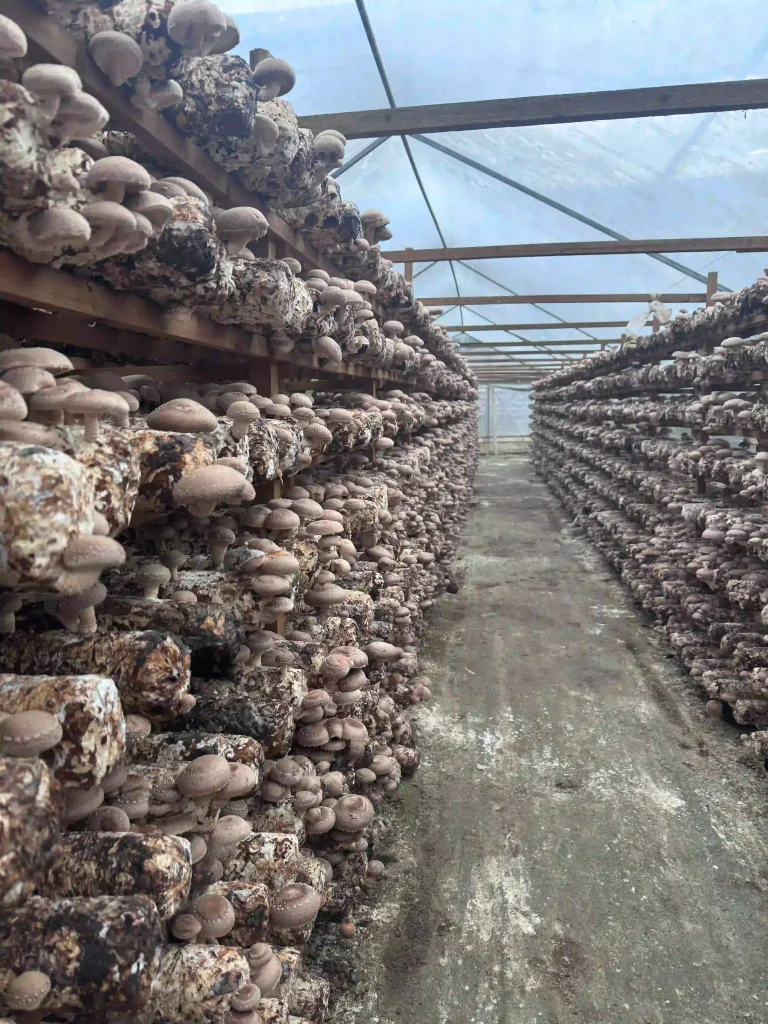
Why Raw Material Origin Matters Before Drying Begins
The quality of dried mushrooms is often discussed as if the drying room creates the final product. It does not.
The drying room can preserve, transform, or damage the characteristics of the raw material. It cannot manufacture a trustworthy origin story after the fact.
This is particularly relevant to Qingyuan dried shiitake.
Qingyuan, Zhejiang, has a mushroom culture extending back centuries and is widely associated with China’s shiitake-growing heritage. For Jiangyuan Mushroom, the significance of the region is not merely a marketing label. It provides the geographical and agricultural context behind the raw material supply chain.
For an overseas buyer, however, “Qingyuan origin”should mean more than printing a place name on a product label.
The buyer should want to understand:
Where was the raw material sourced? How was it received? How was it assigned to a production batch? How can the finished shipment be connected to those records?
That is where origin, traceability, and food safety begin to overlap.
Qingyuan Origin and Supply-Chain Credibility
Qingyuan’s long mushroom-growing tradition has created an established production ecosystem around edible fungi. The region’s identity as a major shiitake production area gives Jiangyuan a meaningful sourcing advantage, but the commercial value comes from connecting that origin with standardized processing.
The chain should look something like:
Qingyuan production area
↓
Raw mushroom sourcing
↓
Receiving inspection
↓
Sorting and grading
↓
Controlled processing
↓
Finished-product inspection
↓
Batch identification
↓
Export shipment
This is much stronger than relying on a generic“Chinese mushroom supplier”positioning.
It also helps address a concern international buyers rarely state openly: Can I prove where this product actually came from?
Why Origin Protection Matters to International Buyers
Origin-related claims become especially important when buyers are purchasing premium agricultural ingredients.
A recognized geographical origin or origin-protection framework can help distinguish products associated with a defined production region from products that simply pass through a particular city or trading hub.
But origin protection should not be confused with a blanket guarantee of every quality attribute.
A responsible buyer still needs to evaluate:
Raw material sourcing records
Processing controls
Food safety management
Testing documentation
Traceability
Product specifications
Packaging controls
Export documentation
This is where a manufacturer has an opportunity to demonstrate real evidence rather than rely on regional reputation alone.
The First Procurement Question Should Be About the Raw Material
A buyer considering long-term supply should ask for more than a product photograph and a price quotation.
The more useful questions are:
What mushroom species is being supplied?
Where is the raw material sourced?
How is incoming material inspected?
How are different grades separated?
What drying method is used?
How is final moisture controlled?
Can the supplier provide batch traceability?
What testing documentation is available for the destination market?
These questions shift the discussion from“How cheap is the dried mushroom? ”to the issue that matters much more over a 12-month supply agreement:
How reliably can the supplier reproduce the same specification?
That is the standard an export-oriented production process should be built around.
From Drying to Quality Assurance: Where Export Standards Are Won or Lost
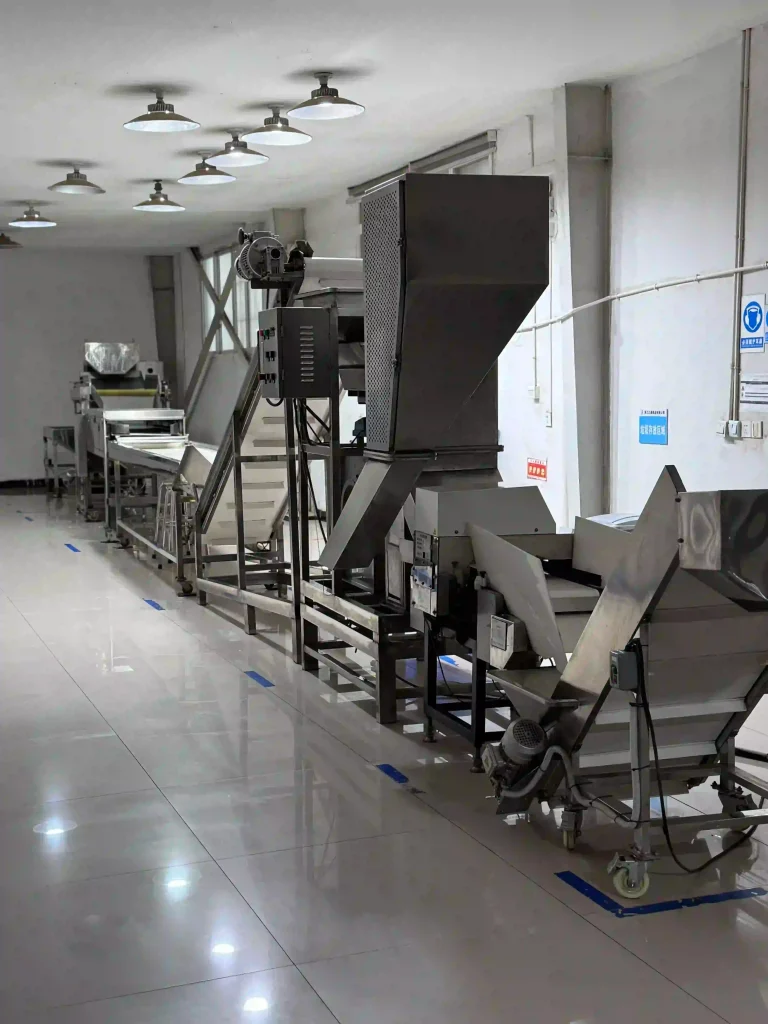
From Drying to Quality Assurance
Drying is only half the job. Once the mushroom reaches its target moisture level, the production team still has to protect that result.
This is where a commercial dried mushroom production process separates itself from small-scale dehydration. A dried mushroom can leave the dryer in excellent condition and deteriorate later if it absorbs atmospheric moisture, is packed incorrectly, or is handled in an uncontrolled environment.
Codex Standard CXS 39-1981 provides specific maximum water-content requirements for dried edible fungi, including 13%for dried shiitake. It also requires packaging to protect the product against humidity during storage and transport.
For an international buyer, this creates a simple rule: drying performance and post-drying protection must be evaluated as one system.
Quality Assurance from Production to Finished Batch
Based on our experience with export-oriented mushroom processing, quality assurance works best when every major production stage has a defined control point rather than relying on one final inspection.
| Control Point | Primary Risk | Quality Parameter | Buyer Evidence |
|---|---|---|---|
| Raw material receiving | Damaged or unsuitable mushrooms | Appearance, size, condition | Receiving records |
| Sorting & grading | Mixed commercial grades | Size, cap quality, color | Grade specification |
| Drying | Uneven dehydration | Moisture, drying consistency | Process records |
| Post-drying handling | Moisture reabsorption | Moisture stability | Batch inspection |
| Finished product | Physical or microbial defects | Hygiene and appearance | Inspection/testing records |
| Packaging | Humidity and contamination | Seal and material integrity | Packaging inspection |
| Shipment | Storage deterioration | Lot identification and protection | Traceability documents |
This approach also makes supplier audits easier. A serious buyer should be able to follow a batch backward and forward through the system rather than receiving only a generic certificate.
Food Safety Controls: What Global Buyers Should Verify
For buyers in North America, Europe, and other regulated markets, “food safe”is not a sufficient specification.
The actual questions are more specific.
Was the raw material controlled? Were pesticide residues considered? Were heavy metals assessed where relevant? Was the finished product protected from contamination? Can the manufacturer provide appropriate laboratory documentation for the destination market?
Codex requires dried edible fungi to be prepared and handled under appropriate food-hygiene practices and states that products should be free from microorganisms, parasites, or microbial substances at levels that could represent a health hazard.
Pesticide Residue and Contaminant Control
Pesticide testing should be approached according to the destination market and the buyer’s product specification rather than through a vague claim of“international standard.”
For an importer, a practical documentation package may include:
Product specification
Relevant laboratory test reports
Pesticide residue analysis where required
Heavy-metal testing where required
Microbiological results where applicable
Batch or lot identification
Certificate of analysis
The exact testing program should reflect the product, market, regulatory requirements, and buyer risk assessment.
This distinction matters. A laboratory report is useful only when it tests the parameters that actually matter for the shipment being purchased.
Heavy Metals and Environmental Contaminants
Mushrooms interact closely with their growing environment, which is why buyers of dried edible fungi may request controls for contaminants such as lead and cadmium.
The correct approach is not to promise that every shipment has identical testing requirements. Instead, the manufacturer should have a documented quality system capable of arranging appropriate testing against the buyer’s specification and destination-market requirements.
That is a much stronger B2B proposition than simply placing“quality guaranteed”on a product page.
Microbiological and Physical Inspection
Food safety does not end with chemical testing.
Physical inspection can identify:
Decomposed material
Excessive damage
Foreign matter
Insect-related defects
Abnormal appearance
The FDA maintains analytical methods specifically addressing decomposition in dried mushrooms, demonstrating that physical quality characteristics can form part of official food-control assessment.
This is particularly relevant for exporters because the U. S. regulatory environment can involve shipment-specific scrutiny. FDA’s current Import Alert 25-05, for example, addresses detention without physical examination for certain dried fungi and dried mushrooms from China and Hong Kong due to filth concerns, while identifying laboratory evidence as one form of evidence that may support release.
For a procurement manager, that changes the conversation.
Documentation is not paperwork added after production. It is part of the product’s commercial value.
Traceability: The Test of a Real Manufacturing System
A supplier may quote an attractive price and send an impressive sample. The harder question comes six months later:
Can the supplier identify exactly which production batch produced that shipment?
A functioning traceability system should connect the finished product with its production history.
The basic chain can be represented as:
Raw Material Source→Receiving Batch→Processing Batch→Drying Record→Quality Inspection→Packaging Lot→Shipment
This becomes especially important for supermarket groups and food manufacturers purchasing repeatedly. If a specification changes, a customer complaint occurs, or a market requires additional documentation, the supplier needs to identify the relevant batch quickly.
Traceability also helps prevent a common B2B problem: treating every mushroom in a supplier’s warehouse as though it were identical.
It is not.
Harvest timing, grade, drying conditions, and storage history can all influence the finished product.
Packaging and Storage: Protecting the Work Already Done
A well-dried mushroom can still lose quality after processing if the package allows moisture migration.
Codex specifically requires packaging for dried edible fungi to provide adequate protection against humidity during storage and transportation.
For export buyers, packaging should therefore be evaluated together with:
Moisture barrier performance
Package size
Bulk versus retail format
Seal integrity
Lot coding
Storage instructions
Container-loading conditions
Expected transportation duration
Bulk Packaging for Food Manufacturers
Food processors often prioritize:
Large-volume formats
Stable specifications
Efficient warehouse handling
Consistent grading
Batch identification
Retail and Private-Label Packaging
Supermarket and branded-food buyers may additionally require:
Customized artwork
Retail-ready packaging
Barcode and labeling requirements
Lot/date coding
Customized pack sizes
Jiangyuan’s product range can therefore serve different commercial applications, from whole dried shiitake for foodservice and retail to sliced mushrooms and smaller pieces for industrial food production.
Sustainability Should Be Measured Through the Process
Sustainability in mushroom processing should not be reduced to the phrase“naturally produced.”
The more useful question is: Where can the production system reduce waste, energy use, and unnecessary material loss without compromising food safety?
Sun drying can provide an opportunity to reduce conventional energy consumption when weather and process conditions are suitable. Mechanical drying, meanwhile, offers stronger control and repeatability.
The most practical strategy may be a combination of traditional processing knowledge and modern process management.
There is another sustainability advantage that receives less attention: grading can improve raw-material utilization.
Whole mushrooms can serve premium applications. Smaller pieces and broken mushrooms may be directed toward soups, seasonings, sauces, powders, or other food ingredients rather than being treated as unusable waste.
That turns a quality-control decision into a resource-efficiency strategy.
How Global Buyers Should Qualify a Dried Mushroom Supplier
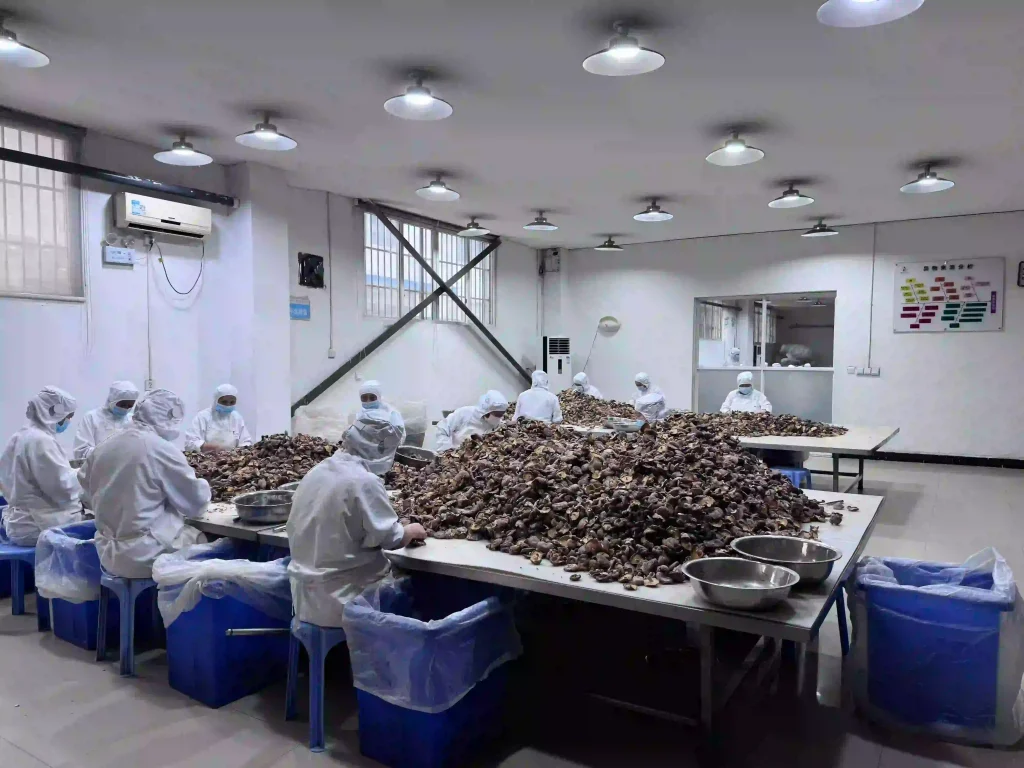
Dried Mushroom Supplier
Price is easy to compare.
Supply reliability is not.
For a long-term purchasing program, buyers should assess the supplier across several dimensions rather than choosing solely on quotation price.
| Supplier Evaluation Area | What the Buyer Should Ask | Why It Matters | Strong Evidence |
|---|---|---|---|
| Origin | Where is the mushroom sourced? | Authenticity and consistency | Source/traceability records |
| Production | How is the mushroom dried? | Quality and scalability | Process description |
| Moisture | What specification is guaranteed? | Shelf stability | Test records/COA |
| Food safety | What controls are implemented? | Import compliance | HACCP/system documents |
| Testing | What analyses can be provided? | Market-specific compliance | Laboratory reports |
| Traceability | Can each shipment be linked to a batch? | Risk management | Lot records |
| Supply capacity | Can the same grade be supplied repeatedly? | Continuity | Production/supply history |
| Packaging | Can packaging be customized? | Retail and industrial use | Packaging specifications |
| Export support | Can documentation match the destination market? | Customs and buyer compliance | Export documents |
This is where Jiangyuan Mushroom’s positioning as a manufacturer based in Qingyuan becomes commercially relevant. The value is not simply access to dried shiitake. It is the combination of origin, processing, quality management, product grading, packaging capability, and export-oriented supply.
From Dried Shiitake to Industrial Mushroom Ingredients
The production process also creates opportunities beyond conventional whole dried mushrooms.
Different grades and formats can serve different downstream industries:
Whole dried shiitake→retail and foodservice
Sliced mushrooms→prepared foods and food manufacturing
Small mushrooms→soup, hot pot, and ingredient supply
Broken pieces→seasoning and soup-base production
Mushroom powder→ingredient formulation
Mushroom extracts→specialized product development
For food manufacturers and supplement R&D teams, this creates an important sourcing advantage: the same supplier relationship can potentially support multiple mushroom formats rather than forcing the buyer to manage several fragmented supply chains.
Functional compounds such as beta-glucans may also become relevant for ingredient-development discussions, although any nutrition or health claim should be evaluated separately against the regulations of the intended market.
5 FAQs Global Buyers Ask About Dried Mushroom Production
1. What is the dried mushroom production process for export?
A typical commercial process includes raw material selection, receiving inspection, cleaning, sorting, grading, controlled drying, moisture inspection, finished-product quality checks, packaging, traceability, and export preparation. The exact process varies according to mushroom species, product grade, customer specification, and destination market.
2. What is the difference between sun-dried and machine-dried mushrooms?
Sun drying relies on environmental conditions and traditional processing methods, while mechanical drying provides greater control over temperature, airflow, and drying time. For international B2B supply, consistency is usually more important than choosing one method based solely on whether it is“natural”or“modern.”
3. What moisture content should dried shiitake have?
The specification depends on the product and applicable requirements. Codex CXS 39-1981 specifies a maximum water content of 13%for dried shiitake, while other dried edible fungi categories have different limits. Buyers should confirm the contractual specification and destination-market requirements rather than assume one universal moisture target.
4. What food safety documents should I request from a dried mushroom supplier?
Depending on the market and purchasing program, buyers may request a product specification, certificate of analysis, relevant pesticide residue and heavy-metal testing, microbiological results, HACCP or food-safety documentation, traceability records, and export-related certificates. The required package should be matched to the product and destination.
5. How can I verify a Chinese dried mushroom supplier?
Start with five questions: Where is the raw material sourced? How is it processed? How is moisture controlled? What testing can be provided? Can the supplier trace a finished shipment back to a production batch? A manufacturer that can answer these questions with records and specifications is generally easier to qualify than one relying only on product samples and price quotations.
Expert Verdict: Buy the Process, Not Just the Mushroom
For global buyers, a dried mushroom is never just a dried agricultural product.
You are buying origin control, drying consistency, food safety management, traceability, packaging protection, and supply continuity at the same time.
The strongest supplier is not necessarily the one offering the lowest first quotation. It is the one capable of reproducing the agreed specification shipment after shipment.
For serious wholesale and food-manufacturing programs, qualify the production system first. Then negotiate the price.
References:
University of Minnesota Extension — Preserving Food at Home: Drying