For international mushroom buyers, the question “Dried vs fresh shiitake: which is more nutritious?” has no reliable one-word answer. Dried shiitake generally show a much higher concentration of nutrients per 100 g because most of the water has been removed, but that does not mean drying creates nutrients or that every dried product retains the same nutritional profile. The correct comparison depends on whether the buyer is looking at fresh weight, dry weight, or rehydrated weight—and, importantly, how the mushrooms were dried.
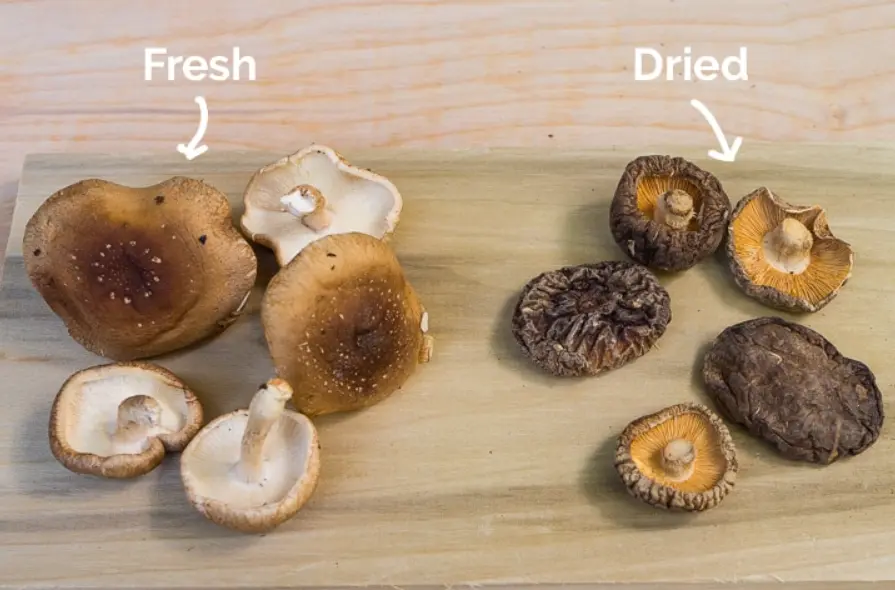
Dried vs fresh shiitake
| Nutritional/Quality Factor | Fresh Shiitake | Dried Shiitake | What a B2B Buyer Should Check |
|---|---|---|---|
| Water content | High | Very low | Moisture specification and storage stability |
| Nutrient concentration per 100 g | Lower because of water | Higher because solids are concentrated | Compare on the same weight basis |
| Dietary fiber | Naturally present | More concentrated by weight | Product specification |
| Minerals | Present | More concentrated by weight | Laboratory analysis when required |
| β-glucans | Present | Can remain after controlled drying | Processing conditions and testing |
| Vitamin D2 potential | Depends on exposure | May increase with UV/sun exposure | Drying method, UV exposure and analytical data |
| Shelf life | Relatively short | Significantly longer | Moisture, packaging and storage conditions |
| International logistics | Cold-chain sensitive | Easier to transport and store | Destination-market requirements |
That distinction matters commercially. A food manufacturer buying several tons of dried shiitake is not purchasing “fresh shiitake with the water removed” in a purely mathematical sense. Drying changes weight, texture, aroma, storage behavior and sometimes the measurable level of individual nutrients or bioactive compounds. Based on our experience with export-oriented mushroom supply, the safest procurement practice is to compare products using a defined specification sheet and laboratory data rather than relying on a supplier’s generic claim that “dried is more nutritious.”
The regulatory side adds another layer. For U.S. imports, FDA enforces pesticide tolerances established by EPA and monitors pesticide residues in imported foods; its 2026 monitoring update covers approximately 780 pesticides and around 3,500 domestic and import samples annually. In the EU, pesticide Maximum Residue Levels apply to food placed on the market, including imported products, and processing-related concentration or dilution is taken into account when applicable.
For that reason, nutrition should be treated as only one part of the purchasing decision. The better product is the one whose nutritional characteristics, processing controls, safety documentation and supply consistency match the final application.
Dried vs Fresh Shiitake: What Actually Changes Nutritionally?
The first mistake buyers should avoid is comparing 100 g of fresh shiitake with 100 g of dried shiitake as though they represent equivalent quantities of mushroom solids. They do not.
Fresh shiitake contains a large proportion of water. Once that water is removed, the remaining protein, fiber, minerals and other solids become concentrated into a much smaller physical weight. This is why a nutrition database can show substantially higher values for dried mushrooms without implying that the drying process has multiplied the underlying nutrients.
Fresh Weight, Dry Weight and Rehydrated Weight Are Three Different Comparisons
For procurement teams, this distinction should be written into the specification sheet.
Fresh Weight
Fresh weight refers to the mushroom as supplied before drying.
Dry Weight
Dry weight refers to the mushroom after most moisture has been removed.
Rehydrated Weight
Rehydrated weight refers to dried mushroom after water has been absorbed again.
These three measurement bases answer different questions.
A supermarket buyer comparing retail nutrition labels may care about the nutrients delivered in a typical serving. A food manufacturer producing soup, sauce or seasoning may care more about nutrient concentration per kilogram of raw material. A functional-food R&D team may require results reported on a dry-matter basis so that different batches can be compared scientifically.
The comparison therefore needs a fixed analytical basis before any conclusion is made.
Why Dried Shiitake Often Looks “More Nutritious”
The mechanism is straightforward:
Fresh mushroom → high water content → lower nutrient concentration per kilogram
Drying → water removal → higher concentration of mushroom solids per kilogram
This is particularly important when comparing dietary fiber and minerals. Their apparent concentration rises as the water fraction falls. The same principle applies when comparing the aroma and umami intensity of dried shiitake: the finished ingredient contains a much greater proportion of mushroom solids than the original fresh product.
But concentration is not the same thing as preservation.
A drying process can remove water effectively while still producing differences in color, aroma, texture and nutrient stability depending on temperature, airflow, drying duration and raw-material condition. That is why a serious supplier should be able to explain not only what the final moisture content is, but also how that moisture level was achieved.
β-Glucans: One Nutritional Factor Buyers Should Watch
β-glucans deserve particular attention because they are important polysaccharide components of edible mushrooms and are increasingly relevant to functional-food and ingredient research.
Research on Lentinula edodes has examined the effect of controlled drying temperatures on β-glucan content and found that the tested drying conditions did not necessarily cause a significant reduction in β-glucans. The important point is not that “drying never affects nutrients,” but that the outcome depends on the compound and processing conditions being evaluated.
That distinction is important for B2B buyers.
A supplier should not make a blanket claim that all dried shiitake retain every nutrient at the same level. Nor should a buyer assume that all dried products have suffered major nutritional losses. The specification, process and test result should decide the answer.
Vitamin D2 Requires a Different Explanation
Vitamin D2 is another area where generic comparisons can be misleading.
Shiitake contains ergosterol, which can be converted to vitamin D2 when exposed to ultraviolet radiation. Therefore, sunlight exposure can be relevant to the final vitamin D2 profile. However, “sun-dried” does not automatically mean “high in vitamin D2.” Exposure intensity, duration, mushroom orientation, weather and post-harvest handling all influence the result.
For a commercial buyer making a vitamin D-related nutritional claim, laboratory verification is more defensible than relying on the processing label alone.
How Drying Method Can Influence Shiitake Nutritional Quality
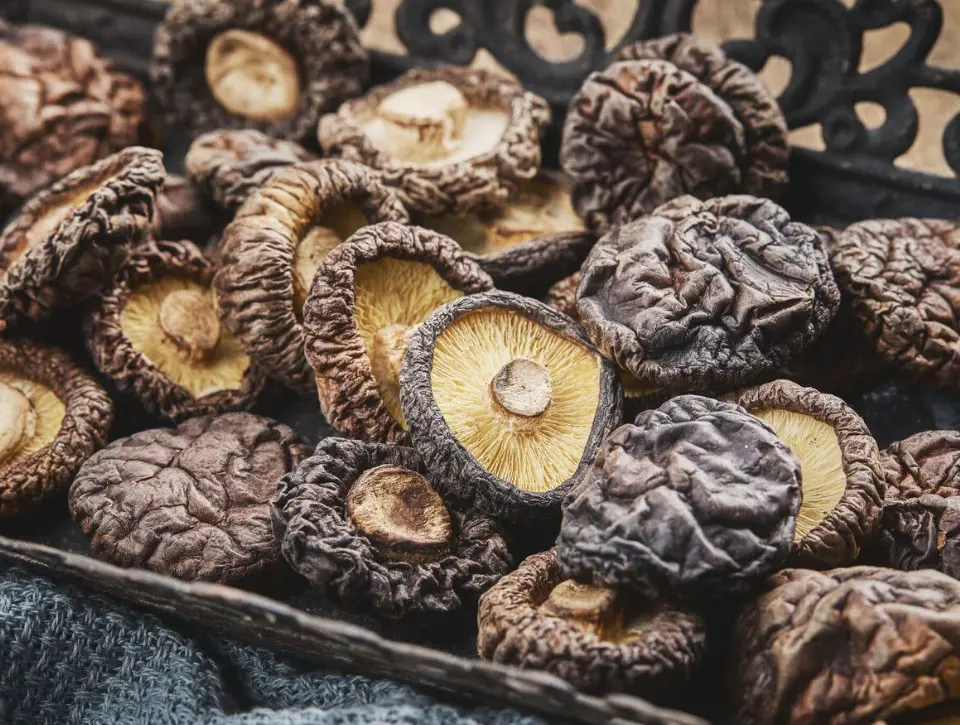
dried shiitake nutrition
Once the weight-basis problem is understood, the next question is more practical:
Does the drying method itself make a difference?
Yes. But the difference should be assessed parameter by parameter rather than reduced to “traditional is better” or “machine drying is better.”
Sun-Dried vs. Machine-Dried Shiitake
| Processing Dimension | Sun-Dried Shiitake | Machine-Dried Shiitake | Buyer Implication |
|---|---|---|---|
| Heat control | Dependent on weather | Precisely controllable | Important for batch consistency |
| UV exposure | Naturally present | Usually limited unless specifically designed | Relevant to vitamin D2 formation |
| Drying speed | Variable | More predictable | Affects production scheduling |
| Humidity control | Weather-dependent | Controlled environment | Important for final moisture |
| Aroma development | Often associated with traditional processing | Highly dependent on temperature profile | Evaluate sensory specifications |
| Batch uniformity | Can vary | Generally easier to standardize | Important for industrial formulations |
| Production scalability | Weather-dependent | Better suited to continuous bulk production | Important for large contracts |
| Energy profile | Uses solar energy | Requires controlled energy input | Relevant to sustainability analysis |
| Export consistency | Requires strong process management | Easier to standardize | Important for repeat orders |
Sun-Dried Shiitake: Traditional Process, Variable Conditions
Sun drying has a long history in mushroom processing. Its most obvious advantage is the use of solar energy, while natural UV exposure may also influence the biochemical profile of the finished mushroom.
The limitation is equally obvious: the sun is not a controlled drying chamber.
Temperature, solar intensity and ambient humidity change throughout the day and across seasons. For small-scale production this may be manageable. For an international buyer requiring hundreds of kilograms or several tons with consistent specifications, process variability becomes a commercial issue.
This does not make traditional sun drying inferior. It means the supplier needs a robust sorting, drying and quality-control system around it.
Machine Drying: Control Is the Main Advantage
Mechanical drying allows the producer to manage variables that are difficult to control outdoors:
- Drying temperature
- Airflow
- Drying duration
- Chamber conditions
- Final moisture target
- Batch repeatability
For export production, this repeatability matters. A food manufacturer does not want one shipment with excellent aroma and another with noticeably different moisture, color or texture because weather conditions changed during processing.
Modern controlled drying can therefore be particularly useful when the buyer needs standardized raw material for sauces, soup bases, seasoning blends, instant foods or other industrial applications.
The objective is not simply to “dry the mushroom faster.” It is to reach the required moisture level while maintaining acceptable sensory and nutritional characteristics.
The Better Question Is Not “Sun or Machine?”
For professional procurement, the more useful question is:
“Can the supplier consistently control the critical parameters of the drying process and demonstrate the resulting product quality?”
That shifts the discussion from marketing language to measurable specifications.
A buyer should request:
- Final moisture specification
- Product grade
- Drying method
- Batch consistency data
- Microbiological requirements
- Pesticide residue testing where applicable
- Heavy-metal testing where required
- Certificate of Analysis (COA)
- Traceability information
According to current FDA guidance and monitoring programs, imported foods remain subject to U.S. pesticide-residue enforcement, while EU food placed on the market is subject to harmonized MRL requirements. For an export supplier, therefore, drying quality and food-safety documentation should be managed together rather than treated as separate departments.
For Jiangyuan Mushroom, this is the practical principle behind our quality approach: raw-material selection, controlled processing, moisture management, inspection and traceability must form one continuous chain. A good dried shiitake is not defined by low moisture alone. It is defined by whether the product reaches the buyer with the expected nutritional, sensory, safety and specification profile—batch after batch.
Why Qingyuan Origin Matters When Comparing Dried and Fresh Shiitake
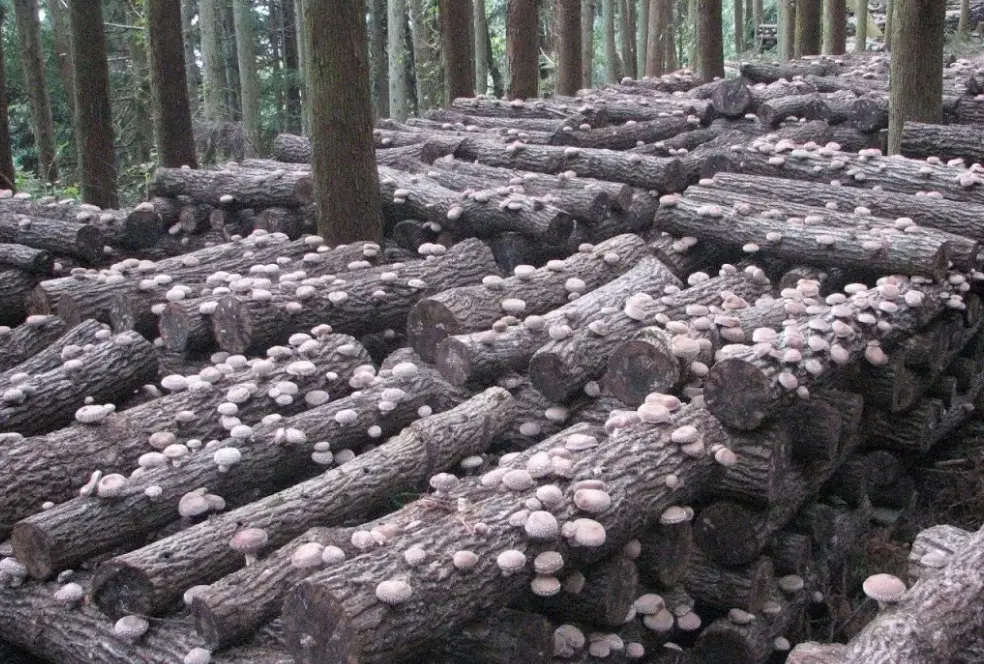
Nutrition is only one part of the quality equation. For international buyers, dried vs fresh shiitake: which is more nutritious should also lead to a second question: Where did the mushrooms come from, and can that origin be verified?
Qingyuan, Zhejiang, has a long-established shiitake cultivation tradition and is widely associated with the historical development of artificial shiitake cultivation in China. Qingyuan shiitake is also recognized within China’s geographical indication protection system. For a B2B purchaser, this matters because “Chinese shiitake” is a broad commercial description, while a documented production origin provides a much more useful basis for traceability and supplier evaluation.
The distinction becomes particularly important when comparing premium dried products. A strong aroma, thick cap, consistent color and low moisture may indicate good processing, but none of these characteristics alone proves geographic origin. Origin claims need documentation.
What Does a Geographical Indication Actually Tell a Buyer?
A geographical indication (GI) connects a product with a defined geographic area and characteristics associated with that origin. It should not be confused with a generic statement such as “Made in China.”
For procurement teams, the practical value is traceability. A serious supplier should be able to identify where raw mushrooms were sourced, how they were processed, which batch they belong to and what quality controls were applied before export.
This is especially relevant when a buyer is developing a premium retail line or private-label product. If the packaging makes an origin-related claim, the underlying supply chain needs to support it.
Based on our experience with international mushroom supply, buyers should request origin information at the same time as they request the product specification. Waiting until after a shipment is produced makes verification much harder. How to store dried shiitake mushrooms: prevent insects, mildew, and spoilage?
How Qingyuan Origin Connects With Dried Shiitake Quality
Origin does not automatically determine nutritional superiority. Soil, cultivation method, strain, maturity and post-harvest handling all contribute to the final product.
That is precisely why origin should be treated as one layer of quality control, not as a substitute for laboratory testing.
For example, two suppliers may both sell dried Lentinula edodes, but their products can differ in:
- Mushroom strain
- Growing substrate
- Harvest maturity
- Cap thickness
- Drying profile
- Final moisture
- Sorting standards
- Storage conditions
- Traceability depth
The buyer’s task is to connect these variables rather than judge quality from appearance alone.
Quality Assurance: What Global Buyers Should Verify Before Ordering
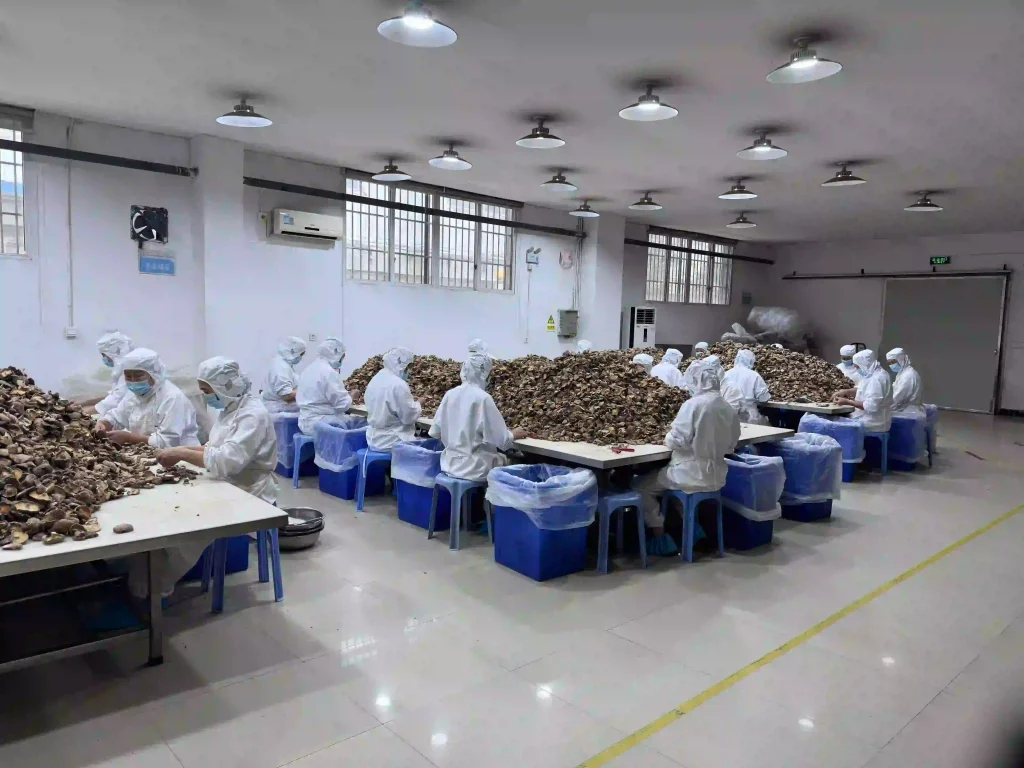
reliable mushroom manufacturer
The biggest procurement mistake is often simple: evaluating a mushroom supplier from a product photograph and a price quotation, then asking for compliance documents only after the purchase order has been issued.
Food safety should work in the opposite direction.
Before placing a recurring order, buyers should establish a written specification covering moisture, physical quality, microbiological requirements, pesticide residues, heavy metals, packaging and traceability. The exact limits should follow the destination market and intended application.
| Quality Control Point | Why It Matters | Typical Verification | B2B Risk if Ignored |
|---|---|---|---|
| Moisture content | Influences shelf stability and mold risk | COA/laboratory test | Storage deterioration |
| Water activity | Provides a stronger indication of microbial stability | Laboratory measurement | Mold and shelf-life problems |
| Pesticide residues | Required for market compliance | Multi-residue laboratory analysis | Import or regulatory issues |
| Heavy metals | Mushrooms can accumulate environmental contaminants | ICP-MS or equivalent analysis | Regulatory and customer rejection |
| Microbiology | Indicates hygienic and storage control | Microbial testing | Food-safety risk |
| Foreign matter | Protects finished-product quality | Visual + production inspection | Customer complaints |
| Product grade | Determines commercial consistency | Size, cap, color and defect grading | Batch inconsistency |
| Traceability | Connects finished product to its source | Batch records | Difficult recall investigation |
| Packaging integrity | Protects product during international transport | Packaging inspection | Moisture ingress |
| COA | Confirms batch-specific specifications | Supplier documentation | Weak verification |
Pesticide Residues: Do Not Rely on “Export Quality”
For U.S. buyers, pesticide compliance is tied to EPA-established tolerances, with FDA responsible for enforcing food regulations and monitoring pesticide residues in domestic and imported foods. The FDA’s pesticide monitoring program therefore provides a useful regulatory reference for importers evaluating supplier controls.
European buyers face a different regulatory framework but the same fundamental procurement principle: pesticide Maximum Residue Levels (MRLs) must be respected for food placed on the EU market, including imported products.
The practical lesson is straightforward.
“Compliant with export standards” is not a sufficient specification.
A buyer should identify the destination market and request relevant test documentation against the applicable requirements.
Heavy Metals Deserve Separate Attention
Heavy-metal testing is another area where mushroom buyers should avoid assumptions based on visual quality.
The relevant analytical scope can include:
- Lead (Pb)
- Cadmium (Cd)
- Arsenic (As)
- Mercury (Hg)
The actual testing requirement depends on the destination market, product category and applicable regulation. For higher-risk or tightly controlled supply chains, laboratory analysis provides a much stronger assurance than a supplier declaration alone.
For large food manufacturers, this information should be maintained by batch. That makes it possible to investigate deviations and trace the affected raw material if a specification changes.
Moisture Is More Than a Number
A specification such as moisture below 13% can be useful, but moisture alone does not tell the complete storage story.
Packaging material, water activity, warehouse humidity, transportation conditions and sealing quality all influence stability.
This is why an experienced exporter evaluates the chain as a system:
Drying → moisture control → cooling → packaging → storage → shipment
A low moisture reading at the factory gate has limited value if the product later absorbs moisture through inadequate packaging.
Which Shiitake Format Makes More Sense for Different B2B Applications?
There is no universal winner between fresh and dried shiitake. The right format depends heavily on what happens after the buyer receives the product.
Food Manufacturers: Dried Usually Offers More Flexibility
For soup bases, sauces, seasoning blends, instant noodles and other shelf-stable applications, dried shiitake is generally easier to manage.
The advantages are practical:
- Longer storage potential
- Easier bulk transportation
- No standard cold-chain requirement comparable to fresh produce
- Concentrated mushroom solids
- Strong aroma and umami character
- Multiple grades and cuts available
Whole mushrooms may suit premium ingredient applications, while slices, smaller mushrooms or broken pieces can be more economical for industrial processing.
Supermarket Chains: The Decision Depends on the Product Category
Fresh shiitake works well where texture, appearance and freshness are central to the purchasing decision.
Dried shiitake has a different retail proposition. It offers shelf stability and can support private-label products where inventory turnover and international logistics are important.
For a supermarket buyer, the decision should therefore consider category economics, not just nutritional content.
Functional Food and Ingredient R&D
For R&D teams investigating mushroom ingredients, consistency becomes more important than simply choosing fresh or dried.
Relevant specifications may include:
- Dry-matter basis
- β-glucan content
- Moisture
- Microbiological profile
- Pesticide residues
- Heavy metals
- Batch-to-batch consistency
- Traceability
Nutritional or functional claims should be based on analytical evidence appropriate to the intended market. A raw-material supplier should not be expected to replace the buyer’s regulatory or product-development process, but it should provide sufficiently detailed technical documentation for that process.
5 FAQs Global Shiitake Buyers Are Actually Asking
1. Is dried shiitake more nutritious than fresh shiitake?
Not universally. Dried shiitake is more nutrient-dense by weight because water has been removed, but individual nutrient retention depends on the compound and processing conditions. For a meaningful comparison, use the same weight basis and distinguish fresh, dry and rehydrated product.
2. Does drying reduce β-glucans in shiitake mushrooms?
Controlled drying does not necessarily cause a major reduction in β-glucans. Research on Lentinula edodes has found that tested drying conditions can preserve β-glucan levels, although results should not be generalized to every drying process or mushroom variety.
3. Are sun-dried shiitake mushrooms naturally higher in vitamin D2?
They can be, because UV exposure can convert ergosterol into vitamin D2. However, the amount depends on actual UV exposure and processing conditions. Buyers requiring a nutritional claim should request analytical verification rather than assume that every sun-dried product has a high vitamin D2 level.
4. What quality tests should I request from a dried shiitake supplier?
At minimum, establish a product specification covering moisture, microbiology, physical defects and foreign matter. Depending on the destination market and application, also request pesticide-residue and heavy-metal testing, together with a batch-specific Certificate of Analysis and traceability documentation.
5. How can I verify the origin of Qingyuan dried shiitake?
Ask the supplier for documented production and sourcing information rather than relying solely on the phrase “Qingyuan shiitake.” Origin records, batch traceability, applicable geographical-indication documentation and supplier production records provide a stronger basis for verification.
Expert Verdict: Choose the Process, Not Just the Format
For most international B2B applications, dried shiitake is the more practical format when shelf life, transportation, storage and concentrated mushroom solids are priorities. Fresh shiitake remains the better choice when texture and immediate culinary use drive the specification.
But the more important purchasing rule is this:
Do not buy “dried” simply because the nutrition numbers look higher. Buy a documented product with controlled moisture, verified safety, traceable origin and consistent processing.
For buyers seeking Qingyuan-origin supply, the strongest supplier is not necessarily the one offering the lowest price per kilogram. It is the one capable of connecting raw material, drying process, laboratory testing, traceability and export documentation into one reliable supply chain.
That is the standard Jiangyuan Mushroom should be measured against—and the standard we recommend buyers use when comparing suppliers.
References: