Understanding the MOQ for Mushroom Export: Sourcing Premium Shiitake Directly from the Qingyuan Origin
In the global food supply chain, the Minimum Order Quantity (MOQ) for dried mushrooms is rarely a static number. It is a strategic threshold that balances logistics costs, shelf-life stability, and food safety compliance. For a professional buyer, the primary concern is not just the price per kilogram, but whether the shipment size ensures the integrity of the Lentinus edodes (Shiitake) during its 30-day ocean transit.
To provide immediate clarity for procurement officers, the following table outlines the standard export MOQs based on common industrial requirements and shipping configurations:
| Product Category | Typical MOQ (Air Freight) | Typical MOQ (Sea Freight) | Packing Standard | Best Suited For |
|---|---|---|---|---|
| Whole Dried Shiitake (Premium) | 100 kg – 300 kg | 1,000 kg (1 Ton) | 10 kg / 20 kg Carton | High-end Retail / Supermarkets |
| Shiitake Slices / Dices | 200 kg | 2,000 kg | Bulk PE Bags + Carton | Food Processing / Soup Mixes |
| Mushroom Powder (Fine) | 50 kg | 500 kg | Double PE Liner + Fiber Drum | Nutraceuticals / Supplement R&D |
| Custom Label (OEM) Retail Packs | 500 kg | 100 – 200 Cartons | Stand-up Pouches / Jars | Private Label Brands |
Navigating these numbers requires an understanding of “Critical Shipment Mass”. Based on our 28 years of export experience at Jiangyuan Mushroom, we’ve observed that orders falling below the 500 kg threshold in sea freight often suffer from disproportionately high per-unit logistics costs and a higher risk of moisture re-absorption. For the B2B buyer, the “pain” is not just the MOQ itself, but the hidden cost of “Rejection Risk” — where a small, poorly consolidated batch fails to meet stringent EU or FDA pesticide residue limits due to cross-contamination in shared LCL (Less than Container Load) containers.
Beyond the Number: Why MOQ Matters for Wholesale Quality Control
mushroom export MOQ
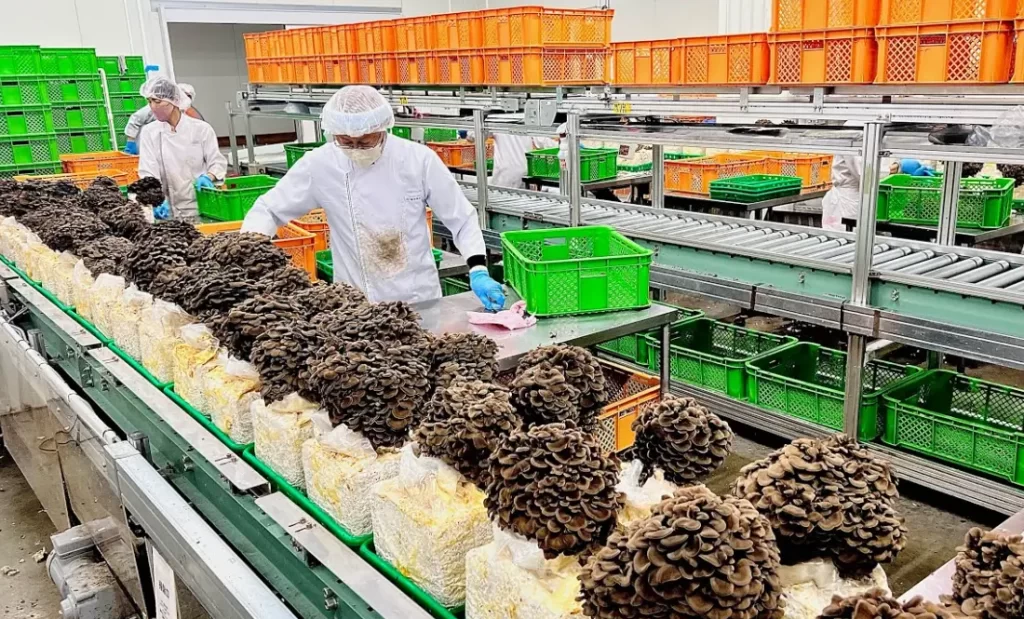
In the world of industrial fungi, moisture is the enemy. While a buyer might desire a smaller MOQ to test the market, the biological nature of dried mushrooms demands a volume that justifies dedicated climate-controlled logistics.
The Relationship Between Order Volume and Batch Consistency
When sourcing from a high-output region like Qingyuan, batch consistency is maintained through large-scale mechanical dehydration. Smaller “micro-batches” (below 100 kg) often come from fragmented supply sources, leading to variations in cap thickness, color, and more importantly, moisture content.
At Jiangyuan, we mandate a minimum batch size for our drying tunnels to ensure that every mushroom in the shipment maintains a moisture level below 13%. If a batch is too small, the airflow in industrial dehydrators becomes uneven, leading to “hot spots” where mushrooms become brittle or “cold spots” where they remain damp — the latter being a primary cause of mold during international shipping.
How Container Optimization (FCL vs. LCL) Protects Mushroom Integrity
Logistics-driven MOQs are designed to protect the buyer’s investment. We frequently advise our partners on the “FCL Advantage”:
Aroma Retention
Shiitake mushrooms are highly porous. In an LCL (Less than Container Load) environment, they can easily absorb odors from other goods (such as spices or chemicals) sharing the container. An MOQ that reaches a 20 ft FCL (Full Container Load) provides a sealed environment that preserves the natural guanylate-rich aroma of the Qingyuan Shiitake.
Structural Integrity
Mushrooms are lightweight but bulky. Our standardized export cartons are designed for specific stacking heights. A full container ensures that the bottom layers aren’t crushed by unrelated, heavier cargo — a common issue in low-volume LCL shipments.
| Factor | LCL (Low MOQ < 500 kg) | FCL (Standard MOQ > 2,000 kg) | Impact on Buyer |
|---|---|---|---|
| Moisture Control | High risk of flux | Stable (Sealed environment) | Prevents mold / texture degradation |
| Odor Contamination | Significant risk | Zero (Dedicated container) | Maintains culinary profile |
| Physical Damage | Variable (due to trans-loading) | Minimal (Point-to-point) | Reduces “fines” and broken caps |
| Unit Logistics Cost | High (Includes many surcharges) | Low (Optimized per kg) | Direct impact on gross margin |
The Qingyuan Heritage: Why Origin Dictates Global Market Value
shiitake export MOQ
For a global wholesaler, the MOQ is a financial commitment. To justify that commitment, the product must carry a value proposition that “generic” mushrooms cannot match. This is where the Qingyuan Geographical Indication (GI) becomes a critical asset for your supply chain.
800 Years of History: Sourcing from the “Hometown of Shiitake”
Qingyuan is not just a production hub; it is the globally recognized birthplace of cultivated mushrooms. According to historical records and FAO (Food and Agriculture Organization) recognition, the “Qingyuan Forest-Mushroom Co-culture System” represents a pinnacle of sustainable mycology.
When you source from Jiangyuan, you are tapping into a 28-year-old infrastructure built within this heritage site. Our experience suggests that buyers who emphasize the “Qingyuan Origin” on their packaging can often command a 15-25% premium in retail markets compared to non-origin-specific competitors. This “Origin Equity” transforms the mushroom from a commodity into a specialty ingredient.
Understanding Geographical Indication (GI) Protection
In 2026, transparency is the ultimate currency. GI protection ensures that:
Genetic Purity
Only specific strains of Lentinus edodes adapted to the high-altitude, mountainous climate of Qingyuan are used.
Traceability
Every ton of mushrooms we export can be traced back to the specific forest farm and the date of harvest.
Compliance
The GI status requires us to adhere to strict cultivation standards that naturally limit the need for chemical fertilizers, making our products inherently more likely to pass EU and FDA pesticide screenings.
For the procurement officer, an MOQ of 1,000 kg from a GI-certified source like Jiangyuan is a lower-risk investment than a 100 kg “spot buy” from an unverified trader. The former offers a repeatable, defensible quality standard that protects your brand’s reputation.
Rigorous Dehydration Standards: Ensuring a 24-Month Shelf Life
In the high-stakes world of international food distribution, the difference between a profitable shipment and a total loss often comes down to two percentage points in moisture content. At Jiangyuan, we treat dehydration not merely as a preservation method, but as a precision engineering process.
Mechanical Precision vs. Sun-Dried Traditionalism
While traditional “sun-dried” mushrooms are often marketed for their high Vitamin D2 content, they present significant risks for industrial-scale exports. Sun-drying is susceptible to environmental contaminants, unpredictable UV intensity, and uneven drying. To mitigate this, our 2026 processing protocols utilize Solar-Assisted Mechanical Dehydration. This hybrid approach captures the Vitamin D benefits of solar exposure while maintaining the strict temperature-controlled environment necessary to lock in the umami-rich guanylate.
We maintain a non-negotiable threshold: Moisture content must remain below 13%. This specific metric is the “shelf-life firewall”. Anything higher risks the activation of latent spores during sea transit; anything significantly lower leads to “cap shattering”, which increases the percentage of “fines” (broken pieces) in your retail packaging.
Compliance First: Meeting EU and FDA Food Safety Thresholds
mushroom supplier
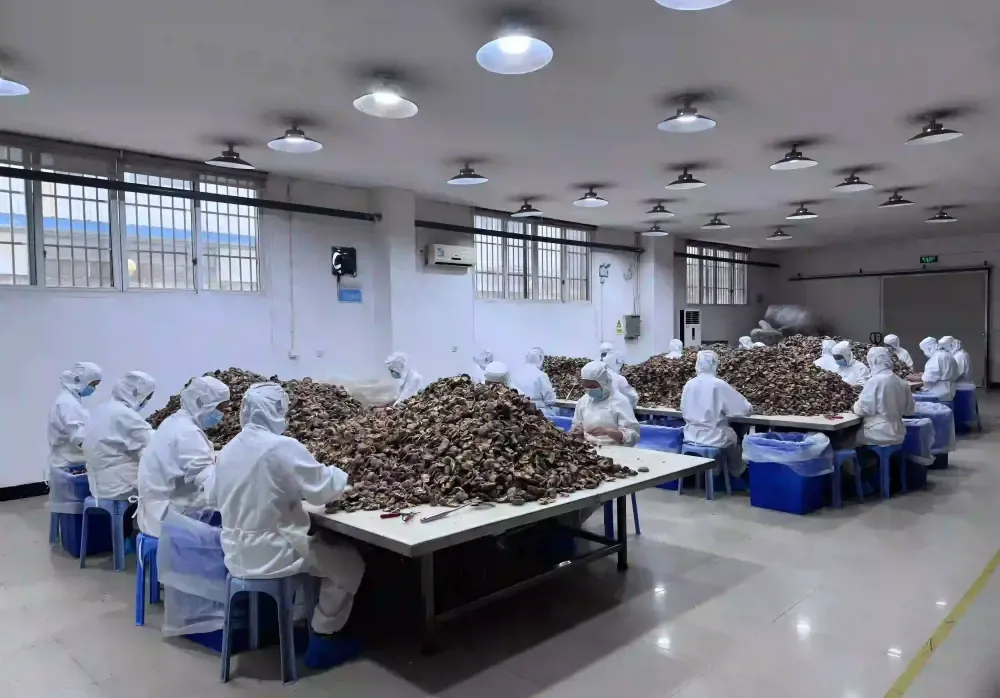
For a procurement officer in the EU or North America, the MOQ is secondary to the Lab COA (Certificate of Analysis). A single shipment failing a random customs inspection for chlorpyrifos or heavy metals can blacklist a brand for years.
Our quality assurance protocol is designed to exceed the world’s most stringent standards. We don’t just “test for export”; we cultivate for compliance. Because our Qingyuan farms are situated in high-altitude, low-population zones, the baseline environmental toxicity is significantly lower than in industrial agricultural hubs.
| Analysis Parameter | EU Regulation (EC 396/2005) | US FDA Threshold | Jiangyuan Export Standard | Testing Methodology |
|---|---|---|---|---|
| Pesticide Residues | < 0.01 mg/kg (LOD) | Exemption / EPA Limit | Non-Detected (ND) | GC-MS/MS & LC-MS/MS |
| Cadmium (Cd) | ≤ 1.0 mg/kg (dry) | Industry Guidelines | ≤ 0.5 mg/kg | ICP-OES |
| Lead (Pb) | ≤ 0.8 mg/kg (dry) | Industry Guidelines | ≤ 0.3 mg/kg | ICP-MS |
| Salmonella | Absent / 25 g | Negative / 25 g | Negative | ISO 6579-1 |
| Water Activity (aw) | N/A | < 0.60 | 0.45 – 0.55 | Electronic Hygrometer |
Strategic Procurement: How to Calculate Your Ideal Order Volume
From a supply chain director’s perspective, the “Best Price” often hides the “Total Cost of Ownership”. When calculating your order volume, we recommend a three-tiered approach based on your business model:
For Food Manufacturers (Ingredients)
Focus on the Bulk MOQ (1,000 kg+). Sourcing Slices or Dices in bulk reduces your labor costs in re-processing. By committing to a 20 ft FCL, you stabilize your COGS (Cost of Goods Sold) against fluctuating ocean freight rates.
For Retailers (Private Label)
The MOQ is often dictated by the Printing Run. While we can supply the mushrooms in small batches, high-quality rotogravure printing for stand-up pouches typically requires a minimum of 10,000 to 20,000 units. Balancing your mushroom MOQ with your packaging MOQ is critical to avoid “dead stock” in your warehouse.
For Nutraceutical R&D
Focus on Beta-glucan Density. If you are sourcing for extract production, your MOQ should be calculated based on the “Extraction Ratio”. For example, if you need 100 kg of 10:1 extract, your raw material MOQ should be at least 1,000 kg of high-grade dried whole mushrooms to ensure batch uniformity.
The 2026 Sustainability Mandate: Green Supply Chains in Qingyuan
The modern B2B buyer is increasingly tasked with ESG (Environmental, Social, and Governance) reporting. Sourcing from a 28-year-old establishment in the Qingyuan GI zone provides an immediate advantage. Our “Forest-Mushroom Co-culture System” is carbon-neutral by design. The logs used for cultivation are sourced from sustainably managed forests where for every tree harvested, three are planted. Choosing a higher MOQ from a sustainable source doesn’t just fill a container; it fulfills a corporate responsibility mandate that is becoming mandatory for EU-based importers under the CSRD (Corporate Sustainability Reporting Directive).
FAQ for Global Mushroom Buyers
Q1: Can we mix different grades of Shiitake (e.g., Flower Mushroom and Smooth Cap) to meet the 1-ton MOQ?
Yes. For most sea-freight orders, we allow a “Consolidated MOQ”. You can mix multiple specifications (Whole, Slices, Powder) within a single shipment, provided each sub-category meets a minimum of 200 kg for labeling and batch tracking purposes.
Q2: How do you guarantee the absence of heavy metals in large-scale exports?
We operate a “Soil-to-Shipment” tracking system. Every batch is tested twice: once at the farm gate and once post-processing. Because we source from the high-altitude Qingyuan region, our cadmium and lead levels are naturally 40-60% below the EU limit.
Q3: Is it possible to request a “Trial MOQ” before committing to a full container?
We offer a 100 kg – 300 kg “Evaluation Batch” via air freight. While the shipping cost per kg is higher, this allows your QA team to perform full-scale sensory and chemical analysis before scaling to FCL volumes.
Q4: What is the lead time from MOQ confirmation to port delivery?
Standard lead time is 15–21 days. This includes final dehydration, sorting, metal detection, and CIQ (China Inspection and Quarantine) certification. For custom-printed OEM packaging, please allow an additional 14 days for the first order.
Q5: How does the 2026 “Traceability Regulation” affect my import process?
All Jiangyuan shipments come with a QR-coded Batch ID. Scanning this provides your customs broker with the harvest date, drying log, and pesticide residue report, significantly speeding up the “Clearance-to-Warehouse” timeline.
The Bottom Line for Global Procurement
The MOQ is not a barrier; it is a quality assurance mechanism. In the volatile 2026 food market, “buying cheap” often leads to “buying twice” due to quality rejections. For 28 years, Jiangyuan has prioritized the structural and chemical integrity of the Qingyuan Shiitake over the temptation of low-quality, high-volume commodity trading.
If your procurement goal is to secure a transparent, GI-protected, and EU/FDA-compliant supply of Lentinus edodes, focus on a volume that justifies a dedicated, moisture-controlled logistics chain. This is the only way to ensure that the premium mushroom harvested in the mountains of Qingyuan arrives in your customer’s kitchen with its aroma and bio-activity intact.
Price Note
Please note that mushroom prices can vary according to product grade, specification, moisture level, packaging requirements, order quantity, processing requirements, destination market, exchange rates, and current logistics costs. The MOQ and cost figures presented above should therefore be treated as reference information rather than fixed quotations. For an accurate current price, buyers should confirm the exact product specifications, packaging format, order volume, and delivery terms with the supplier before placing an order.
References:
FAO — Qingyuan Forest-Mushroom Co-culture System
Cornell University — Best Management Practices for Log-Based Shiitake Cultivation