For international dried mushroom buyers, how to store dried shiitake without bugs or mold is not simply a warehouse question. The storage result is largely determined before the cartons ever arrive. A properly dried shiitake should enter storage with controlled moisture, clean packaging, stable product temperature, and a traceable production batch. For commercial storage, the practical formula is straightforward: adequate drying + moisture-barrier packaging + low-humidity storage + pest control + batch inspection. Cornell University’s commercial mushroom guidance identifies approximately 13% moisture for dried shiitake, while food-science research shows that moisture migration during storage can materially affect dried shiitake quality.
That distinction matters when a shipment is worth thousands of dollars rather than a single kitchen jar. A wholesaler may receive mushrooms that look completely dry but gradually absorb humidity during inland transportation, port handling or warehouse storage. A food manufacturer may discover excessive moisture only after opening multiple cartons. Worse, a pest problem can originate from damaged packaging or an inadequately controlled processing environment rather than from the warehouse itself. Based on our experience with dried mushroom processing and export-oriented quality control, storage failures are often symptoms of upstream moisture and packaging problems, not merely poor warehouse housekeeping.
Why Dried Shiitake Can Still Develop Mold or Attract Bugs
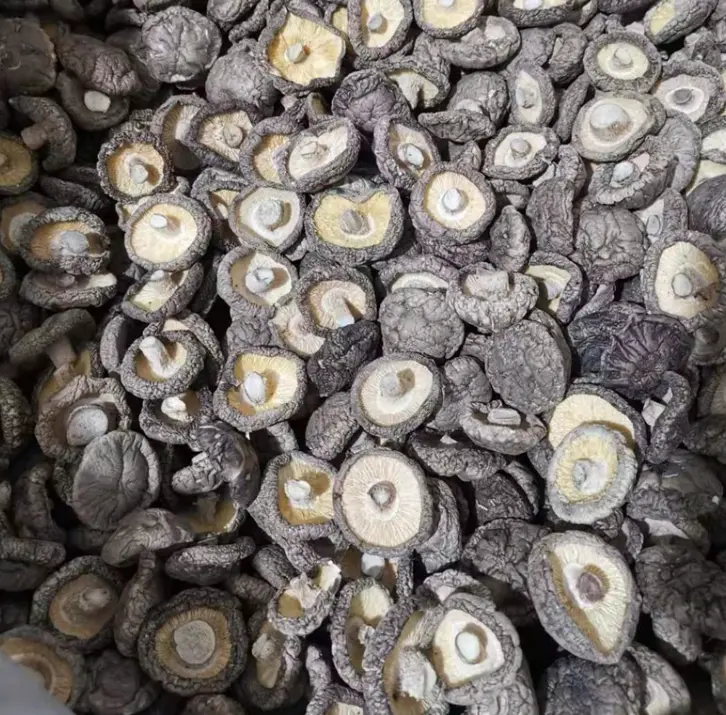
how to store dried shiitake
Dried shiitake has a major advantage over fresh mushrooms: substantially reduced water availability gives it a much longer storage potential. But “dried” does not mean biologically or chemically inactive. The product remains sensitive to humidity, oxygen, temperature fluctuations, packaging integrity and contamination.
For B2B buyers, four mechanisms deserve particular attention.
1. Moisture Reabsorption Is the First Warning Sign
Shiitake is a hygroscopic food ingredient. When exposed to humid air, it can gradually take up moisture from the surrounding environment. This can happen surprisingly easily when cartons are opened repeatedly, when an inner bag is poorly sealed, or when packaging is exposed to humid conditions during transportation.
The problem is not always immediately visible.
A mushroom can remain firm enough to appear acceptable while its internal moisture balance has already changed. As moisture increases, texture can soften, aroma can deteriorate and the conditions become increasingly favorable for microbial activity.
This is why a professional dried shiitake specification should not rely on visual dryness alone.
| Storage Factor | Low-Risk Condition | Warning Condition | B2B Control Measure |
|---|---|---|---|
| Final moisture | Consistent and within agreed specification | Uneven or elevated moisture | Batch moisture testing |
| Warehouse humidity | Dry, stable environment | High or fluctuating humidity | Dehumidification and monitoring |
| Package seal | Fully sealed, intact barrier | Pinholes, loose seals, damaged liners | Seal and carton inspection |
| Temperature | Stable and moderate | Heat exposure or rapid changes | Controlled warehouse conditions |
| Product texture | Firm and dry | Soft, sticky or unusually flexible | Incoming QC inspection |
| Odor | Characteristic mushroom aroma | Sour, musty or abnormal odor | Sensory inspection and isolation |
| Inventory handling | FIFO/FEFO controlled | Long, unmanaged dwell time | Lot-level inventory tracking |
The distinction between moisture content and water activity is also important. Moisture content tells a buyer how much water is present in the product; water activity provides a better indication of how available that water is for microbial and chemical reactions. For serious commercial procurement, both concepts help explain why two dried mushrooms with similar moisture percentages can behave differently during storage.
2. Mold Usually Signals a Moisture-Control Failure
Visible mold should never be treated as a cosmetic defect that can simply be removed.
For a commercial lot, mold may indicate that moisture has entered the product, that drying was incomplete, that moisture was unevenly distributed, or that packaging failed during transportation. Once the product has developed visible fungal growth, re-drying is not an appropriate substitute for a proper food-safety assessment.
This is particularly important for international food manufacturers. A supplier may meet a basic visual inspection while failing to demonstrate adequate control over the conditions that allowed deterioration to occur.
Food-safety authorities also recognize the relationship between fungal growth and mycotoxin risks, making mold control a preventive issue rather than merely a matter of appearance.
3. Insects Can Enter at Several Points in the Supply Chain
When buyers ask how to prevent bugs in dried shiitake, they often focus on the warehouse. That is only part of the picture.
Potential Entry Points Include:
- raw-material storage;
- drying and cooling areas;
- sorting and grading operations;
- damaged packaging;
- transportation;
- long-term warehouse storage.
A robust pest-control program therefore needs to begin at the processing facility and continue through distribution.
For bulk buyers, signs such as small holes, webbing, larvae, unusual powder, insect fragments or unexplained carton damage should trigger lot isolation and investigation, rather than simply transferring the product into a new container.
4. Temperature Changes Can Create a Hidden Condensation Problem
A common misconception is that colder storage is automatically safer for dried mushrooms.
Not necessarily.
If dried shiitake is moved from a cold environment into warm, humid air while the package is open or inadequately sealed, condensation can occur. That moisture can then be absorbed by the mushrooms.
This is one reason packaging integrity matters just as much as the warehouse temperature itself. Sugimoto, a specialist shiitake supplier, also warns about condensation and moisture absorption associated with temperature changes when dried shiitake is refrigerated and subsequently returned to room temperature.
For this reason, commercial operators should evaluate the entire temperature journey, not simply record the temperature inside the final warehouse.
What Moisture Level Should Dried Shiitake Have Before Storage?
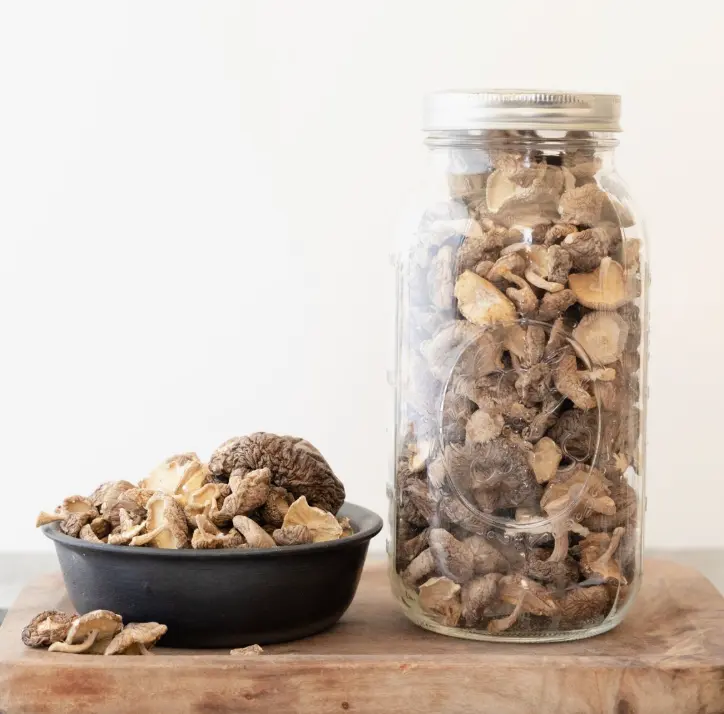
how to store dried shiitake
The most useful question is not simply, “What percentage of moisture should dried shiitake contain?”
The better question is:
Was the product dried consistently enough to meet an agreed specification, and can the supplier prove that the specification was maintained across the entire batch?
Cornell University’s commercial mushroom resource gives approximately 13% moisture as a reference for dried shiitake. That figure is useful when discussing commercial quality, but it should not be misrepresented as a universal legal limit for every country, grade or application. Buyer specifications may vary according to product form, intended use, packaging system and destination-market requirements.
Moisture Content Is a Procurement Parameter, Not Just a Storage Detail
For a food processor purchasing several tons of dried shiitake, moisture affects more than shelf life.
It can influence:
- net product stability;
- texture after rehydration;
- aroma retention;
- susceptibility to mold;
- packaging performance;
- shipping weight;
- inventory losses;
- consistency between production batches.
A supplier that reports only “naturally dried” or “fully dried” without a measurable specification leaves too much uncertainty for a professional buyer.
Moisture Content vs Water Activity: What Buyers Should Understand
Moisture percentage and water activity should not be treated as interchangeable measurements.
Moisture content measures the quantity of water in the food.
Water activity (aw) indicates how energetically that water is available within the food system.
For storage decisions, this distinction matters because microbial stability depends strongly on water availability. A mature procurement program should therefore establish which parameters are tested, how samples are collected, which laboratory or testing method is used, and what acceptance limits apply to the specific product.
This is where a supplier’s quality-management system becomes meaningful.
A reliable manufacturer should be able to connect the final moisture result to a specific production lot, rather than providing a generic number copied across multiple shipments.
What Should a Buyer Request Before Shipment?
For bulk dried shiitake, a practical pre-shipment quality file should include:
- Product specification;
- production or batch identification;
- moisture test result;
- packaging specification;
- relevant microbiological results;
- pesticide-residue documentation where required;
- heavy-metal testing where required;
- traceability information.
According to FDA guidance, pesticide residues in domestic and imported foods are monitored against applicable tolerances, while food importers also carry responsibilities under the U.S. Foreign Supplier Verification Program.
For European buyers, pesticide-residue compliance is similarly tied to EU maximum residue levels established under the applicable regulatory framework.
The commercial lesson is simple: storage stability starts with measurable incoming quality.
Why “Dry to the Touch” Is Not a Professional Acceptance Standard
Visual inspection remains useful, but it should be the first filter, not the final decision.
A mushroom can appear dry while having inconsistent internal moisture. Likewise, a shipment can pass a surface inspection while individual cartons differ because of uneven drying, packaging leakage or moisture migration during transportation.
Based on our experience with export-oriented mushroom processing, the most reliable approach is to combine:
instrument testing + representative sampling + visual inspection + packaging inspection + traceability records.
That combination gives buyers something far more valuable than a supplier’s verbal assurance: evidence that the product was controlled before it entered the storage chain.
How Processing and Packaging Determine Dried Shiitake Shelf Life
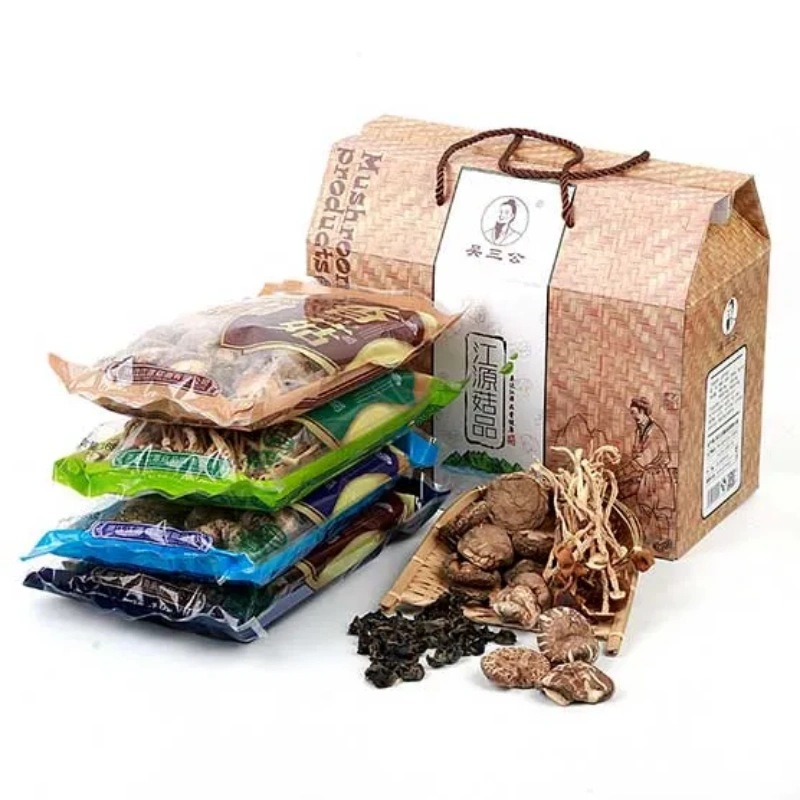
A common procurement mistake is to treat storage as something that begins after the shipment reaches the buyer’s warehouse. In reality, dried shiitake storage begins much earlier, with raw mushroom selection, drying, cooling, grading and packaging. If these stages are poorly controlled, even a clean, dry warehouse cannot fully protect the product.
Sun-Dried vs Machine-Dried Shiitake
Traditional sun drying has an important place in Qingyuan’s shiitake culture. Natural sunlight can contribute to the characteristic aroma and traditional flavor associated with dried shiitake. But the process depends heavily on weather, humidity, exposure time and handling conditions.
Controlled mechanical drying takes a different approach. Temperature and drying time can be managed more precisely, making it easier to achieve consistent moisture across a commercial batch. Research comparing shiitake drying methods also shows that drying conditions can influence color, texture, shrinkage and nutritional characteristics.
Neither method should be labeled “better” without considering the intended application. For an international food manufacturer, the more important question is whether the supplier can consistently verify the finished product specification.
| Processing Factor | Traditional Sun Drying | Controlled Mechanical Drying | Buyer Consideration |
|---|---|---|---|
| Temperature | Weather dependent | Controlled | Important for batch consistency |
| Drying time | Variable | Programmable | Affects production planning |
| Moisture uniformity | Requires careful handling | Easier to standardize | Directly relevant to storage |
| Environmental exposure | Higher | Lower | Consider dust, insects and humidity |
| Aroma | Traditional profile | More standardized | Match with product positioning |
| Production capacity | Weather constrained | More scalable | Important for wholesale contracts |
| Energy input | Relatively low direct energy use | Higher energy demand | Include in sustainability assessment |
| Quality documentation | Requires strong process records | Easier to standardize | Important for export buyers |
For this reason, buyers should ask for the drying method, final moisture specification, inspection procedure and batch traceability, rather than relying on the phrase “naturally dried.”
Packaging Is the Second Barrier Against Mold and Insects
Once drying is complete, packaging becomes the product’s first physical defense against humidity and pests.
For bulk dried shiitake, packaging should provide an effective moisture barrier while remaining suitable for food contact, transportation and the buyer’s storage environment. A damaged liner, weak heat seal or tiny puncture may appear insignificant during loading but become expensive several weeks later.
Useful Packaging Controls Include:
- sealed food-grade inner bags;
- moisture-barrier materials;
- strong outer cartons;
- appropriate palletization;
- intact heat seals;
- lot and production-date identification;
- inspection for punctures and compression damage.
Vacuum packaging, desiccants or oxygen absorbers may be useful in particular applications, but they should never be used to compensate for insufficient drying. Packaging is a barrier. It is not a repair mechanism.
This distinction becomes especially important when shipping dried mushrooms from a relatively dry processing environment into humid markets in Southeast Asia or other tropical regions. The packaging specification should be designed around the entire distribution route, not simply the conditions inside the factory.
A Practical Quality Assurance System for Bulk Dried Shiitake
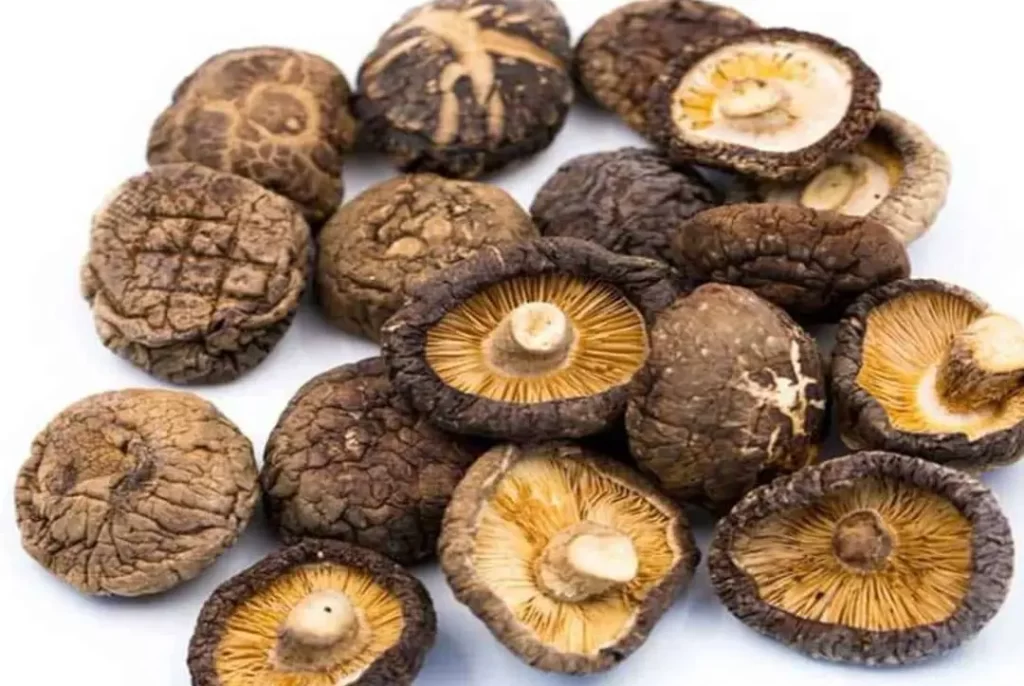
how to store dried shiitake
For professional buyers, the strongest storage program is built around prevention rather than visual inspection after problems appear.
At Jiangyuan Mushroom, our approach is based on controlling the product through the processing chain: raw mushroom selection → cleaning and sorting → grading → drying → quality inspection → packaging → export shipment. Based on our experience with export-oriented dried mushroom production, this sequence matters because every uncontrolled step can create a later storage problem.
A useful incoming-quality system should evaluate at least five dimensions: product condition, moisture, contamination, packaging and traceability.
| Quality Dimension | What to Check | Recommended Evidence | Why It Matters |
|---|---|---|---|
| Physical quality | Cap condition, color, size, breakage | Product specification | Confirms agreed grade |
| Moisture | Batch moisture level and uniformity | Test report / COA | Reduces storage instability |
| Microbiological safety | Relevant microbial parameters | Laboratory report | Supports food-safety assessment |
| Chemical safety | Pesticide residues, heavy metals where applicable | Accredited laboratory results | Supports destination-market compliance |
| Packaging | Seal, liner, carton condition | Packaging specification + inspection | Prevents moisture and pest entry |
| Traceability | Farm/raw-material source, lot and production date | Batch records | Enables rapid investigation |
| Storage | Temperature, humidity, pest control | Warehouse records | Protects product after production |
Do Not Confuse Appearance With Food Safety
A dark cap does not automatically mean mold. White material does not automatically mean contamination. Likewise, a mushroom that looks perfectly normal is not automatically compliant with an importer’s chemical or microbiological requirements.
The correct response to suspected mold, insect infestation or abnormal odor is to isolate the affected lot and investigate, rather than attempting to salvage it by re-drying.
For international shipments, the same principle applies to laboratory testing. FDA monitors pesticide residues in imported foods against applicable tolerances, while U.S. importers may have responsibilities under the Foreign Supplier Verification Program. European buyers similarly need to consider EU maximum residue levels for applicable pesticides.
Heavy metals deserve separate attention because contaminants such as lead, cadmium, arsenic and mercury can enter food through environmental pathways.
The buyer therefore needs more than a statement that a supplier is “food safe.” A stronger procurement file links the actual batch to actual test evidence.
How to Store Bulk Dried Shiitake After Arrival
Once the shipment reaches the warehouse, the objective is simple: prevent the product from gaining moisture and prevent external contamination from reaching the package.
Store cartons in a clean, dry and well-managed area. Keep them elevated from the floor and away from walls where practical. Avoid placing dried shiitake beside wet ingredients, steam-generating equipment, chemicals or products with strong odors.
Inventory rotation also matters. FIFO or FEFO, where appropriate to the product’s documented shelf-life system, prevents older batches from remaining forgotten at the back of the warehouse.
For humid climates, humidity monitoring deserves particular attention. Repeated opening of large bulk packages can introduce humid air every time. Smaller working packs or resealable inner packaging can therefore be more practical than repeatedly opening a large master bag.
If cold storage or freezing is used, temperature transitions must also be managed carefully. Condensation can create the very moisture problem the cold environment was intended to prevent.
Five Questions Global Buyers Should Ask Before Ordering
1. How can I verify the moisture content of bulk dried shiitake?
Ask for the supplier’s agreed moisture specification and a recent batch-specific test or COA. Do not accept “fully dried” as a measurable quality specification.
2. How should dried shiitake be stored in a humid country?
Prioritize moisture-barrier packaging, sealed inner liners, dry warehouse conditions and humidity monitoring. In tropical markets, packaging selection should be discussed before shipment rather than after arrival.
3. What tests should I request from a Chinese dried shiitake supplier?
Depending on the destination and intended application, discuss moisture, microbiological parameters, pesticide residues, heavy metals and other buyer- or market-specific requirements. The testing program should be aligned with the importer’s regulatory obligations.
4. How can I verify Qingyuan-origin dried shiitake?
Do not rely solely on the wording printed on a product page. Ask for traceability and applicable origin documentation. Qingyuan shiitake has a specific geographical-indication framework under China’s GB/T 19087-2008 standard, which covers areas including product requirements, testing, labeling, packaging, transportation and storage.
5. What should I do if my dried shiitake develops mold during storage?
Quarantine the affected lot, stop distribution and investigate moisture exposure, packaging integrity, storage conditions and the original production batch. Do not simply remove visibly affected pieces and assume the remaining product is safe.
Expert Verdict: Storage Quality Is Won Before the Warehouse
If you need to know how to store dried shiitake without bugs or mold, start by looking upstream.
Choose a supplier that can demonstrate controlled drying, measurable moisture, appropriate packaging, food-safety testing and lot-level traceability. For B2B buyers, that combination is far more reliable than choosing a product solely because it looks dry or carries a low purchase price.
My recommendation: specify the quality requirements before the purchase order is issued. A stable dried shiitake supply chain is not built by fixing mold after it appears; it is built by preventing the conditions that allow it to appear in the first place.
References:
Cornell University — Storage & Preservation of Shiitake Mushrooms
U.S. EPA — Setting Tolerances for Pesticide Residues in Foods